Loading...
Ashur-resh-ishi II vs Julius Caesar
Julius Caesar leads by 44.0 pts · 2 figures compared
…
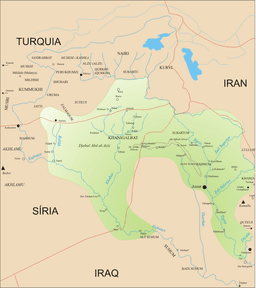
Ashur-resh-ishi II
Emperor · Ancient
38.8Total

Julius Caesar
General · Ancient
82.8Total
Basic Information
Born
-971
-100
Died
-967
-44
Era
Ancient
Ancient
Nationality
Assyria
Roman Republic
Occupation
Emperor
General
Civilization
Middle Eastern
Western
Score Comparison
Military (10%)
10.2
88.0
Political (20%)
35.0
78.0
Influence (20%)
45.5
85.0
Legacy (20%)
33.3
82.0
Leadership (15%)
55.3
80.0
Strategy (15%)
45.0
85.0
TOTAL
38.8
82.8
Julius Caesar — Complete Timeline
58 BC
Gallic WarsWar◆ Major
Caesar, as proconsul of Gaul, launched a series of campaigns that conquered all of Gaul (modern France, Belgium, and parts of Switzerland). He fought numerous battles, including against the Helvetii, the Belgae, and the Gallic chieftain Vercingetorix. The wars brought immense wealth and a loyal army to Caesar.
Gallic WarsConquestRoman Expansion
Impact: regional
49 BC
Crossing the RubiconPolitical Action◆ Major
Caesar led Legio XIII across the Rubicon River into Italy, defying the Roman Senate's order to disband his army. This act triggered a civil war against Pompey and the Optimates, ultimately leading to Caesar's dictatorship and the end of the Roman Republic.
Roman Civil WarEnd of RepublicPower Struggle
Impact: global
48 BC
Battle of PharsalusWar◆ Major
Caesar's outnumbered army defeated the larger forces of Pompey the Great at Pharsalus in Greece. Caesar's tactical use of a reserve line to counter Pompey's cavalry charge proved decisive. Pompey fled to Egypt, where he was assassinated, leaving Caesar as the undisputed master of the Roman world.
Roman Civil WarBattleDecisive Victory
Impact: regional
44 BC
Appointment as Dictator for LifePolitical Action◆ Major
The Roman Senate appointed Caesar dictator perpetuo (dictator for life), granting him unprecedented personal power. This move concentrated military, legislative, and judicial authority in one person, effectively ending the Roman Republic's traditional system of checks and balances and alarming many senators.
DictatorshipEnd of RepublicPower Consolidation
Impact: regionaldestructive
Assassination on the Ides of MarchPolitical Action◆ Major
A group of Roman senators, led by Marcus Junius Brutus and Gaius Cassius Longinus, stabbed Caesar to death at a meeting of the Senate in the Theatre of Pompey. The assassination was intended to restore the Republic, but instead triggered another civil war that led to the rise of the Roman Empire.
AssassinationRoman PoliticsEnd of Republic
Impact: globaldestructive
Expert Analysis
ashur-resh-ishi-ii-vs-julius-caesar
# The Shadow and the Sun
On a spring morning in 44 BCE, Julius Caesar walked into the Senate chamber, dismissing a warning from a soothsayer who had foreseen his doom. Within minutes, he lay bleeding from twenty-three stab wounds, the Republic he had bent to his will collapsing around his corpse. Half a millennium earlier and a thousand miles east, another ruler, Ashur-resh-ishi II, ascended the throne of Assyria—and vanished into history so completely that his own people barely remembered his name. One man reshaped the Western world; the other barely disturbed the dust of his own age. What separates a colossus from a cipher?
Origins
Caesar was born into the patrician Julian clan, an ancient family that had lost much of its political clout by the time of his birth in 100 BCE. Rome was a republic in crisis—torn between senatorial oligarchs and populist reformers, its armies fighting civil wars while its borders expanded. Caesar’s childhood unfolded against the backdrop of the Social War and the rise of Sulla’s dictatorship. He learned early that politics was a blood sport.
Ashur-resh-ishi II, by contrast, inherited a throne that had already seen centuries of Assyrian dominance. He reigned from 971 to 967 BCE, a mere four years, during a period when the Neo-Assyrian Empire was still recovering from a long decline. His father had been a shadow; his son, Tiglath-Pileser II, would be a flicker. The empire was stable but stagnant, its bureaucracy intact but its ambitions dormant. Ashur-resh-ishi II was born into a system that demanded nothing more from its king than continuity.
Rise to Power
Caesar’s path was forged through debt, danger, and defiance. Exiled by Sulla, he served in the military in Asia Minor, was captured by pirates, and famously told them he would crucify them—then did exactly that after his ransom was paid. He climbed the political ladder through the *cursus honorum*—quaestor, aedile, praetor—borrowing fortunes to stage lavish games that bought him popularity. In 59 BCE, he formed the First Triumvirate with Pompey and Crassus, a backroom deal that gave him the consulship and, crucially, the governorship of Gaul.
Ashur-resh-ishi II rose by birthright. The Assyrian kingship was hereditary, and he assumed the throne upon his father’s death with no recorded opposition, no coup, no dramatic exile. He inherited an army, a treasury, and a court that had functioned for generations. The only drama in his ascent is that we know almost nothing about it—his name appears in king lists and a single inscription, a silent placeholder in a dynasty.
Leadership & Governance
Caesar governed through relentless motion. In Gaul (58–50 BCE), he commanded legions that conquered a territory larger than Italy, fought over a million enemies according to his own *Commentaries*, and crossed the Rhine and the English Channel. He wrote his own propaganda, shaping how history would see him. As dictator, he reformed the calendar, extended citizenship to provincials, initiated public works, and centralized power in ways that made the Republic an empire in all but name. His military genius lay in speed and logistics—his sieges at Alesia and his crossing of the Rubicon in 49 BCE were strokes of psychological as well as tactical brilliance.
Ashur-resh-ishi II left no such mark. The only known reference to his reign is a brief mention in the Assyrian King List and a single inscription from the city of Ashur, recording a modest building project. He was not a conqueror; his military score of 39.0 suggests he fought no major campaigns. His political score of 31.9 indicates he enacted no reforms. He governed as a caretaker, maintaining what his ancestors had built, neither expanding nor losing territory. His total score of 44.0 is a statistical whisper.
Triumph & Tragedy
Caesar’s greatest triumph was the conquest of Gaul, which brought him wealth, loyalty, and a veteran army that made him master of Rome. His greatest tragedy was his own success—the Ides of March assassination, born from the fear that he would crown himself king. His last words, according to tradition, were to Brutus: “Et tu, Brute?” The tragedy was not just his death but the civil wars that followed, ending the Republic he had loved and destroyed.
Ashur-resh-ishi II’s triumph, if it can be called that, was simply surviving his four-year reign without disaster. His tragedy is that he was forgotten. No epic poem celebrates him; no historian records his death. He was a king who ruled, and then he was not.
Character & Destiny
Caesar was audacious, calculating, and charismatic. He gambled everything on the crossing of the Rubicon, knowing that civil war meant either total victory or total ruin. He pardoned enemies, seduced allies, and wrote his own legend. His character drove him to seek unparalleled power, and that same ambition made him a target. Destiny, for Caesar, was something he seized—until it seized him back.
Ashur-resh-ishi II’s character is unknowable. He may have been cautious or lazy, wise or foolish. But his destiny was determined not by his choices but by the era he inhabited. Assyria in the early 10th century BCE was a sleeping giant; its kings were placeholders until a true conqueror, Ashurnasirpal II, would wake it a generation later. Ashur-resh-ishi II was born into a lull, and he stayed there.
Legacy
Caesar’s legacy is the Roman Empire, the Latin alphabet, the Julian calendar, and the very concept of “Caesar” as a title for emperors—Kaiser, Tsar. His writings are studied in military academies; his life has been dramatized by Shakespeare and Hollywood. He is a symbol of ambition, genius, and the cost of power.
Ashur-resh-ishi II’s legacy is a footnote in a cuneiform list. His son, Tiglath-Pileser II, is also obscure. His grandson, Ashurnasirpal II, would become one of the greatest Assyrian conquerors—but the grandfather is remembered only because he fathered a line. His legacy score of 44.0 reflects a near-total absence from historical memory.
Conclusion
To compare Caesar and Ashur-resh-ishi II is to compare a supernova to a candle flickering in an empty room. Yet the contrast reveals something essential about history: it is not merely the record of power, but of action. Caesar earned his immortality through risk, violence, and vision. Ashur-resh-ishi II inherited a throne and did nothing with it—and history, with brutal efficiency, forgot him. The difference between a total score of 83.3 and 44.0 is not just luck or circumstance. It is the difference between crossing the Rubicon and staying home.
Rankings
🥇
Julius CaesarLeader
Mil: 88.0Pol: 78.0Inf: 85.0
82.8
🥈
Ashur-resh-ishi II
Mil: 10.2Pol: 35.0Inf: 45.5
38.8
+44.0 behind
How This Comparison Works
Algorithm
Each figure is scored on 6 dimensions (0—100 scale) based on structured historical data: Military (10%), Political (20%), Influence (20%), Legacy (20%), Leadership (15%), Strategy (15%). The weighted total produces the final ranking.
Data Sources
Scores are computed from structured sub-indicators in the database. Scale factors adjust for era (Ancient ×0.85, Modern ×1.0) and civilization size (Eastern ×1.05, Other ×0.80) to account for differences in population and military scale.
Maximum 3 Figures
Comparisons are limited to 2—3 figures to ensure readability and statistical meaningfulness.
Error Margins
±5 points per dimension — Sub-scores are derived from historical records with inherent uncertainty. Two figures within 5 points on a dimension should be considered roughly equivalent in that area.
Total Score Accuracy
±3 points overall — The weighted combination of 6 dimensions produces a total score with approximately ±3 points of uncertainty. Differences of less than 3 points are not statistically significant— the figures are effectively tied.
Known Limitations
- Historical records are incomplete and uneven across civilizations
- Figures from oral-tradition societies may be underrepresented
- Occupation labels can misclassify multi-role figures
- Scores measure capability and impact, not moral character
- Quantitative scoring is a comparison tool, not absolute truth
Capability Radar
Military (10%) — Battles & Warfare
Battles
5
95
Win Rate
5
92
Expansion
5
97
Political (20%) — Governance & Reform
Reform
5
90
Diplomacy
5
85
Economy
5
82
Influence (20%) — Cultural & Global Reach
Cultural
5
88
Global
5
94
Legacy (20%) — Historical Impact
Historical
5
95
Longevity
5
96
Leadership (15%) — Power & Stability
Tenure
5
75
Stability
5
60
Strategy (15%) — Tactics & Innovation
Strategy
5
94
Tactics
5
96
Reform
5
88
Similar Comparisons
Comments & Discussion
TheShadowKnows6/17/2026
Caesar didn’t just conquer—he *branded*. “Veni, vidi, vici” wasn’t a report, it was a marketing campaign. Ashur-resh-ishi II? Dude barely left a clay tablet with his name on it. That’s the difference between a man who understood optics and a placeholder king. Caesar’s assassination made him immortal; Ashur’s peaceful death made him a footnote. History doesn’t remember competence—it remembers theater.
数据侦探6/17/2026
别被四年的统治骗了,短板效应不存在于历史对比中。Caesar有普鲁塔克、苏埃托尼乌斯、阿庇安三大史家打包宣传,而Ashur-resh-ishi II连个像样的亚述编年史都没混上。这不是能力的差距,是史料保存的抽签。你拿《高卢战记》和一块破陶片比,当然一个像太阳一个像影子。考古学家的铁锹才是真正的历史裁判。
ClassicsProf6/17/2026
The real difference? *Audacity*. Caesar crossed the Rubicon knowing it meant war with the Senate. Ashur-resh-ishi II spent his four-year reign doing… what exactly? Probably chasing Bedouin raiders from the Khabur region. That’s like comparing a Grand Master chess player to a guy who just learned how pawns move. One broke the board; the other barely nudged a piece. History doesn’t have room for both in the same sentence.
戏说达人6/17/2026
感觉像拿米其林三星和路边摊比。Caesar是自导自演的政治爆米花大片——内战、埃及艳后、刺杀,每场都是收视率王。Ashur-resh-ishi II?他唯一的娱乐价值就是证明亚述王朝也有"谁啊"时期。说他统治四年?我怀疑他上任第一年就在宫殿里摸鱼,等老爹留下的老臣退休。不是所有历史人物都是戏精,但史诗般的平淡也需要天赋。