Loading...
This comparison has not been analyzed yet.
One-time AI generation (~1 minute). Scores and timeline are already available below.
Ashur-uballit I vs Sargon II
Sargon II leads by 1.6 pts · 2 figures compared
…
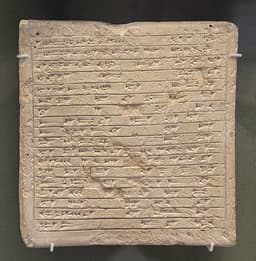
Ashur-uballit I
Emperor · Ancient
51.4Total

Sargon II
Emperor · Ancient
53.0Total
Basic Information
Born
-1363
-722
Died
-1328
-705
Era
Ancient
Ancient
Nationality
Assyria
Assyria
Occupation
Emperor
Emperor
Civilization
Middle Eastern
Middle Eastern
Score Comparison
Military (10%)
50.0
85.0
Political (20%)
43.7
45.0
Influence (20%)
51.0
54.1
Legacy (20%)
44.2
45.8
Leadership (15%)
67.0
40.0
Strategy (15%)
60.0
68.1
TOTAL
51.4
53.0
Ashur-uballit I — Complete Timeline
1363 BC
First Assyrian ruler to claim the title 'King of Assyria'Political Action
Ashur-uballit I was the first ruler to use the title 'King of Assyria' (
TitleKingshipAssyria
Impact: regionalconstructive
1350 BC
Defeated the Mitanni and expanded Assyrian territoryWar◆ Major
Ashur-uballit I launched military campaigns against the Mitanni kingdom, which had previously dominated Assyria. He defeated them and annexed their territories, significantly expanding Assyrian control in northern Mesopotamia and establishing Assyria as a major power.
ConquestMitanniExpansion
Impact: regional
Corresponded with the Pharaoh of EgyptPolitical Action◆ Major
Ashur-uballit I exchanged letters with the Egyptian Pharaoh, likely Akhenaten, as documented in the Amarna letters. This correspondence indicates Assyria's growing diplomatic status and its recognition as an independent power by Egypt.
DiplomacyEgyptAmarna
Impact: regional
1345 BC
Intervened in Babylonian successionPolitical Action
Ashur-uballit I intervened in Babylonian affairs by supporting a claimant to the throne, demonstrating Assyrian influence over Babylon. This intervention marked the beginning of Assyrian involvement in Babylonian politics, a recurring theme in later history.
BabylonInterventionPolitics
Impact: regional
Sargon II — Complete Timeline
722 BC
Conquest of the Kingdom of IsraelWar
Sargon II completed the conquest of the Kingdom of Israel, capturing its capital Samaria after a three-year siege. He deported over 27,000 Israelites to Assyria and other parts of the empire, ending the northern kingdom's existence.
Military CampaignIsraelDeportation
Impact: regionaldestructive
717 BC
Construction of Dur-SharrukinCultural◆ Major
Sargon II founded a new capital city named Dur-Sharrukin (Fort of Sargon) near modern Khorsabad. The city was built on a grand scale with palaces, temples, and fortifications, but was abandoned after his death.
Urban PlanningCapital CityAssyrian Empire
Impact: regionalconstructive
714 BC
Campaign against UrartuWar◆ Major
Sargon II led a major campaign against Urartu, defeating King Rusa I and sacking the temple of Haldi at Musasir. This victory weakened Urartu and secured Assyrian control over the northern frontier.
Military CampaignUrartuSack
Impact: regional
705 BC
Death in BattleWar◆ Major
Sargon II was killed in battle against the Cimmerians in Anatolia. His body was not recovered, which was considered a great dishonor in Assyrian culture. His death led to the abandonment of Dur-Sharrukin and a succession crisis.
Death in BattleCimmeriansSuccession Crisis
Impact: nationaltragic
This comparison has not been analyzed yet.
One-time AI generation (~1 minute). Scores and timeline are already available below.
Rankings
🥇
Sargon IILeader
Mil: 85.0Pol: 45.0Inf: 54.1
53.0
🥈
Ashur-uballit I
Mil: 50.0Pol: 43.7Inf: 51.0
51.4
+1.6 behind
How This Comparison Works
Algorithm
Each figure is scored on 6 dimensions (0—100 scale) based on structured historical data: Military (10%), Political (20%), Influence (20%), Legacy (20%), Leadership (15%), Strategy (15%). The weighted total produces the final ranking.
Data Sources
Scores are computed from structured sub-indicators in the database. Scale factors adjust for era (Ancient ×0.85, Modern ×1.0) and civilization size (Eastern ×1.05, Other ×0.80) to account for differences in population and military scale.
Maximum 3 Figures
Comparisons are limited to 2—3 figures to ensure readability and statistical meaningfulness.
Error Margins
±5 points per dimension — Sub-scores are derived from historical records with inherent uncertainty. Two figures within 5 points on a dimension should be considered roughly equivalent in that area.
Total Score Accuracy
±3 points overall — The weighted combination of 6 dimensions produces a total score with approximately ±3 points of uncertainty. Differences of less than 3 points are not statistically significant— the figures are effectively tied.
Known Limitations
- Historical records are incomplete and uneven across civilizations
- Figures from oral-tradition societies may be underrepresented
- Occupation labels can misclassify multi-role figures
- Scores measure capability and impact, not moral character
- Quantitative scoring is a comparison tool, not absolute truth
Capability Radar
Military (10%) — Battles & Warfare
Battles
45
75
Win Rate
50
80
Expansion
55
80
Political (20%) — Governance & Reform
Reform
40
70
Diplomacy
45
65
Economy
35
60
Influence (20%) — Cultural & Global Reach
Cultural
35
50
Global
30
45
Legacy (20%) — Historical Impact
Historical
45
55
Longevity
40
40
Leadership (15%) — Power & Stability
Tenure
50
60
Stability
40
55
Strategy (15%) — Tactics & Innovation
Strategy
45
75
Tactics
40
70
Reform
35
65
Similar Comparisons
Comments & Discussion
No comments yet. Be the first to share your thoughts!