Loading...
Sargon II vs Ziying
Sargon II leads by 11.6 pts · 2 figures compared
…

Sargon II
Emperor · Ancient
53.0Total
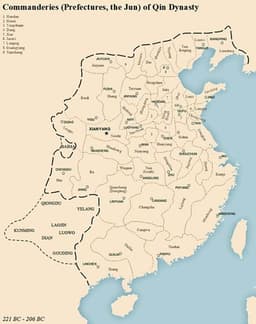
Ziying
Emperor · Ancient
41.4Total
Basic Information
Born
-722
-240
Died
-705
-206
Era
Ancient
Ancient
Nationality
Assyria
China
Occupation
Emperor
Emperor
Civilization
Middle Eastern
Eastern
Score Comparison
Military (10%)
85.0
47.5
Political (20%)
45.0
43.7
Influence (20%)
54.1
42.4
Legacy (20%)
45.8
32.5
Leadership (15%)
40.0
49.9
Strategy (15%)
68.1
38.6
TOTAL
53.0
41.4
Sargon II — Complete Timeline
722 BC
Conquest of the Kingdom of IsraelWar
Sargon II completed the conquest of the Kingdom of Israel, capturing its capital Samaria after a three-year siege. He deported over 27,000 Israelites to Assyria and other parts of the empire, ending the northern kingdom's existence.
Military CampaignIsraelDeportation
Impact: regionaldestructive
717 BC
Construction of Dur-SharrukinCultural◆ Major
Sargon II founded a new capital city named Dur-Sharrukin (Fort of Sargon) near modern Khorsabad. The city was built on a grand scale with palaces, temples, and fortifications, but was abandoned after his death.
Urban PlanningCapital CityAssyrian Empire
Impact: regionalconstructive
714 BC
Campaign against UrartuWar◆ Major
Sargon II led a major campaign against Urartu, defeating King Rusa I and sacking the temple of Haldi at Musasir. This victory weakened Urartu and secured Assyrian control over the northern frontier.
Military CampaignUrartuSack
Impact: regional
705 BC
Death in BattleWar◆ Major
Sargon II was killed in battle against the Cimmerians in Anatolia. His body was not recovered, which was considered a great dishonor in Assyrian culture. His death led to the abandonment of Dur-Sharrukin and a succession crisis.
Death in BattleCimmeriansSuccession Crisis
Impact: nationaltragic
Ziying — Complete Timeline
207 BC
Killed Zhao GaoPolitical Action◆ Major
Ziying, after ascending the throne, plotted with his eunuchs to kill Zhao Gao. He succeeded, ending Zhao Gao's tyranny but failing to save the Qin dynasty from collapse.
AssassinationQinZhao Gao
Impact: nationalconstructive
206 BC
Surrendered to Liu BangPolitical Action
Ziying, the last ruler of Qin, surrendered to Liu Bang's rebel forces at Xianyang. This act ended the Qin dynasty and marked the beginning of the Han dynasty.
SurrenderQinHan
Impact: global
Expert Analysis
Origins
Sargon II, likely a son of Tiglath-Pileser III, ascended the Assyrian throne in 722 BCE amid political instability. His exact birth year is unknown, but he claimed divine mandate through his name, meaning 'the king is legitimate.' He was not the crown prince, and his rise involved purging rivals. He received thorough military training and administrative experience under his predecessors, preparing him for aggressive expansion.
Ziying, born around 240 BCE, was the son of Fusu, the eldest son of Qin Shi Huang. After the death of Qin Shi Huang in 210 BCE, the eunuch Zhao Gao forced Fusu to commit suicide and installed the younger Huhai as Qin Er Shi. Ziying survived the purges and was later appointed as the 'King of Qin' by Zhao Gao in 207 BCE, after Zhao Gao murdered Qin Er Shi. Ziying was educated in Confucian classics but had no prior ruling experience.
Rise to Power
Sargon II came to power in 722 BCE after overthrowing Shalmaneser V. He immediately faced rebellions across the empire. He crushed a revolt in the west led by Hamath and defeated the coalition of Damascus, Samaria, and Gaza. In 721 BCE, he completed the conquest of Israel, capturing Samaria after a three-year siege and deporting over 27,000 Israelites. This event scored 85.0 in military for Sargon II. He also subdued the Medes and campaigned against Urartu, defeating King Rusa I in 714 BCE.
Ziying's rise was brief and reactive. After Zhao Gao killed Qin Er Shi in 207 BCE, Zhao Gao offered the throne to Ziying. Ziying, pretending to be ill, lured Zhao Gao into his chambers and had him killed by his eunuchs. This act ended Zhao Gao's tyranny but did not restore Qin's power. Ziying then took the title 'King of Qin' (not emperor) and attempted to hold the crumbling dynasty together. He faced rebellions from Chu and other former states.
Leadership & Governance
Sargon II governed through military might and administrative reforms. He built a new capital, Dur-Sharrukin (modern Khorsabad), which showcased his power with massive palaces and temples. He appointed provincial governors loyal to him and used deportation to break resistance. His leadership style was autocratic and expansionist. He scored 40.0 in leadership and 68.1 in strategy.
Ziying's leadership was constrained by the collapse of Qin authority. He killed Zhao Gao but could not reverse the widespread revolts. He attempted to negotiate with rebel leaders and reduced his title to 'king' to appease them. His political score is 43.7, reflecting his efforts but limited success. He lacked the military force to suppress rebellions.
Triumph & Tragedy
Sargon II's greatest triumph was the conquest of Israel and the expansion of Assyrian borders. He also secured the northern frontier by defeating Urartu. His tragedy was his death in battle against the Cimmerians in 705 BCE, with his body unrecovered, a grave dishonor. His capital Dur-Sharrukin was abandoned after his death.
Ziying's triumph was the elimination of Zhao Gao, a tyrant who had terrorized the court. His tragedy was the surrender to Liu Bang in 206 BCE, ending the Qin dynasty after only 15 years. He was later killed by Xiang Yu, despite having surrendered peacefully.
Character & Destiny
Sargon II was ambitious, ruthless, and confident. He took personal command of armies and engaged in direct combat, which led to his death. He left detailed inscriptions recording his deeds, showing his desire for glory. His character drove him to expand Assyria but also led to his downfall.
Ziying was cautious and pragmatic but lacked the decisiveness to save his dynasty. He killed Zhao Gao but failed to consolidate power. His surrender to Liu Bang showed a desire to spare lives but resulted in his own death. Historical assessments view him as a tragic figure caught in circumstances beyond his control.
Legacy
Sargon II's legacy lies in his military campaigns and the construction of Dur-Sharrukin. He is remembered as a powerful Assyrian king who expanded the empire. His scores: legacy 45.8, influence 54.1. The deportations of Israelites contributed to the 'Lost Ten Tribes' legend.
Ziying's legacy is as the last Qin ruler. His surrender allowed the Han dynasty to rise, which shaped Chinese history for centuries. However, his personal influence is minimal, with scores of 32.5 in legacy and 42.4 in influence. The Qin dynasty's harsh policies were replaced by Han Confucianism.
Conclusion
Sargon II had greater impact than Ziying. Sargon II's military achievements (85.0) and strategic expansion (68.1) reshaped the Near East, while Ziying's political and military scores (43.7 and 47.5) reflect his inability to prevent Qin's collapse. Sargon II's total score of 53.0 exceeds Ziying's 41.4 by 11.6 points. Despite his death in battle, Sargon II's conquests endured, whereas Ziying's surrender ended a dynasty but enabled the Han, which was more transformative. However, direct comparison is difficult due to different contexts. Sargon II's aggressive expansion had immediate regional impact, while Ziying's actions were reactive. Thus, Sargon II emerges as the more historically significant figure.
Rankings
🥇
Sargon IILeader
Mil: 85.0Pol: 45.0Inf: 54.1
53.0
🥈
Ziying
Mil: 47.5Pol: 43.7Inf: 42.4
41.4
+11.6 behind
How This Comparison Works
Algorithm
Each figure is scored on 6 dimensions (0—100 scale) based on structured historical data: Military (10%), Political (20%), Influence (20%), Legacy (20%), Leadership (15%), Strategy (15%). The weighted total produces the final ranking.
Data Sources
Scores are computed from structured sub-indicators in the database. Scale factors adjust for era (Ancient ×0.85, Modern ×1.0) and civilization size (Eastern ×1.05, Other ×0.80) to account for differences in population and military scale.
Maximum 3 Figures
Comparisons are limited to 2—3 figures to ensure readability and statistical meaningfulness.
Error Margins
±5 points per dimension — Sub-scores are derived from historical records with inherent uncertainty. Two figures within 5 points on a dimension should be considered roughly equivalent in that area.
Total Score Accuracy
±3 points overall — The weighted combination of 6 dimensions produces a total score with approximately ±3 points of uncertainty. Differences of less than 3 points are not statistically significant— the figures are effectively tied.
Known Limitations
- Historical records are incomplete and uneven across civilizations
- Figures from oral-tradition societies may be underrepresented
- Occupation labels can misclassify multi-role figures
- Scores measure capability and impact, not moral character
- Quantitative scoring is a comparison tool, not absolute truth
Capability Radar
Military (10%) — Battles & Warfare
Battles
75
5
Win Rate
80
5
Expansion
80
0
Political (20%) — Governance & Reform
Reform
70
0
Diplomacy
65
20
Economy
60
0
Influence (20%) — Cultural & Global Reach
Cultural
50
5
Global
45
5
Legacy (20%) — Historical Impact
Historical
55
10
Longevity
40
5
Leadership (15%) — Power & Stability
Tenure
60
10
Stability
55
5
Strategy (15%) — Tactics & Innovation
Strategy
75
5
Tactics
70
5
Reform
65
0
Similar Comparisons
Comments & Discussion
No comments yet. Be the first to share your thoughts!