Loading...
Asif Ali Zardari vs Eisaku Sato
Eisaku Sato leads by 11.7 pts · 2 figures compared
…
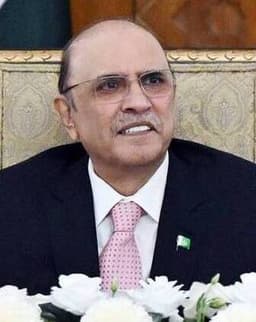
Asif Ali Zardari
Politician · Modern
49.2Total

Eisaku Sato
Politician · Modern
60.9Total
Basic Information
Born
1955
1901
Died
—
1975
Era
Modern
Modern
Nationality
Pakistan
Japan
Occupation
Politician
Politician
Civilization
Indian
Eastern
Score Comparison
Military (10%)
47.5
10.4
Political (20%)
37.9
77.8
Influence (20%)
51.0
72.0
Legacy (20%)
41.7
58.0
Leadership (15%)
64.0
81.0
Strategy (15%)
60.0
35.5
TOTAL
49.2
60.9
Asif Ali Zardari — Complete Timeline
1987 AD
Married Benazir BhuttoPolitical Action
Asif Ali Zardari married Benazir Bhutto, the former Prime Minister of Pakistan. The marriage was politically significant, uniting two influential political families.
MarriageBenazir BhuttoPolitical Alliance
Impact: nationalconstructive
1996 AD
Imprisoned on Corruption ChargesPolitical Action◆ Major
Zardari was arrested and imprisoned on corruption charges following the dismissal of Benazir Bhutto's government. He spent over eight years in prison, earning the nickname 'Mr. 10 Percent' for alleged kickbacks.
ImprisonmentCorruptionPolitical Persecution
Impact: nationaldestructive
2007 AD
Assassination of Benazir BhuttoPolitical Action
Benazir Bhutto was assassinated in a suicide attack after a political rally in Rawalpindi. Zardari became the co-chairman of the Pakistan Peoples Party (PPP) following her death.
AssassinationBenazir BhuttoPPP
Impact: nationaltragic
2008 AD
Elected President of PakistanPolitical Action◆ Major
Zardari was elected as the 11th President of Pakistan by the electoral college. He served from 2008 to 2013, during a period of political instability and conflict with the judiciary.
PresidencyPPPHead of State
Impact: nationalconstructive
2010 AD
Repealed the 17th Constitutional AmendmentReform
Zardari signed the 18th Constitutional Amendment, which repealed the 17th Amendment and devolved powers from the presidency to the prime minister and provinces. This restored parliamentary democracy.
Constitutional AmendmentDevolutionParliamentary Democracy
Impact: nationalconstructive
2013 AD
End of Presidential TermPolitical Action
Zardari's presidential term ended, and he was succeeded by Mamnoon Hussain. He returned to a role in the PPP leadership, focusing on party politics.
Presidential TermSuccessionPPP
Impact: national
Eisaku Sato — Complete Timeline
1964 AD
Appointed Prime Minister of JapanPolitical Action◆ Major
Eisaku Sato became Prime Minister of Japan on November 9, 1964, succeeding Hayato Ikeda. His appointment marked the start of a record-long continuous tenure of nearly eight years. Sato's government focused on economic growth, nuclear non-proliferation, and reversion of Okinawa.
Prime MinisterLDPJapan
Impact: national
1970 AD
Signed the Nuclear Non-Proliferation TreatyPolitical Action◆ Major
Sato signed the Treaty on the Non-Proliferation of Nuclear Weapons (NPT) on February 3, 1970, committing Japan to not develop nuclear weapons. The decision was controversial domestically but aligned with Japan's post-war pacifist constitution and strengthened its alliance with the United States.
NPTNuclear PolicyJapan
Impact: globalconstructive
1972 AD
Negotiated the Reversion of OkinawaPolitical Action
Sato secured the reversion of Okinawa from U.S. control to Japan on May 15, 1972, after years of negotiations. The agreement included the removal of nuclear weapons from Okinawa and maintained the U.S.-Japan Security Treaty. This was a major diplomatic achievement for Sato.
Okinawa ReversionDiplomacyU.S.-Japan
Impact: regionalconstructive
1974 AD
Awarded the Nobel Peace PrizeCultural◆ Major
Sato was awarded the Nobel Peace Prize on December 10, 1974, for his efforts to promote nuclear non-proliferation and regional stability. He was the first Japanese prime minister to receive the prize. The award recognized his role in signing the Nuclear Non-Proliferation Treaty and returning Okinawa.
Nobel PrizeNuclear Non-ProliferationPeace
Impact: globalconstructive
Expert Analysis
Origins
Asif Ali Zardari was born on July 26, 1955, in Karachi, Pakistan, into a landowning family from Sindh. He studied at the University of Karachi but did not complete a degree. His early life was marked by privilege, and he entered politics through his marriage to Benazir Bhutto in 1987. Eisaku Sato was born on March 27, 1901, in Tabuse, Yamaguchi Prefecture, Japan, into a political family. He graduated from Tokyo Imperial University in 1924 and joined the Ministry of Railways. His brother Nobusuke Kishi also became prime minister. Sato's early career was bureaucratic, not political.
Rise to Power
Zardari rose to prominence as the husband of Benazir Bhutto, becoming a member of parliament in 1988 when she became prime minister. He served as Minister of Environment but gained notoriety for corruption allegations. After Bhutto's assassination in 2007, Zardari became co-chairman of the Pakistan Peoples Party. He was elected president on September 6, 2008, with 481 out of 702 electoral votes. Sato's rise was gradual. He became chief cabinet secretary in 1954, then minister of construction, and finally prime minister on November 9, 1964, succeeding Hayato Ikeda. He was re-elected three times, serving until 1972.
Leadership & Governance
Zardari's presidency (2008-2013) was marked by political instability, including conflicts with the judiciary and military. He signed the 18th Constitutional Amendment in 2010, devolving powers to the provinces and reducing presidential authority. His governance was criticized for corruption and weak economic management. Sato's leadership focused on economic growth and international diplomacy. He oversaw Japan's rapid economic expansion during the 1960s, with GDP growth averaging 10%. He also normalized relations with South Korea in 1965 and pursued nuclear non-proliferation, signing the NPT in 1970.
Triumph & Tragedy
Zardari's greatest triumph was the 18th Amendment, which strengthened democracy by transferring powers to parliament. His tragedy was his corruption scandals: he spent over eight years in prison on charges, earning the nickname "Mr. 10 Percent." His legacy is tarnished by these allegations. Sato's triumph was the reversion of Okinawa from U.S. control in 1972, a major diplomatic achievement. He also won the Nobel Peace Prize in 1974 for his non-proliferation efforts. His tragedy was the Vietnam War: he allowed U.S. forces to use Japanese bases, causing domestic protest. Additionally, his political style was criticized as autocratic.
Character & Destiny
Zardari was pragmatic and opportunistic, using his wife's legacy to gain power. He was a survivor, enduring imprisonment and political attacks. His character led to a presidency that was controversial but influential in constitutional reform. Sato was methodical and patient, earning the nickname "the fox." He was a consensus-builder but also secretive. His character shaped Japan's post-war pacifist identity. Historians note his strategic acumen in foreign policy, but his domestic legacy is mixed due to environmental issues.
Legacy
Zardari's legacy is mixed. His 18th Amendment is a lasting democratic reform, but corruption allegations overshadow his tenure. He scored 41.7 in legacy. Sato's legacy is stronger: he is remembered as a peacemaker, with his non-proliferation policies influencing Japan's anti-nuclear stance. He scored 58.0. His record as the longest-serving prime minister (7 years 8 months) reflects stability. However, his economic policies contributed to the later bubble economy.
Conclusion
Eisaku Sato had greater impact. His political score of 77.8 dwarfs Zardari's 37.9. Sato's achievements in nuclear non-proliferation and Okinawa reversion had lasting global significance. Zardari's 18th Amendment was important for Pakistan, but his corruption and instability limit his influence. Sato's total score of 60.9 versus Zardari's 49.2 reflects this. While Zardari's leadership score of 64.0 is respectable, Sato's 81.0 in leadership and 77.8 in political skill show a more effective leader. Thus, Sato is the more consequential figure.
Rankings
🥇
Eisaku SatoLeader
Mil: 10.4Pol: 77.8Inf: 72.0
60.9
🥈
Asif Ali Zardari
Mil: 47.5Pol: 37.9Inf: 51.0
49.2
+11.7 behind
How This Comparison Works
Algorithm
Each figure is scored on 6 dimensions (0—100 scale) based on structured historical data: Military (10%), Political (20%), Influence (20%), Legacy (20%), Leadership (15%), Strategy (15%). The weighted total produces the final ranking.
Data Sources
Scores are computed from structured sub-indicators in the database. Scale factors adjust for era (Ancient ×0.85, Modern ×1.0) and civilization size (Eastern ×1.05, Other ×0.80) to account for differences in population and military scale.
Maximum 3 Figures
Comparisons are limited to 2—3 figures to ensure readability and statistical meaningfulness.
Error Margins
±5 points per dimension — Sub-scores are derived from historical records with inherent uncertainty. Two figures within 5 points on a dimension should be considered roughly equivalent in that area.
Total Score Accuracy
±3 points overall — The weighted combination of 6 dimensions produces a total score with approximately ±3 points of uncertainty. Differences of less than 3 points are not statistically significant— the figures are effectively tied.
Known Limitations
- Historical records are incomplete and uneven across civilizations
- Figures from oral-tradition societies may be underrepresented
- Occupation labels can misclassify multi-role figures
- Scores measure capability and impact, not moral character
- Quantitative scoring is a comparison tool, not absolute truth
Capability Radar
Military (10%) — Battles & Warfare
Battles
42
16
Win Rate
45
20
Expansion
51
19
Political (20%) — Governance & Reform
Reform
25
80
Diplomacy
40
85
Economy
20
82
Influence (20%) — Cultural & Global Reach
Cultural
20
55
Global
25
70
Legacy (20%) — Historical Impact
Historical
30
65
Longevity
20
60
Leadership (15%) — Power & Stability
Tenure
60
75
Stability
15
78
Strategy (15%) — Tactics & Innovation
Strategy
54
25
Tactics
57
25
Reform
61
27
Similar Comparisons
Comments & Discussion
No comments yet. Be the first to share your thoughts!