Loading...
Ataoja of Osogbo vs Hong Taiji
Hong Taiji leads by 35.8 pts · 2 figures compared
…

Ataoja of Osogbo
Emperor · Modern
42.5Total
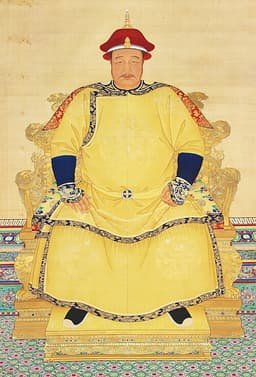
Hong Taiji
Emperor · Modern
78.3Total
Basic Information
Born
1800
1592
Died
1870
1643
Era
Modern
Modern
Nationality
Nigeria
China
Occupation
Emperor
Emperor
Civilization
Other
Eastern
Score Comparison
Military (10%)
10.2
85.0
Political (20%)
32.2
82.0
Influence (20%)
50.2
88.0
Legacy (20%)
39.2
65.0
Leadership (15%)
58.8
78.0
Strategy (15%)
54.8
76.0
TOTAL
42.5
78.3
Ataoja of Osogbo — Complete Timeline
1820 AD
Ascended as Ataoja of OsogboPolitical Action◆ Major
The Ataoja became the traditional ruler of Osogbo, a Yoruba town known for the Osun-Osogbo Sacred Grove. His reign coincided with Osogbo's growth as a center of trade and spirituality in the 19th century.
OsogboCoronationYoruba
Impact: regional
1840 AD
Defended Osogbo During the Yoruba WarsWar◆ Major
The Ataoja led Osogbo's defense against attacks from the Ibadan Empire during the Yoruba civil wars. The town's strategic location near the Osun River made it a contested site, but Osogbo maintained its independence through military resistance.
Yoruba WarsDefenseOsogbo
Impact: regionaldestructive
1850 AD
Established the Osun-Osogbo FestivalCultural◆ Major
The Ataoja formalized the annual Osun-Osogbo Festival, a religious celebration honoring the river goddess Osun. The festival became a major cultural event, attracting pilgrims and tourists, and was later designated a UNESCO World Heritage site.
Osun FestivalReligionCultural Heritage
Impact: regionalconstructive
Hong Taiji — Complete Timeline
1631 AD
Adoption of Chinese-style governmentReform◆ Major
Hong Taiji established a Chinese-style bureaucracy, including the Six Ministries and a Hanlin Academy. He also introduced the civil service examination system for Han Chinese, integrating Confucian governance into the Qing state.
Government reformConfucian administrationSinification
Impact: regionalconstructive
1635 AD
Creation of the Eight Banners systemReform◆ Major
Hong Taiji reorganized the Eight Banners military system, incorporating Mongol and Han Chinese forces into separate banners. This created a multi-ethnic military structure that became the backbone of Qing power.
Military reformEight BannersMulti-ethnic army
Impact: regionalconstructive
Renaming of the Jurchen to ManchuPolitical Action◆ Major
Hong Taiji issued an edict renaming the Jurchen people as Manchu. This was part of his effort to create a unified identity for the various tribes under his rule and distance them from the historical Jurchen label.
Ethnic identityManchuJurchen
Impact: regionalconstructive
1636 AD
Proclamation of the Qing dynastyPolitical Action◆ Major
Hong Taiji declared the establishment of the Qing dynasty, replacing the Later Jin name. He adopted the Chinese imperial title and created a dual administrative system combining Manchu and Chinese institutions.
Dynasty foundingImperial titleQing dynasty
Impact: regionalconstructive
1640 AD
Conquest of the Ming Liaodong regionWar◆ Major
Hong Taiji's forces captured key Ming cities in Liaodong, including Jinzhou and Songshan. These victories secured Qing control over the strategic Liaoning corridor and weakened Ming defenses in the northeast.
Territorial expansionMing-Qing WarLiaodong
Impact: regional
Expert Analysis
Origins
Ataoja of Osogbo is the traditional ruler of Osogbo, a Yoruba town in present-day Nigeria. The precise origins of the Ataoja title are rooted in the 18th century, with the first Ataoja, Larooye, establishing the town's governance. The Ataoja's role evolved as a custodian of Yoruba traditions, particularly around the Osun River. The Ataoja's early life is not well-documented, but the position carries deep ancestral authority within the Osogbo kingdom.
Hong Taiji was born in 1592 as the eighth son of Nurhaci, the founder of the Later Jin dynasty. He belonged to the Aisin Gioro clan of the Jurchen people. From a young age, he was educated in both Jurchen and Chinese traditions, learning military tactics and statecraft. His father's unification of Jurchen tribes provided a foundation for Hong Taiji's later ambitions.
Rise to Power
Ataoja of Osogbo ascends to the throne through hereditary succession, traditionally chosen by a council of kingmakers. The exact date of the current Ataoja's ascension is not specified, but his reign coincided with the Yoruba civil wars of the 19th century. His key turning point was leading the defense of Osogbo against attacks from the Ibadan Empire, leveraging the town's strategic location near the Osun River.
Hong Taiji rose to power after his father's death in 1626. He was initially passed over for the khanate in favor of his older brother, but he maneuvered to become the second khan of the Later Jin in 1626. He consolidated power by eliminating rivals, including his brother. In 1636, he proclaimed the Qing dynasty, replacing the Later Jin name, and adopted the Chinese imperial title. He also renamed the Jurchen people as Manchu, creating a unified identity.
Leadership & Governance
Ataoja of Osogbo's leadership is rooted in traditional Yoruba governance, where the ruler serves as a spiritual and cultural figurehead. He formalized the annual Osun-Osogbo Festival, a religious celebration honoring the river goddess Osun. This festival became a major cultural event, drawing thousands of participants and strengthening community bonds. His governance focused on preserving traditions rather than expanding political influence. His political score of 32.2 reflects limited territorial or administrative control.
Hong Taiji's leadership was transformative. He reorganized the Eight Banners military system, incorporating Mongol and Han Chinese forces to create a multi-ethnic army. He adopted Chinese-style government, establishing the Six Ministries and a Hanlin Academy, and introduced civil service examinations. This blend of Manchu and Chinese institutions allowed him to effectively rule a vast empire. His political score of 82.0 reflects his ability to build a centralized state. He also successfully conquered key Ming cities in Liaodong, securing strategic territory.
Triumph & Tragedy
Ataoja of Osogbo's greatest success was the establishment of the Osun-Osogbo Festival, which endures as a UNESCO-recognized cultural heritage event. He successfully defended Osogbo during the Yoruba wars, maintaining the town's autonomy. However, his influence remained local, with a total score of 42.5. His failure lay in the lack of broader political or military expansion, as Osogbo remained a small kingdom within the larger Yoruba sphere.
Hong Taiji's triumphs include founding the Qing dynasty, which ruled China for nearly 300 years. His military campaigns secured the Liaodong region, scoring 85.0 in military. His adoption of Chinese governance systems ensured administrative stability. However, his legacy was marred by the suppression of Ming loyalists and the forced assimilation of Han Chinese. He died in 1643 before the final conquest of China, leaving that to his son, Shunzhi. His total score of 78.3 reflects his immense impact but also incomplete conquest.
Character & Destiny
Ataoja of Osogbo's character is defined by his role as a cultural preserver. He prioritized ritual and tradition over expansion, which shaped his destiny as a revered local figure but not a regional power. Historical assessments note his success in maintaining Osogbo's identity during turbulent times.
Hong Taiji was pragmatic and ambitious. He adopted Chinese titles and systems to legitimize his rule, showing adaptability. His decision to rename the Jurchen to Manchu created a new ethnic identity. However, his aggressive expansion led to conflict with Ming loyalists. His character combined ruthlessness with strategic vision, enabling the Qing dynasty's rise. Historians credit him with laying the foundation for the Qing conquest of China.
Legacy
Ataoja of Osogbo's legacy is cultural and spiritual. The Osun-Osogbo Festival continues annually, attracting global attention. The Osun Sacred Grove is a UNESCO World Heritage site. However, his political impact remains local, with limited influence beyond Yorubaland. His legacy score of 39.2 reflects this niche but enduring contribution.
Hong Taiji's legacy is monumental. He founded the Qing dynasty, which ruled China from 1644 to 1912. His administrative reforms, including the Eight Banners and civil service exams, shaped Chinese governance for centuries. He also expanded China's borders into Manchuria and Mongolia. His legacy score of 65.0 is dampened by the eventual decline of the Qing and its association with foreign domination. Nevertheless, his impact on Chinese history is undeniable.
Conclusion
Hong Taiji had greater impact by a wide margin. His total score of 78.3 dwarfs Ataoja's 42.5. While Ataoja preserved Yoruba culture effectively, Hong Taiji founded a dynasty that ruled a quarter of the world's population. His military, political, and strategic scores all exceed 75, whereas Ataoja's highest score is 58.8 in leadership. The scale of their influence—local versus imperial—is incomparable. Hong Taiji's actions reshaped East Asian history, while Ataoja's impact is confined to a single ethnic group. Thus, Hong Taiji is the more significant historical figure.
Rankings
🥇
Hong TaijiLeader
Mil: 85.0Pol: 82.0Inf: 88.0
78.3
🥈
Ataoja of Osogbo
Mil: 10.2Pol: 32.2Inf: 50.2
42.5
+35.8 behind
How This Comparison Works
Algorithm
Each figure is scored on 6 dimensions (0—100 scale) based on structured historical data: Military (10%), Political (20%), Influence (20%), Legacy (20%), Leadership (15%), Strategy (15%). The weighted total produces the final ranking.
Data Sources
Scores are computed from structured sub-indicators in the database. Scale factors adjust for era (Ancient ×0.85, Modern ×1.0) and civilization size (Eastern ×1.05, Other ×0.80) to account for differences in population and military scale.
Maximum 3 Figures
Comparisons are limited to 2—3 figures to ensure readability and statistical meaningfulness.
Error Margins
±5 points per dimension — Sub-scores are derived from historical records with inherent uncertainty. Two figures within 5 points on a dimension should be considered roughly equivalent in that area.
Total Score Accuracy
±3 points overall — The weighted combination of 6 dimensions produces a total score with approximately ±3 points of uncertainty. Differences of less than 3 points are not statistically significant— the figures are effectively tied.
Known Limitations
- Historical records are incomplete and uneven across civilizations
- Figures from oral-tradition societies may be underrepresented
- Occupation labels can misclassify multi-role figures
- Scores measure capability and impact, not moral character
- Quantitative scoring is a comparison tool, not absolute truth
Capability Radar
Military (10%) — Battles & Warfare
Battles
10
85
Win Rate
10
80
Expansion
5
90
Political (20%) — Governance & Reform
Reform
20
90
Diplomacy
25
85
Economy
20
80
Influence (20%) — Cultural & Global Reach
Cultural
30
80
Global
10
75
Legacy (20%) — Historical Impact
Historical
25
85
Longevity
20
80
Leadership (15%) — Power & Stability
Tenure
30
75
Stability
25
70
Strategy (15%) — Tactics & Innovation
Strategy
10
90
Tactics
10
85
Reform
5
90
Similar Comparisons
Comments & Discussion
No comments yet. Be the first to share your thoughts!