Loading...
Christian IX of Denmark vs Hong Taiji
Hong Taiji leads by 20.5 pts · 2 figures compared
…
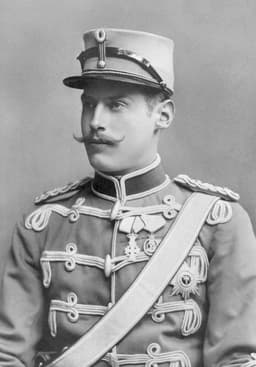
Christian IX of Denmark
Emperor · Modern
57.8Total
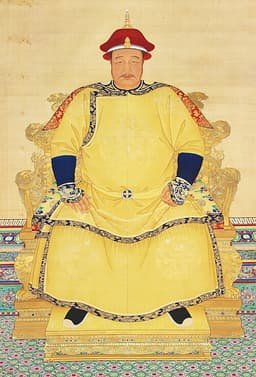
Hong Taiji
Emperor · Modern
78.3Total
Basic Information
Born
1818
1592
Died
1906
1643
Era
Modern
Modern
Nationality
Denmark
China
Occupation
Emperor
Emperor
Civilization
Western
Eastern
Score Comparison
Military (10%)
22.0
85.0
Political (20%)
68.0
82.0
Influence (20%)
61.0
88.0
Legacy (20%)
54.0
65.0
Leadership (15%)
72.0
78.0
Strategy (15%)
58.2
76.0
TOTAL
57.8
78.3
Christian IX of Denmark — Complete Timeline
1863 AD
Accession to the thronePolitical Action◆ Major
Christian IX became King of Denmark on November 15, 1863, after the death of King Frederick VII. His accession occurred during a period of political crisis over the Schleswig-Holstein question.
AccessionSuccession
Impact: national
Marriage alliances of his childrenPolitical Action◆ Major
Christian IX's children married into European royal families: Alexandra married Edward VII of the UK, Dagmar married Tsar Alexander III of Russia, and George became King of Greece. This earned him the nickname 'Father-in-law of Europe'.
Marriage AlliancesRoyal DiplomacyDynastic Strategy
Impact: globalconstructive
1864 AD
Second Schleswig WarWar◆ Major
Denmark under Christian IX fought the Second Schleswig War against Prussia and Austria. The war ended in Danish defeat, leading to the loss of Schleswig, Holstein, and Lauenburg, permanently reducing Danish territory.
WarDefeatTerritorial Loss
Impact: regionaltragic
1866 AD
Signing of the Danish Constitution of 1866Reform
Christian IX signed a revised constitution in 1866 that reorganized the Danish parliament (Rigsdag) and strengthened the powers of the monarchy and the upper house. This followed the political upheaval after the 1864 war.
ConstitutionPolitical Reform
Impact: national
1901 AD
Establishment of the Danish monarchy as a constitutional monarchyReform◆ Major
In 1901, Christian IX accepted the principle of parliamentary rule by appointing a government based on the majority in the Folketing (lower house). This effectively established constitutional monarchy in Denmark, limiting royal power.
Constitutional ReformParliamentary System
Impact: nationalconstructive
Hong Taiji — Complete Timeline
1631 AD
Adoption of Chinese-style governmentReform◆ Major
Hong Taiji established a Chinese-style bureaucracy, including the Six Ministries and a Hanlin Academy. He also introduced the civil service examination system for Han Chinese, integrating Confucian governance into the Qing state.
Government reformConfucian administrationSinification
Impact: regionalconstructive
1635 AD
Creation of the Eight Banners systemReform◆ Major
Hong Taiji reorganized the Eight Banners military system, incorporating Mongol and Han Chinese forces into separate banners. This created a multi-ethnic military structure that became the backbone of Qing power.
Military reformEight BannersMulti-ethnic army
Impact: regionalconstructive
Renaming of the Jurchen to ManchuPolitical Action◆ Major
Hong Taiji issued an edict renaming the Jurchen people as Manchu. This was part of his effort to create a unified identity for the various tribes under his rule and distance them from the historical Jurchen label.
Ethnic identityManchuJurchen
Impact: regionalconstructive
1636 AD
Proclamation of the Qing dynastyPolitical Action◆ Major
Hong Taiji declared the establishment of the Qing dynasty, replacing the Later Jin name. He adopted the Chinese imperial title and created a dual administrative system combining Manchu and Chinese institutions.
Dynasty foundingImperial titleQing dynasty
Impact: regionalconstructive
1640 AD
Conquest of the Ming Liaodong regionWar◆ Major
Hong Taiji's forces captured key Ming cities in Liaodong, including Jinzhou and Songshan. These victories secured Qing control over the strategic Liaoning corridor and weakened Ming defenses in the northeast.
Territorial expansionMing-Qing WarLiaodong
Impact: regional
Expert Analysis
Origins
Christian IX was born on April 8, 1818, in Gottorf, Schleswig, as a prince of the House of Schleswig-Holstein-Sonderburg-Glücksburg, a cadet branch of the Danish royal family. His father was Friedrich Wilhelm, Duke of Schleswig-Holstein-Sonderburg-Glücksburg, and his mother was Princess Louise Caroline of Hesse-Kassel. Christian grew up in a relatively modest princely household, not initially expected to inherit the Danish throne. He received a military education and served in the Danish army. In 1842, he married Princess Louise of Hesse-Kassel, and their children would later become monarchs of major European powers.
Hong Taiji was born on November 28, 1592, in the Jianzhou Jurchen tribe, as the eighth son of Nurhaci, the founder of the Later Jin dynasty. His mother was Lady Ula, a consort. Growing up in a militaristic society, Hong Taiji was trained in archery, horsemanship, and warfare from a young age. He participated in his father's campaigns and proved himself a capable commander. The Jurchen tribes were united under Nurhaci, but still faced threats from the Ming dynasty, Korea, and other nomadic groups.
Rise to Power
Christian IX became King of Denmark on November 15, 1863, after the death of King Frederick VII, who had no legitimate issue. Christian's claim was based on his marriage to Louise of Hesse-Kassel, a niece of Frederick VII, and he was chosen by the great powers (Britain, Russia, France) to avoid a succession crisis. His accession immediately triggered the Second Schleswig War (1864) against Prussia and Austria, as he attempted to integrate the Duchy of Schleswig into Denmark against the terms of the 1852 London Protocol. The war ended in a decisive Danish defeat, leading to the loss of Schleswig, Holstein, and Lauenburg.
Hong Taiji rose to power after his father Nurhaci's death in 1626. Although Nurhaci had designated his son Dorgon as successor, Hong Taiji was elected by the Beile (princes) as the new Khan of the Later Jin. He consolidated power by eliminating rivals, including his brother Amin and other powerful nobles. In 1636, he proclaimed the Qing dynasty, adopting the Chinese imperial title and renaming the Jurchen people as Manchu. He also reorganized the Eight Banners system to include Mongol and Han Chinese forces, creating a multi-ethnic military machine.
Leadership & Governance
Christian IX's leadership was marked by his acceptance of constitutional monarchy. In 1901, he appointed a government based on the majority in the Folketing, establishing the principle of parliamentary rule in Denmark. He signed the revised constitution of 1866, which strengthened the powers of the monarchy and the upper house (Landsting), but he later yielded to democratic pressures. His political score of 68.0 reflects his ability to navigate a transition from absolutism to democracy, though his military score of 22.0 is low due to the disastrous Schleswig War.
Hong Taiji was a transformative leader who adopted Chinese-style governance while maintaining Manchu identity. He established a dual administrative system: Chinese-style Six Ministries and a Hanlin Academy for civil affairs, and the Eight Banners for military and tribal matters. He introduced civil service examinations for Han Chinese, co-opting the Ming bureaucracy. His political score of 82.0 and military score of 85.0 reflect his success in both realms. He also created a multi-ethnic state that included Manchus, Mongols, and Han Chinese, laying the foundation for Qing expansion.
Triumph & Tragedy
Christian IX's greatest triumph was the marriage alliances of his children: Alexandra married Edward VII of the UK, Dagmar (as Maria Feodorovna) married Tsar Alexander III of Russia, Thyra married Crown Prince Ernst August of Hanover, and his son Frederick became King Frederick VIII of Denmark. This earned him the nickname 'Father-in-law of Europe' and increased Danish influence. His tragedy was the loss of Schleswig-Holstein in 1864, a national humiliation that reduced Denmark's territory and power.
Hong Taiji's greatest triumph was the establishment of the Qing dynasty and the conquest of the Ming Liaodong region, including key cities like Jinzhou and Songshan. He also successfully incorporated Mongol and Han Chinese elites into his administration. His tragedy was his early death in 1643 at age 50, before the Qing conquest of China proper; his son Shunzhi became emperor, with Dorgon as regent. His legacy score of 65.0 is lower than his other scores because his achievements were built upon by his successors.
Character & Destiny
Christian IX was pragmatic and adaptable, accepting the loss of absolute power to preserve the monarchy. He was known for his modesty and family values, which endeared him to his subjects. However, his decision to go to war in 1864 was a miscalculation, driven by nationalistic sentiment and a desire to assert Danish sovereignty. His character shaped Denmark's peaceful transition to democracy.
Hong Taiji was ambitious, strategic, and ruthless. He eliminated rivals and imposed a new identity on his people. His decision to rename the Jurchen as Manchu was a brilliant move to unify diverse tribes and distance them from the Ming-allied Jurchen. He died before achieving his ultimate goal, but his policies ensured Qing success.
Legacy
Christian IX's legacy is the modern Danish constitutional monarchy, which remains stable today. His descendants include many European monarchs, such as King Charles III of the UK, King Harald V of Norway, and Queen Margrethe II of Denmark. His influence score of 61.0 reflects this dynastic impact, though his political reforms were more significant domestically.
Hong Taiji's legacy is the Qing dynasty, which ruled China until 1912. He created the multi-ethnic structure that allowed the Qing to conquer and govern China. The Eight Banners system and Manchu identity persisted for centuries. His influence score of 88.0 is high because he fundamentally reshaped East Asian geopolitics.
Conclusion
Hong Taiji had a greater impact on world history than Christian IX. With a total score of 78.3 compared to Christian's 57.8, Hong Taiji excelled in military (85.0 vs 22.0), political (82.0 vs 68.0), and influence (88.0 vs 61.0). While Christian's marriage alliances created a network of royal ties, they did not fundamentally alter the course of European history. Hong Taiji founded a dynasty that ruled over 300 million people for nearly 270 years, transformed the Chinese state, and created a lasting legacy. Christian's reforms were limited to Denmark, a small kingdom. Therefore, Hong Taiji is the more consequential figure.
Rankings
🥇
Hong TaijiLeader
Mil: 85.0Pol: 82.0Inf: 88.0
78.3
🥈
Christian IX of Denmark
Mil: 22.0Pol: 68.0Inf: 61.0
57.8
+20.5 behind
How This Comparison Works
Algorithm
Each figure is scored on 6 dimensions (0—100 scale) based on structured historical data: Military (10%), Political (20%), Influence (20%), Legacy (20%), Leadership (15%), Strategy (15%). The weighted total produces the final ranking.
Data Sources
Scores are computed from structured sub-indicators in the database. Scale factors adjust for era (Ancient ×0.85, Modern ×1.0) and civilization size (Eastern ×1.05, Other ×0.80) to account for differences in population and military scale.
Maximum 3 Figures
Comparisons are limited to 2—3 figures to ensure readability and statistical meaningfulness.
Error Margins
±5 points per dimension — Sub-scores are derived from historical records with inherent uncertainty. Two figures within 5 points on a dimension should be considered roughly equivalent in that area.
Total Score Accuracy
±3 points overall — The weighted combination of 6 dimensions produces a total score with approximately ±3 points of uncertainty. Differences of less than 3 points are not statistically significant— the figures are effectively tied.
Known Limitations
- Historical records are incomplete and uneven across civilizations
- Figures from oral-tradition societies may be underrepresented
- Occupation labels can misclassify multi-role figures
- Scores measure capability and impact, not moral character
- Quantitative scoring is a comparison tool, not absolute truth
Capability Radar
Military (10%) — Battles & Warfare
Battles
35
85
Win Rate
41
80
Expansion
40
90
Political (20%) — Governance & Reform
Reform
30
90
Diplomacy
75
85
Economy
40
80
Influence (20%) — Cultural & Global Reach
Cultural
40
80
Global
55
75
Legacy (20%) — Historical Impact
Historical
60
85
Longevity
55
80
Leadership (15%) — Power & Stability
Tenure
60
75
Stability
65
70
Strategy (15%) — Tactics & Innovation
Strategy
43
90
Tactics
47
85
Reform
53
90
Similar Comparisons
Comments & Discussion
No comments yet. Be the first to share your thoughts!