Loading...
Augusto Cesar Sandino vs Jose Marti
Jose Marti leads by 1.3 pts · 2 figures compared
…

Augusto Cesar Sandino
Revolutionary · Modern
42.7Total
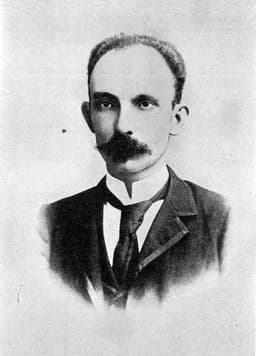
Jose Marti
Revolutionary · Modern
44.0Total
Basic Information
Born
1895
1853
Died
1934
1895
Era
Modern
Modern
Nationality
Nicaragua
Cuba
Occupation
Revolutionary
Revolutionary
Civilization
Western
Western
Score Comparison
Military (10%)
38.3
20.0
Political (20%)
25.0
33.6
Influence (20%)
51.0
59.0
Legacy (20%)
44.2
50.0
Leadership (15%)
40.9
40.9
Strategy (15%)
51.7
35.7
TOTAL
42.7
44.0
Augusto Cesar Sandino — Complete Timeline
1927 AD
Led the Battle of OcotalWar◆ Major
Augusto Cesar Sandino led a small force of Nicaraguan rebels in an attack on the US Marine garrison at Ocotal. The battle resulted in heavy casualties for Sandino's forces but marked the beginning of his six-year guerrilla war against the US occupation.
BattleUS MarinesGuerrilla War
Impact: national
Founded the Defending Army of National SovereigntyPolitical Action◆ Major
Sandino established the Defending Army of National Sovereignty (EDSN) to fight the US occupation and the Nicaraguan government. The army grew to several thousand fighters and used guerrilla tactics to resist US forces.
ArmyNational SovereigntyResistance
Impact: nationalconstructive
Negotiated the Treaty of TipitapaPolitical Action◆ Major
Sandino refused to accept the Treaty of Tipitapa, which ended the civil war between liberal and conservative factions and allowed US forces to remain. His rejection led to his continued insurgency against the US and the Nicaraguan government.
TreatyRejectionInsurgency
Impact: national
1934 AD
Assassinated by the National GuardPolitical Action
Sandino was assassinated by members of the National Guard under the orders of Anastasio Somoza Garcia, after leaving a meeting with President Juan Bautista Sacasa. His death ended the resistance but made him a martyr for anti-imperialist movements.
AssassinationMartyrSomoza
Impact: nationaltragic
Jose Marti — Complete Timeline
1892 AD
Founding of the Cuban Revolutionary PartyPolitical Action
Marti founded the Cuban Revolutionary Party (PRC) in New York, uniting Cuban exiles. The party aimed to achieve Cuban independence from Spain through armed struggle and democratic governance.
Political OrganizationIndependence MovementExile
Impact: nationalprogressive
1895 AD
Battle of Dos RiosWar
Marti was killed in action at Dos Rios while fighting Spanish forces. His death made him a martyr for Cuban independence and galvanized the revolutionary movement, though it deprived the cause of its civilian leader.
BattleDeathMartyrdom
Impact: nationaltragic
Manifesto of MontecristiPolitical Action◆ Major
Marti and General Maximo Gomez signed the Manifesto of Montecristi, outlining the goals of the Cuban War of Independence. It called for racial equality, civilian control of the military, and a democratic republic.
ManifestoWar GoalsIndependence
Impact: nationalprogressive
Expert Analysis
Origins
Augusto César Sandino was born on May 18, 1895, in Niquinohomo, Nicaragua, the illegitimate son of a wealthy landowner. He worked as a miner in Honduras and Mexico, where he encountered revolutionary ideas. His early experiences with US corporate influence shaped his anti-imperialist stance.
José Martí was born on January 28, 1853, in Havana, Cuba, to Spanish immigrants. He was educated in Cuba and Spain, where he developed his literary and political skills. Exiled for his activism, he spent years in the US, writing and organizing for Cuban independence.
Rise to Power
Sandino rose to prominence in 1926 when he joined the liberal constitutionalist forces in Nicaragua's civil war. After the US-brokered Treaty of Tipitapa (1927), which he rejected, he founded the Defending Army of National Sovereignty (EDSN) and launched guerrilla operations against US Marines. His attack on the Marine garrison at Ocotal in July 1927, though a tactical defeat, brought him international attention.
Martí began his political activism as a teenager, founding the newspaper 'La Patria Libre.' Exiled to Spain in 1871, he later moved to Mexico and then the US, where he united Cuban émigrés. In 1892, he founded the Cuban Revolutionary Party (PRC), which coordinated the war for independence. His diplomatic efforts secured support from key figures and raised funds for the revolution.
Leadership & Governance
Sandino's leadership was charismatic but decentralized. He commanded a small force of peasants and workers, using hit-and-run tactics against a superior enemy. He refused political compromises, insisting on full US withdrawal. His governance model was based on cooperative farming and self-defense, but he never held national power.
Martí was a political organizer and intellectual. He built a unified party structure, balancing military and civilian wings. His 'Manifesto of Montecristi' (1895) outlined a vision for a democratic, multiracial Cuba. He prioritized racial equality and civilian control over the military, though his early death prevented implementation.
Triumph & Tragedy
Sandino's greatest triumph was forcing the US to withdraw its Marines in 1933 after years of guerrilla warfare. He negotiated a peace with President Juan Bautista Sacasa, but his assassination by Anastasio Somoza García's National Guard in 1934 turned him into a martyr. His failure to secure lasting power allowed the Somoza dynasty to rise.
Martí's triumph was launching the Cuban War of Independence in 1895, which ultimately ended Spanish rule. However, his death at the Battle of Dos Rios on May 19, 1895, meant he did not see Cuba's independence or the subsequent US intervention. His ideas influenced later revolutions but were often distorted.
Character & Destiny
Sandino was stubborn and principled, refusing to compromise even when it cost him. His mystical and nationalist rhetoric inspired loyalty but alienated moderates. His decision to trust Sacasa and Somoza led to his assassination. Historians score his military strategy at 51.7, reflecting effective guerrilla tactics, but his political score is only 25.0 due to poor statecraft.
Martí was a disciplined intellectual, driven by a vision of a free Cuba. He excelled in organization and persuasion, with a political score of 33.6 and influence at 59.0. His fatal decision to join the battlefield despite his lack of military experience (military score 20.0) cut short his leadership. Both men's characters—Sandino's defiance and Martí's dedication—shaped their tragic ends.
Legacy
Sandino's legacy is mixed. In Nicaragua, he is a national hero, but his name was co-opted by the Sandinista movement, which diverged from his original ideals. Internationally, he became a symbol of anti-imperialist resistance. His total score of 42.7 reflects a regional impact but limited institutional legacy.
Martí's legacy is more enduring. He is revered across Latin America as a poet, thinker, and martyr. His writings on race, imperialism, and democracy remain influential. The Cuban Revolution of 1959 claimed his mantle, and his ideas are taught in schools. His total score of 44.0 edges out Sandino's.
Conclusion
While Sandino achieved tactical victories against the US, Martí's broader political vision and literary output gave him greater long-term impact. Martí's influence score of 59.0 versus Sandino's 51.0, and his higher total score of 44.0, support this. Martí's ideas transcended his lifetime, inspiring movements beyond Cuba, whereas Sandino's legacy was more localized and easily manipulated. Therefore, José Martí had a greater and more lasting impact on history.
Rankings
🥇
Jose MartiLeader
Mil: 20.0Pol: 33.6Inf: 59.0
44.0
🥈
Augusto Cesar Sandino
Mil: 38.3Pol: 25.0Inf: 51.0
42.7
+1.3 behind
How This Comparison Works
Algorithm
Each figure is scored on 6 dimensions (0—100 scale) based on structured historical data: Military (10%), Political (20%), Influence (20%), Legacy (20%), Leadership (15%), Strategy (15%). The weighted total produces the final ranking.
Data Sources
Scores are computed from structured sub-indicators in the database. Scale factors adjust for era (Ancient ×0.85, Modern ×1.0) and civilization size (Eastern ×1.05, Other ×0.80) to account for differences in population and military scale.
Maximum 3 Figures
Comparisons are limited to 2—3 figures to ensure readability and statistical meaningfulness.
Error Margins
±5 points per dimension — Sub-scores are derived from historical records with inherent uncertainty. Two figures within 5 points on a dimension should be considered roughly equivalent in that area.
Total Score Accuracy
±3 points overall — The weighted combination of 6 dimensions produces a total score with approximately ±3 points of uncertainty. Differences of less than 3 points are not statistically significant— the figures are effectively tied.
Known Limitations
- Historical records are incomplete and uneven across civilizations
- Figures from oral-tradition societies may be underrepresented
- Occupation labels can misclassify multi-role figures
- Scores measure capability and impact, not moral character
- Quantitative scoring is a comparison tool, not absolute truth
Capability Radar
Military (10%) — Battles & Warfare
Battles
45
15
Win Rate
55
10
Expansion
20
10
Political (20%) — Governance & Reform
Reform
25
40
Diplomacy
30
45
Economy
15
15
Influence (20%) — Cultural & Global Reach
Cultural
40
70
Global
35
55
Legacy (20%) — Historical Impact
Historical
50
65
Longevity
45
60
Leadership (15%) — Power & Stability
Tenure
20
20
Stability
10
10
Strategy (15%) — Tactics & Innovation
Strategy
50
25
Tactics
60
20
Reform
30
30
Similar Comparisons
Comments & Discussion
No comments yet. Be the first to share your thoughts!