Loading...
Quli Qutb Shah vs Sigismund III Vasa
Sigismund III Vasa leads by 7.9 pts · 2 figures compared
…
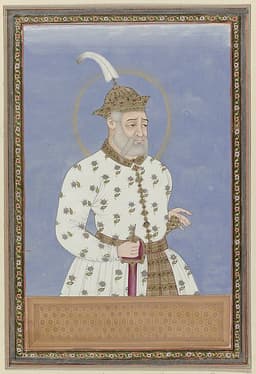
Quli Qutb Shah
Emperor · Modern
49.0Total
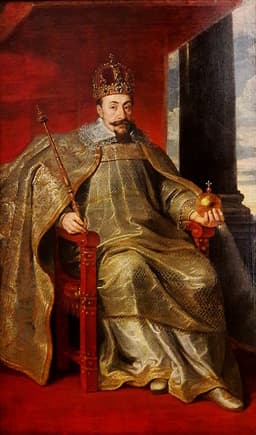
Sigismund III Vasa
Emperor · Modern
56.9Total
Basic Information
Born
1518
1566
Died
1543
1632
Era
Modern
Modern
Nationality
India
Poland
Occupation
Emperor
Emperor
Civilization
Indian
Western
Score Comparison
Military (10%)
25.0
40.0
Political (20%)
46.6
68.0
Influence (20%)
53.3
59.0
Legacy (20%)
45.8
49.2
Leadership (15%)
65.0
74.0
Strategy (15%)
50.0
45.0
TOTAL
49.0
56.9
Quli Qutb Shah — Complete Timeline
1518 AD
Foundation of the Qutb Shahi dynastyPolitical Action
Quli Qutb Shah declared independence from the Bahmani Sultanate and established the Qutb Shahi dynasty with its capital at Golconda. This marked the beginning of a new sultanate in the Deccan.
FoundingIndependence
Impact: regionalconstructive
1520 AD
Construction of the Golconda FortCultural◆ Major
Quli Qutb Shah expanded and fortified the Golconda Fort, transforming it into a major military stronghold. The fort's design included advanced water management systems and massive gates.
ArchitectureFortification
Impact: regionalconstructive
1525 AD
War against the Vijayanagara EmpireWar◆ Major
Quli Qutb Shah fought a war against the Vijayanagara Empire, capturing the fort of Kondapalli. The victory expanded Qutb Shahi territory and established Golconda as a regional power.
WarVijayanagaraTerritorial Expansion
Impact: regional
1530 AD
Promotion of trade in diamondsPolitical Action
Quli Qutb Shah encouraged diamond mining in the Golconda region, which became a major source of wealth for the sultanate. The Golconda diamonds were traded across Asia and Europe.
TradeDiamondsEconomy
Impact: regionalconstructive
Sigismund III Vasa — Complete Timeline
1587 AD
Elected King of PolandPolitical Action◆ Major
Sigismund III Vasa was elected King of Poland and Grand Duke of Lithuania, establishing the Polish
ElectionPolish–Swedish UnionMonarchy
Impact: regional
1596 AD
Union of BrestPolitical Action◆ Major
Sigismund III supported the Union of Brest, which created the Ukrainian Greek Catholic Church. This union brought Orthodox Christians in the Polish
ReligionUnionEastern Europe
Impact: regional
Transfer of the capital from Kraków to WarsawPolitical Action◆ Major
Sigismund III moved the royal court from Krak
CapitalGovernmentPoland
Impact: nationalconstructive
1609 AD
Polish–Muscovite War (1609–1618)War◆ Major
Sigismund III launched a war against Russia, aiming to place his son W
WarRussiaTime of Troubles
Impact: regional
Expert Analysis
Origins
Quli Qutb Shah, born in 1470 in Hamadan, Persia, was the son of a Qara Qoyunlu Turkman noble. He migrated to the Deccan and served as a governor under the Bahmani Sultanate. His early life was shaped by military and administrative roles, and he seized the opportunity to declare independence in 1518, founding the Qutb Shahi dynasty at Golconda. Sigismund III Vasa, born on 20 June 1566 at Gripsholm Castle, Sweden, was the son of King John III of Sweden and Catherine Jagiellon. He was raised as a devout Catholic in a predominantly Protestant Sweden, a religious tension that defined his reign. He inherited the Swedish throne in 1592 and was elected King of Poland in 1587, creating a personal union.
Rise to Power
Quli Qutb Shah rose by exploiting the decline of the Bahmani Sultanate. In 1518, he declared independence and established Golconda as his capital. He consolidated power through alliances and military campaigns, notably capturing Kondapalli fort from the Vijayanagara Empire in 1535. His promotion of diamond mining generated immense wealth, financing his state. Sigismund III Vasa was elected King of Poland in 1587 after a contested election against Maximilian III of Austria. He secured the Polish throne through the support of the Polish nobility and the Habsburgs, but his claim to Sweden led to a personal union that collapsed in 1599 when he was deposed in Sweden due to his Catholicism. Sigismund's rise was marked by religious conflict and dynastic ambition.
Leadership & Governance
Quli Qutb Shah governed as an absolute monarch, focusing on fortifying Golconda and promoting trade. He constructed the Golconda Fort with advanced water management systems, making it a formidable stronghold. His economic policies centered on diamond mining, attracting traders from around the world. He was tolerant of Hinduism, allowing local customs to persist. Sigismund III Vasa ruled as a constitutional monarch within the Polish-Lithuanian Commonwealth, where power was shared with the nobility (Szlachta). He pursued centralization and Catholicization, supporting the Union of Brest (1595-1596) to create the Ukrainian Greek Catholic Church. His move of the capital from Kraków to Warsaw in 1596 centralized administration but alienated the Lithuanian nobility. Sigismund's style was authoritarian within the constraints of the Commonwealth, leading to conflicts with the Sejm.
Triumph & Tragedy
Quli Qutb Shah's greatest triumph was founding a dynasty that lasted 171 years and establishing Golconda as a diamond hub. His fort and economic policies created a wealthy state that resisted Mughal expansion for decades. His tragedy was that his dynasty eventually succumbed to the Mughal Empire in 1687, and his focus on internal development limited territorial expansion. Sigismund III's triumph was the Polish-Muscovite War (1609-1618), where Polish forces captured Moscow in 1610, achieving a temporary victory. His tragedy was the loss of the Swedish throne and involvement in costly wars with Sweden and Russia, draining the Commonwealth. His religious policies led to the Kosiński and Nalyvaiko uprisings among Cossacks and Orthodox populations.
Character & Destiny
Quli Qutb Shah was a pragmatic ruler, focused on economic development and cultural synthesis. His decision to tolerate Hinduism and promote trade attracted diverse populations, but his lack of military aggression limited his empire's size. Sigismund III was a devout Catholic and a champion of the Counter-Reformation, which drove his foreign policy and domestic reforms. His stubbornness in pursuing dynastic claims to Sweden and Russia led to prolonged conflicts. Historian Norman Davies notes that Sigismund's 'obsession with the Swedish crown' undermined his Polish reign. His character combined religious zeal with political miscalculation, leading to a legacy of mixed achievements.
Legacy
Quli Qutb Shah's legacy is the Qutb Shahi dynasty and the architectural heritage of Golconda, including the fort and the Charminar (built by his successor). The diamond trade made Golconda a legendary name in world history. His rule established a stable state that fostered a distinct Deccani culture, blending Persian, Indian, and local traditions. Sigismund III's legacy includes the transfer of the capital to Warsaw, which remains Poland's capital, and the Union of Brest, which created the Ukrainian Greek Catholic Church. His support for the arts led to the construction of the Sigismund's Column in Warsaw and patronage of early Baroque architecture. However, his wars weakened the Commonwealth, contributing to its eventual decline in the 18th century.
Conclusion
Sigismund III Vasa, with a total score of 56.9, had greater impact on European history than Quli Qutb Shah (49.0). Sigismund's actions reshaped the political and religious landscape of Eastern Europe: his capital move centralized Poland, his war with Russia altered the balance of power, and his religious union created lasting divisions. Quli Qutb Shah's influence was more regional, confined to the Deccan and the diamond trade, which, while economically significant, did not change the course of world history as Sigismund's did. Sigismund's higher scores in military (40.0 vs 25.0), political (68.0 vs 46.6), and leadership (74.0 vs 65.0) reflect his broader reach. Thus, Sigismund III Vasa emerges as the more consequential figure.
Rankings
🥇
Sigismund III VasaLeader
Mil: 40.0Pol: 68.0Inf: 59.0
56.9
🥈
Quli Qutb Shah
Mil: 25.0Pol: 46.6Inf: 53.3
49.0
+7.9 behind
How This Comparison Works
Algorithm
Each figure is scored on 6 dimensions (0—100 scale) based on structured historical data: Military (10%), Political (20%), Influence (20%), Legacy (20%), Leadership (15%), Strategy (15%). The weighted total produces the final ranking.
Data Sources
Scores are computed from structured sub-indicators in the database. Scale factors adjust for era (Ancient ×0.85, Modern ×1.0) and civilization size (Eastern ×1.05, Other ×0.80) to account for differences in population and military scale.
Maximum 3 Figures
Comparisons are limited to 2—3 figures to ensure readability and statistical meaningfulness.
Error Margins
±5 points per dimension — Sub-scores are derived from historical records with inherent uncertainty. Two figures within 5 points on a dimension should be considered roughly equivalent in that area.
Total Score Accuracy
±3 points overall — The weighted combination of 6 dimensions produces a total score with approximately ±3 points of uncertainty. Differences of less than 3 points are not statistically significant— the figures are effectively tied.
Known Limitations
- Historical records are incomplete and uneven across civilizations
- Figures from oral-tradition societies may be underrepresented
- Occupation labels can misclassify multi-role figures
- Scores measure capability and impact, not moral character
- Quantitative scoring is a comparison tool, not absolute truth
Capability Radar
Military (10%) — Battles & Warfare
Battles
35
45
Win Rate
40
40
Expansion
40
35
Political (20%) — Governance & Reform
Reform
40
50
Diplomacy
35
45
Economy
40
40
Influence (20%) — Cultural & Global Reach
Cultural
30
55
Global
20
40
Legacy (20%) — Historical Impact
Historical
35
50
Longevity
40
45
Leadership (15%) — Power & Stability
Tenure
45
60
Stability
35
30
Strategy (15%) — Tactics & Innovation
Strategy
30
40
Tactics
30
35
Reform
25
30
Similar Comparisons
Comments & Discussion
No comments yet. Be the first to share your thoughts!