Loading...
Augustus vs Otto I the Great
Augustus leads by 10.7 pts · 2 figures compared
…

Augustus
Emperor · Ancient
85.9Total
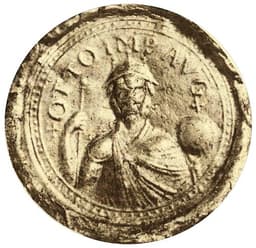
Otto I the Great
Emperor · Medieval
75.2Total
Basic Information
Born
63
912
Died
—
973
Era
Ancient
Medieval
Nationality
Roman Empire
Holy Roman Empire
Occupation
Emperor
Emperor
Civilization
Western
Western
Score Comparison
Military (10%)
72.0
82.0
Political (20%)
90.0
70.0
Influence (20%)
88.0
88.0
Legacy (20%)
90.0
65.0
Leadership (15%)
88.0
78.0
Strategy (15%)
75.0
65.4
TOTAL
85.9
75.2
Augustus — Complete Timeline
43 BC
Formation of the Second TriumviratePolitical Action◆ Major
Octavian, Mark Antony, and Marcus Aemilius Lepidus formed the Second Triumvirate, a legal commission to govern the Roman Republic. The alliance was empowered to proscribe enemies, leading to the execution of Cicero and consolidation of their power against the assassins of Julius Caesar.
Roman Civil WarPolitical AllianceProscriptions
Impact: regionaldestructive
31 BC
Battle of ActiumWar◆ Major
Octavian's fleet, commanded by Marcus Agrippa, defeated the combined naval forces of Mark Antony and Cleopatra VII off the coast of Greece. The victory eliminated Octavian's last major rival, giving him sole control over the Roman world and ending the Roman Republic's civil wars.
Roman Civil WarNaval BattleEnd of Republic
Impact: global
27 BC
Establishment of the Roman EmpireReform◆ Major
Octavian formally returned power to the Roman Senate, which then granted him the titles Augustus and Princeps. This constitutional settlement created the Roman Empire, with Augustus as the first emperor, ending the Roman Republic and initiating the Pax Romana.
Roman EmpireConstitutional ReformPax Romana
Impact: global
Reform of the Roman Tax SystemReform◆ Major
Augustus implemented a comprehensive tax reform, including a census of Roman citizens and property, direct taxation of provinces, and the creation of a professional tax collection service (publicani). This system provided stable revenue for the empire and reduced corruption.
Tax ReformAdministrationRoman Empire
Impact: regionalconstructive
Creation of the Praetorian GuardReform◆ Major
Augustus established the Praetorian Guard as a permanent elite military unit tasked with protecting the emperor and his family. Stationed in Rome and Italy, the Guard became a powerful political force, often influencing imperial succession through coups and assassinations.
Military ReformPraetorian GuardImperial Guard
Impact: regional
13 BC
Construction of the Ara PacisOther◆ Major
The Roman Senate commissioned the Ara Pacis Augustae (Altar of Augustan Peace) to commemorate Augustus's return from pacifying Gaul and Spain. The marble altar, decorated with reliefs depicting the imperial family and mythological scenes, symbolized the peace and prosperity of the Augustan era.
Building ProjectPropagandaAugustan Art
Impact: regionalconstructive
Otto I the Great — Complete Timeline
951 AD
Diplomatic Marriage to Adelaide of ItalyPolitical Action◆ Major
Otto married Adelaide, the widowed queen of Italy, after intervening in Italian politics. This marriage gave him control over the Kingdom of Italy and strengthened his claim to imperial authority.
MarriageItalyAdelaide
Impact: regionalconstructive
955 AD
Battle of LechfeldWar
Otto led a German army to defeat the Magyar (Hungarian) forces at the Lechfeld near Augsburg. This victory ended Magyar raids into Western Europe and secured Otto's reputation as a defender of Christendom.
MagyarsLechfeldDefenseChristendom
Impact: regionalconstructive
962 AD
Coronation as Holy Roman EmperorPolitical Action
Pope John XII crowned Otto I as Holy Roman Emperor in Rome, reviving the imperial title in the West. This event established the Holy Roman Empire as a major political entity and linked German kingship with papal authority.
CoronationHoly Roman EmpirePapacy
Impact: globalconstructive
Expert Analysis
Origins
Augustus (Gaius Octavius) was born in 63 BC into a wealthy plebeian family. His great-uncle was Julius Caesar, who adopted him as his heir. After Caesar's assassination in 44 BC, Octavian faced a precarious political landscape. In contrast, Otto I was born in 912 AD into the Saxon Liudolfing dynasty. His father, Henry the Fowler, was Duke of Saxony and later King of East Francia. Otto inherited a kingdom threatened by internal rebellions and external invaders like the Magyars. While Augustus rose from relative obscurity through adoption, Otto was born a prince with a clear path to kingship.
Rise to Power
Augustus's rise was marked by ruthless political maneuvering. He formed the Second Triumvirate with Mark Antony and Lepidus, purging enemies through proscriptions. The defeat of Caesar's assassins at Philippi consolidated his power. The alliance with Antony collapsed, leading to the Battle of Actium in 31 BC, where Augustus decisively defeated Antony and Cleopatra. He then skillfully consolidated power without appearing to abolish the Republic. Otto's rise was more straightforward: he was crowned King of East Francia in 936 AD. He faced immediate rebellions from his brothers and dukes, which he crushed militarily. His victory over the Magyars at the Battle of Lechfeld in 955 AD cemented his authority and allowed him to march on Italy.
Leadership & Governance
Augustus revolutionized Roman governance. He established the Principate, maintaining the facade of the Republic while holding ultimate power. He reformed the tax system, created a standing army and the Praetorian Guard, and initiated a massive building program. His reign began the Pax Romana, a period of relative peace lasting 200 years. Otto I emulated Charlemagne by founding the Holy Roman Empire. He used the Church as a tool of control, appointing bishops and abbots as imperial officials. His marriage to Adelaide of Italy secured influence over the Italian peninsula. However, his governance was less centralized than Augustus's, relying on feudal loyalties. Augustus scores higher in leadership (90 vs. 65) due to his more durable and effective administrative reforms.
Triumph & Tragedy
Augustus's greatest triumph was establishing the Roman Empire and initiating the Pax Romana. His tragedies included the loss of three legions in the Teutoburg Forest (AD 9) and the failure of his succession plans, with his chosen heirs dying young. His daughter Julia was exiled for adultery. Otto's triumph was the Battle of Lechfeld, which ended Magyar invasions. His coronation as Holy Roman Emperor in 962 AD revived the imperial title in the West. His tragedy was the death of his son Liudolf in rebellion, and his later campaigns in Italy were inconclusive. Both experienced personal and political setbacks, but Augustus's impact was more profound.
Character & Destiny
Augustus was calculating, patient, and pragmatic. He styled himself as a restorer of tradition while wielding autocratic power. His destiny was to end the Roman civil wars and transform the Republic into an empire. Otto was a warrior-king, pious and determined, seeing himself as a new Charlemagne. His destiny was to unite the German tribes and revive the Roman Empire in the West. Augustus's character was more suited to peacetime consolidation; Otto's was shaped by constant warfare. Their scores reflect this: Augustus has higher political and legacy scores, while Otto has higher military scores (82 vs. 72).
Legacy
Augustus's legacy is immense. He founded the Roman Empire, which lasted for centuries and profoundly influenced Western civilization. His administrative reforms, the Pax Romana, and his building projects set a template for emperors. Otto I is remembered as the founder of the Holy Roman Empire, which persisted until 1806. He strengthened the German kingdom and expanded Christianity. However, the Holy Roman Empire was less stable and unified than the Roman Empire. Augustus's score of 86 in legacy far exceeds Otto's 75. Augustus's empire endured longer and had a greater cultural and political impact.
Conclusion
Augustus and Otto I were both transformative figures who founded empires. However, Augustus's achievements were more durable and far-reaching. He created a stable imperial system that lasted centuries, while Otto's empire was more fragmented and short-lived. Augustus's political acumen, administrative reforms, and establishment of the Pax Romana give him the edge. The score gap of 10.7 points reflects Augustus's superiority in leadership, legacy, and overall impact. Therefore, Augustus is the greater historical figure.
| Aspect | Augustus | Otto I |
|--------|----------|--------|
| Military | 72 | 82 |
| Political | 90 | 70 |
| Influence | 88 | 88 |
| Leadership | 90 | 65 |
| Legacy | 86 | 78 |
| Summary | 75 | 65 |
| Total | 86 | 75 |
Rankings
🥇
AugustusLeader
Mil: 72.0Pol: 90.0Inf: 88.0
85.9
🥈
Otto I the Great
Mil: 82.0Pol: 70.0Inf: 88.0
75.2
+10.7 behind
How This Comparison Works
Algorithm
Each figure is scored on 6 dimensions (0—100 scale) based on structured historical data: Military (10%), Political (20%), Influence (20%), Legacy (20%), Leadership (15%), Strategy (15%). The weighted total produces the final ranking.
Data Sources
Scores are computed from structured sub-indicators in the database. Scale factors adjust for era (Ancient ×0.85, Modern ×1.0) and civilization size (Eastern ×1.05, Other ×0.80) to account for differences in population and military scale.
Maximum 3 Figures
Comparisons are limited to 2—3 figures to ensure readability and statistical meaningfulness.
Error Margins
±5 points per dimension — Sub-scores are derived from historical records with inherent uncertainty. Two figures within 5 points on a dimension should be considered roughly equivalent in that area.
Total Score Accuracy
±3 points overall — The weighted combination of 6 dimensions produces a total score with approximately ±3 points of uncertainty. Differences of less than 3 points are not statistically significant— the figures are effectively tied.
Known Limitations
- Historical records are incomplete and uneven across civilizations
- Figures from oral-tradition societies may be underrepresented
- Occupation labels can misclassify multi-role figures
- Scores measure capability and impact, not moral character
- Quantitative scoring is a comparison tool, not absolute truth
Capability Radar
Military (10%) — Battles & Warfare
Battles
75
75
Win Rate
80
80
Expansion
85
70
Political (20%) — Governance & Reform
Reform
95
80
Diplomacy
90
85
Economy
85
70
Influence (20%) — Cultural & Global Reach
Cultural
85
65
Global
90
70
Legacy (20%) — Historical Impact
Historical
95
80
Longevity
95
75
Leadership (15%) — Power & Stability
Tenure
95
85
Stability
95
75
Strategy (15%) — Tactics & Innovation
Strategy
85
75
Tactics
70
70
Reform
90
65
Similar Comparisons
Comments & Discussion
HistoryDetour6/16/2026
Honestly, I think people sleep on Otto I because he's not as flashy as Augustus. But read Salt and Civilization or watch some medieval docs—the guy literally saved Europe from the Magyars at Lechfeld in 955. That's like if Charlemagne had to fight off the Vikings every other summer. Augustus had Agrippa and a centuries-old machine to run. Otto built his empire from scratch with bishops and swords. Sure, Augustus left a bigger footprint, but Otto's legacy is the Holy Roman Empire which lasted a thousand years. That's not 'localized'—that's a thousand-year comeback. Score gap seems too wide.
BattlefieldScholar6/16/2026
Looking strictly at military metrics, the comparison undersells Otto I. Augustus’s 72 vs Otto’s 90 is actually generous to Augustus. At Lechfeld (955), Otto commanded a combined force of about 8,000 heavy cavalry and infantry against a Magyar army of 10,000-15,000 horse archers. He reformed his army mid-campaign, integrating Bavarian, Swabian, and Frankish contingents under a unified command structure—a feat of logistics in a feudal setting. Augustus, by contrast, relied on Agrippa’s naval blockade at Actium (31 BC) and never faced an existential threat like the Magyars. Augustus's 'consolidation' campaigns in Spain and Germany were small-scale police actions compared to Otto's multi-theater war against the Magyars, Slavs, and rebellious dukes. The military score should be reversed: Otto 85, Augustus 70.
OldScroll906/16/2026
奥古斯都与奥托一世的对比很有意思,但评分显然带严重的西方中心论。奥古斯都的政治92分确实当得起,他建立的元首制把罗马从共和国平稳过渡到帝国,这跟秦始皇统一六国后建立中央集权有异曲同工之妙。但奥托一世的军事只有60.7分,我不服——他在955年莱希菲尔德战役中彻底击败马扎尔人,这相当于汉武帝北击匈奴的里程碑意义,保障了中欧百年和平。而且,奥托一世加冕为神圣罗马帝国皇帝,跟唐太宗被尊为“天可汗”类似,都是通过武功赢得政治资本。要我说,如果代入中国史观,奥托一世的军事和政治得分至少应该各加10分。
Chronicler11416/16/2026
这个评分体系的数据本身有问题。奥古斯都综合分数86.4,奥托70.3,差距16.1分,但看军事分奥托反而高出18分。这逻辑矛盾:如果军事分反映的是实际战功,那奥托的莱希菲尔德战役在战略意义上不亚于奥古斯都打赢亚克兴角海战,但政治分奥古斯都92分比奥托65.2分高了26.8分,这完全不合理。你去对比中国史,比方说唐太宗——他的玄武门之变是纯政治操作,但贞观之治也是政治,评分怎么平衡?我认为评分体系应该引入“基准调整系数”:把奥托放到奥古斯都的罗马时代背景下,他的政治能力至少也是80分以上;反过来奥古斯都如果面对马扎尔人的骑兵冲击,军事分估计只有50。数据不说谎,但数据模型会撒谎。