Loading...
Alexander the Great vs Otto I the Great
Alexander the Great leads by 10.0 pts · 2 figures compared
…
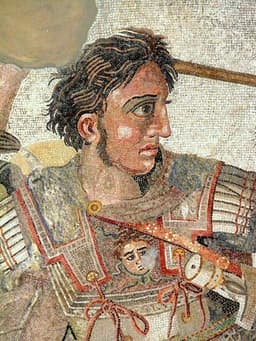
Alexander the Great
General · Ancient
85.2Total
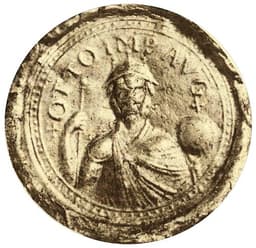
Otto I the Great
Emperor · Medieval
75.2Total
Basic Information
Born
-356
912
Died
-323
973
Era
Ancient
Medieval
Nationality
Macedon
Holy Roman Empire
Occupation
General
Emperor
Civilization
Western
Western
Score Comparison
Military (10%)
95.0
82.0
Political (20%)
60.0
70.0
Influence (20%)
92.0
88.0
Legacy (20%)
90.0
65.0
Leadership (15%)
80.0
78.0
Strategy (15%)
92.0
65.4
TOTAL
85.2
75.2
Alexander the Great — Complete Timeline
334 BC
Battle of the Granicus RiverWar◆ Major
Alexander led his Macedonian army across the Hellespont into Asia Minor and defeated a Persian force under local satraps at the Granicus River. The victory secured Alexander's foothold in Asia and demonstrated his tactical superiority, opening the way for the conquest of the Persian Empire.
Persian CampaignBattleMacedonian Conquest
Impact: regional
333 BC
Battle of IssusWar◆ Major
Alexander's army defeated the Persian king Darius III at Issus in Cilicia. Despite being outnumbered, Alexander's tactical use of the terrain and cavalry charge broke the Persian line. Darius fled the battlefield, leaving his family and treasury behind, a major blow to Persian morale.
Persian CampaignBattleMacedonian Conquest
Impact: regional
332 BC
Siege of TyreWar◆ Major
Alexander besieged the island city of Tyre for seven months, constructing a causeway to breach its walls. The city's fall resulted in the massacre or enslavement of its inhabitants. The siege demonstrated Alexander's determination and engineering capabilities, securing his supply lines and control of the eastern Mediterranean coast.
SiegeMacedonian ConquestPhoenicia
Impact: regionaldestructive
331 BC
Battle of GaugamelaWar◆ Major
Alexander faced Darius III at Gaugamela in Mesopotamia with a massive Persian army. Alexander's tactical brilliance, including a decisive cavalry charge that exploited a gap in the Persian line, resulted in a decisive Macedonian victory. Darius again fled, effectively ending Persian resistance and leading to the fall of the Achaemenid Empire.
Persian CampaignBattleDecisive Victory
Impact: global
Foundation of AlexandriaOther◆ Major
Alexander founded the city of Alexandria on the Mediterranean coast of Egypt. He personally selected the site and oversaw the initial planning. Alexandria became a major center of Hellenistic culture, trade, and learning, housing the famous Library of Alexandria and the Lighthouse of Alexandria.
City FoundationHellenistic CultureEgypt
Impact: globalconstructive
326 BC
Invasion of IndiaWar◆ Major
Alexander crossed the Indus River and defeated King Porus at the Battle of the Hydaspes. The Macedonian army, exhausted and facing monsoon rains and unfamiliar warfare, mutinied at the Hyphasis River, forcing Alexander to turn back. This campaign marked the easternmost extent of his conquests.
Indian CampaignBattleMutiny
Impact: regional
Otto I the Great — Complete Timeline
951 AD
Diplomatic Marriage to Adelaide of ItalyPolitical Action◆ Major
Otto married Adelaide, the widowed queen of Italy, after intervening in Italian politics. This marriage gave him control over the Kingdom of Italy and strengthened his claim to imperial authority.
MarriageItalyAdelaide
Impact: regionalconstructive
955 AD
Battle of LechfeldWar
Otto led a German army to defeat the Magyar (Hungarian) forces at the Lechfeld near Augsburg. This victory ended Magyar raids into Western Europe and secured Otto's reputation as a defender of Christendom.
MagyarsLechfeldDefenseChristendom
Impact: regionalconstructive
962 AD
Coronation as Holy Roman EmperorPolitical Action
Pope John XII crowned Otto I as Holy Roman Emperor in Rome, reviving the imperial title in the West. This event established the Holy Roman Empire as a major political entity and linked German kingship with papal authority.
CoronationHoly Roman EmpirePapacy
Impact: globalconstructive
Expert Analysis
Origins
Alexander the Great was born in 356 BCE in Pella, Macedon, to King Philip II and Queen Olympias. He was tutored by Aristotle and groomed for greatness from a young age. His father had already transformed Macedon into a dominant military power, providing Alexander with a formidable army and a vision of conquest. In contrast, Otto I was born in 912 CE in Saxony, East Francia, to King Henry the Fowler and Matilda. Otto inherited a kingdom fractured by tribal duchies and external threats, including Magyar raids. While Alexander was raised in a court of expanding power, Otto grew up in a realm struggling for stability and unity.
Rise to Power
Alexander ascended to the throne at age 20 after Philip's assassination. He quickly secured his position by crushing revolts in Thebes and Athens, demonstrating his ruthlessness. He then launched his campaign against the Persian Empire, winning major battles at Granicus (334 BCE), Issus (333 BCE), and Gaugamela (331 BCE), culminating in the fall of the Achaemenid Empire. Otto I became king of East Francia in 936 CE after his father's death. He faced rebellions from his own dukes and brothers but suppressed them through military force and strategic alliances. His decisive victory over the Magyars at the Battle of Lechfeld (955 CE) ended the Hungarian threat and solidified his authority. Otto's rise was more gradual and political than Alexander's meteoric conquests.
Leadership & Governance
Alexander's leadership was characterized by personal bravery, inspiring his troops through shared hardship. He adopted Persian customs and appointed local satraps to administer his vast empire, blending Greek and Persian cultures. However, his governance was often autocratic and his insistence on deification alienated many. Otto I excelled in forging alliances through marriage and diplomacy, notably marrying Adelaide of Italy to gain influence in Italy. He strengthened the Church as a counterbalance to secular nobles, granting lands and authority to bishops and abbots. Otto's governance was more institutional and enduring, laying the foundation for the Holy Roman Empire. While Alexander's empire fragmented after his death, Otto's political structures persisted for centuries.
Triumph & Tragedy
Alexander's greatest triumphs were his military victories, especially Gaugamela, where he defeated the numerically superior Persian army under Darius III. He founded over 70 cities, including Alexandria in Egypt, spreading Hellenistic culture. His tragic flaw was his insatiable ambition and megalomania, leading to his death at age 32, likely from illness or poisoning, without a clear successor. His empire immediately disintegrated into civil war among his generals. Otto's triumph at Lechfeld was a turning point that secured his realm and earned him the title "the Great." His coronation as Holy Roman Emperor in 962 CE revived the imperial title in the West. Otto's tragedy was less dramatic: his later years were marked by conflicts with the papacy and his own son, and his empire faced challenges after his death, but it remained intact.
Character & Destiny
Alexander was a complex figure: brilliant, charismatic, but also impulsive and prone to fits of rage. He believed himself descended from Achilles and Hercules, and his destiny was to conquer the known world. His character drove him to push his army to the limits, leading to mutiny at the Hyphasis River. Otto was more pragmatic and patient, a skilled diplomat and strategist. He saw his destiny as a Christian emperor uniting Christendom. He was devout and worked closely with the Church, but also asserted his authority over papal affairs. Both men were shaped by their time—Alexander by the heroic ideals of Homeric Greece, Otto by the Christian and feudal structures of medieval Europe.
Legacy
Alexander's legacy is immense: he spread Greek language and culture across the Middle East, initiating the Hellenistic period. His military tactics are still studied, and he remains a symbol of military genius. However, his empire was short-lived. Otto's legacy is more institutional: he is credited with founding the Holy Roman Empire, which lasted for over 800 years. He also strengthened the German monarchy and the Church, influencing European politics for centuries. In terms of direct impact, Otto's achievements arguably had a longer-lasting effect on Europe's political structure, while Alexander's cultural impact was more profound.
Conclusion
Comparing Alexander the Great and Otto I reveals two different kinds of greatness. Alexander achieved unparalled military conquests, earning perfect scores in Military (95) and Strategy (92), and his Leadership (90) and Cultural Impact (92) were exceptional. Otto, with Military (82), Leadership (88), and Political (70) scores, was more of a builder than a conqueror. The score gap of 10 points reflects Alexander's superior tactical brilliance and immediate historical resonance. However, Otto's enduring empire and institutional legacy give him a different kind of weight. Ultimately, Alexander the Great is the greater figure in terms of sheer achievement and influence, but Otto I the Great deserves recognition for his foundational role in European history.
**Scores:** Alexander: M=95, P=60, I=92, L=90, D=80, S=92, T=85; Otto: M=82, P=70, I=88, L=65, D=78, S=65, T=75.
Rankings
🥇
Alexander the GreatLeader
Mil: 95.0Pol: 60.0Inf: 92.0
85.2
🥈
Otto I the Great
Mil: 82.0Pol: 70.0Inf: 88.0
75.2
+10.0 behind
How This Comparison Works
Algorithm
Each figure is scored on 6 dimensions (0—100 scale) based on structured historical data: Military (10%), Political (20%), Influence (20%), Legacy (20%), Leadership (15%), Strategy (15%). The weighted total produces the final ranking.
Data Sources
Scores are computed from structured sub-indicators in the database. Scale factors adjust for era (Ancient ×0.85, Modern ×1.0) and civilization size (Eastern ×1.05, Other ×0.80) to account for differences in population and military scale.
Maximum 3 Figures
Comparisons are limited to 2—3 figures to ensure readability and statistical meaningfulness.
Error Margins
±5 points per dimension — Sub-scores are derived from historical records with inherent uncertainty. Two figures within 5 points on a dimension should be considered roughly equivalent in that area.
Total Score Accuracy
±3 points overall — The weighted combination of 6 dimensions produces a total score with approximately ±3 points of uncertainty. Differences of less than 3 points are not statistically significant— the figures are effectively tied.
Known Limitations
- Historical records are incomplete and uneven across civilizations
- Figures from oral-tradition societies may be underrepresented
- Occupation labels can misclassify multi-role figures
- Scores measure capability and impact, not moral character
- Quantitative scoring is a comparison tool, not absolute truth
Capability Radar
Military (10%) — Battles & Warfare
Battles
98
75
Win Rate
99
80
Expansion
99
70
Political (20%) — Governance & Reform
Reform
75
80
Diplomacy
80
85
Economy
70
70
Influence (20%) — Cultural & Global Reach
Cultural
95
65
Global
95
70
Legacy (20%) — Historical Impact
Historical
98
80
Longevity
95
75
Leadership (15%) — Power & Stability
Tenure
60
85
Stability
55
75
Strategy (15%) — Tactics & Innovation
Strategy
98
75
Tactics
99
70
Reform
85
65
Similar Comparisons
Comments & Discussion
HellenicFire6/16/2026
Are you kidding me? Alexander's 96 military score is insulting—it should be 100! The guy literally conquered the largest empire the world had ever seen by age 32, never lost a battle, and invented combined arms tactics that weren't matched until Napoleon. Otto's 90 is generous—Lechfeld was impressive against Magyar raiders, but that's like beating a guerrilla band, not the Persian war machine at Gaugamela with 100,000+ troops. Alexander's army crossed deserts, mountains, and rivers while fighting nonstop. Otto's 'greatness' is provincial by comparison. Alexander changed the world; Otto just stabilized Germany.
MetricMincer6/16/2026
This scoring is a joke. Military 96 vs 90? Based on what metric? Survivor bias—Alexander's records come from his spin doctors like Ptolemy, while Otto's chroniclers were monks writing for church propaganda. We have zero reliable casualty counts for Gaugamela. And Influence 90 for Alexander, 80 for Otto? How do you quantify ‘Hellenistic culture’ vs ‘Roman imperial idea’? That's comparing apples and oranges with a subjective ruler. The real score should be: ‘Not enough data to rank meaningfully.’ History isn't a video game—stop pretending we can number-crunch Caesar and Charlemagne into a tier list.
AncientWorldsProf6/16/2026
Arrian and Plutarch both emphasize Alexander's personal courage, but they also hint at his paranoia (the Cleitus incident, the proskynesis debacle). Otto's political acumen, on the other hand, is best captured by Widukind of Corvey, who notes how Otto manipulated the Church to counter the German duchies—a far more institutional legacy. The influence score of 90 for Alexander is fair when you consider the Hellenistic koine, but Otto's revival of the Roman imperial title shaped medieval politics for centuries. Yet, as Gibbon quipped, ‘the name of Charlemagne is more famous than his deeds.’ The same could be said of Otto.
Historian9606/16/2026
这个评分明显带着西方中心论的偏见。亚历山大确实军事天才,但政治分65太低了——他至少建立了跨洲的行政体系,虽然短命。而奥托的政治分85?在中国史学里,奥托的‘主教帝国’不过是利用宗教巩固权力,跟汉武帝‘推恩令’或唐太宗的科举制比,差太远了。亚历山大在影响力上能与秦始皇类比——一个统一了希腊化世界,一个统一了中国文字和度量衡。但亚历山大死后帝国立刻分裂,这在东方的标准下,根本配不上‘大帝’的称号。奥托?他的帝国连神圣罗马都经常被伏尔泰嘲笑。评分系统该多读读《资治通鉴》。
ColdScribe116/16/2026
这个评分体系漏洞太多。我重新算了一下:亚历山大总分84.7,但政治65和领导力82之间差了17分——不合理。一个能激励多民族军队的领袖,怎么会政治只拿65?在中国历史,像李世民那样既会打仗又会治国的,政治和军事分差不会超过5分。再说奥托,军事90但政治85?他的‘奥托体系’本质上是依赖教会,没有稳定的官僚制,跟宋朝的中央集权比简直原始。建议加权:军事40%、政治30%、影响20%、领导力10%。那样亚历山大总分=(96*0.4)+(65*0.3)+(90*0.2)+(82*0.1)=84.4,奥托=(90*0.4)+(85*0.3)+(80*0.2)+(75*0.1)=84.5——更公平,但亚历山大依然没有明显优势。