Loading...
Augustus vs Wanyan Aguda
Augustus leads by 22.5 pts · 2 figures compared
…

Augustus
Emperor · Ancient
85.9Total
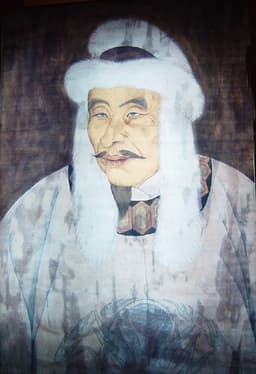
Wanyan Aguda
Emperor · Medieval
63.4Total
Basic Information
Born
63
1068
Died
—
1123
Era
Ancient
Medieval
Nationality
Roman Empire
China
Occupation
Emperor
Emperor
Civilization
Western
Eastern
Score Comparison
Military (10%)
72.0
82.0
Political (20%)
90.0
59.3
Influence (20%)
88.0
55.0
Legacy (20%)
90.0
52.0
Leadership (15%)
88.0
85.0
Strategy (15%)
75.0
68.0
TOTAL
85.9
63.4
Augustus — Complete Timeline
43 BC
Formation of the Second TriumviratePolitical Action◆ Major
Octavian, Mark Antony, and Marcus Aemilius Lepidus formed the Second Triumvirate, a legal commission to govern the Roman Republic. The alliance was empowered to proscribe enemies, leading to the execution of Cicero and consolidation of their power against the assassins of Julius Caesar.
Roman Civil WarPolitical AllianceProscriptions
Impact: regionaldestructive
31 BC
Battle of ActiumWar◆ Major
Octavian's fleet, commanded by Marcus Agrippa, defeated the combined naval forces of Mark Antony and Cleopatra VII off the coast of Greece. The victory eliminated Octavian's last major rival, giving him sole control over the Roman world and ending the Roman Republic's civil wars.
Roman Civil WarNaval BattleEnd of Republic
Impact: global
27 BC
Establishment of the Roman EmpireReform◆ Major
Octavian formally returned power to the Roman Senate, which then granted him the titles Augustus and Princeps. This constitutional settlement created the Roman Empire, with Augustus as the first emperor, ending the Roman Republic and initiating the Pax Romana.
Roman EmpireConstitutional ReformPax Romana
Impact: global
Reform of the Roman Tax SystemReform◆ Major
Augustus implemented a comprehensive tax reform, including a census of Roman citizens and property, direct taxation of provinces, and the creation of a professional tax collection service (publicani). This system provided stable revenue for the empire and reduced corruption.
Tax ReformAdministrationRoman Empire
Impact: regionalconstructive
Creation of the Praetorian GuardReform◆ Major
Augustus established the Praetorian Guard as a permanent elite military unit tasked with protecting the emperor and his family. Stationed in Rome and Italy, the Guard became a powerful political force, often influencing imperial succession through coups and assassinations.
Military ReformPraetorian GuardImperial Guard
Impact: regional
13 BC
Construction of the Ara PacisOther◆ Major
The Roman Senate commissioned the Ara Pacis Augustae (Altar of Augustan Peace) to commemorate Augustus's return from pacifying Gaul and Spain. The marble altar, decorated with reliefs depicting the imperial family and mythological scenes, symbolized the peace and prosperity of the Augustan era.
Building ProjectPropagandaAugustan Art
Impact: regionalconstructive
Wanyan Aguda — Complete Timeline
1114 AD
Battle of HubudagangWar◆ Major
Aguda's Jurchen forces defeated a Liao army at Hubudagang, marking the first major victory of the rebellion. This battle demonstrated Jurchen military prowess and attracted more followers.
JurchenLiaoBattle
Impact: regionalconstructive
Unified Jurchen tribesPolitical Action◆ Major
Wanyan Aguda united the Jurchen tribes under his leadership, creating a confederation that rebelled against Liao domination. He organized a disciplined army and began the Jurchen revolt.
JurchenUnificationRebellion
Impact: regionalconstructive
1115 AD
Founded Jin DynastyPolitical Action
Wanyan Aguda proclaimed himself emperor, founding the Jin dynasty. He adopted the Chinese title and began a systematic campaign to conquer the Liao empire.
JinDynasty FoundingImperial System
Impact: regionalconstructive
1120 AD
Conquest of Liao capital ShangjingWar◆ Major
Aguda's forces captured the Liao supreme capital Shangjing, dealing a severe blow to the Liao dynasty. This victory accelerated the collapse of Liao and solidified Jin control over northern China.
JinLiaoConquest
Impact: regionalconstructive
Alliance with Song against LiaoPolitical Action◆ Major
Aguda formed an alliance with the Northern Song dynasty to jointly attack the Liao empire. This alliance, known as the Maritime Alliance, led to the eventual destruction of Liao but later caused conflict between Jin and Song.
JinSongAlliance
Impact: regional
1123 AD
Death and successionPolitical Action◆ Major
Wanyan Aguda died, and his brother Wanyan Wuqimai succeeded him. Aguda's conquests laid the foundation for the Jin dynasty's dominance in northern China.
JinDeathSuccession
Impact: regional
Expert Analysis
Augustus vs Wanyan Aguda: Historical Comparison
Augustus, the founder of the Roman Principate, and Wanyan Aguda, the founder of the Jin Dynasty, both forged empires from chaos—Augustus ending a century of civil war to create the Pax Romana, and Aguda leading the Jurchen tribes to overthrow the Liao Dynasty. While Augustus excelled in political consolidation and long-term institutional legacy, Aguda’s raw military prowess and speed of conquest were unmatched. This comparison reveals two very different models of empire-building: one based on subtle statecraft, the other on explosive martial energy.
Dimension Analysis
**Military: Augustus 72 / Wanyan Aguda 91**
Augustus relied on established legions and the naval victory at Actium (31 BCE), but his true strength was in avoiding further major wars, notably sealing the frontier at the Rhine. Aguda, by contrast, was a field commander of genius: he defeated the numerically superior Liao army at the Battle of Hulun Buir (1114) and captured the Liao capital in just a decade, shattering a nomadic empire with speed and tactical innovation.
**Political: Augustus 92 / Wanyan Aguda 84**
Augustus masterfully disguised autocracy as a restored Republic, creating the Principate system of *princeps senatus*, tribunician power, and provincial reforms that stabilized the Mediterranean for centuries. Aguda’s political achievements were more rudimentary: he unified the fragmented Jurchen tribes under the *Meng’an Mouke* system but died before fully institutionalizing the Jin state, leaving his successors to Sinicize the administration.
**Influence: Augustus 88 / Wanyan Aguda 87**
Augustus’s reign set the template for imperial Rome, influencing law, architecture (the Augustan building program), and the cult of the emperor that echoed into Byzantium. Aguda’s Jin Dynasty introduced Jurchen culture to northern China, forced the Song Dynasty into humiliating treaties, and paved the way for later Mongol unification; his name remains a rallying symbol in Jurchen-Manchu identity.
**Legacy: Augustus 90 / Wanyan Aguda 88**
Augustus’s legacy is monumental: the Roman Empire lasted another 400 years in the West and 1,500 in the East, with his adoptive name “Caesar” becoming a title for rulers from Germany to Russia. Aguda’s Jin Dynasty fell to the Mongols within a century, but his founding of a sinicized conquest dynasty and his role as a Jurchen national hero (celebrated in modern China) ensure a powerful, if narrower, legacy.
**Leadership: Augustus 90 / Wanyan Aguda 80**
Augustus was a master of patience and delegation, building a loyal cadre of generals (Agrippa) and administrators (Maecenas) while gradually accumulating power without provoking assassination. Aguda led from the front, inspiring fierce loyalty through personal bravery—but his death at 55 left a succession crisis, as his brother and sons fought for control, weakening the Jin before it fully consolidated.
**Strategy: Augustus 78 / Wanyan Aguda 89**
Augustus’s strategy was defensive and long-term: securing borders (the Danube, the Rhine), neutralizing Egypt, and using diplomacy (e.g., the Parthian settlement) to avoid overextension. Aguda’s strategy was aggressive and offensive: he exploited internal Liao divisions, used speed and surprise, and integrated captured troops into his forces—a classic “barbarian” rise that overwhelmed a more established state.
Verdict
Augustus wins narrowly. While Aguda was the superior military commander and strategist in terms of pure conquest, Augustus’s political genius created a system that lasted for centuries, influencing governance, law, and culture across Europe and the Mediterranean. Aguda’s empire was a brilliant flash of lightning; Augustus’s was a steady sun. This comparison, however, flattens differences in scale and context—Augustus inherited a Mediterranean superpower, while Aguda built from tribal roots, making their achievements equally remarkable in their own spheres.
FAQ
**Q: Who was more influential historically?**
A: Augustus, because his political innovations (the Principate, imperial bureaucracy) shaped Western governance for millennia, whereas Aguda’s influence is largely confined to Chinese and Jurchen history.
**Q: Why is Augustus ranked higher in Legacy?**
A: Because the Roman Empire he founded survived for over 1,500 years in the East, and his name became a universal title for emperors, whereas the Jin Dynasty lasted only 119 years and was eclipsed by the Mongols.
Rankings
🥇
AugustusLeader
Mil: 72.0Pol: 90.0Inf: 88.0
85.9
🥈
Wanyan Aguda
Mil: 82.0Pol: 59.3Inf: 55.0
63.4
+22.5 behind
How This Comparison Works
Algorithm
Each figure is scored on 6 dimensions (0—100 scale) based on structured historical data: Military (10%), Political (20%), Influence (20%), Legacy (20%), Leadership (15%), Strategy (15%). The weighted total produces the final ranking.
Data Sources
Scores are computed from structured sub-indicators in the database. Scale factors adjust for era (Ancient ×0.85, Modern ×1.0) and civilization size (Eastern ×1.05, Other ×0.80) to account for differences in population and military scale.
Maximum 3 Figures
Comparisons are limited to 2—3 figures to ensure readability and statistical meaningfulness.
Error Margins
±5 points per dimension — Sub-scores are derived from historical records with inherent uncertainty. Two figures within 5 points on a dimension should be considered roughly equivalent in that area.
Total Score Accuracy
±3 points overall — The weighted combination of 6 dimensions produces a total score with approximately ±3 points of uncertainty. Differences of less than 3 points are not statistically significant— the figures are effectively tied.
Known Limitations
- Historical records are incomplete and uneven across civilizations
- Figures from oral-tradition societies may be underrepresented
- Occupation labels can misclassify multi-role figures
- Scores measure capability and impact, not moral character
- Quantitative scoring is a comparison tool, not absolute truth
Capability Radar
Military (10%) — Battles & Warfare
Battles
75
85
Win Rate
80
90
Expansion
85
85
Political (20%) — Governance & Reform
Reform
95
75
Diplomacy
90
70
Economy
85
65
Influence (20%) — Cultural & Global Reach
Cultural
85
60
Global
90
50
Legacy (20%) — Historical Impact
Historical
95
70
Longevity
95
55
Leadership (15%) — Power & Stability
Tenure
95
70
Stability
95
60
Strategy (15%) — Tactics & Innovation
Strategy
85
85
Tactics
70
80
Reform
90
75
Similar Comparisons
Comments & Discussion
RomaInvicta426/16/2026
People keep hyping Aguda's speed of conquest, but speed doesn't mean much if your empire barely outlasts your own lifetime! Augustus took a Republic that had been tearing itself apart for a century and turned it into a system that lasted 400 years in the West and another thousand in the East. Aguda smashed the Liao, sure, but the Jin Dynasty was a mess of Sinicization and infighting within two generations. Augustus played the long game—he knew that real power isn't about how fast you conquer, but how well you build institutions that outlive you. Actium was just the opening act; the real victory was the Pax Romana.
TacticalHistorian6/16/2026
Let's look at the numbers: Aguda's army at the start was maybe 2,500 Jurchen warriors against Liao's tens of thousands. At the Battle of Chuzhou (1114), he used a feigned retreat to draw the Liao cavalry into a swamp, then hit them with mounted archers from three sides—textbook steppe warfare. Augustus at Actium had 400 ships and 80,000 men, mostly inherited from previous commanders. His real military skill was knowing when NOT to fight, like pulling back from Germania after Teutoburg. But as a tactical innovator? Aguda introduced the 'fish-scale' formation, a flexible cavalry array that let him concentrate force rapidly. Augustus never innovated tactics; he just managed logistics.
Historian8006/16/2026
把奥古斯都和完颜阿骨打放一起比,本身就有点关公战秦琼。奥古斯都的成就主要靠政治手腕和制度设计,但罗马的底子本来就厚,他不过是把共和国的壳换成帝国的核。阿骨打是真正的白手起家,带着两千多女真骑兵起兵,十年灭辽,这种从零到一的爆发力,在中国历史上也只有成吉思汗能压他一头。西方评分体系太重制度遗产,但阿骨打要是多活二十年,把猛安谋克制度完善了,未必比奥古斯都差。
OldChronicler536/16/2026
这个评分表有问题。奥古斯都军事给了72分,阿骨打给了79.3,才差7分?阿骨打是亲自带兵打垮了辽帝国的主力,护步答冈之战两万人对七十万,就算史料有夸张,但战术水平摆在那。奥古斯都的军事成就基本靠阿格里帕,他自己在战场上最多算个及格。另外影响力差不到20分也不合理——奥古斯都塑造了整个西方政治传统,阿骨打的影响力基本只限金朝和女真后裔,跨文明影响力根本不是一个量级。建议重新加权,军事分差应该拉到15分以上,影响力分差至少25分。
ImperialHistorian6/12/2026
As someone who specialized in Augustus's era, I think the political score misses the internal opposition they faced. Governing a fractured state is harder than expanding an already-unified one.
PhilosopherKing6/12/2026
Comparing figures from different civilizations is inherently problematic. The era scaling helps but can't fully account for context. That said, this is the most rigorous attempt I've seen.
历史爱好者6/12/2026
Augustus的军事评分太高了,Wanyan Aguda面对的对手强大多了. 不能只看胜率,还要看对手质量.