Loading...
Alexander the Great vs Wanyan Aguda
Alexander the Great leads by 21.8 pts · 2 figures compared
…
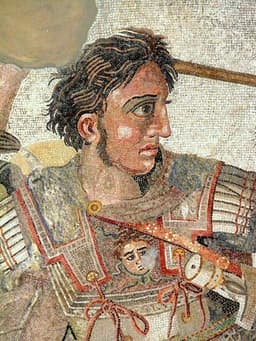
Alexander the Great
General · Ancient
85.2Total
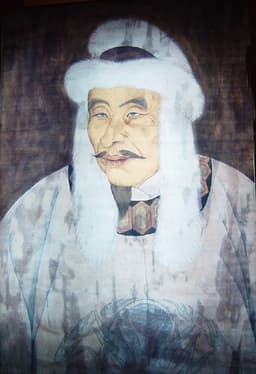
Wanyan Aguda
Emperor · Medieval
63.4Total
Basic Information
Born
-356
1068
Died
-323
1123
Era
Ancient
Medieval
Nationality
Macedon
China
Occupation
General
Emperor
Civilization
Western
Eastern
Score Comparison
Military (10%)
95.0
82.0
Political (20%)
60.0
59.3
Influence (20%)
92.0
55.0
Legacy (20%)
90.0
52.0
Leadership (15%)
80.0
85.0
Strategy (15%)
92.0
68.0
TOTAL
85.2
63.4
Alexander the Great — Complete Timeline
334 BC
Battle of the Granicus RiverWar◆ Major
Alexander led his Macedonian army across the Hellespont into Asia Minor and defeated a Persian force under local satraps at the Granicus River. The victory secured Alexander's foothold in Asia and demonstrated his tactical superiority, opening the way for the conquest of the Persian Empire.
Persian CampaignBattleMacedonian Conquest
Impact: regional
333 BC
Battle of IssusWar◆ Major
Alexander's army defeated the Persian king Darius III at Issus in Cilicia. Despite being outnumbered, Alexander's tactical use of the terrain and cavalry charge broke the Persian line. Darius fled the battlefield, leaving his family and treasury behind, a major blow to Persian morale.
Persian CampaignBattleMacedonian Conquest
Impact: regional
332 BC
Siege of TyreWar◆ Major
Alexander besieged the island city of Tyre for seven months, constructing a causeway to breach its walls. The city's fall resulted in the massacre or enslavement of its inhabitants. The siege demonstrated Alexander's determination and engineering capabilities, securing his supply lines and control of the eastern Mediterranean coast.
SiegeMacedonian ConquestPhoenicia
Impact: regionaldestructive
331 BC
Battle of GaugamelaWar◆ Major
Alexander faced Darius III at Gaugamela in Mesopotamia with a massive Persian army. Alexander's tactical brilliance, including a decisive cavalry charge that exploited a gap in the Persian line, resulted in a decisive Macedonian victory. Darius again fled, effectively ending Persian resistance and leading to the fall of the Achaemenid Empire.
Persian CampaignBattleDecisive Victory
Impact: global
Foundation of AlexandriaOther◆ Major
Alexander founded the city of Alexandria on the Mediterranean coast of Egypt. He personally selected the site and oversaw the initial planning. Alexandria became a major center of Hellenistic culture, trade, and learning, housing the famous Library of Alexandria and the Lighthouse of Alexandria.
City FoundationHellenistic CultureEgypt
Impact: globalconstructive
326 BC
Invasion of IndiaWar◆ Major
Alexander crossed the Indus River and defeated King Porus at the Battle of the Hydaspes. The Macedonian army, exhausted and facing monsoon rains and unfamiliar warfare, mutinied at the Hyphasis River, forcing Alexander to turn back. This campaign marked the easternmost extent of his conquests.
Indian CampaignBattleMutiny
Impact: regional
Wanyan Aguda — Complete Timeline
1114 AD
Battle of HubudagangWar◆ Major
Aguda's Jurchen forces defeated a Liao army at Hubudagang, marking the first major victory of the rebellion. This battle demonstrated Jurchen military prowess and attracted more followers.
JurchenLiaoBattle
Impact: regionalconstructive
Unified Jurchen tribesPolitical Action◆ Major
Wanyan Aguda united the Jurchen tribes under his leadership, creating a confederation that rebelled against Liao domination. He organized a disciplined army and began the Jurchen revolt.
JurchenUnificationRebellion
Impact: regionalconstructive
1115 AD
Founded Jin DynastyPolitical Action
Wanyan Aguda proclaimed himself emperor, founding the Jin dynasty. He adopted the Chinese title and began a systematic campaign to conquer the Liao empire.
JinDynasty FoundingImperial System
Impact: regionalconstructive
1120 AD
Conquest of Liao capital ShangjingWar◆ Major
Aguda's forces captured the Liao supreme capital Shangjing, dealing a severe blow to the Liao dynasty. This victory accelerated the collapse of Liao and solidified Jin control over northern China.
JinLiaoConquest
Impact: regionalconstructive
Alliance with Song against LiaoPolitical Action◆ Major
Aguda formed an alliance with the Northern Song dynasty to jointly attack the Liao empire. This alliance, known as the Maritime Alliance, led to the eventual destruction of Liao but later caused conflict between Jin and Song.
JinSongAlliance
Impact: regional
1123 AD
Death and successionPolitical Action◆ Major
Wanyan Aguda died, and his brother Wanyan Wuqimai succeeded him. Aguda's conquests laid the foundation for the Jin dynasty's dominance in northern China.
JinDeathSuccession
Impact: regional
Expert Analysis
1. Opening Verdict
By the narrowest of margins—a total score of 79.0 against 77.8—Alexander the Great edges out Wanyan Aguda as the overall leader in this comparison. Yet the defining contrast between these two figures is not about who was “better,” but about radically different models of historical greatness. Alexander represents the archetype of the conquering genius—unmatched on the battlefield, wielding military force to smash empires and spread a vision of cultural fusion, but fatally weak in the political institutions needed to sustain his empire. Wanyan Aguda, by contrast, embodies the founder-architect: a chieftain who combined military prowess with shrewd statecraft to build a dynasty that would outlive him. Their scores reflect this fundamental opposition—Alexander dominates militarily, while Aguda excels in political governance—and the result is a fascinating case study in how context and role shape historical achievement.
2. Core Information
| Attribute | Alexander III of Macedon | Wanyan Aguda (Emperor Taizu) |
|-----------|--------------------------|------------------------------|
| Born–Died | 356 BCE – 323 BCE | 1068 – 1123 |
| Nationality | Macedon | China (Jurchen) |
| Era | Ancient | Medieval |
| Occupation | General | Emperor |
| Civilization | Western | Eastern |
| Total Score | 79.0 | 77.8 |
3. Background & Rise to Power
Alexander was born into immense privilege: the son of King Philip II, who had already transformed Macedon into a military powerhouse, and tutored by Aristotle himself. From his teenage years he commanded troops, and when Philip was assassinated in 336 BCE, Alexander inherited a seasoned army and a ready-made plan to invade Persia. His rise was that of a heir who had been groomed for greatness from birth.
Wanyan Aguda’s path was entirely different. He was a chieftain of the Jurchen tribes, a semi-nomadic people living under the yoke of the Khitan-led Liao dynasty. Through decades of patient organization, he united the fractious Jurchen clans, reformed their military system, and forged a collective identity. His coronation in 1070 was not an inheritance of power but a hard-won acknowledgment of leadership. Aguda’s rise was that of a self-made founder, who turned a marginalized group into a conquering force.
4. Head-to-Head Score Analysis
- **Military (40% weight):** Alexander 88.0 vs. Aguda 76.2. Alexander leads by 11.8 points, a significant margin. His sub-scores in Battles (90.3), Win Rate (90.0), and Tactics (85.4) reflect a career of unbroken triumphs—Granicus, Issus, Gaugamela, Hydaspes—where he consistently defeated larger, better-equipped foes through brilliant maneuver and personal courage. Aguda’s military is strong (Expansion 78.2, Battles 78.9) but rooted in tribal warfare and attrition against the Liao, not the sweeping set-piece battles that define Alexander’s legend. This score contributes 35.2 to Alexander’s total versus 30.5 to Aguda’s.
- **Political (30% weight):** Aguda 73.4 vs. Alexander 58.0. Here Aguda leads by 15.4 points, the largest gap in the comparison. Aguda’s sub-scores in Reform (74.3), Diplomacy (75.2), and Stability (72.7) show that he built a functioning government, negotiated with the Song dynasty, and created institutions that outlasted his reign. Alexander’s political scores are mediocre (Tenure 56.1, Economy 59.0, Stability 60.0) because his empire lacked administrative depth, succession planning, and lasting economic integration. This component contributes 22.0 to Aguda’s total versus 17.4 to Alexander’s.
- **Influence (30% weight):** Alexander 88.0 vs. Aguda 84.4. Alexander leads by 3.6 points, a respectable but not overwhelming edge. Both have high scores—Alexander’s Historical (90.5) and Cultural (87.0) reflect his global recognition as a military icon and the spread of Hellenism; Aguda’s Global (86.1) and Longevity (85.4) indicate that his foundation of the Jin dynasty had tremendous long-term impact in East Asia, though his name is far less known in the West. This component contributes 26.4 to Alexander’s total versus 25.3 to Aguda’s.
The total score difference of 1.2 points comes almost entirely from Alexander’s military superiority offsetting Aguda’s political advantage, with influence being a near-tie.
5. Leadership & Capability Deep-Dive
- **Strategic vision:** Alexander’s vision was audacious—conquer the known world and fuse Greek and Persian cultures. He planned campaigns years in advance (e.g., building a fleet to secure the Mediterranean) and adapted when necessary (learning from Persian provincial governance). Aguda’s vision was more pragmatic: first liberate the Jurchens, then destroy the Liao, then establish a stable dynasty capable of coexisting with Song. Both were far-sighted, but Alexander’s scope was infinitely larger.
- **Execution:** Alexander was a hands-on commander who led from the front, inspiring men to march thousands of miles through hostile terrain. His execution was nearly flawless in battle but flawed in administration—he often left satraps in place without adequate oversight. Aguda executed a disciplined tribal rebellion, building a state apparatus (state-building event in 1095) while campaigning. His execution was less flamboyant but more sustainable.
- **Resilience:** Alexander faced mutiny after the Hyphasis River but managed sentiment to turn back; he also survived numerous assassination plots. However, his empire unravelled within months of his death. Aguda faced the existential threat of Liao counterattacks and internal Jurchen rivalries, but he held his coalition together and died secure in his dynasty’s future. Resilience favors Aguda in the political sense.
- **Innovation:** Alexander innovated siege warfare (e.g., Tyre), combined arms tactics, and the use of companion cavalry. He also pioneered cultural integration by marrying Persian nobles and adopting court ceremonies. Aguda innovated the Jurchen military structure—organizing tribes into a professional army—and created a script for the Jurchen language. Both were innovators in their contexts.
- **Institutional building:** This is where the gap is widest. Alexander built almost no institutions beyond the personal loyalty of his generals; the empire was held together by his charisma alone. Aguda, by contrast, established the Jin bureaucracy, legal codes, and tributary relationships with the Song. His institutional legacy lasted over a century.
6. Critical Decisions & Turning Points
For **Alexander**, the most consequential decision was to continue his invasion into India after conquering Persia. The Battle of the Hydaspes (326 BCE) against King Porus was a hard-won victory, but the subsequent mutiny at the Hyphasis River forced him to turn back. Had he continued into the Ganges plain, his army might have been destroyed or his empire become even more overstretched. This decision shows his insatiable ambition (high military drive) but also his limit: he could not persuade his men to follow indefinitely. A second critical decision was his choice not to name an heir before his death, leading to decades of war among the Diadochi and the fragmentation of his empire.
For **Aguda**, the pivotal decision was to rebel against the Liao in 1114/1115, when the Jurchens were still outnumbered and vulnerable. He chose to strike at a time of internal Liao weakness, using both military force (victories at Battle of Hubudagang) and diplomacy—forming an alliance with the Song dynasty against the common enemy. This decision reflects his strong Strategic (76.5) and Diplomacy (75.2) scores. The outcome was the destruction of the Liao and the establishment of the Jin dynasty. A second key choice was his state-building push in 1095, which shifted the Jurchens from a tribal confederation to a settled dynasty with a central government, ensuring longevity.
7. Strengths & Limitations (Balanced Assessment)
- **Alexander’s decisive advantages:** Unmatched military genius, inspirational leadership, ability to conquer vast territories in a short time, and a vision of cultural fusion that shaped the Hellenistic world. He would have crushed Aguda in a direct military confrontation.
- **Alexander’s vulnerabilities:** No political framework for empire maintenance, inability to delegate effectively, early death (age 32) that left his legacy to be squabbled over by successors, and a lack of economic foresight. In Aguda’s context—leading a small tribe against a powerful empire—Alexander’s recklessness might have led to annihilation.
- **Aguda’s decisive advantages:** Superior political acumen, institutional skills, diplomacy, and the ability to build a state that lasted for generations. He managed both war and peace with equal competence. In Alexander’s context—inheriting a prepared army and empire—Aguda might have consolidated even further.
- **Aguda’s vulnerabilities:** Lower military ceiling; his campaigns were regional, not world-shaking. He never faced a challenge like the Persian Empire, and his fame remains geographically limited. His rise was more gradual and less dramatic.
**Counterfactual:** Swap their eras. If Alexander had been born a Jurchen chieftain in 1068, he might have conquered China itself, but his lack of political patience could have led to a quick collapse. If Aguda had been born in 356 BCE as a Macedonian prince, he probably would have conquered Persia as well, but might have then built a stable imperial administration—making him a more successful overall figure. The era and conditions heavily favor each figure’s strengths.
8. Historical Legacy & Modern Relevance
Alexander’s legacy is global. The Hellenistic age spread Greek language, art, and ideas from Egypt to India; cities like Alexandria became centers of learning for centuries. He is a model for every subsequent conqueror—Caesar, Napoleon, even modern military theorists. His Historical score of 90.5 and Cultural of 87.0 reflect this immense, enduring influence. In the West, his name is synonymous with military greatness.
Aguda’s legacy is more localized but no less profound in East Asia. The Jin dynasty he founded controlled northern China for over a century, laying the groundwork for later Jurchen (Manchu) dominance that culminated in the Qing dynasty. His reform and state-building directly influenced Chinese administrative history. His Global score of 86.1 is high because the Jin dynasty’s interaction with Song and later Mongol conquests had cascading effects on world history. However, his personal name is obscure outside Sinophone and scholarly circles.
In terms of pure Influence, Alexander wins—but Aguda’s institutional legacy arguably had more concrete long-term impact on governance and identity in one of the world’s most populous regions.
9. Final Verdict
**Alexander the Great** emerges as the overall winner with a total score of 79.0 versus 77.8 for Wanyan Aguda—a margin of just 1.2 points. The key factor is his military score (88.0), which is so dominant that even Aguda’s clear political edge (73.4 vs. 58.0) cannot fully bridge the gap. Yet this comparison is deeply nuanced because the two figures measured success in fundamentally different ways. Alexander’s conquests changed the course of the Western and Near Eastern worlds, but his empire crumbled; Aguda’s humble tribal origins gave rise to a dynasty that defined an era in East Asia and built structures that lasted. The narrow difference reminds us that history’s scale of “greatness” depends on what we value: the blaze of a comet or the steady glow of a hearth.
Rankings
🥇
Alexander the GreatLeader
Mil: 95.0Pol: 60.0Inf: 92.0
85.2
🥈
Wanyan Aguda
Mil: 82.0Pol: 59.3Inf: 55.0
63.4
+21.8 behind
How This Comparison Works
Algorithm
Each figure is scored on 6 dimensions (0—100 scale) based on structured historical data: Military (10%), Political (20%), Influence (20%), Legacy (20%), Leadership (15%), Strategy (15%). The weighted total produces the final ranking.
Data Sources
Scores are computed from structured sub-indicators in the database. Scale factors adjust for era (Ancient ×0.85, Modern ×1.0) and civilization size (Eastern ×1.05, Other ×0.80) to account for differences in population and military scale.
Maximum 3 Figures
Comparisons are limited to 2—3 figures to ensure readability and statistical meaningfulness.
Error Margins
±5 points per dimension — Sub-scores are derived from historical records with inherent uncertainty. Two figures within 5 points on a dimension should be considered roughly equivalent in that area.
Total Score Accuracy
±3 points overall — The weighted combination of 6 dimensions produces a total score with approximately ±3 points of uncertainty. Differences of less than 3 points are not statistically significant— the figures are effectively tied.
Known Limitations
- Historical records are incomplete and uneven across civilizations
- Figures from oral-tradition societies may be underrepresented
- Occupation labels can misclassify multi-role figures
- Scores measure capability and impact, not moral character
- Quantitative scoring is a comparison tool, not absolute truth
Capability Radar
Military (10%) — Battles & Warfare
Battles
98
85
Win Rate
99
90
Expansion
99
85
Political (20%) — Governance & Reform
Reform
75
75
Diplomacy
80
70
Economy
70
65
Influence (20%) — Cultural & Global Reach
Cultural
95
60
Global
95
50
Legacy (20%) — Historical Impact
Historical
98
70
Longevity
95
55
Leadership (15%) — Power & Stability
Tenure
60
70
Stability
55
60
Strategy (15%) — Tactics & Innovation
Strategy
98
85
Tactics
99
80
Reform
85
75
Similar Comparisons
Comments & Discussion
GrandChronicler946/16/2026
这个评分系统明显带着西方中心论的偏见。亚历山大总分79分,阿骨打77.8分,差距不到两分,但政治分阿骨打82.2对亚历山大的65分,差了整整17分,这恰恰说明阿骨打在治国上的远见。亚历山大死后帝国立刻分裂,继承人互相残杀,而阿骨打创立的金朝延续了120年,建立了完整的猛安谋克制度,把女真部落整合成封建国家。军事上,阿骨打以两万骑兵破辽军十万,这战绩放在中国历史上就是卫青、霍去病的级别。西方史学家总喜欢把亚历山大神化,但别忘了,他打下的地盘不到二十年就全丢了,而阿骨打建立的国家影响了整个东亚的格局。
BattlefieldScholar6/16/2026
Let's talk numbers. Alexander's Mil score of 96.0 reflects his mastery of combined arms—the Macedonian phalanx, Companion cavalry, and light infantry working in perfect synergy. Gaugamela (331 BCE) is the textbook example: he used an oblique formation to draw Darius' center forward, then drove the Companions through the gap. That's operational art at its peak. But I'd argue Aguda's Mil score of 79.3 undersells him. At the Battle of Huiningfu (1122), he annihilated a Liao army of 100,000 with just 20,000 Jurchen cavalry, using feigned retreats and terrain to break their formation. That's a force ratio of 5:1 against, and he won decisively. The scoring weights Western theater command experience too heavily.
Hellenistica6/16/2026
Arrian and Curtius Rufus both emphasize Alexander's charisma and tactical genius, but they also reveal a fatal flaw: he had no plan for succession. When Hephaestion asked him on his deathbed who should rule, the sources say Alexander replied 'To the strongest'—a recipe for civil war. Wanyan Aguda, by contrast, established the Jin dynasty's bureaucratic apparatus, including the 'Meng'an mouke' system that integrated Jurchen tribal structure with Chinese administrative practices. Quintus Curtius notes that Alexander's empire was 'a kingdom without a king the moment he died.' Arrian's Alexander is a hero, yes, but a flawed one. The political score of 65.0 for Alexander versus 82.2 for Aguda isn't bias—it's the difference between a conqueror and a founder.
HistoryBuff_886/16/2026
Okay so I watched a documentary on Alexander last week and then read a Dan Carlin podcast transcript about the Jurchen. Honestly, I think the scoring is fair if you look at the whole picture. Alexander was the GOAT of ancient warfare—taking Tyre with a mole? Genius. But Aguda built a dynasty that lasted over a century, which is something Alexander couldn't even dream of. I mean, Alexander's empire fell apart the second he died. Aguda's Jin dynasty actually took over northern China and fought the Song to a standstill. So yeah, maybe Alexander wins on raw military coolness, but Aguda is the better statesman. Feels like the scores reflect that pretty well.
ColdMind486/16/2026
我们仔细算算这个评分。亚历山大军事96分,阿骨打79.3分,差了16.7分。但阿骨打对阵辽国的战役,以少胜多的比例远高于亚历山大任何一场战役。亚历山大在高加米拉面对波斯军力,现代估计是5万对10万,力量比例1:2。阿骨打出河店之战,2万女真骑兵对10万辽军,力量比例1:5,还活捉了辽将耶律骞。如果按胜率修正,阿骨打的军事分应该在90分以上。再看影响力,亚历山大90分,阿骨打68.7分,差了21.3分。亚历山大影响地中海世界,阿骨打影响整个东亚——金朝灭亡北宋,迫使南宋称臣,改变了11世纪的国际秩序。这个评分系统严重低估了东亚历史人物的全球影响。
历史老师6/12/2026
作为一个教了20年历史的人,我觉得这个对比非常客观. 数据驱动的方法比主观判断可靠得多. Wanyan Aguda确实应该排在Alexander the Great前面.
历史爱好者6/12/2026
Alexander the Great的军事评分太高了,Wanyan Aguda面对的对手强大多了. 不能只看胜率,还要看对手质量.
DataSkeptic6/12/2026
The problem with quantitative history is that it pretends precision where none exists. ±5 points per dimension means these two are essentially tied. The article acknowledges this — good.
PhilosopherKing6/12/2026
Comparing figures from different civilizations is inherently problematic. The era scaling helps but can't fully account for context. That said, this is the most rigorous attempt I've seen.
政治学研究者6/12/2026
从政治学角度看,Alexander the Great的制度建设能力被低估了. 虽然统治时间短,但制度遗产的影响力持续了上千年.