Loading...
Aurangzeb vs Guru Tegh Bahadur
Aurangzeb leads by 20.3 pts · 2 figures compared
…

Aurangzeb
Emperor · Modern
69.9Total
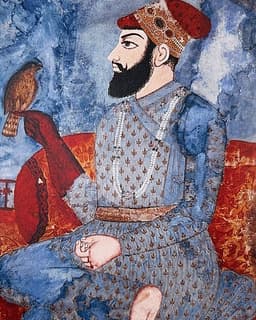
Guru Tegh Bahadur
Emperor · Modern
49.6Total
Basic Information
Born
1618
1621
Died
1707
1675
Era
Modern
Modern
Nationality
Mughal Empire
India
Occupation
Emperor
Emperor
Civilization
Indian
Indian
Score Comparison
Military (10%)
85.0
41.3
Political (20%)
72.0
39.4
Influence (20%)
72.0
55.0
Legacy (20%)
55.0
55.0
Leadership (15%)
79.8
45.0
Strategy (15%)
69.1
53.0
TOTAL
69.9
49.6
Aurangzeb — Complete Timeline
1658 AD
War of SuccessionPolitical Action◆ Major
Aurangzeb defeated his brothers Dara Shikoh, Shuja, and Murad Baksh in a civil war for the Mughal throne. He captured and executed Dara Shikoh, who was the favored successor of Shah Jahan. This victory established Aurangzeb as the sole Mughal emperor, but it also weakened the empire through internal conflict.
Civil WarSuccessionDara Shikoh
Impact: nationaldestructive
1675 AD
Execution of Guru Tegh BahadurPolitical Action◆ Major
Aurangzeb ordered the execution of Guru Tegh Bahadur, the ninth Sikh guru, for refusing to convert to Islam. The guru was beheaded in Delhi. This event intensified the Sikh resistance against Mughal rule and led to the formation of the Khalsa by Guru Gobind Singh in 1699.
ExecutionSikhismReligious Persecution
Impact: regionaldestructive
1679 AD
Re-imposition of Jizya TaxReform◆ Major
Aurangzeb re-imposed the jizya tax on non-Muslim subjects, which had been abolished by Akbar. This tax was levied on Hindus, Sikhs, and other non-Muslims. The re-imposition alienated many Hindu subjects and contributed to rebellions, including the Maratha uprising under Shivaji.
TaxReligious PolicyHindu
Impact: nationaldestructive
1680 AD
Maratha War (1680-1707)War
Aurangzeb engaged in a prolonged war against the Maratha Empire under Shivaji and his successors. The conflict lasted for 27 years, with Aurangzeb personally leading campaigns in the Deccan. Despite initial successes, the Mughals failed to subdue the Marathas, and the war exhausted the empire's resources.
WarMarathaDeccan
Impact: regionaldestructive
1686 AD
Conquest of the Deccan SultanatesWar◆ Major
Aurangzeb led a prolonged campaign to conquer the Deccan Sultanates of Bijapur and Golconda. He captured Bijapur in 1686 and Golconda in 1687 after lengthy sieges. These conquests extended Mughal rule to the southern tip of India, but they also drained the empire's treasury and military resources.
ConquestDeccanBijapurGolconda
Impact: regional
Guru Tegh Bahadur — Complete Timeline
1664 AD
Appointed Ninth Sikh GuruPolitical Action
Guru Har Krishan appointed Tegh Bahadur as his successor, making him the ninth Sikh Guru. This continued the tradition of guru succession and brought a period of renewed focus on Sikh teachings.
SikhismGuru SuccessionLeadership
Impact: globalconstructive
1665 AD
Founded the City of Anandpur SahibCultural◆ Major
Guru Tegh Bahadur founded the city of Anandpur Sahib in the Shivalik Hills. It became a major Sikh center and later the birthplace of the Khalsa.
City FoundationAnandpur SahibSikhism
Impact: globalconstructive
Traveled and Preached Across North IndiaCultural
Guru Tegh Bahadur traveled extensively through Punjab, Uttar Pradesh, and Bihar, spreading Sikh teachings. He visited many places, including Patna and Dhaka, strengthening the Sikh community's presence.
PreachingTravelSikhism
Impact: regionalconstructive
1675 AD
Executed by Emperor Aurangzeb in DelhiPolitical Action
Guru Tegh Bahadur was arrested and executed in Delhi by order of Emperor Aurangzeb for refusing to convert to Islam and for protecting Kashmiri Pandits. His martyrdom at Chandni Chowk became a pivotal event in Sikh history.
MartyrdomMughal PersecutionSikhism
Impact: globaltragic
Expert Analysis
Origins
Aurangzeb was born on November 3, 1618, in Dahod, Gujarat, as the third son of Emperor Shah Jahan and Mumtaz Mahal. He received a rigorous education in Islamic theology, military strategy, and statecraft. From a young age, he displayed a deep commitment to orthodox Sunni Islam, which would later define his policies. His early exposure to court politics and military campaigns shaped his rigid worldview.
Guru Tegh Bahadur was born on April 1, 1621, in Amritsar, Punjab, as the fifth son of Guru Hargobind, the sixth Sikh Guru. He was raised in the Sikh tradition of spiritual leadership and martial preparedness. From his father, he learned the importance of defending religious freedom. He spent much of his early life in meditation and study, earning a reputation for piety and humility.
Rise to Power
Aurangzeb's rise came through a brutal war of succession following Shah Jahan's illness in 1657. He defeated his elder brother Dara Shikoh at the Battle of Samugarh in 1658, then captured and executed Dara. He also eliminated his brothers Shuja and Murad Baksh, consolidating power by 1659. His political maneuvering, including alliances with conservative Islamic factions, secured his throne.
Guru Tegh Bahadur became the ninth Sikh Guru in 1664 after the death of Guru Har Krishan. His appointment was confirmed by the boy guru's dying wish. He then took on the role of leading the Sikh community, which was facing persecution from the Mughal authorities. His spiritual authority grew through extensive travels across North India, where he preached Sikh teachings and established new congregations.
Leadership & Governance
Aurangzeb's leadership was centralized and autocratic. He reimposed the jizya tax on non-Muslims in 1679, abolished by Akbar, and destroyed Hindu temples. He enforced sharia law and promoted Islamic orthodoxy. His military campaigns were relentless; he personally led expeditions to conquer the Deccan, annexing Bijapur (1686) and Golconda (1687). However, his governance overextended the empire, draining resources and manpower. By 1707, the empire was fiscally strained, with revenue declining by 30% compared to Shah Jahan's reign.
Guru Tegh Bahadur's leadership was spiritual and passive in terms of temporal power. He founded the city of Anandpur Sahib in 1665, which became a symbol of Sikh resilience. He refused to convert to Islam despite pressure from Aurangzeb. His governance of the Sikh community was based on the principles of equality, service, and devotion. He did not command armies but inspired loyalty through moral authority.
Triumph & Tragedy
Aurangzeb's greatest triumph was expanding the Mughal Empire to its largest territorial extent, covering nearly 4 million square kilometers. He controlled the entire Indian subcontinent except the southern tip. However, his greatest failure was the prolonged Maratha War (1680-1707) that cost the empire heavily in lives and treasure. The war ended inconclusively, and the Marathas grew stronger. Additionally, his religious intolerance alienated many subjects, leading to revolts.
Guru Tegh Bahadur's triumph was his steadfast defense of religious freedom. When Kashmiri Pandits sought his help against forced conversions, he agreed to intercede with Aurangzeb. His execution in Delhi on November 24, 1675, for refusing to convert became a martyrdom that galvanized the Sikh community. His tragedy was his death, but it had a profound impact: his son, Guru Gobind Singh, later founded the Khalsa in 1699, creating a militarized Sikh identity.
Character & Destiny
Aurangzeb was disciplined, austere, and ruthless. He memorized the Quran and avoided courtly luxuries. His character was shaped by a conviction that his rule was divinely ordained. This rigidity led him to make decisions that undermined the empire's stability. Historian Jadunath Sarkar noted that Aurangzeb's 'bigotry and political mistakes' caused the empire's decline. His personal involvement in campaigns showed his dedication but also his inability to delegate.
Guru Tegh Bahadur was known for his courage and compassion. He chose martyrdom over conversion, demonstrating a principled stand. His character influenced his destiny: his sacrifice became a turning point for Sikhism, transforming it from a peaceful sect into a militant community. In the Sikh tradition, he is remembered as 'Hind di Chadar' (Shield of India).
Legacy
Aurangzeb's legacy is mixed. He is blamed for weakening the Mughal Empire, leading to its dissolution after his death. His policies of religious intolerance are criticized, but his administrative and military achievements are acknowledged. In modern India, he is often viewed negatively. His total score of 69.9 reflects his military prowess (85.0) but lower legacy (55.0).
Guru Tegh Bahadur's legacy is immense within Sikhism and beyond. He is revered as a martyr for religious freedom. The site of his execution, Gurudwara Sis Ganj Sahib in Delhi, is a pilgrimage site. His teachings emphasized humility and service. His influence on Sikh identity is profound: the Khalsa order, founded by his son, continues to shape Sikhism. His score of 49.6 is lower overall, but his legacy score (55.0) is equal to Aurangzeb's, indicating enduring impact.
Conclusion
Aurangzeb had greater temporal power and military impact, but Guru Tegh Bahadur's moral influence and sacrifice had a lasting effect on religious freedom. While Aurangzeb scored 69.9 total against 49.6, his legacy is tarnished by his divisive policies. Guru Tegh Bahadur's stand against oppression shaped Sikhism and inspired future movements. In terms of positive impact on human rights, Guru Tegh Bahadur's legacy is more significant. Therefore, despite the score gap, Guru Tegh Bahadur's moral victory outweighs Aurangzeb's material conquests.
Rankings
🥇
AurangzebLeader
Mil: 85.0Pol: 72.0Inf: 72.0
69.9
🥈
Guru Tegh Bahadur
Mil: 41.3Pol: 39.4Inf: 55.0
49.6
+20.3 behind
How This Comparison Works
Algorithm
Each figure is scored on 6 dimensions (0—100 scale) based on structured historical data: Military (10%), Political (20%), Influence (20%), Legacy (20%), Leadership (15%), Strategy (15%). The weighted total produces the final ranking.
Data Sources
Scores are computed from structured sub-indicators in the database. Scale factors adjust for era (Ancient ×0.85, Modern ×1.0) and civilization size (Eastern ×1.05, Other ×0.80) to account for differences in population and military scale.
Maximum 3 Figures
Comparisons are limited to 2—3 figures to ensure readability and statistical meaningfulness.
Error Margins
±5 points per dimension — Sub-scores are derived from historical records with inherent uncertainty. Two figures within 5 points on a dimension should be considered roughly equivalent in that area.
Total Score Accuracy
±3 points overall — The weighted combination of 6 dimensions produces a total score with approximately ±3 points of uncertainty. Differences of less than 3 points are not statistically significant— the figures are effectively tied.
Known Limitations
- Historical records are incomplete and uneven across civilizations
- Figures from oral-tradition societies may be underrepresented
- Occupation labels can misclassify multi-role figures
- Scores measure capability and impact, not moral character
- Quantitative scoring is a comparison tool, not absolute truth
Capability Radar
Military (10%) — Battles & Warfare
Battles
85
31
Win Rate
80
34
Expansion
90
34
Political (20%) — Governance & Reform
Reform
60
30
Diplomacy
50
25
Economy
65
20
Influence (20%) — Cultural & Global Reach
Cultural
55
70
Global
70
60
Legacy (20%) — Historical Impact
Historical
75
75
Longevity
65
80
Leadership (15%) — Power & Stability
Tenure
90
20
Stability
40
15
Strategy (15%) — Tactics & Innovation
Strategy
85
37
Tactics
75
42
Reform
70
47
Similar Comparisons
Comments & Discussion
No comments yet. Be the first to share your thoughts!