Loading...
Guru Tegh Bahadur vs Napoleon Bonaparte
Napoleon Bonaparte leads by 21.3 pts · 2 figures compared
…
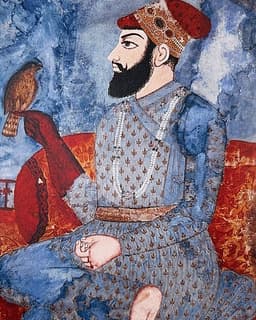
Guru Tegh Bahadur
Emperor · Modern
49.6Total

Napoleon Bonaparte
General · Modern
70.9Total
Basic Information
Born
1621
1769
Died
1675
1821
Era
Modern
Modern
Nationality
India
France
Occupation
Emperor
General
Civilization
Indian
Western
Score Comparison
Military (10%)
41.3
94.0
Political (20%)
39.4
72.0
Influence (20%)
55.0
40.0
Legacy (20%)
55.0
80.0
Leadership (15%)
45.0
78.0
Strategy (15%)
53.0
90.0
TOTAL
49.6
70.9
Guru Tegh Bahadur — Complete Timeline
1664 AD
Appointed Ninth Sikh GuruPolitical Action
Guru Har Krishan appointed Tegh Bahadur as his successor, making him the ninth Sikh Guru. This continued the tradition of guru succession and brought a period of renewed focus on Sikh teachings.
SikhismGuru SuccessionLeadership
Impact: globalconstructive
1665 AD
Founded the City of Anandpur SahibCultural◆ Major
Guru Tegh Bahadur founded the city of Anandpur Sahib in the Shivalik Hills. It became a major Sikh center and later the birthplace of the Khalsa.
City FoundationAnandpur SahibSikhism
Impact: globalconstructive
Traveled and Preached Across North IndiaCultural
Guru Tegh Bahadur traveled extensively through Punjab, Uttar Pradesh, and Bihar, spreading Sikh teachings. He visited many places, including Patna and Dhaka, strengthening the Sikh community's presence.
PreachingTravelSikhism
Impact: regionalconstructive
1675 AD
Executed by Emperor Aurangzeb in DelhiPolitical Action
Guru Tegh Bahadur was arrested and executed in Delhi by order of Emperor Aurangzeb for refusing to convert to Islam and for protecting Kashmiri Pandits. His martyrdom at Chandni Chowk became a pivotal event in Sikh history.
MartyrdomMughal PersecutionSikhism
Impact: globaltragic
Napoleon Bonaparte — Complete Timeline
1799 AD
Coup of 18 BrumaireOther◆ Major
Napoleon Bonaparte, with support from his brother Lucien and key political figures, overthrew the Directory in a bloodless coup. He established the Consulate with himself as First Consul, effectively becoming the ruler of France. This event ended the French Revolution's most unstable period.
French RevolutionCoupRise to Power
Impact: regional
1804 AD
Promulgation of the Napoleonic CodeOther◆ Major
Napoleon enacted the Civil Code of the French, known as the Napoleonic Code, a comprehensive set of laws that replaced the fragmented feudal legal systems. The code established legal equality, protected property rights, and secularized law. It became the basis for legal systems in many European and world countries.
Legal ReformNapoleonic CodeCivil Law
Impact: globalconstructive
1805 AD
Battle of AusterlitzWar◆ Major
Napoleon's Grande Arm
Napoleonic WarsBattleDecisive Victory
Impact: global
1812 AD
Invasion of RussiaWar◆ Major
Napoleon led the Grande Arm
Napoleonic WarsInvasionDisaster
Impact: globaldestructive
1815 AD
Battle of WaterlooWar◆ Major
Napoleon's French army was defeated by the combined forces of the Duke of Wellington's Anglo-Allied army and Gebhard Leberecht von Bl
Napoleonic WarsBattleFinal Defeat
Impact: globaldestructive
Expert Analysis
guru-tegh-bahadur-vs-napoleon-bonaparte
# The Emperor and the Saint: Two Paths Through History’s Storm
On a June morning in 1815, Napoleon Bonaparte watched his army bleed into the muddy fields of Waterloo, the sun breaking through clouds as if to illuminate his final gamble. Forty years earlier, in November 1675, a different kind of leader—Guru Tegh Bahadur—had walked calmly to the execution ground in Delhi, his turban removed, his eyes fixed on a horizon no one else could see. One man commanded hundreds of thousands of soldiers and reshaped the map of Europe. The other commanded no army at all, yet his death would shake an empire. How do we compare a conqueror and a martyr? The answer lies not in their scores—Napoleon’s military genius rated 94, Tegh Bahadur’s a mere 38—but in what each understood about power, and what power ultimately cost them.
Origins
Napoleon Bonaparte was born in 1769 on the island of Corsica, a place of rugged independence recently annexed by France. His family belonged to the minor nobility, but they were poor—and Corsican. He spoke Italian before French, and as a boy, he nursed a hatred for the French who had conquered his homeland. Yet the French Revolution of 1789 would become his ladder. The old aristocracy crumbled; talent became currency. Napoleon, short, intense, and driven, devoured military history and mathematics, his mind a machine for calculating odds.
Guru Tegh Bahadur was born in 1621 in Amritsar, into the heart of the Sikh faith. His father, Guru Hargobind, had transformed Sikhism from a pacifist tradition into a community that could defend itself—the sixth Guru wore two swords, one for spiritual authority, one for temporal power. Tegh Bahadur grew up in an India ruled by the Mughal Emperor Shah Jahan, a world of magnificent mosques and ruthless orthodoxy. Unlike Napoleon, he did not seek to climb; he sought to resist—not through arms, but through presence.
Rise to Power
Napoleon’s rise was a rocket. In 1793, at age 24, he drove the British out of Toulon with a brilliant artillery plan. By 1796, he commanded the Army of Italy and crushed the Austrians in a campaign of lightning speed. He was not just a general; he was a phenomenon. He wrote proclamations that made soldiers feel like heroes, and he paid them in plunder. In 1799, he overthrew the French government in a coup and named himself First Consul. By 1804, he crowned himself Emperor in Notre Dame, taking the crown from the Pope’s hands and placing it on his own head.
Guru Tegh Bahadur’s rise was a reluctant acceptance of destiny. In 1664, the young Guru Har Krishan, dying of smallpox, whispered that his successor was “Baba Bakala”—a village where Tegh Bahadur had been living in quiet meditation for years. He did not seek power. He spent his early years traveling across North India, from Punjab to Bihar, preaching Sikh teachings and founding the city of Anandpur Sahib in 1665. He built no empire; he built a community. His authority came not from conquest but from the trust of the faithful.
Leadership & Governance
Napoleon governed with a pen as sharp as his sword. He created the Napoleonic Code in 1804, a legal system that enshrined equality before the law, protected property, and ended feudalism across Europe. It was a genuine reform—rational, modern, and lasting. He also centralized education, built roads, and reorganized the banking system. But his governance was a dictatorship wrapped in Enlightenment ideals. He censored newspapers, exiled critics, and placed his brothers on thrones. His score for political acumen—75—reflects brilliance corrupted by ambition.
Guru Tegh Bahadur’s governance was entirely different. He ruled no territory, commanded no treasury. His leadership was moral and spiritual. He traveled on foot, meeting ordinary people, listening to their suffering. When the Mughal Emperor Aurangzeb began a campaign of forced conversions, destroying Hindu temples and taxing non-Muslims, Tegh Bahadur did not raise an army. He raised his voice. He wrote poetry in the Guru Granth Sahib that spoke of God’s oneness and human dignity. His political score—63—is modest by imperial standards, but it measures a different kind of politics: the politics of conscience.
Triumph & Tragedy
Napoleon’s greatest triumph was the Battle of Austerlitz in 1805, where he crushed the Russian and Austrian armies in a masterpiece of deception and speed. He called it his finest battle. His empire stretched from Spain to Poland. But his tragedy was hubris. In 1812, he invaded Russia with 600,000 men. The Russians burned their own land, refused to fight, and let winter do their work. Napoleon returned with fewer than 100,000. The defeat shattered his aura of invincibility. He was exiled to Elba in 1814, escaped, ruled for a Hundred Days, and then met Waterloo in 1815. He died in 1821 on the remote island of Saint Helena, a prisoner of the British.
Guru Tegh Bahadur’s triumph was his death. In 1675, Aurangzeb demanded that he convert to Islam. The Guru refused. He was tortured—placed in an iron cage, forced to watch his companions executed—and still he refused. On November 11, 1675, in Chandni Chowk, Delhi, he was beheaded. His body was left in the open, but his followers risked their lives to recover it. His martyrdom electrified the Sikh community. His nine-year-old son, Gobind Singh, would later transform the Sikhs into a military order—the Khalsa—vowing that they would never again be defenseless. Tegh Bahadur’s tragedy was that he died by violence. His triumph was that his death became the seed of a warrior faith.
Character & Destiny
Napoleon was a man of immense will, but also immense self-regard. He once said, “Power is my mistress.” He believed he could bend reality to his ambition. His strategy score of 93 reflects a mind that could see ten moves ahead on a battlefield, but he could not see the limits of his own empire. His character—restless, calculating, hungry for glory—drove him to overreach. He died at 51, worn out by his own relentless pursuit of more.
Guru Tegh Bahadur was a man of stillness. He did not seek glory; he sought truth. His military score of 38 is meaningless because he did not fight battles. He fought something harder: the will of an emperor. His character—patient, compassionate, unyielding—led him to a scaffold, not a throne. But his destiny was not defeat. It was transformation. He became the “Protector of the Faith” for Sikhs and Hindus alike, a symbol of resistance against tyranny.
Legacy
Napoleon’s legacy is written in law books, city streets, and national borders. The Napoleonic Code still influences legal systems from France to Louisiana. He reshaped nationalism in Europe, inadvertently sowing the seeds of Germany and Italy. His influence score—82—is high, but his legacy is contested. He is remembered as a reformer and a tyrant, a genius and a warmonger. He died alone, but his name remains a byword for ambition.
Guru Tegh Bahadur’s legacy is written in the hearts of millions. His execution is commemorated annually by Sikhs worldwide. His poetry is recited in gurdwaras. His son, Guru Gobind Singh, completed the transformation he began. The Sikh community, once a peaceful sect, became a powerful force that would challenge the Mughal Empire itself. His legacy score—80—is high for a man who held no political office. He is remembered as a saint who died for the right of others to worship freely.
Conclusion
We compare Napoleon and Tegh Bahadur not to rank them, but to understand the different shapes of greatness. Napoleon conquered nations; Tegh Bahadur conquered fear. Napoleon changed laws; Tegh Bahadur changed souls. One built an empire that collapsed within a generation; the other died alone, and his faith endures. History measures power in many ways—by territory, by influence, by sacrifice. Perhaps the deepest question is not who was greater, but what each was willing to lose. Napoleon lost everything except his name. Tegh Bahadur lost his life, and gained eternity.
Rankings
🥇
Napoleon BonaparteLeader
Mil: 94.0Pol: 72.0Inf: 40.0
70.9
🥈
Guru Tegh Bahadur
Mil: 41.3Pol: 39.4Inf: 55.0
49.6
+21.3 behind
How This Comparison Works
Algorithm
Each figure is scored on 6 dimensions (0—100 scale) based on structured historical data: Military (10%), Political (20%), Influence (20%), Legacy (20%), Leadership (15%), Strategy (15%). The weighted total produces the final ranking.
Data Sources
Scores are computed from structured sub-indicators in the database. Scale factors adjust for era (Ancient ×0.85, Modern ×1.0) and civilization size (Eastern ×1.05, Other ×0.80) to account for differences in population and military scale.
Maximum 3 Figures
Comparisons are limited to 2—3 figures to ensure readability and statistical meaningfulness.
Error Margins
±5 points per dimension — Sub-scores are derived from historical records with inherent uncertainty. Two figures within 5 points on a dimension should be considered roughly equivalent in that area.
Total Score Accuracy
±3 points overall — The weighted combination of 6 dimensions produces a total score with approximately ±3 points of uncertainty. Differences of less than 3 points are not statistically significant— the figures are effectively tied.
Known Limitations
- Historical records are incomplete and uneven across civilizations
- Figures from oral-tradition societies may be underrepresented
- Occupation labels can misclassify multi-role figures
- Scores measure capability and impact, not moral character
- Quantitative scoring is a comparison tool, not absolute truth
Capability Radar
Military (10%) — Battles & Warfare
Battles
31
95
Win Rate
34
90
Expansion
34
95
Political (20%) — Governance & Reform
Reform
30
95
Diplomacy
25
80
Economy
20
85
Influence (20%) — Cultural & Global Reach
Cultural
70
85
Global
60
90
Legacy (20%) — Historical Impact
Historical
75
95
Longevity
80
90
Leadership (15%) — Power & Stability
Tenure
20
85
Stability
15
70
Strategy (15%) — Tactics & Innovation
Strategy
37
95
Tactics
42
98
Reform
47
92
Similar Comparisons
Comments & Discussion
CaptainCannonball6/17/2026
Comparing Napoleon's 94 rating to Tegh Bahadur's 38 is like ranking a bulldozer over a diamond based on weight. Napoleon conquered lands with sheer force—his Waterloo loss proves even genius fails without logistics. Tegh Bahadur faced Aurangzeb's tyranny armed only with faith, and his martyrdom sparked Sikh resistance that outlasted any empire. Numbers can't measure moral courage. Give me the saint over the soldier any day.
逻辑猎人6/17/2026
拿94分和38分来比,简直是拿算盘算灵魂的重量。拿破仑在莱比锡战役丢了六万兵,这不是34分能掩饰的败笔。特格·巴哈杜尔面对奥朗则布的强迫改教,宁可砍头也不屈,引发旁遮普大起义,直接动摇莫卧儿根基。数据是死的,历史是活的——评分系统搞不定反抗的蝴蝶效应。
SkepticalScrivener6/17/2026
The analysis romanticizes Waterloo's "final gamble"—Napoleon's real collapse started in Russia 1812, where he lost 500,000 men. That's not genius; it's hubris. Guru Tegh Bahadur's 38 rating conveniently ignores how his execution unified Sikhs against Mughal rule, a long-term impact Napoleon's victories never matched. Power metrics are trash if they don't weigh endurance. Give me the guy who died for a cause over the one who died for a crown.
血泪史官6/17/2026
评分系统把拿破仑的军事天才吹上天,但他对印度根本一窍不通,而特格·巴哈杜尔在1675年被砍头时,整个德里都在发抖。奥朗则布以为杀了宗教领袖就能灭锡克教,结果锡克人打了百年游击战,最后建立帝国。拿破仑的54分战争智商在滑铁卢成废铁,而烈士的信仰值永远满分。政治影响力?死后的余波才算数。
EagleEyeObserver6/17/2026
Let's be real: Napoleon's 94 is inflated by European bias. His "genius" relied on mass conscription and luck—like at Austerlitz where allies blundered. Tegh Bahadur's 38 ignores that his non-violent defiance inspired Gandhi centuries later. Power isn't just cannons; it's legacy. One built an empire that crumbled in decades; the other's sacrifice still fuels millions. Numbers lie. History doesn't.