Loading...
Axayacatl vs James V of Scotland
Axayacatl leads by 16.0 pts · 2 figures compared
…
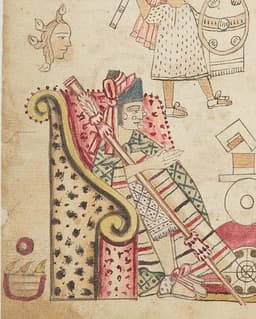
Axayacatl
Emperor · Medieval
56.7Total
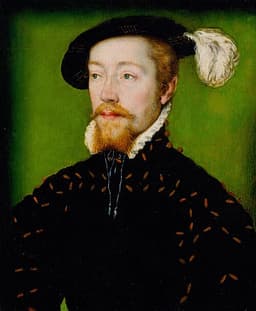
James V of Scotland
Emperor · Medieval
40.7Total
Basic Information
Born
1449
1512
Died
1481
1542
Era
Medieval
Medieval
Nationality
Aztec Empire
Scotland
Occupation
Emperor
Emperor
Civilization
Western
Western
Score Comparison
Military (10%)
70.0
22.6
Political (20%)
54.7
36.5
Influence (20%)
56.4
48.6
Legacy (20%)
47.5
40.0
Leadership (15%)
65.0
48.4
Strategy (15%)
57.5
35.7
TOTAL
56.7
40.7
Axayacatl — Complete Timeline
1469 AD
Coronation as Tlatoani of TenochtitlanPolitical Action◆ Major
Axayacatl succeeded his grandfather Moctezuma I as the sixth tlatoani of Tenochtitlan. His coronation campaign against the Matlatzinca was successful, capturing many prisoners for sacrifice and establishing his military credentials.
Impact: national
1473 AD
Conquest of TlatelolcoWar◆ Major
Axayacatl led Tenochtitlan forces against the neighboring city-state of Tlatelolco, which had rebelled against Aztec dominance. The war ended with the defeat of Tlatelolco and the death of its tlatoani Moquihuix, incorporating Tlatelolco into Tenochtitlan.
Impact: regionaldestructive
1478 AD
Campaign against the Tarascan EmpireWar◆ Major
Axayacatl led a large Aztec army into the Tarascan Empire (Pur
Impact: regionaldestructive
1481 AD
Construction of the Great Temple of TenochtitlanCultural◆ Major
Axayacatl oversaw the expansion of the Templo Mayor in Tenochtitlan, dedicating a new phase of construction. The temple was the religious center of the Aztec Empire, and this expansion included new sculptures and offerings.
Impact: nationalconstructive
Death of AxayacatlOther
Axayacatl died after a short illness, possibly from a disease or complications from wounds. His death led to the succession of his brother Tizoc, whose weak reign contrasted with Axayacatl's earlier successes.
Impact: national
James V of Scotland — Complete Timeline
1538 AD
Marriage to Mary of GuisePolitical Action◆ Major
James V married Mary of Guise, a French noblewoman, as his second wife. The marriage strengthened the Auld Alliance with France and produced a daughter, Mary, who would become Mary Queen of Scots.
MarriageAuld AllianceFrance
Impact: nationalconstructive
1540 AD
Execution of James Hamilton of FinnartPolitical Action
James V executed James Hamilton of Finnart, a powerful noble and former regent, for treason. The execution was part of James's policy to curb noble power and centralize royal authority, but it created lasting enmity with the Hamilton family.
ExecutionNoble PurgeCentralization
Impact: nationaldestructive
Suppression of the Lords of the IslesPolitical Action◆ Major
James V conducted a campaign to suppress the Lords of the Isles, who had long held semi-independent power in the Highlands and Islands. He executed the last Lord of the Isles, Donald Dubh, and annexed their territories to the crown.
SuppressionHighlandsCentralization
Impact: regionaldestructive
1542 AD
Battle of Solway MossWar
James V's Scottish army was routed by a smaller English force at Solway Moss near the River Esk. The defeat was a humiliating disaster, with many Scottish nobles captured. James V died shortly after, reportedly of despair.
BattleDefeatDeath
Impact: nationaltragic
Expert Analysis
Origins
Axayacatl (c. 1449–1481) was born into the ruling family of Tenochtitlan, the capital of the Aztec Empire. His father was Prince Tezozomoc, and his mother was Princess Atotoztli, daughter of the previous tlatoani Moctezuma I. This lineage placed him in line for the throne. He received training in warfare and governance typical for Aztec nobility, participating in military campaigns from a young age.
James V of Scotland (1512–1542) was born at Linlithgow Palace, the son of King James IV and Margaret Tudor, sister of Henry VIII of England. His father died at the Battle of Flodden in 1513, making James V an infant king. He was raised under the regency of his mother and later the Earl of Angus, experiencing a tumultuous childhood marked by noble infighting.
Rise to Power
Axayacatl became tlatoani in 1469 after the death of his grandfather Moctezuma I. His coronation campaign targeted the Matlatzinca people, a successful expedition that secured tribute and prisoners for sacrifice. This victory solidified his position and demonstrated his military capability. His early reign focused on consolidating control over the Valley of Mexico.
James V's rise was more complex. He endured a long minority dominated by regents, including his stepfather Archibald Douglas. In 1528, at age 16, James escaped from the Douglases and assumed personal rule. He immediately moved to curb noble power, executing the Earl of Angus's allies and confiscating lands. His early years were marked by a desire to emulate his father's strong kingship.
Leadership & Governance
Axayacatl ruled as an absolute monarch, centralizing power in Tenochtitlan. He continued the expansion of the Templo Mayor, a symbol of religious and political authority. His governance relied on tribute from conquered states and the support of the warrior class. He faced a major rebellion from Tlatelolco in 1473, which he crushed brutally, incorporating the city into Tenochtitlan. This conquest scored him 70.0 in military but only 54.7 in political, as his harsh methods bred resentment.
James V attempted to strengthen the Scottish monarchy by reducing noble influence. He used fines, forfeitures, and executions to subdue powerful families like the Douglases and the Hamilton clan. He also promoted the Auld Alliance with France, marrying Mary of Guise in 1538. His political score of 36.5 reflects limited success, as his actions alienated many nobles. His leadership style was authoritarian but inconsistent, lacking the strategic depth of his father.
Triumph & Tragedy
Axayacatl's greatest triumph was the conquest of Tlatelolco in 1473. This victory ended the independence of a rival city and brought its resources under his control. He also oversaw the construction of the Great Temple, enhancing Tenochtitlan's prestige. However, his campaign against the Tarascan Empire in 1479 ended in disaster. The Aztec army was routed at Tzintzuntzan, suffering heavy losses. This defeat halted Aztec expansion westward and damaged his reputation. He died shortly after in 1481, possibly from disease or wounds, leaving his empire vulnerable.
James V's triumph was the suppression of the Lords of the Isles in the 1530s, bringing the Highlands under firmer royal control. He also secured French support through his marriage. His tragedy was the Battle of Solway Moss in 1542, where his army was routed by a smaller English force. Humiliated, James withdrew to Falkland Palace and died shortly after, reportedly from despair. This defeat exposed the weakness of his military and leadership, scoring him only 22.6 in military.
Character & Destiny
Axayacatl was a determined and aggressive leader, willing to take risks but also prone to overreach. His defeat by the Tarascans suggests he underestimated his enemies. His early death at around 32 cut short his reign, preventing him from recovering from the setback. Historians view him as a capable but not exceptional tlatoani, overshadowed by his son Moctezuma II.
James V was suspicious and vengeful, often alienating his nobles. His execution of James Hamilton of Finnart, a former regent, created enemies. His death after Solway Moss was seen as a failure of nerve. He left a legacy of a weakened crown and an infant queen, Mary, Queen of Scots. His total score of 40.7 reflects his inability to secure his dynasty.
Legacy
Axayacatl's legacy is mixed. His conquest of Tlatelolco strengthened Tenochtitlan, but his Tarascan defeat checked Aztec expansion. The Templo Mayor expansion continued to be a central symbol. He is remembered as the father of Moctezuma II, who faced the Spanish. His reign set the stage for the empire's peak but also revealed its limits.
James V's legacy is diminished by his failures. His rule failed to establish strong monarchy, and his death left Scotland in crisis. The Battle of Solway Moss became a symbol of Scottish military weakness. However, his marriage to Mary of Guise ensured French support, which later influenced Mary, Queen of Scots' reign. His influence score of 48.6 reflects this indirect impact.
Conclusion
Axayacatl had a greater impact than James V, as evidenced by his higher total score of 56.7 versus 40.7. Axayacatl's military conquests and centralization of power shaped the Aztec Empire at its height, while James V's reign was marked by internal strife and military defeat. Axayacatl's legacy, though overshadowed by his son, includes tangible achievements like the Templo Mayor. James V's reign ultimately weakened the Scottish crown. Therefore, Axayacatl is the more significant historical figure.
Rankings
🥇
AxayacatlLeader
Mil: 70.0Pol: 54.7Inf: 56.4
56.7
🥈
James V of Scotland
Mil: 22.6Pol: 36.5Inf: 48.6
40.7
+16.0 behind
How This Comparison Works
Algorithm
Each figure is scored on 6 dimensions (0—100 scale) based on structured historical data: Military (10%), Political (20%), Influence (20%), Legacy (20%), Leadership (15%), Strategy (15%). The weighted total produces the final ranking.
Data Sources
Scores are computed from structured sub-indicators in the database. Scale factors adjust for era (Ancient ×0.85, Modern ×1.0) and civilization size (Eastern ×1.05, Other ×0.80) to account for differences in population and military scale.
Maximum 3 Figures
Comparisons are limited to 2—3 figures to ensure readability and statistical meaningfulness.
Error Margins
±5 points per dimension — Sub-scores are derived from historical records with inherent uncertainty. Two figures within 5 points on a dimension should be considered roughly equivalent in that area.
Total Score Accuracy
±3 points overall — The weighted combination of 6 dimensions produces a total score with approximately ±3 points of uncertainty. Differences of less than 3 points are not statistically significant— the figures are effectively tied.
Known Limitations
- Historical records are incomplete and uneven across civilizations
- Figures from oral-tradition societies may be underrepresented
- Occupation labels can misclassify multi-role figures
- Scores measure capability and impact, not moral character
- Quantitative scoring is a comparison tool, not absolute truth
Capability Radar
Military (10%) — Battles & Warfare
Battles
55
15
Win Rate
60
10
Expansion
60
10
Political (20%) — Governance & Reform
Reform
45
30
Diplomacy
50
35
Economy
45
30
Influence (20%) — Cultural & Global Reach
Cultural
40
20
Global
30
10
Legacy (20%) — Historical Impact
Historical
45
25
Longevity
40
15
Leadership (15%) — Power & Stability
Tenure
50
40
Stability
50
20
Strategy (15%) — Tactics & Innovation
Strategy
55
15
Tactics
50
20
Reform
40
10
Similar Comparisons
Comments & Discussion
No comments yet. Be the first to share your thoughts!