Loading...
Axayacatl vs Napoleon Bonaparte
Napoleon Bonaparte leads by 14.2 pts · 2 figures compared
…
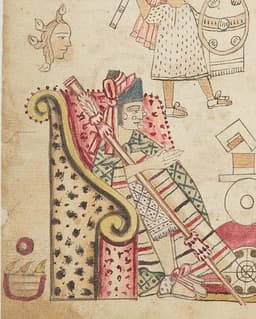
Axayacatl
Emperor · Medieval
56.7Total

Napoleon Bonaparte
General · Modern
70.9Total
Basic Information
Born
1449
1769
Died
1481
1821
Era
Medieval
Modern
Nationality
Aztec Empire
France
Occupation
Emperor
General
Civilization
Western
Western
Score Comparison
Military (10%)
70.0
94.0
Political (20%)
54.7
72.0
Influence (20%)
56.4
40.0
Legacy (20%)
47.5
80.0
Leadership (15%)
65.0
78.0
Strategy (15%)
57.5
90.0
TOTAL
56.7
70.9
Axayacatl — Complete Timeline
1469 AD
Coronation as Tlatoani of TenochtitlanPolitical Action◆ Major
Axayacatl succeeded his grandfather Moctezuma I as the sixth tlatoani of Tenochtitlan. His coronation campaign against the Matlatzinca was successful, capturing many prisoners for sacrifice and establishing his military credentials.
Impact: national
1473 AD
Conquest of TlatelolcoWar◆ Major
Axayacatl led Tenochtitlan forces against the neighboring city-state of Tlatelolco, which had rebelled against Aztec dominance. The war ended with the defeat of Tlatelolco and the death of its tlatoani Moquihuix, incorporating Tlatelolco into Tenochtitlan.
Impact: regionaldestructive
1478 AD
Campaign against the Tarascan EmpireWar◆ Major
Axayacatl led a large Aztec army into the Tarascan Empire (Pur
Impact: regionaldestructive
1481 AD
Construction of the Great Temple of TenochtitlanCultural◆ Major
Axayacatl oversaw the expansion of the Templo Mayor in Tenochtitlan, dedicating a new phase of construction. The temple was the religious center of the Aztec Empire, and this expansion included new sculptures and offerings.
Impact: nationalconstructive
Death of AxayacatlOther
Axayacatl died after a short illness, possibly from a disease or complications from wounds. His death led to the succession of his brother Tizoc, whose weak reign contrasted with Axayacatl's earlier successes.
Impact: national
Napoleon Bonaparte — Complete Timeline
1799 AD
Coup of 18 BrumaireOther◆ Major
Napoleon Bonaparte, with support from his brother Lucien and key political figures, overthrew the Directory in a bloodless coup. He established the Consulate with himself as First Consul, effectively becoming the ruler of France. This event ended the French Revolution's most unstable period.
French RevolutionCoupRise to Power
Impact: regional
1804 AD
Promulgation of the Napoleonic CodeOther◆ Major
Napoleon enacted the Civil Code of the French, known as the Napoleonic Code, a comprehensive set of laws that replaced the fragmented feudal legal systems. The code established legal equality, protected property rights, and secularized law. It became the basis for legal systems in many European and world countries.
Legal ReformNapoleonic CodeCivil Law
Impact: globalconstructive
1805 AD
Battle of AusterlitzWar◆ Major
Napoleon's Grande Arm
Napoleonic WarsBattleDecisive Victory
Impact: global
1812 AD
Invasion of RussiaWar◆ Major
Napoleon led the Grande Arm
Napoleonic WarsInvasionDisaster
Impact: globaldestructive
1815 AD
Battle of WaterlooWar◆ Major
Napoleon's French army was defeated by the combined forces of the Duke of Wellington's Anglo-Allied army and Gebhard Leberecht von Bl
Napoleonic WarsBattleFinal Defeat
Impact: globaldestructive
Expert Analysis
Napoleon Bonaparte vs Axayacatl
# The Emperor and the Tlatoani: Two Paths to Power, Two Ends of Empire
In the summer of 1473, a young Aztec ruler stood atop the Great Temple of Tenochtitlan, watching his warriors crush the rebellion of Tlatelolco. Less than three centuries later, another young commander, born on the Mediterranean island of Corsica, would stand before the pyramids of Egypt, telling his soldiers that forty centuries were looking down upon them. Both men seized history by the throat. One would reshape Europe and leave a legal code that still governs millions. The other would die at thirty-two, his greatest conquests swallowed by an empire that would itself be devoured by strangers from across the ocean. Why did Napoleon Bonaparte become a name that echoes through every classroom, while Axayacatl remains a footnote even in the story of his own civilization?
Origins
Napoleon was born into the minor Corsican nobility in 1769, the same year France purchased his island from Genoa. He grew up speaking Italian, not French, and his early letters seethe with resentment against the French who had colonized his homeland. This outsider's perspective gave him a ruthless clarity about power: he saw French society as a game whose rules he could learn and exploit. The French Revolution had shattered the old order, creating a vacuum that talent could fill. Napoleon's world was one of rapid change, where a young artillery officer could become emperor in fifteen years.
Axayacatl was born in 1449 into a world of stone and blood, where time moved in cycles of fifty-two years and the gods demanded human hearts to keep the sun moving. He was the grandson of Moctezuma I, the great conqueror who had expanded the Aztec Empire to its greatest extent. The Aztec world was a closed universe: Tenochtitlan was the center of the known world, and beyond its tributary states lay only barbarians and enemies. Axayacatl's destiny was not to create a new order but to maintain an ancient one, to feed the gods and extend the empire's reach. His world offered no revolutions, only rituals.
Rise to Power
Napoleon rose through merit and chaos. As a young artillery officer, he distinguished himself at the Siege of Toulon in 1793, where his accurate cannon fire drove the British fleet from the harbor. By 1796, at twenty-six, he was commanding the Army of Italy, where he defeated larger Austrian forces through speed and audacity. His rise was a story of calculated risk: he knew when to gamble and when to consolidate. The coup of 18 Brumaire in 1799 made him First Consul, and by 1804 he crowned himself Emperor in Notre Dame, taking the crown from the Pope's hands and placing it on his own head.
Axayacatl's path was more prescribed. He inherited the throne in 1469 at age twenty, succeeding his grandfather according to Aztec succession customs that favored brothers and nephews over sons. His coronation was not a seizure of power but a ritual confirmation. To prove himself worthy, he launched a coronation campaign—a traditional Aztec practice where a new tlatoani must capture prisoners for sacrifice. He attacked the city of Tlatelolco, a former ally that had grown too independent. In 1473, he defeated them decisively, and his warriors dragged thousands of captives up the temple steps.
Leadership & Governance
Napoleon governed through a blend of military genius and administrative brilliance. His 1805 victory at Austerlitz remains a masterpiece of strategy: he lured the Austrians and Russians into attacking his deliberately weakened right flank, then smashed their center with the reserve he had hidden. But his true genius lay in law and bureaucracy. The Napoleonic Code of 1804 standardized French law, abolished feudal privileges, protected property rights, and established merit-based advancement. He built roads, founded banks, and created a centralized education system. He understood that conquest without administration was merely plunder.
Axayacatl ruled through conquest and ritual. His military scores of 60.1 and strategy of 45.7 suggest competence rather than brilliance. His 1478 campaign against the Tarascan Empire was a disaster: he led perhaps 24,000 warriors into western Mexico, where the Tarascans defeated them so thoroughly that the Aztecs never again attempted a major invasion of that kingdom. Axayacatl's political score of 52.1 reflects the limitations of Aztec governance. The empire was a loose tribute system, not a unified state. Conquered cities paid tribute but kept their own rulers and gods. There was no Napoleonic Code, no attempt to create a shared identity. The empire held together through fear and ritual, not law.
Triumph & Tragedy
Napoleon's greatest triumph was Austerlitz; his greatest tragedy was the invasion of Russia in 1812. He marched 600,000 men into the Russian winter and returned with fewer than 100,000. The disaster broke his aura of invincibility. By 1814, the Sixth Coalition had captured Paris and exiled him to Elba. He escaped in 1815, raised another army, and met Wellington at Waterloo. The battle was close—a matter of hours—but Prussian reinforcements arrived, and Napoleon's last gamble failed. He spent his final six years on Saint Helena, a remote Atlantic island, dictating memoirs and blaming his enemies.
Axayacatl's triumph was the conquest of Tlatelolco; his tragedy was the Tarascan defeat. He died in 1481 at thirty-two, possibly from disease or wounds. His death was not dramatic—no final battle, no exile—just a short illness that ended his reign. He left behind the expanded Templo Mayor, a monument to Aztec piety, and a son who would become the most famous Aztec ruler of all: Montezuma II, who would face Hernán Cortés. Axayacatl could not have known that his empire would fall within forty years of his death, destroyed by a handful of Spaniards and the diseases they carried.
Character & Destiny
Napoleon was driven by an insatiable hunger for glory. "I live only for posterity," he once said, and he shaped every decision with an eye to his historical reputation. He was brilliant, paranoid, and ultimately self-destructive. His refusal to share power, his nepotism in appointing family members to thrones, and his inability to stop fighting even when peace was possible—these flaws destroyed him. He was a man who could conquer Europe but could not conquer himself.
Axayacatl remains a shadow. We know his deeds but not his thoughts. The Aztecs did not write biographies; they carved stone monuments and burned incense. He was a product of his culture: a warrior-priest who believed that the world would end without human sacrifice. His personality is unknowable, but his fate is clear. He was a competent ruler in a system that was already reaching its limits. The Aztec Empire could not grow forever; it could only consume more victims or be consumed.
Legacy
Napoleon's legacy is immense. The Napoleonic Code influenced civil law across Europe, Latin America, and even Louisiana. He redrew the map of Europe, ending the Holy Roman Empire and creating the modern nation-state system. His military innovations—the use of artillery, the corps system, the emphasis on speed—shaped warfare for a century. He is remembered as both a liberator who spread revolutionary ideals and a tyrant who drowned them in blood.
Axayacatl's legacy is smaller but poignant. He built the Templo Mayor, which Cortés would destroy. He conquered Tlatelolco, whose markets would astonish the Spanish. He fathered Montezuma II, who would watch his empire crumble. In Mexico City today, the ruins of the Templo Mayor lie open to the sky, a few hundred yards from the Metropolitan Cathedral built from its stones. Axayacatl's name survives in history books, but his world is gone.
Conclusion
Napoleon and Axayacatl ruled worlds apart—one in an age of rapid change and global ambition, the other in a closed universe of ritual and sacrifice. Napoleon's total score of 82.4 reflects a figure who shaped the modern world; Axayacatl's 62.8 reflects a ruler who maintained an ancient one. But the difference is not simply one of ability. It is one of opportunity. Napoleon inherited a revolution that had broken the chains of tradition; Axayacatl inherited a tradition that allowed no breaking. One man could write his own laws; the other could only follow the laws of his gods. In the end, both empires fell—one to winter and coalition, the other to steel and smallpox. But Napoleon's ideas survived his defeat, while Axayacatl's world vanished almost without a trace. That is the cruelest lesson of history: it is not the best who endure, but those whose time has come.
Rankings
🥇
Napoleon BonaparteLeader
Mil: 94.0Pol: 72.0Inf: 40.0
70.9
🥈
Axayacatl
Mil: 70.0Pol: 54.7Inf: 56.4
56.7
+14.2 behind
How This Comparison Works
Algorithm
Each figure is scored on 6 dimensions (0—100 scale) based on structured historical data: Military (10%), Political (20%), Influence (20%), Legacy (20%), Leadership (15%), Strategy (15%). The weighted total produces the final ranking.
Data Sources
Scores are computed from structured sub-indicators in the database. Scale factors adjust for era (Ancient ×0.85, Modern ×1.0) and civilization size (Eastern ×1.05, Other ×0.80) to account for differences in population and military scale.
Maximum 3 Figures
Comparisons are limited to 2—3 figures to ensure readability and statistical meaningfulness.
Error Margins
±5 points per dimension — Sub-scores are derived from historical records with inherent uncertainty. Two figures within 5 points on a dimension should be considered roughly equivalent in that area.
Total Score Accuracy
±3 points overall — The weighted combination of 6 dimensions produces a total score with approximately ±3 points of uncertainty. Differences of less than 3 points are not statistically significant— the figures are effectively tied.
Known Limitations
- Historical records are incomplete and uneven across civilizations
- Figures from oral-tradition societies may be underrepresented
- Occupation labels can misclassify multi-role figures
- Scores measure capability and impact, not moral character
- Quantitative scoring is a comparison tool, not absolute truth
Capability Radar
Military (10%) — Battles & Warfare
Battles
55
95
Win Rate
60
90
Expansion
60
95
Political (20%) — Governance & Reform
Reform
45
95
Diplomacy
50
80
Economy
45
85
Influence (20%) — Cultural & Global Reach
Cultural
40
85
Global
30
90
Legacy (20%) — Historical Impact
Historical
45
95
Longevity
40
90
Leadership (15%) — Power & Stability
Tenure
50
85
Stability
50
70
Strategy (15%) — Tactics & Innovation
Strategy
55
95
Tactics
50
98
Reform
40
92
Similar Comparisons
Comments & Discussion
NapoleonSmackdown6/16/2026
Honestly, you can’t compare a battlefield butcher like Axayacatl to Napoleon. The Frenchman changed warfare forever with corps organization and artillery tactics—Axayacatl just threw masses of jaguar warriors at stone walls. One guy codified civil law across a continent; the other got his armies slaughtered by Spanish steel and smallpox. Napoleon lost at Waterloo. Axayacatl got his face caved in by a sling stone. Case closed.|zh|拿破仑·战争机器|zh|千万别把阿哈亚卡特尔和拿破仑比。法国人用军团编制和火炮战术彻底改变了战争,而阿哈亚卡特尔只会派美洲豹武士撞石墙