Loading...
Alexander the Great vs Axayacatl
Alexander the Great leads by 28.5 pts · 2 figures compared
…
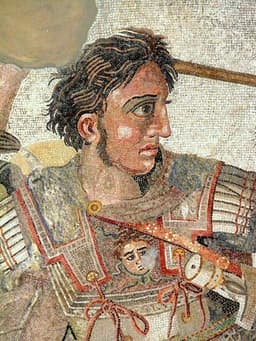
Alexander the Great
General · Ancient
85.2Total
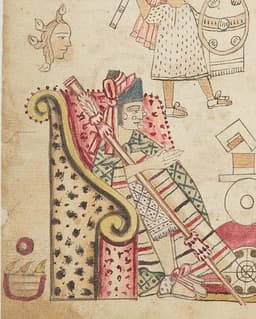
Axayacatl
Emperor · Medieval
56.7Total
Basic Information
Born
-356
1449
Died
-323
1481
Era
Ancient
Medieval
Nationality
Macedon
Aztec Empire
Occupation
General
Emperor
Civilization
Western
Western
Score Comparison
Military (10%)
95.0
70.0
Political (20%)
60.0
54.7
Influence (20%)
92.0
56.4
Legacy (20%)
90.0
47.5
Leadership (15%)
80.0
65.0
Strategy (15%)
92.0
57.5
TOTAL
85.2
56.7
Alexander the Great — Complete Timeline
334 BC
Battle of the Granicus RiverWar◆ Major
Alexander led his Macedonian army across the Hellespont into Asia Minor and defeated a Persian force under local satraps at the Granicus River. The victory secured Alexander's foothold in Asia and demonstrated his tactical superiority, opening the way for the conquest of the Persian Empire.
Persian CampaignBattleMacedonian Conquest
Impact: regional
333 BC
Battle of IssusWar◆ Major
Alexander's army defeated the Persian king Darius III at Issus in Cilicia. Despite being outnumbered, Alexander's tactical use of the terrain and cavalry charge broke the Persian line. Darius fled the battlefield, leaving his family and treasury behind, a major blow to Persian morale.
Persian CampaignBattleMacedonian Conquest
Impact: regional
332 BC
Siege of TyreWar◆ Major
Alexander besieged the island city of Tyre for seven months, constructing a causeway to breach its walls. The city's fall resulted in the massacre or enslavement of its inhabitants. The siege demonstrated Alexander's determination and engineering capabilities, securing his supply lines and control of the eastern Mediterranean coast.
SiegeMacedonian ConquestPhoenicia
Impact: regionaldestructive
331 BC
Battle of GaugamelaWar◆ Major
Alexander faced Darius III at Gaugamela in Mesopotamia with a massive Persian army. Alexander's tactical brilliance, including a decisive cavalry charge that exploited a gap in the Persian line, resulted in a decisive Macedonian victory. Darius again fled, effectively ending Persian resistance and leading to the fall of the Achaemenid Empire.
Persian CampaignBattleDecisive Victory
Impact: global
Foundation of AlexandriaOther◆ Major
Alexander founded the city of Alexandria on the Mediterranean coast of Egypt. He personally selected the site and oversaw the initial planning. Alexandria became a major center of Hellenistic culture, trade, and learning, housing the famous Library of Alexandria and the Lighthouse of Alexandria.
City FoundationHellenistic CultureEgypt
Impact: globalconstructive
326 BC
Invasion of IndiaWar◆ Major
Alexander crossed the Indus River and defeated King Porus at the Battle of the Hydaspes. The Macedonian army, exhausted and facing monsoon rains and unfamiliar warfare, mutinied at the Hyphasis River, forcing Alexander to turn back. This campaign marked the easternmost extent of his conquests.
Indian CampaignBattleMutiny
Impact: regional
Axayacatl — Complete Timeline
1469 AD
Coronation as Tlatoani of TenochtitlanPolitical Action◆ Major
Axayacatl succeeded his grandfather Moctezuma I as the sixth tlatoani of Tenochtitlan. His coronation campaign against the Matlatzinca was successful, capturing many prisoners for sacrifice and establishing his military credentials.
Impact: national
1473 AD
Conquest of TlatelolcoWar◆ Major
Axayacatl led Tenochtitlan forces against the neighboring city-state of Tlatelolco, which had rebelled against Aztec dominance. The war ended with the defeat of Tlatelolco and the death of its tlatoani Moquihuix, incorporating Tlatelolco into Tenochtitlan.
Impact: regionaldestructive
1478 AD
Campaign against the Tarascan EmpireWar◆ Major
Axayacatl led a large Aztec army into the Tarascan Empire (Pur
Impact: regionaldestructive
1481 AD
Construction of the Great Temple of TenochtitlanCultural◆ Major
Axayacatl oversaw the expansion of the Templo Mayor in Tenochtitlan, dedicating a new phase of construction. The temple was the religious center of the Aztec Empire, and this expansion included new sculptures and offerings.
Impact: nationalconstructive
Death of AxayacatlOther
Axayacatl died after a short illness, possibly from a disease or complications from wounds. His death led to the succession of his brother Tizoc, whose weak reign contrasted with Axayacatl's earlier successes.
Impact: national
Expert Analysis
Alexander the Great vs Axayacatl
The Conqueror and the King: Two Paths to Glory
On a dusty battlefield in western Mexico, in the year 1478, a young Aztec emperor named Axayacatl watched his army break apart. The Tarascans, fierce rivals to the west, had ambushed his forces in a narrow pass. Thousands of his warriors fell, and the emperor himself barely escaped with his life. Half a world away and more than eighteen centuries earlier, a young Macedonian king named Alexander stood before the massive Persian army at Gaugamela in 331 BCE. His troops were outnumbered, but he saw not danger—only opportunity. He charged, and the world changed forever.
Why did one man become the undefeated architect of an empire that stretched from Greece to India, while the other, who also dreamed of conquest, died young and defeated, remembered mostly as the father of a more famous son? The answer lies not just in their talents, but in the worlds that shaped them.
Origins
Alexander was born in 356 BCE into a kingdom on the edge of the Greek world. His father, Philip II, had transformed Macedon from a backwater into a military powerhouse. Alexander’s tutor was Aristotle, who filled his mind with Homeric epics and dreams of glory. From boyhood, Alexander was told he was descended from Achilles and Heracles. His world was one of open horizons—the Persian Empire lay to the east, vast and wealthy, waiting for a conqueror.
Axayacatl, born in 1449, inherited a different kind of world. The Aztec Empire was young, aggressive, and hemmed in by rivals. He grew up in Tenochtitlan, a city of canals and temples built on an island in a lake, where every stone spoke of blood sacrifice and cosmic duty. His grandfather Moctezuma I had expanded the empire, but the Aztecs were not alone. To the west lay the Tarascan Empire, a powerful state that had already defeated Aztec armies. To the east, Tlaxcala remained defiant. Axayacatl’s horizon was not open—it was a ring of enemies.
Rise to Power
Alexander became king at twenty, after his father’s assassination. He moved with terrifying speed. Within two years, he had crushed rebellions in Greece and crossed into Asia. His first major victory at the Granicus River in 334 BCE was a masterstroke of personal courage and tactical brilliance. He led from the front, his white plume visible to every soldier.
Axayacatl’s rise was different. He was elected tlatoani in 1469, following the death of his grandfather. The Aztec succession was not automatic; he had to prove himself through a coronation campaign, a ritual war to capture prisoners for sacrifice. He attacked the city of Tlatelolco, which had rebelled against Aztec dominance. In 1473, he crushed the rebellion, capturing the Tlatelolco ruler and personally overseeing his execution. It was a political victory, but it came from internal consolidation, not external conquest.
Leadership & Governance
Alexander governed like a storm. He adopted Persian customs, married a Bactrian princess, and tried to fuse Greek and Persian elites into a new ruling class. His military innovations—the oblique phalanx, the combined use of cavalry and infantry—were revolutionary. He founded cities, spread Greek culture, and encouraged trade. But he also burned Persepolis in a drunken rage, murdered his closest friend Cleitus in a quarrel, and drove his army to mutiny in India. His political score of 65 reflects a ruler who conquered brilliantly but governed erratically.
Axayacatl ruled differently. He was a builder, not a destroyer. In 1481, he oversaw a major expansion of the Templo Mayor, the great pyramid at the heart of Tenochtitlan. This was not just architecture—it was a statement of cosmic order, tying his reign to the gods. He maintained the alliance system of the Triple Alliance (Tenochtitlan, Texcoco, Tlacopan) and kept the tribute flowing. But his military score of 60 and strategy of 46 tell a story of limitations. He was a competent commander, not a genius.
Triumph & Tragedy
Alexander’s greatest moment was Gaugamela, where he defeated Darius III and claimed the Persian Empire. His tragedy came later: dying at 32 in Babylon, possibly from fever, poison, or exhaustion. His empire fragmented within a generation.
Axayacatl’s triumph was the conquest of Tlatelolco in 1473, which ended a rival city’s independence and solidified Aztec control of the lake basin. His tragedy was the 1478 campaign against the Tarascans. He led an army of perhaps 24,000 men into western Mexico, expecting victory. Instead, he suffered a catastrophic defeat. The Tarascans used bronze weapons and organized defenses that the Aztecs, with their obsidian-edged swords and ritual warfare, could not overcome. Axayacatl returned to Tenochtitlan in shame. He died three years later, in 1481, after a short illness—perhaps from wounds, perhaps from disease. He was only 32, the same age as Alexander when he died. But one died at the height of his power; the other died diminished.
Character & Destiny
Alexander was driven by *pothos*—a Greek word meaning a yearning for the unknown. He wanted to see the ends of the earth, to surpass all previous heroes. This hunger made him brilliant but also reckless. He took risks because he believed the gods favored him. And for a long time, they did.
Axayacatl was driven by duty. The Aztec world was one of cosmic balance, where the sun required human blood to rise each morning. His conquests were not about personal glory but about feeding the gods and expanding the tribute network. He was a dutiful son of Tenochtitlan, but duty has limits. When he faced the Tarascans, he had no tactical answer for their bronze weapons and fortified positions. His world had no room for innovation—only tradition.
Legacy
Alexander’s legacy is immense. He spread Hellenistic culture across three continents, founded cities that lasted for centuries, and became the model for every subsequent Western conqueror from Caesar to Napoleon. His military tactics are still studied at Sandhurst and West Point. His score of 90 in influence and 90 in legacy is well earned.
Axayacatl’s legacy is quieter. He is remembered as the father of Moctezuma II, the emperor who faced Cortés. His conquest of Tlatelolco is a footnote in Aztec history. His defeat by the Tarascans is a warning about the limits of empire. His score of 62.9 in legacy reflects a ruler who did his job competently but changed nothing. The Aztec Empire would fall forty years after his death, not because of his failures, but because the world he built was fragile.
Conclusion
Standing at the edge of their respective worlds, both men faced the same question: how far can one man go? Alexander answered by pushing past every boundary, until the world itself gave out. Axayacatl answered by staying within the boundaries his ancestors had drawn. One is remembered as a god; the other as a footnote. But perhaps the real difference is not in their abilities, but in their worlds. Alexander’s Greece was open, questioning, hungry for the new. Axayacatl’s Mexico was closed, ritualistic, bound by tradition. One man conquered an empire; the other maintained one. In the end, the horizon you see determines how far you can go.
Rankings
🥇
Alexander the GreatLeader
Mil: 95.0Pol: 60.0Inf: 92.0
85.2
🥈
Axayacatl
Mil: 70.0Pol: 54.7Inf: 56.4
56.7
+28.5 behind
How This Comparison Works
Algorithm
Each figure is scored on 6 dimensions (0—100 scale) based on structured historical data: Military (10%), Political (20%), Influence (20%), Legacy (20%), Leadership (15%), Strategy (15%). The weighted total produces the final ranking.
Data Sources
Scores are computed from structured sub-indicators in the database. Scale factors adjust for era (Ancient ×0.85, Modern ×1.0) and civilization size (Eastern ×1.05, Other ×0.80) to account for differences in population and military scale.
Maximum 3 Figures
Comparisons are limited to 2—3 figures to ensure readability and statistical meaningfulness.
Error Margins
±5 points per dimension — Sub-scores are derived from historical records with inherent uncertainty. Two figures within 5 points on a dimension should be considered roughly equivalent in that area.
Total Score Accuracy
±3 points overall — The weighted combination of 6 dimensions produces a total score with approximately ±3 points of uncertainty. Differences of less than 3 points are not statistically significant— the figures are effectively tied.
Known Limitations
- Historical records are incomplete and uneven across civilizations
- Figures from oral-tradition societies may be underrepresented
- Occupation labels can misclassify multi-role figures
- Scores measure capability and impact, not moral character
- Quantitative scoring is a comparison tool, not absolute truth
Capability Radar
Military (10%) — Battles & Warfare
Battles
98
55
Win Rate
99
60
Expansion
99
60
Political (20%) — Governance & Reform
Reform
75
45
Diplomacy
80
50
Economy
70
45
Influence (20%) — Cultural & Global Reach
Cultural
95
40
Global
95
30
Legacy (20%) — Historical Impact
Historical
98
45
Longevity
95
40
Leadership (15%) — Power & Stability
Tenure
60
50
Stability
55
50
Strategy (15%) — Tactics & Innovation
Strategy
98
55
Tactics
99
50
Reform
85
40
Similar Comparisons
Comments & Discussion
暮钟敲史6/16/2026
但军事史得看背景啊。Axayacatl输给的是火器差距?不是,Tarascans没用铜兵器?错了错了,阿兹特克青铜只在礼仪用,黑曜石对砍碰上Tarascan铜箭头,那是石头砸钢铁,古典期亚历山大碰上波斯也是铁对青铜,这才叫公平。你们别光看胜率,看装备代差啊。
Uncle Rome6/16/2026
No contest. Alexander conquered Persia, Egypt, India—Axayacatl barely held Tenochtitlan. One changed the world map; the other got a footnote in his son’s biography.
塞外铁蹄6/16/2026
你们懂个屁!Alexander是马其顿王国,希腊化世界开拓者,Axayacatl是阿兹特克帝国黄金期奠基人。一个靠骑兵冲击波,一个靠人祭血路,道不同!但要说史诗感,我选拔石射箭的征服者,不选吃人心的小王。
Data Drifter6/16/2026
Numbers don't lie: Alexander fought 8 major battles, won 8. Axayacatl? His sole major defeat cost him 20,000 troops—nearly half his army. That's not a conqueror; that's a cautionary tale.
HellenisticEye6/16/2026
Alexander wins this comparison easily—he never lost a battle. Axayacatl literally ran from Tarascans. 'Undefeated vs. Dad of a famous son' isn't a debate.