Loading...
Axayacatl vs Suleiman I
Suleiman I leads by 22.1 pts · 2 figures compared
…
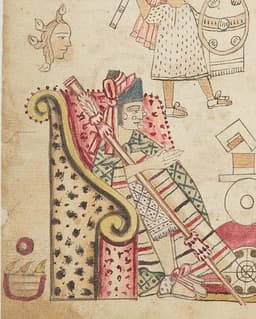
Axayacatl
Emperor · Medieval
56.7Total
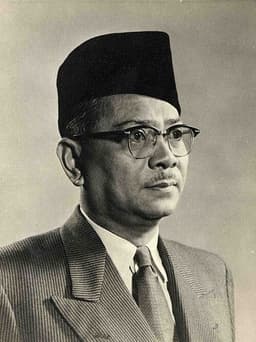
Suleiman I
Emperor · Medieval
78.8Total
Basic Information
Born
1449
1494
Died
1481
1566
Era
Medieval
Medieval
Nationality
Aztec Empire
Ottoman Empire
Occupation
Emperor
Emperor
Civilization
Western
Middle Eastern
Score Comparison
Military (10%)
70.0
78.5
Political (20%)
54.7
82.0
Influence (20%)
56.4
85.0
Legacy (20%)
47.5
70.8
Leadership (15%)
65.0
81.7
Strategy (15%)
57.5
74.4
TOTAL
56.7
78.8
Axayacatl — Complete Timeline
1469 AD
Coronation as Tlatoani of TenochtitlanPolitical Action◆ Major
Axayacatl succeeded his grandfather Moctezuma I as the sixth tlatoani of Tenochtitlan. His coronation campaign against the Matlatzinca was successful, capturing many prisoners for sacrifice and establishing his military credentials.
Impact: national
1473 AD
Conquest of TlatelolcoWar◆ Major
Axayacatl led Tenochtitlan forces against the neighboring city-state of Tlatelolco, which had rebelled against Aztec dominance. The war ended with the defeat of Tlatelolco and the death of its tlatoani Moquihuix, incorporating Tlatelolco into Tenochtitlan.
Impact: regionaldestructive
1478 AD
Campaign against the Tarascan EmpireWar◆ Major
Axayacatl led a large Aztec army into the Tarascan Empire (Pur
Impact: regionaldestructive
1481 AD
Construction of the Great Temple of TenochtitlanCultural◆ Major
Axayacatl oversaw the expansion of the Templo Mayor in Tenochtitlan, dedicating a new phase of construction. The temple was the religious center of the Aztec Empire, and this expansion included new sculptures and offerings.
Impact: nationalconstructive
Death of AxayacatlOther
Axayacatl died after a short illness, possibly from a disease or complications from wounds. His death led to the succession of his brother Tizoc, whose weak reign contrasted with Axayacatl's earlier successes.
Impact: national
Suleiman I — Complete Timeline
1522 AD
Siege of RhodesWar◆ Major
Suleiman I led a massive Ottoman army and fleet to besiege the island of Rhodes, held by the Knights Hospitaller. After a six-month siege, the knights surrendered and were allowed to leave. This victory secured Ottoman control over the eastern Mediterranean.
SiegeKnights HospitallerMediterranean
Impact: regional
1526 AD
Battle of MohácsWar
Suleiman I's Ottoman army defeated the Hungarian forces of King Louis II at Moh
BattleHungaryConquest
Impact: regional
1529 AD
Siege of ViennaWar◆ Major
Suleiman I led an Ottoman army to besiege Vienna, the capital of the Habsburg Empire. The siege failed due to supply problems and the onset of winter. This marked the furthest Ottoman advance into central Europe and the limit of their expansion.
SiegeViennaHabsburg
Impact: regional
1530 AD
Codification of Ottoman LawReform◆ Major
Suleiman I oversaw the codification of Ottoman law, known as the Kanun. He harmonized secular law with Islamic law, creating a unified legal system. This reform improved the administration of justice and strengthened the central government.
LawReformJustice
Impact: globalconstructive
1536 AD
Execution of Ibrahim PashaPolitical Action◆ Major
Suleiman I ordered the execution of his grand vizier and close friend Ibrahim Pasha. Ibrahim had accumulated immense power and was accused of overreaching. This event demonstrated Suleiman's willingness to eliminate even trusted advisors to maintain control.
ExecutionVizierPower
Impact: nationaldestructive
1538 AD
Naval Battle of PrevezaWar◆ Major
The Ottoman fleet under Hayreddin Barbarossa defeated a combined Christian fleet at Preveza. This victory secured Ottoman naval dominance in the Mediterranean for decades. It allowed the Ottomans to control trade routes and raid coastal areas.
Naval BattleBarbarossaMediterranean
Impact: regional
Expert Analysis
Origins
Axayacatl was born around 1449 in Tenochtitlan, the son of Princess Atotoztli (daughter of Moctezuma I) and Prince Tezozomoc. He belonged to the ruling Mexica dynasty. Little is known of his early education, but as a noble, he would have received training in warfare, religion, and governance. He ascended to the throne in 1469 after the death of his grandfather Moctezuma I.
Suleiman I was born on November 6, 1494, in Trabzon, as the only son of Sultan Selim I and Hafsa Sultan. He received an elite education in Islamic sciences, history, literature, and military tactics. He served as governor of several provinces under his father's reign, gaining administrative experience. He became sultan in 1520 after Selim I's death.
Rise to Power
Axayacatl's rise was dynastic: he succeeded his grandfather as tlatoani (emperor) of Tenochtitlan. His first major act as ruler was a coronation campaign against the Matlatzinca people, which he won, securing tribute and captives. This campaign established his military credentials. His most famous early achievement was the conquest of Tlatelolco in 1473, a neighboring city-state that had rebelled against Aztec dominance. Axayacatl led Tenochtitlan forces to victory, killing the Tlatelolco ruler Moquihuixtli and incorporating the city fully into the Aztec Triple Alliance. This conquest solidified his control over the Valley of Mexico.
Suleiman I inherited a vast empire from his father Selim I, who had expanded Ottoman territory into the Middle East. Unlike Axayacatl, Suleiman did not need to prove himself through a coronation campaign; he immediately launched military campaigns to extend his rule. His first major campaign was the capture of Belgrade in 1521, a key fortress of the Kingdom of Hungary. This was followed by the successful Siege of Rhodes in 1522-1523, expelling the Knights Hospitaller. These victories established him as a formidable military leader and expanded Ottoman influence in Europe.
Leadership & Governance
Axayacatl governed as an absolute monarch within the Aztec imperial system. He oversaw the expansion of the Templo Mayor in Tenochtitlan, dedicating a new phase of construction that reflected his religious authority. His governance focused on maintaining the tribute system and military dominance. However, his leadership was tested by the disastrous campaign against the Tarascan Empire (Purépecha) in 1479-1480. Axayacatl led a large Aztec army into Tarascan territory but suffered a major defeat at the Battle of Tzintzuntzan. This failure weakened his reputation and the empire's expansionist momentum.
Suleiman I's governance was marked by comprehensive legal reform. He codified Ottoman law (Kanun) to harmonize secular and religious law, creating a unified legal system that lasted for centuries. He was known as "Suleiman the Lawgiver" among his subjects. He also patronized arts and architecture, commissioning works by the architect Sinan. His leadership style combined military aggression with administrative efficiency. He established a meritocratic system within the devshirme, recruiting Christian boys for elite military and administrative roles, which strengthened the central government. In contrast to Axayacatl's more personal rule, Suleiman built institutional structures that outlasted his reign.
Triumph & Tragedy
Axayacatl's greatest triumph was the conquest of Tlatelolco, which eliminated a rival power and brought the great market of Tlatelolco under Tenochtitlan's control. This victory netted immense tribute and captives for sacrifice, boosting his prestige. His greatest tragedy was the defeat by the Tarascans. The battle cost thousands of Aztec lives and stopped Aztec expansion westward. Axayacatl himself may have been wounded; he died in 1481 after a short illness, possibly from complications of those wounds. His death at age 31 cut short his reign, and his empire was left to his brother Tizoc, who proved weak.
Suleiman I's triumphs include the Battle of Mohács (1526), where his army crushed the Hungarians, killing King Louis II and leaving Hungary vulnerable. He also successfully besieged Rhodes and expanded Ottoman control over Iraq and North Africa. His codification of law was a landmark achievement. His tragedies include the failed Siege of Vienna (1529), where supply problems and winter forced a retreat. Another personal tragedy was the execution of his grand vizier and close friend Ibrahim Pasha in 1536, after Ibrahim's power became threatening. Suleiman also ordered the execution of his own son Mustafa in 1553, a decision that caused deep sorrow and succession disputes.
Character & Destiny
Axayacatl was an ambitious and aggressive leader, as shown by his swift action against Tlatelolco. However, he overreached against the Tarascans, underestimating their military strength. His character combined boldness with a lack of strategic caution. His early death prevented him from recovering from the Tarascan defeat. Historical assessments often view him as a competent but not exceptional ruler, overshadowed by his grandfather Moctezuma I and his son Moctezuma II.
Suleiman I was methodical, calculated, and ruthless when necessary. He balanced military campaigns with administrative reforms. His character was shaped by a strong sense of justice and order, but also by a paranoid streak in later years, leading to the executions of Ibrahim and Mustafa. His destiny was to rule at the zenith of Ottoman power; his reign is considered the golden age. He died in 1566 during the Siege of Szigetvár, still leading his army at age 71. His scores reflect a more balanced and effective leadership: Suleiman scored 81.7 in leadership to Axayacatl's 65.0, and 74.4 in strategy to Axayacatl's 57.5.
Legacy
Axayacatl's legacy is mixed. He conquered Tlatelolco, but his Tarascan defeat limited Aztec expansion. His construction at the Templo Mayor reinforced religious symbolism. However, his reign is often seen as a prelude to the greater achievements of his son Moctezuma II. The Aztec Empire under Axayacatl was still consolidating, and his death led to a period of weak rulers. His total score of 56.7 reflects a ruler who made some impact but was not transformative.
Suleiman I's legacy is vast. He expanded the Ottoman Empire to its greatest territorial extent, from Hungary to Yemen. His legal code influenced the empire for centuries. He patronized architecture, leaving landmarks like the Süleymaniye Mosque. He is remembered as Suleiman the Magnificent in the West and the Lawgiver in the East. His military score of 78.5, political score of 82.0, and influence score of 85.0 all exceed Axayacatl's. The Ottoman Empire remained a major power for centuries after his death, partly due to the institutions he strengthened.
Conclusion
Suleiman I had a greater impact than Axayacatl. Axayacatl's military score of 70.0 and political score of 54.7 are overshadowed by Suleiman's 78.5 and 82.0. The total score gap of 22.1 points reflects Suleiman's broader influence across multiple dimensions. While Axayacatl's conquest of Tlatelolco was significant for the Aztec Empire, his failure against the Tarascans and early death limited his legacy. Suleiman's legal reforms, military conquests, and cultural patronage shaped the Ottoman Empire for centuries. Axayacatl was a regional ruler in a pre-industrial Mesoamerican state; Suleiman was a global figure whose empire connected Europe, Asia, and Africa. The clear position is that Suleiman I achieved more enduring impact.
Rankings
🥇
Suleiman ILeader
Mil: 78.5Pol: 82.0Inf: 85.0
78.8
🥈
Axayacatl
Mil: 70.0Pol: 54.7Inf: 56.4
56.7
+22.1 behind
How This Comparison Works
Algorithm
Each figure is scored on 6 dimensions (0—100 scale) based on structured historical data: Military (10%), Political (20%), Influence (20%), Legacy (20%), Leadership (15%), Strategy (15%). The weighted total produces the final ranking.
Data Sources
Scores are computed from structured sub-indicators in the database. Scale factors adjust for era (Ancient ×0.85, Modern ×1.0) and civilization size (Eastern ×1.05, Other ×0.80) to account for differences in population and military scale.
Maximum 3 Figures
Comparisons are limited to 2—3 figures to ensure readability and statistical meaningfulness.
Error Margins
±5 points per dimension — Sub-scores are derived from historical records with inherent uncertainty. Two figures within 5 points on a dimension should be considered roughly equivalent in that area.
Total Score Accuracy
±3 points overall — The weighted combination of 6 dimensions produces a total score with approximately ±3 points of uncertainty. Differences of less than 3 points are not statistically significant— the figures are effectively tied.
Known Limitations
- Historical records are incomplete and uneven across civilizations
- Figures from oral-tradition societies may be underrepresented
- Occupation labels can misclassify multi-role figures
- Scores measure capability and impact, not moral character
- Quantitative scoring is a comparison tool, not absolute truth
Capability Radar
Military (10%) — Battles & Warfare
Battles
55
95
Win Rate
60
92
Expansion
60
95
Political (20%) — Governance & Reform
Reform
45
90
Diplomacy
50
88
Economy
45
85
Influence (20%) — Cultural & Global Reach
Cultural
40
85
Global
30
85
Legacy (20%) — Historical Impact
Historical
45
88
Longevity
40
80
Leadership (15%) — Power & Stability
Tenure
50
95
Stability
50
80
Strategy (15%) — Tactics & Innovation
Strategy
55
90
Tactics
50
88
Reform
40
85
Similar Comparisons
Comments & Discussion
No comments yet. Be the first to share your thoughts!