Loading...
Axel Oxenstierna vs Bonar Law
Axel Oxenstierna leads by 21.4 pts · 2 figures compared
…
Axel Oxenstierna
Politician · Modern
66.2Total
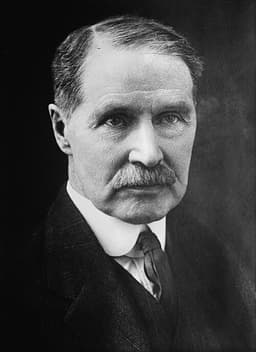
Bonar Law
Politician · Modern
44.8Total
Basic Information
Born
1583
1858
Died
1654
1923
Era
Modern
Modern
Nationality
Sweden
United Kingdom
Occupation
Politician
Politician
Civilization
Western
Western
Score Comparison
Military (10%)
55.0
46.9
Political (20%)
75.0
43.7
Influence (20%)
72.0
47.9
Legacy (20%)
55.0
38.3
Leadership (15%)
78.0
51.9
Strategy (15%)
60.0
42.0
TOTAL
66.2
44.8
Axel Oxenstierna — Complete Timeline
1612 AD
Appointed Lord High Chancellor of SwedenPolitical Action◆ Major
Axel Oxenstierna was appointed Lord High Chancellor by King Gustavus Adolphus. This position made him the chief administrator of the Swedish government, a role he held for over four decades, shaping Swedish policy during its rise as a great power.
GovernmentAdministrationSwedish Empire
Impact: nationalconstructive
1632 AD
Governed Sweden during Christina's minorityPolitical Action◆ Major
After King Gustavus Adolphus died at the Battle of L
RegencyThirty Years' WarGovernment
Impact: nationalconstructive
1634 AD
Implemented the Form of Government of 1634Reform◆ Major
Oxenstierna introduced a new constitution that established a centralized administrative system with five government colleges. This reform streamlined governance, reduced the power of the nobility, and created a more efficient state apparatus that lasted for over a century.
ConstitutionAdministrationReform
Impact: nationalconstructive
1648 AD
Negotiated the Treaty of WestphaliaPolitical Action
Oxenstierna led Swedish negotiations at the Peace of Westphalia, which ended the Thirty Years' War. Sweden gained territories including Western Pomerania, Bremen, and Verden, securing its status as a major European power and gaining control of key Baltic and North Sea ports.
TreatyThirty Years' WarSwedish Empire
Impact: globalconstructive
Bonar Law — Complete Timeline
1911 AD
Served as Leader of the Conservative PartyPolitical Action◆ Major
Bonar Law was elected leader of the Conservative Party, succeeding Arthur Balfour. He led the party through the pre-war period, opposing Irish Home Rule and supporting tariff reform. His leadership helped unify the party.
Conservative PartyLeadershipHome Rule
Impact: nationalconstructive
1912 AD
Opposed Irish Home RulePolitical Action◆ Major
Bonar Law led Conservative opposition to the Third Home Rule Bill, which would have granted Ireland self-government. He supported the Ulster Unionists and warned of civil war, contributing to the political crisis in Ireland.
IrelandHome RuleUnionism
Impact: regionaldestructive
1922 AD
Became Prime Minister of the United KingdomPolitical Action◆ Major
Bonar Law became Prime Minister after the Conservative Party withdrew from the coalition government. He served for 211 days, the shortest term of any 20th-century UK PM. His government focused on trade and post-war reconstruction.
Prime MinisterConservative PartyShortest term
Impact: national
1923 AD
Resigned as Prime Minister due to ill healthPolitical Action◆ Major
Bonar Law resigned as Prime Minister in May 1923 after being diagnosed with terminal throat cancer. He was succeeded by Stanley Baldwin. His resignation marked the end of his brief premiership.
ResignationHealthPrime Minister
Impact: nationaltragic
Expert Analysis
Origins
Axel Oxenstierna was born in 1583 in Fånö, Sweden, into a high-ranking noble family. His father, Gustaf Gabrielsson Oxenstierna, was a privy councillor, and his mother, Barbro Bielke, came from another powerful clan. He studied at the universities of Rostock and Jena, acquiring a deep knowledge of law and statecraft. His early career included diplomatic missions and administrative posts, preparing him for the highest office.
Bonar Law was born in 1858 in Rexton, New Brunswick, Canada, to a Presbyterian minister father from Ulster and a mother of Scottish descent. After his mother's death, he was raised by wealthy relatives in Scotland. He left school at 16 to work in the iron trade, eventually becoming a partner in a Glasgow iron firm. His business success funded his entry into politics; he was elected as Conservative MP for Glasgow Blackfriars in 1900.
Rise to Power
Oxenstierna rose through the Swedish bureaucracy, catching the attention of King Gustavus Adolphus. In 1612, at age 29, he was appointed Lord High Chancellor, the chief minister of the realm. He became indispensable to the king, managing domestic affairs while the king campaigned abroad. After Gustavus Adolphus's death at the Battle of Lützen in 1632, Oxenstierna assumed regency for the six-year-old Queen Christina, effectively ruling Sweden for over a decade.
Bonar Law's rise was more gradual. He became Parliamentary Secretary to the Board of Trade in 1902, then served as opposition leader after the Conservatives lost the 1906 election. He succeeded Arthur Balfour as Conservative Party leader in 1911. During World War I, he joined the coalition government as Chancellor of the Exchequer in 1916 under David Lloyd George. In 1922, he led the Conservative revolt that ended the coalition, becoming Prime Minister in October 1922.
Leadership & Governance
Oxenstierna's governance was marked by administrative efficiency and centralization. He implemented the Form of Government of 1634, which established five government colleges (chancery, treasury, war, admiralty, and justice) that streamlined decision-making. He also reformed the tax system and improved the military's organization, enabling Sweden to sustain its involvement in the Thirty Years' War. His diplomatic skill secured Sweden's position in the Peace of Westphalia (1648), gaining territories including Western Pomerania. Oxenstierna's leadership style was meticulous and methodical, earning a Leadership score of 78.0.
Bonar Law's tenure as Prime Minister was brief—211 days—and his leadership was overshadowed by ill health. He focused on stabilizing the Conservative government after the coalition collapse, but his policy initiatives were limited. He opposed Irish Home Rule with fervor, supporting Ulster Unionists, but his government did not pass major legislation. His Political score of 43.7 reflects his lack of transformative impact. His leadership style was cautious and conciliatory, but he lacked the strategic vision of a long-term leader.
Triumph & Tragedy
Oxenstierna's greatest triumph was the Peace of Westphalia, which ended the Thirty Years' War and established Sweden as a major European power. His administrative reforms created a modern state apparatus that lasted for generations. However, his tragedy came later: his regency ended when Queen Christina assumed personal rule in 1644, and she rejected his advice, pursuing an extravagant court and eventually abdicating in 1654. Oxenstierna died in 1654, seeing his life's work partially undone.
Bonar Law's triumph was becoming Prime Minister, a remarkable rise from a Canadian-born iron merchant. He successfully led the Conservative Party through the difficult pre-war period. His tragedy was his short, illness-plagued tenure. He resigned in May 1923 due to terminal throat cancer, dying later that year. He left no major legislative achievements, and his influence waned quickly after his resignation.
Character & Destiny
Oxenstierna was patient, disciplined, and intellectually rigorous. His character shaped Sweden's destiny by providing stable governance during a king's minority. He was a master of detail and long-term planning, which allowed Sweden to punch above its weight in European politics. His fate was to be ultimately sidelined by a young queen who valued her independence over his counsel.
Bonar Law was reserved, honest, and pragmatic. His character earned him respect but not adulation. His destiny was to be a caretaker Prime Minister, stepping in at a moment of crisis but lacking the energy or time to leave a mark. His early death sealed his status as a footnote in British political history.
Legacy
Oxenstierna's legacy is substantial. His administrative system influenced Swedish governance for centuries. The Peace of Westphalia is a cornerstone of modern international relations, and his role in it is remembered. His Legacy score of 55.0 reflects his enduring impact on Swedish state-building and European diplomacy.
Bonar Law's legacy is minimal. He is remembered as the shortest-serving UK Prime Minister of the 20th century. His opposition to Irish Home Rule contributed to the partition of Ireland, but that was a party stance rather than personal achievement. His Influence score of 47.9 and Legacy score of 38.3 indicate limited long-term impact.
Conclusion
Axel Oxenstierna had a significantly greater historical impact than Bonar Law. Oxenstierna's total score of 66.2 dwarfs Law's 44.8, a gap of 21.4 points. While Law played a role in British politics during a turbulent period, Oxenstierna shaped the destiny of Sweden and Europe through war, diplomacy, and administrative reform. His leadership (78.0 vs 51.9) and political skills (75.0 vs 43.7) were far superior. Bonar Law's brief tenure and lack of major accomplishments make him a minor figure compared to Oxenstierna, who stands as one of Sweden's greatest statesmen.
Rankings
🥇
Axel OxenstiernaLeader
Mil: 55.0Pol: 75.0Inf: 72.0
66.2
🥈
Bonar Law
Mil: 46.9Pol: 43.7Inf: 47.9
44.8
+21.4 behind
How This Comparison Works
Algorithm
Each figure is scored on 6 dimensions (0—100 scale) based on structured historical data: Military (10%), Political (20%), Influence (20%), Legacy (20%), Leadership (15%), Strategy (15%). The weighted total produces the final ranking.
Data Sources
Scores are computed from structured sub-indicators in the database. Scale factors adjust for era (Ancient ×0.85, Modern ×1.0) and civilization size (Eastern ×1.05, Other ×0.80) to account for differences in population and military scale.
Maximum 3 Figures
Comparisons are limited to 2—3 figures to ensure readability and statistical meaningfulness.
Error Margins
±5 points per dimension — Sub-scores are derived from historical records with inherent uncertainty. Two figures within 5 points on a dimension should be considered roughly equivalent in that area.
Total Score Accuracy
±3 points overall — The weighted combination of 6 dimensions produces a total score with approximately ±3 points of uncertainty. Differences of less than 3 points are not statistically significant— the figures are effectively tied.
Known Limitations
- Historical records are incomplete and uneven across civilizations
- Figures from oral-tradition societies may be underrepresented
- Occupation labels can misclassify multi-role figures
- Scores measure capability and impact, not moral character
- Quantitative scoring is a comparison tool, not absolute truth
Capability Radar
Military (10%) — Battles & Warfare
Battles
30
30
Win Rate
40
34
Expansion
65
38
Political (20%) — Governance & Reform
Reform
90
30
Diplomacy
85
40
Economy
80
35
Influence (20%) — Cultural & Global Reach
Cultural
60
10
Global
65
15
Legacy (20%) — Historical Impact
Historical
75
20
Longevity
70
10
Leadership (15%) — Power & Stability
Tenure
85
20
Stability
75
25
Strategy (15%) — Tactics & Innovation
Strategy
60
40
Tactics
45
38
Reform
70
43
Similar Comparisons
Comments & Discussion
No comments yet. Be the first to share your thoughts!