Loading...
Aybak vs Julius Caesar
Julius Caesar leads by 42.3 pts · 2 figures compared
…
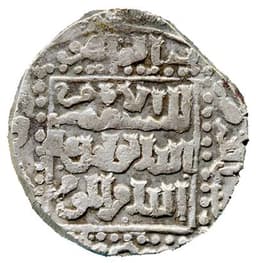
Aybak
Emperor · Medieval
40.5Total

Julius Caesar
General · Ancient
82.8Total
Basic Information
Born
1200
-100
Died
1257
-44
Era
Medieval
Ancient
Nationality
Egypt
Roman Republic
Occupation
Emperor
General
Civilization
Middle Eastern
Western
Score Comparison
Military (10%)
55.0
88.0
Political (20%)
26.4
78.0
Influence (20%)
47.9
85.0
Legacy (20%)
40.8
82.0
Leadership (15%)
33.6
80.0
Strategy (15%)
38.6
85.0
TOTAL
40.5
82.8
Aybak — Complete Timeline
1250 AD
Conflict with the Ayyubids (1250-1251)War◆ Major
Aybak faced a rebellion from the Ayyubid prince An-Nasir Yusuf of Syria, who claimed the sultanate. Aybak defeated the Ayyubid forces at the Battle of Al-Kura in 1251. This victory consolidated Mamluk control over Egypt and prevented Ayyubid restoration.
Mamluk-Ayyubid WarBattleConsolidation
Impact: regionaldestructive
Accession as First Mamluk Sultan (1250)Political Action◆ Major
Aybak became the first Mamluk Sultan of Egypt after marrying Shajar al-Durr and forcing her abdication. He was recognized by the Abbasid Caliph in Cairo. This marked the formal establishment of the Mamluk Sultanate, ending Ayyubid rule in Egypt.
Mamluk SultanateSuccessionEgypt
Impact: regional
1257 AD
Murder of Aybak (1257)Other◆ Major
Aybak was murdered in his bathhouse on the orders of his wife Shajar al-Durr. She feared he would replace her with another wife. His death triggered a succession crisis and led to the rise of his son Al-Mansur Ali, with Qutuz as regent.
AssassinationSuccession CrisisMamluk Sultanate
Impact: regionaltragic
Julius Caesar — Complete Timeline
58 BC
Gallic WarsWar◆ Major
Caesar, as proconsul of Gaul, launched a series of campaigns that conquered all of Gaul (modern France, Belgium, and parts of Switzerland). He fought numerous battles, including against the Helvetii, the Belgae, and the Gallic chieftain Vercingetorix. The wars brought immense wealth and a loyal army to Caesar.
Gallic WarsConquestRoman Expansion
Impact: regional
49 BC
Crossing the RubiconPolitical Action◆ Major
Caesar led Legio XIII across the Rubicon River into Italy, defying the Roman Senate's order to disband his army. This act triggered a civil war against Pompey and the Optimates, ultimately leading to Caesar's dictatorship and the end of the Roman Republic.
Roman Civil WarEnd of RepublicPower Struggle
Impact: global
48 BC
Battle of PharsalusWar◆ Major
Caesar's outnumbered army defeated the larger forces of Pompey the Great at Pharsalus in Greece. Caesar's tactical use of a reserve line to counter Pompey's cavalry charge proved decisive. Pompey fled to Egypt, where he was assassinated, leaving Caesar as the undisputed master of the Roman world.
Roman Civil WarBattleDecisive Victory
Impact: regional
44 BC
Appointment as Dictator for LifePolitical Action◆ Major
The Roman Senate appointed Caesar dictator perpetuo (dictator for life), granting him unprecedented personal power. This move concentrated military, legislative, and judicial authority in one person, effectively ending the Roman Republic's traditional system of checks and balances and alarming many senators.
DictatorshipEnd of RepublicPower Consolidation
Impact: regionaldestructive
Assassination on the Ides of MarchPolitical Action◆ Major
A group of Roman senators, led by Marcus Junius Brutus and Gaius Cassius Longinus, stabbed Caesar to death at a meeting of the Senate in the Theatre of Pompey. The assassination was intended to restore the Republic, but instead triggered another civil war that led to the rise of the Roman Empire.
AssassinationRoman PoliticsEnd of Republic
Impact: globaldestructive
Expert Analysis
aybak-vs-julius-caesar
# The Crossing of Two Fates
On a winter morning in 1257, the Mamluk sultan Aybak stepped into his bathhouse in Cairo, never to emerge alive. His wife’s assassins waited in the steam. Nearly thirteen centuries earlier, on the Ides of March in 44 BCE, Julius Caesar fell beneath sixty dagger strokes in the Roman Senate. Both men were murdered by those closest to them. Both had seized supreme power. Yet one name echoes through millennia as the architect of an empire, while the other survives only as a footnote in the chronicles of medieval Egypt. What separates a titan from a footnote? The answer lies not in the violence of their ends, but in the architecture of their lives.
Origins
Caesar was born into the patrician Julian clan, a family that traced its lineage to the goddess Venus. Yet his Rome was a republic in crisis—corrupt, faction-ridden, and bleeding from civil wars. His youth was marked by exile, debt, and a precarious political climb. He learned early that survival meant mastering the art of alliance.
Aybak emerged from a different world entirely. He was a Turkic slave, purchased for the army of the Ayyubid sultan. In the Mamluk system, military slaves could rise to command, but their power was contingent on loyalty to a constantly shifting web of peers and patrons. Aybak’s Egypt was a kingdom under siege—Crusaders to the west, Mongols to the east, and the ghost of the Ayyubid dynasty haunting every throne.
Where Caesar inherited a name and had to forge his own path, Aybak inherited nothing but his sword. The difference in their starting points shaped everything that followed.
Rise to Power
Caesar’s ascent was a masterpiece of calculated risk. He forged the First Triumvirate with Pompey and Crassus, won command in Gaul, and spent eight years conquering a territory that made him fabulously wealthy and beloved by his legions. When the Senate ordered him to disband his army, he crossed the Rubicon River in 49 BCE—an act of treason that ignited civil war. Within four years, he was dictator for life.
Aybak’s rise was narrower and more desperate. In 1250, the Mamluk generals had just defeated the Crusader army of Louis IX at Mansoura. The reigning sultan, Turanshah, was murdered by his own Mamluks. Aybak, a senior officer, married the regent Shajar al-Durr—the widow of the former sultan—and forced her to abdicate. He became sultan not through conquest or popular acclaim, but through a palace coup. His legitimacy was borrowed, and it never became his own.
Caesar seized power by breaking the old order. Aybak seized power by slipping into a vacuum—and he never managed to fill it.
Leadership & Governance
Caesar governed with audacity and vision. He reformed the calendar, granted citizenship to Gauls, launched public works, and centralized the debt-ridden state. His military genius was legendary—the siege of Alesia, the lightning campaign at Pharsalus—but his political genius was even greater. He understood that power required popularity, and he cultivated it relentlessly.
Aybak governed in constant anxiety. His reign was a series of defensive maneuvers: crushing a rebellion by the Ayyubid prince An-Nasir Yusuf of Syria in 1250–1251, fending off rival Mamluk factions, and trying to hold together a fractious military elite. He built no lasting institutions, enacted no sweeping reforms. His strategy was survival, not transformation. Where Caesar expanded Rome’s borders, Aybak barely held his own.
Triumph & Tragedy
Caesar’s greatest triumph was his conquest of Gaul—a feat that doubled Rome’s territory and made him the most powerful man in the Mediterranean. His greatest tragedy was his assassination, which plunged Rome into another generation of civil war. Yet even in death, his legacy endured: his adopted heir Octavian would become Augustus, the first Roman emperor.
Aybak’s triumph was modest: he kept the Mamluk sultanate alive in its fragile infancy. His tragedy was his murder—not by enemies of state, but by his wife, who feared he would replace her with another woman. The bathhouse in Cairo was not the Senate floor. The assassin’s motive was not political principle, but personal jealousy.
Character & Destiny
Caesar was audacious, charismatic, and ruthlessly calculating. He gambled constantly—on Gaul, on the Rubicon, on clemency toward his enemies—and won almost every bet. His confidence bordered on arrogance, but it inspired devotion. His soldiers followed him because they believed he could not fail.
Aybak was cautious, pragmatic, and ultimately isolated. He never commanded the loyalty of his Mamluks the way Caesar commanded his legions. He ruled through fear and marriage, not through vision and trust. His murder was not a political assassination in the grand Roman style; it was a domestic quarrel turned fatal. The scale of his character matched the scale of his ambition—and both were modest.
Legacy
Caesar’s name became synonymous with imperial power—from the German *Kaiser* to the Russian *Tsar*. His writings, his reforms, his assassination, and his rise are studied in every military academy and history classroom. He is a fixed star in the Western imagination.
Aybak is remembered only by specialists. He founded the Mamluk Sultanate, which would go on to defeat the Mongols at Ain Jalut in 1260 and rule Egypt for centuries. But he did not shape its character. That honor belongs to his successor, Baybars. Aybak was a placeholder, a necessary but forgettable first step.
Conclusion
Standing at the edge of history, we see two men who both rose from obscurity to supreme power—and both died violently at the hands of their own. Yet the gulf between them is not merely a matter of scale. Caesar understood that power is not a prize to be seized, but a story to be written. He wrote his in blood, marble, and law. Aybak, trapped in the narrow corridors of a palace, could only hold on. In the end, the difference between a legend and a footnote is the difference between a man who builds an empire and a man who merely survives a throne.
Rankings
🥇
Julius CaesarLeader
Mil: 88.0Pol: 78.0Inf: 85.0
82.8
🥈
Aybak
Mil: 55.0Pol: 26.4Inf: 47.9
40.5
+42.3 behind
How This Comparison Works
Algorithm
Each figure is scored on 6 dimensions (0—100 scale) based on structured historical data: Military (10%), Political (20%), Influence (20%), Legacy (20%), Leadership (15%), Strategy (15%). The weighted total produces the final ranking.
Data Sources
Scores are computed from structured sub-indicators in the database. Scale factors adjust for era (Ancient ×0.85, Modern ×1.0) and civilization size (Eastern ×1.05, Other ×0.80) to account for differences in population and military scale.
Maximum 3 Figures
Comparisons are limited to 2—3 figures to ensure readability and statistical meaningfulness.
Error Margins
±5 points per dimension — Sub-scores are derived from historical records with inherent uncertainty. Two figures within 5 points on a dimension should be considered roughly equivalent in that area.
Total Score Accuracy
±3 points overall — The weighted combination of 6 dimensions produces a total score with approximately ±3 points of uncertainty. Differences of less than 3 points are not statistically significant— the figures are effectively tied.
Known Limitations
- Historical records are incomplete and uneven across civilizations
- Figures from oral-tradition societies may be underrepresented
- Occupation labels can misclassify multi-role figures
- Scores measure capability and impact, not moral character
- Quantitative scoring is a comparison tool, not absolute truth
Capability Radar
Military (10%) — Battles & Warfare
Battles
30
95
Win Rate
35
92
Expansion
25
97
Political (20%) — Governance & Reform
Reform
15
90
Diplomacy
20
85
Economy
15
82
Influence (20%) — Cultural & Global Reach
Cultural
15
88
Global
10
94
Legacy (20%) — Historical Impact
Historical
25
95
Longevity
20
96
Leadership (15%) — Power & Stability
Tenure
20
75
Stability
10
60
Strategy (15%) — Tactics & Innovation
Strategy
20
94
Tactics
25
96
Reform
15
88
Similar Comparisons
Comments & Discussion
No comments yet. Be the first to share your thoughts!