Loading...
B. J. Habibie vs Nouri al-Maliki
B. J. Habibie leads by 5.2 pts · 2 figures compared
…

B. J. Habibie
Politician · Modern
53.0Total
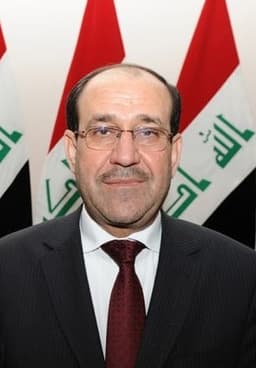
Nouri al-Maliki
Politician · Modern
47.8Total
Basic Information
Born
1936
1950
Died
—
—
Era
Modern
Modern
Nationality
Indonesia
Iraq
Occupation
Politician
Politician
Civilization
Eastern
Middle Eastern
Score Comparison
Military (10%)
15.7
36.6
Political (20%)
72.0
35.1
Influence (20%)
61.0
51.8
Legacy (20%)
49.2
42.5
Leadership (15%)
67.0
67.0
Strategy (15%)
30.0
52.8
TOTAL
53.0
47.8
B. J. Habibie — Complete Timeline
1978 AD
Minister of Research and TechnologyPolitical Action
B. J. Habibie was appointed Minister of Research and Technology by President Suharto. He promoted industrial development, particularly in aerospace and shipbuilding, through state-owned enterprises.
MinisterTechnologyIndustrialization
Impact: nationalconstructive
1998 AD
Vice President of IndonesiaPolitical Action◆ Major
B. J. Habibie was appointed Vice President of Indonesia by Suharto. He served for only two months before Suharto resigned amid the Asian financial crisis and widespread protests.
Vice PresidentSuhartoAsian financial crisis
Impact: national
Presidency and democratic reformsPolitical Action◆ Major
B. J. Habibie became President of Indonesia after Suharto's resignation. He initiated democratic reforms, including freeing political prisoners, allowing press freedom, and holding the first free elections in 1999.
PresidentDemocratic reformsFree elections
Impact: nationalprogressive
1999 AD
East Timor referendumPolitical Action◆ Major
B. J. Habibie allowed a UN-supervised referendum in East Timor, where voters chose independence from Indonesia. The decision was controversial but ended decades of conflict and occupation.
East TimorReferendumIndependence
Impact: regionalconstructive
Nouri al-Maliki — Complete Timeline
2006 AD
Election as Prime MinisterPolitical Action◆ Major
Maliki was elected Prime Minister of Iraq by the Council of Representatives, forming a unity government. His election followed months of political deadlock after the 2005 parliamentary elections, and he inherited a country mired in sectarian violence.
Prime MinisterGovernment FormationPost-2003 Iraq
Impact: national
2007 AD
Surge and the Battle of BaghdadWar◆ Major
Maliki supported the US troop surge and launched the Baghdad Security Plan, a joint US-Iraqi operation to reduce sectarian violence. The plan succeeded in lowering casualty rates, but Maliki's government was criticized for sectarian bias in its security forces.
SurgeSecuritySectarian Violence
Impact: national
2011 AD
US withdrawal from IraqPolitical Action
Maliki's government oversaw the complete withdrawal of US combat forces from Iraq by December 2011, as per the Status of Forces Agreement. The withdrawal ended the US military presence, but left Iraq facing security challenges and political instability.
US WithdrawalSovereigntyPost-War
Impact: global
2014 AD
Rise of ISIS and loss of territoryWar
Under Maliki's leadership, the Iraqi army collapsed in the face of the Islamic State (ISIS) offensive, losing control of Mosul and large parts of northern Iraq. Maliki's sectarian policies were blamed for alienating Sunnis and enabling ISIS's rise.
ISISMilitary CollapseSectarianism
Impact: regionaldestructive
Resignation as Prime MinisterPolitical Action◆ Major
Facing intense domestic and international pressure after the ISIS advance, Maliki resigned as Prime Minister in August 2014. He was succeeded by Haider al-Abadi, ending his eight-year tenure and marking a shift in Iraqi politics.
ResignationPolitical ChangeSuccession
Impact: national
Expert Analysis
Origins
B. J. Habibie was born on June 25, 1936, in Parepare, South Sulawesi, Dutch East Indies. His father was an agriculturist, and his mother was a housewife. He studied at Bandung Institute of Technology before moving to West Germany in 1955, where he earned a doctorate in aeronautical engineering from RWTH Aachen University in 1965. Habibie worked at Messerschmitt-Bölkow-Blohm, becoming a vice president in 1974. His expertise in aerospace engineering brought him to the attention of President Suharto, who appointed him as Minister of Research and Technology in 1978, a position he held for 20 years.
Nouri al-Maliki was born on June 20, 1950, in Al-Hillah, Iraq. He came from a Shia Muslim family and studied at the University of Baghdad, earning a degree in religious studies in 1973. He joined the Islamic Dawa Party in the late 1960s, engaging in underground opposition to Saddam Hussein's Ba'athist regime. Forced into exile in 1979, Maliki spent over two decades in Syria and Iran, rising through the party ranks as a coordinator of anti-regime activities.
Rise to Power
Habibie's rise was tightly linked to President Suharto. After serving as Minister of Research and Technology from 1978 to 1998, he was elected Vice President in March 1998 by the People's Consultative Assembly. However, the Asian financial crisis triggered massive protests, forcing Suharto to resign on May 21, 1998. Habibie succeeded him as president, inheriting a nation in turmoil. His presidency began with little political capital, but he quickly moved to distance himself from Suharto's authoritarian rule.
Maliki's rise came after the 2003 US invasion of Iraq. He returned from exile in 2003 and became a prominent figure in the post-Saddam political process. He was elected to the Transitional National Assembly in 2005 and played a key role in drafting the new constitution. In April 2006, after months of political deadlock, Maliki was elected Prime Minister by the Council of Representatives, forming a unity government aimed at reconciling Iraq's sectarian divides.
Leadership & Governance
Habibie's leadership was defined by rapid democratization. Within months, he freed political prisoners, lifted restrictions on the press, and allowed the formation of political parties. He passed laws to hold free elections in 1999, the first since 1955. His most controversial decision was to allow a UN-supervised referendum in East Timor in August 1999, where 78.5% voted for independence. This decision was seen as a betrayal by Indonesian nationalists but earned him international praise. Habibie's governance score is 67.0, reflecting his democratic reforms.
Maliki's leadership was marked by sectarian tensions and war. He supported the US troop surge in 2007, which reduced violence in Baghdad. However, his tenure was criticized for centralizing power, marginalizing Sunni Arabs, and failing to integrate former Ba'athists. His governance score is also 67.0, but his political score is only 35.1 due to his inability to build lasting coalitions. Under his watch, the Iraqi army collapsed in 2014 when ISIS seized Mosul and large parts of northern Iraq, a turning point that forced his resignation.
Triumph & Tragedy
Habibie's greatest triumph was guiding Indonesia through a peaceful transition from authoritarianism to democracy. He passed 68 laws in 17 months, including anti-monopoly and human rights legislation. The 1999 legislative elections were free and fair, setting the stage for Indonesia's democratic consolidation. His tragedy was the loss of East Timor, which damaged his domestic reputation. The violence that followed the referendum, with pro-Indonesian militias destroying infrastructure, led to an international intervention. Habibie's legacy score is 49.2, reflecting mixed views.
Maliki's triumph was overseeing the US withdrawal from Iraq in 2011, fulfilling a key political goal. His government also achieved a temporary reduction in sectarian violence during the 2007 surge. His tragedy was the catastrophic rise of ISIS in 2014, when his army of 300,000 soldiers fled from a few thousand militants. Mosul fell on June 10, 2014, leading to the displacement of hundreds of thousands. Maliki's leadership score of 67.0 is undermined by his political failures, resulting in a total score of 47.8.
Character & Destiny
Habibie was an intellectual and technocrat, often seen as a dreamer. His decision-making was fast and idealistic, prioritizing democratic principles over political expediency. He scored 30.0 in strategy, reflecting his lack of political maneuvering. His character led to a brief presidency (17 months) but a lasting legacy as the father of Indonesian reformasi.
Maliki was a shrewd political survivor, but his sectarian instincts and authoritarian tendencies alienated allies. He scored 52.8 in strategy, showing tactical skill but strategic blindness. His refusal to accommodate Sunnis fueled the insurgency that became ISIS. His destiny was to be forced out of power by his own party and international pressure, leaving office in August 2014 with his reputation in tatters.
Legacy
Habibie's legacy is the foundation of Indonesian democracy. The reforms he initiated were continued by his successors, leading to a stable democratic system. His influence score of 61.0 reflects his role as a transitional figure. He is remembered as a reformer who chose freedom over power, despite the cost.
Maliki's legacy is more negative. He is associated with the fragmentation of Iraq, the rise of ISIS, and the failure of democratic governance. His influence score of 51.8 is modest, as his tenure set back Iraqi stability for years. However, his role in the 2007 surge is acknowledged as a tactical success.
Conclusion
B. J. Habibie had a greater impact than Nouri al-Maliki. Habibie scored 53.0 overall, while Maliki scored 47.8. Habibie's democratic reforms transformed Indonesia from a dictatorship into the world's third-largest democracy, a lasting achievement that improved the lives of 200 million people. Maliki's tenure, in contrast, ended with Iraq in chaos, having squandered opportunities for unity. While both faced immense challenges, Habibie's decisions created a positive legacy, whereas Maliki's actions exacerbated conflict. The data supports Habibie as the more effective leader, with higher scores in political (72.0 vs 35.1) and legacy (49.2 vs 42.5) categories.
Rankings
🥇
B. J. HabibieLeader
Mil: 15.7Pol: 72.0Inf: 61.0
53.0
🥈
Nouri al-Maliki
Mil: 36.6Pol: 35.1Inf: 51.8
47.8
+5.2 behind
How This Comparison Works
Algorithm
Each figure is scored on 6 dimensions (0—100 scale) based on structured historical data: Military (10%), Political (20%), Influence (20%), Legacy (20%), Leadership (15%), Strategy (15%). The weighted total produces the final ranking.
Data Sources
Scores are computed from structured sub-indicators in the database. Scale factors adjust for era (Ancient ×0.85, Modern ×1.0) and civilization size (Eastern ×1.05, Other ×0.80) to account for differences in population and military scale.
Maximum 3 Figures
Comparisons are limited to 2—3 figures to ensure readability and statistical meaningfulness.
Error Margins
±5 points per dimension — Sub-scores are derived from historical records with inherent uncertainty. Two figures within 5 points on a dimension should be considered roughly equivalent in that area.
Total Score Accuracy
±3 points overall — The weighted combination of 6 dimensions produces a total score with approximately ±3 points of uncertainty. Differences of less than 3 points are not statistically significant— the figures are effectively tied.
Known Limitations
- Historical records are incomplete and uneven across civilizations
- Figures from oral-tradition societies may be underrepresented
- Occupation labels can misclassify multi-role figures
- Scores measure capability and impact, not moral character
- Quantitative scoring is a comparison tool, not absolute truth
Capability Radar
Military (10%) — Battles & Warfare
Battles
13
5
Win Rate
19
5
Expansion
17
5
Political (20%) — Governance & Reform
Reform
75
30
Diplomacy
60
25
Economy
40
20
Influence (20%) — Cultural & Global Reach
Cultural
45
15
Global
50
25
Legacy (20%) — Historical Impact
Historical
55
30
Longevity
40
15
Leadership (15%) — Power & Stability
Tenure
20
60
Stability
30
10
Strategy (15%) — Tactics & Innovation
Strategy
23
5
Tactics
26
5
Reform
30
5
Similar Comparisons
Comments & Discussion
No comments yet. Be the first to share your thoughts!