Loading...
Chen Yun vs Turgut Ozal
Turgut Ozal leads by 2.9 pts · 2 figures compared
…
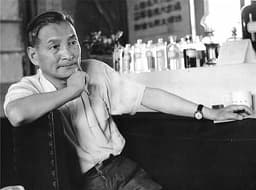
Chen Yun
Politician · Modern
55.2Total

Turgut Ozal
Politician · Modern
58.1Total
Basic Information
Born
1905
1927
Died
1995
—
Era
Modern
Modern
Nationality
China
Turkey
Occupation
Politician
Politician
Civilization
Eastern
Middle Eastern
Score Comparison
Military (10%)
11.7
43.7
Political (20%)
70.3
78.0
Influence (20%)
62.0
56.7
Legacy (20%)
55.0
52.0
Leadership (15%)
78.0
72.0
Strategy (15%)
25.6
40.6
TOTAL
55.2
58.1
Chen Yun — Complete Timeline
1925 AD
Joined the Chinese Communist PartyPolitical Action◆ Major
Chen Yun joined the Chinese Communist Party during the May Thirtieth Movement. He began his career as a labor organizer in Shanghai, rising through the ranks of the party's underground apparatus.
CCP MembershipLabor MovementShanghai
Impact: nationalconstructive
1961 AD
Led economic reconstruction after the Great Leap ForwardReform◆ Major
Chen Yun was appointed to lead economic recovery efforts after the disastrous Great Leap Forward. He implemented policies that reduced central planning, allowed private plots, and stabilized the economy, saving millions from famine.
Economic ReformGreat Leap ForwardFamine Relief
Impact: nationalconstructive
1966 AD
Purged during the Cultural RevolutionPolitical Action◆ Major
Chen Yun was purged from his leadership positions during the Cultural Revolution, accused of being a capitalist roader. He was sent to work in a factory in Jiangxi, but survived the period without being killed.
Cultural RevolutionPurgeEconomic Planning
Impact: nationaldestructive
1978 AD
Advocated for market reforms under Deng XiaopingReform◆ Major
Chen Yun supported Deng Xiaoping's economic reforms, advocating for a 'birdcage economy' that combined state planning with market mechanisms. He helped design the Special Economic Zones and agricultural decollectivization.
Deng XiaopingEconomic ReformMarket Economy
Impact: nationalconstructive
1987 AD
Served as Chairman of the Central Advisory CommissionPolitical Action
Chen Yun became Chairman of the Central Advisory Commission, a body of retired senior leaders. He used this position to influence economic policy, often cautioning against excessive market liberalization.
Advisory CommissionEconomic PolicyElder Statesman
Impact: national
Turgut Ozal — Complete Timeline
1979 AD
Appointed as Undersecretary to the Prime MinisterPolitical Action
Turgut Ozal was appointed as undersecretary to Prime Minister Suleyman Demirel, overseeing economic affairs. He played a key role in implementing the January 24 economic reforms.
Economic ReformsUndersecretaryDemirel
Impact: nationalconstructive
1980 AD
Implemented the January 24 Economic ReformsReform
Ozal designed and implemented a comprehensive economic stabilization and liberalization program. The reforms included devaluation, export promotion, and deregulation, shifting Turkey from import-substitution to a market-oriented economy.
Economic LiberalizationMarket ReformsStabilization
Impact: nationalconstructive
Appointed as Deputy Prime MinisterPolitical Action◆ Major
After the 1980 military coup, Ozal was appointed Deputy Prime Minister in charge of economic affairs by the military government. He continued implementing his economic reforms.
Military GovernmentDeputy Prime MinisterEconomic Policy
Impact: nationalconstructive
1983 AD
Founded the Motherland Party and Became Prime MinisterPolitical Action◆ Major
Ozal founded the Motherland Party (ANAP) and led it to victory in the 1983 general election. He became Prime Minister of Turkey, serving until 1989.
Motherland PartyPrime MinisterElection Victory
Impact: nationalconstructive
1987 AD
Applied for European Community MembershipPolitical Action◆ Major
Ozal's government formally applied for full membership in the European Community (EC). The application marked a major step in Turkey's European integration efforts, though accession negotiations did not begin until decades later.
European CommunityMembership ApplicationEuropean Integration
Impact: nationalconstructive
1989 AD
Elected President of TurkeyPolitical Action◆ Major
Ozal was elected as the 8th President of Turkey by the Grand National Assembly. He served until his death in 1993, continuing to influence economic and foreign policy.
PresidencyHead of StateEconomic Policy
Impact: nationalconstructive
Expert Analysis
Origins
Chen Yun was born in 1905 in Qingpu, Jiangsu, China, into a poor peasant family. Orphaned at a young age, he worked as a printer's apprentice in Shanghai. He joined the Chinese Communist Party (CCP) in 1925 during the May Thirtieth Movement, starting as a labor organizer. His early experiences in the working class shaped his pragmatic approach to economics.
Turgut Ozal was born in 1927 in Malatya, Turkey, into a middle-class family. He studied electrical engineering at Istanbul Technical University and later earned a degree in economics from the University of Texas. He worked as a civil servant and engineer, gaining technical expertise that later informed his economic policies.
Rise to Power
Chen Yun rose through the CCP ranks as an economic specialist. He became a member of the Politburo in 1934 and was instrumental in managing the economy of the Yan'an base area. After the founding of the People's Republic in 1949, he became Vice Premier and Minister of Heavy Industry, playing a key role in the First Five-Year Plan (1953–1957). However, his pragmatic views clashed with Mao's radicalism, leading to his marginalization during the Great Leap Forward (1958–1961). After the famine, Mao appointed Chen to lead economic recovery in 1962, implementing policies that reduced central planning. He was purged during the Cultural Revolution (1966–1976) but rehabilitated in 1978 under Deng Xiaoping.
Turgut Ozal's rise came after the 1980 military coup. He was appointed Deputy Prime Minister in charge of economic affairs by the junta, tasked with implementing the January 24, 1980 reforms—a comprehensive stabilization and liberalization program. These reforms devalued the lira, promoted exports, and reduced state controls. In 1983, he founded the Motherland Party (ANAP) and won the general election, becoming Prime Minister. He served until 1989, when he was elected President, a position he held until his death in 1993.
Leadership & Governance
Chen Yun's leadership style was cautious and pragmatic. He advocated for a 'birdcage economy'—market mechanisms within a state-controlled framework. He opposed rapid liberalization, fearing instability. For example, in the early 1980s, he slowed down Deng's reforms to prevent inflation and inequality. His governance emphasized balanced growth, fiscal discipline, and gradual change. He scored 78.0 in leadership, reflecting his ability to influence policy despite not holding top positions after 1987.
Ozal was a bold reformer who embraced rapid liberalization. He dismantled state monopolies, privatized state-owned enterprises, and opened Turkey to foreign investment. He also pursued EU membership, applying in 1987. His governance style was centralizing and often bypassed bureaucratic hurdles. He scored 72.0 in leadership, showing strong but sometimes controversial decision-making. Ozal's political score of 78.0 reflects his electoral success and coalition-building.
Triumph & Tragedy
Chen Yun's greatest success was stabilizing China's economy after the Great Leap Forward, implementing policies that restored agricultural and industrial production. He also played a key role in the economic reforms of the 1980s, ensuring a gradual transition. His greatest failure was his inability to prevent the Cultural Revolution's excesses, though he was a victim himself. His influence waned after Deng consolidated power, and his cautious approach was eventually sidelined by faster reformers.
Ozal's triumph was transforming Turkey's economy from a closed, state-dominated system to a liberalized, export-oriented one. GDP growth averaged 5% during his tenure. He also strengthened Turkey's ties with the West. His tragedy was the rising inequality and inflation that accompanied the reforms. Additionally, his centralization of power and alleged corruption marred his legacy. He scored 52.0 in legacy, reflecting mixed long-term impact.
Character & Destiny
Chen Yun was reserved, analytical, and risk-averse. He often warned against haste, famously saying, 'We must cross the river by feeling the stones.' His cautious nature saved China from potential economic shocks but also limited his influence in a system that rewarded boldness. He died in 1995, respected but not revered.
Ozal was charismatic, visionary, and sometimes impulsive. He pushed reforms despite opposition from the military and bureaucracy. His character drove Turkey's modernization but also created conflicts. He died suddenly in 1993, possibly from poisoning, leaving his reforms incomplete. Historical assessments note his role as a transformative figure, though controversial.
Legacy
Chen Yun's legacy is the 'birdcage economy' concept, which influenced China's gradual reform path. His emphasis on fiscal prudence and central planning persists in Chinese economic policy. He is remembered as a 'wise man' who balanced market and state. However, his relatively low influence score of 62.0 reflects his secondary role compared to Deng.
Ozal's legacy is more visible: Turkey's economic liberalization, EU orientation, and the rise of Anatolian capital. His policies laid the groundwork for Turkey's growth in the 2000s. Yet, his legacy is contested due to inflation and corruption. His influence score of 56.7 is slightly lower than Chen's, but his political score of 78.0 is higher.
Conclusion
Chen Yun and Turgut Ozal both shaped economic transitions, but Ozal had greater transformative impact. Ozal's reforms were more comprehensive and irreversible, shifting Turkey from statism to capitalism. Chen's caution preserved stability but limited his direct impact. With a total score of 58.1 vs 55.2, Ozal's higher political and strategic scores demonstrate his greater ability to implement change. Chen's legacy is important but secondary to Deng Xiaoping's. Thus, Turgut Ozal is the more impactful figure.
Rankings
🥇
Turgut OzalLeader
Mil: 43.7Pol: 78.0Inf: 56.7
58.1
🥈
Chen Yun
Mil: 11.7Pol: 70.3Inf: 62.0
55.2
+2.9 behind
How This Comparison Works
Algorithm
Each figure is scored on 6 dimensions (0—100 scale) based on structured historical data: Military (10%), Political (20%), Influence (20%), Legacy (20%), Leadership (15%), Strategy (15%). The weighted total produces the final ranking.
Data Sources
Scores are computed from structured sub-indicators in the database. Scale factors adjust for era (Ancient ×0.85, Modern ×1.0) and civilization size (Eastern ×1.05, Other ×0.80) to account for differences in population and military scale.
Maximum 3 Figures
Comparisons are limited to 2—3 figures to ensure readability and statistical meaningfulness.
Error Margins
±5 points per dimension — Sub-scores are derived from historical records with inherent uncertainty. Two figures within 5 points on a dimension should be considered roughly equivalent in that area.
Total Score Accuracy
±3 points overall — The weighted combination of 6 dimensions produces a total score with approximately ±3 points of uncertainty. Differences of less than 3 points are not statistically significant— the figures are effectively tied.
Known Limitations
- Historical records are incomplete and uneven across civilizations
- Figures from oral-tradition societies may be underrepresented
- Occupation labels can misclassify multi-role figures
- Scores measure capability and impact, not moral character
- Quantitative scoring is a comparison tool, not absolute truth
Capability Radar
Military (10%) — Battles & Warfare
Battles
16
21
Win Rate
17
25
Expansion
20
28
Political (20%) — Governance & Reform
Reform
80
85
Diplomacy
70
70
Economy
90
90
Influence (20%) — Cultural & Global Reach
Cultural
40
55
Global
60
60
Legacy (20%) — Historical Impact
Historical
75
70
Longevity
65
55
Leadership (15%) — Power & Stability
Tenure
75
65
Stability
85
60
Strategy (15%) — Tactics & Innovation
Strategy
26
28
Tactics
27
32
Reform
28
35
Similar Comparisons
Comments & Discussion
No comments yet. Be the first to share your thoughts!