Loading...
Bahram V vs Demetrius I Poliorcetes
Bahram V leads by 3.3 pts · 2 figures compared
…

Bahram V
Emperor · Ancient
60.2Total
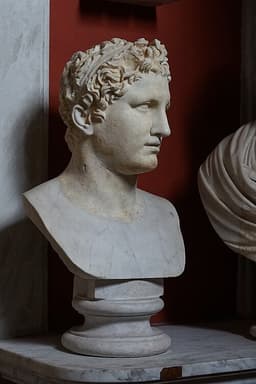
Demetrius I Poliorcetes
Emperor · Ancient
56.9Total
Basic Information
Born
400
-337
Died
438
-283
Era
Ancient
Ancient
Nationality
Sassanid Empire
Macedon
Occupation
Emperor
Emperor
Civilization
Middle Eastern
Western
Score Comparison
Military (10%)
67.5
67.3
Political (20%)
68.0
48.0
Influence (20%)
55.0
58.0
Legacy (20%)
52.0
50.0
Leadership (15%)
72.0
65.7
Strategy (15%)
57.5
61.2
TOTAL
60.2
56.9
Bahram V — Complete Timeline
420 AD
War with the HephthalitesWar◆ Major
Bahram V led the Sassanid army against the Hephthalite Empire (White Huns) in the east. He secured a victory that stabilized the eastern frontier and reinforced Sassanid control over the region.
Sassanid-Hephthalite WarEastern Frontier
Impact: regional
421 AD
Conflict with the Roman EmpireWar
Bahram V fought a war with the Eastern Roman Empire over the treatment of Christians in Persia. The conflict ended in a stalemate, with both sides agreeing to a peace treaty that maintained the status quo.
Roman-Persian WarReligious Tensions
Impact: regional
425 AD
Hunting and Literary PatronageCultural
Bahram V became a central figure in Persian literature and folklore, celebrated for his hunting prowess and romantic adventures. His reign was later idealized in the Shahnameh and other works, shaping Persian cultural identity.
Persian LiteratureShahnamehCultural Legacy
Impact: regionalconstructive
Demetrius I Poliorcetes — Complete Timeline
306 BC
Battle of Salamis in Cyprus (306 BC)War◆ Major
Demetrius commanded the Macedonian fleet to a decisive victory over Ptolemy I's navy off Salamis, Cyprus. He destroyed or captured much of the Ptolemaic fleet, allowing him to conquer Cyprus and establish a base for his father Antigonus I Monophthalmus.
Naval BattleCyprusAntigonid
Impact: regional
305 BC
Siege of Rhodes (305-304 BC)War◆ Major
Demetrius Poliorcetes besieged the city of Rhodes with massive siege engines, including the Helepolis, a 130-foot siege tower. After a year-long siege, he failed to capture the city and was forced to withdraw, but his innovative siege techniques earned him the epithet 'Poliorcetes' (Besieger of Cities).
SiegeMilitary EngineeringRhodes
Impact: regional
294 BC
Proclaimed King of Macedon (294 BC)Political Action◆ Major
After a period of chaos in Macedon, Demetrius seized the throne and was proclaimed king. He ruled Macedon for seven years, attempting to restore Antigonid power and launch campaigns to reclaim his father's empire in Asia.
KingshipMacedonAntigonid
Impact: regional
285 BC
Capture and Death in Seleucid Captivity (285 BC)Other◆ Major
After being defeated by Lysimachus and Pyrrhus, Demetrius fled to Asia Minor but was captured by Seleucus I. He was held in honorable captivity in Apamea, where he died three years later from illness and excessive drinking, ending his turbulent career.
CaptivityDeathSeleucid
Impact: regionaltragic
Expert Analysis
Origins
Bahram V (born c. 400 AD) was the son of Yazdegerd I, a Sassanid king. His early life was marked by his father's unpopularity due to pro-Christian policies, leading to Bahram's upbringing in the court of the Lakhmids, an Arab vassal kingdom. Demetrius I Poliorcetes (born c. 337 BC) was the son of Antigonus I Monophthalmus, a Macedonian general under Alexander the Great. He grew up in the turbulent Wars of the Diadochi, learning warfare from his father.
Rise to Power
Bahram V ascended to the throne in 420 AD after his father's assassination. He initially faced opposition from the nobility but secured power with the support of the Lakhmids. His early reign focused on consolidating control. Demetrius rose to prominence during the Wars of the Diadochi. In 307 BC, he liberated Athens from Cassander's garrison, gaining fame. His major breakthrough came at the Battle of Salamis in Cyprus (306 BC), where he defeated Ptolemy I's fleet, leading his father to declare himself king and Demetrius co-king.
Leadership & Governance
Bahram V's leadership was characterized by military campaigns and cultural patronage. He secured a victory against the Hephthalites (White Huns) in the east, stabilizing the frontier. He also fought a war with the Eastern Roman Empire over Christian persecution, ending in stalemate. His governance included support for Zoroastrianism and promotion of Persian literature. Demetrius was known for his aggressive military campaigns and siegecraft. He besieged Rhodes (305-304 BC) with massive engines like the Helepolis, but failed to take the city. His leadership style was flamboyant and he often relied on personal charisma. As king of Macedon (294-287 BC), he attempted to restore Antigonid power but faced rebellion due to his heavy-handed rule.
Triumph & Tragedy
Bahram's greatest success was his victory over the Hephthalites, securing the eastern border. He also became a legendary figure in Persian literature, celebrated for his hunting and romance. However, his conflict with Rome achieved no decisive advantage, and his internal policies did not prevent later Sassanid decline. Demetrius's triumph was the Battle of Salamis (306 BC), which established him as a major naval commander. His siege of Rhodes, though unsuccessful, showcased his engineering prowess. His tragedy was his eventual capture by Seleucus I in 285 BC, dying in captivity. He failed to restore the Antigonid empire and his reign ended in chaos.
Character & Destiny
Bahram V was portrayed as a charismatic and just ruler in Persian lore, but historical records suggest he was more focused on personal glory than statecraft. His reliance on the Lakhmids and nobility weakened central authority. Demetrius was known for his energy and ambition but also his arrogance and lack of strategic foresight. His nickname 'Poliorcetes' (Besieger) reflected his tactical focus, yet he often neglected long-term governance. Both figures' characters led to short-lived successes but ultimately failed to secure lasting power.
Legacy
Bahram V's legacy is primarily cultural: he became a central figure in Persian literature, including the Shahnameh, where his hunting and romantic adventures are immortalized. His military achievements were modest, and the Sassanid Empire continued its gradual decline. Demetrius's legacy is mixed: he is remembered for his siegecraft and the Helepolis, but his political failures overshadowed his military skill. His son Antigonus II Gonatas later founded the Antigonid dynasty. In terms of scores, Bahram V scored 60.2 total to Demetrius's 56.9, with Bahram higher in leadership (72.0 vs 65.7) and political (68.0 vs 48.0), while Demetrius had a slight edge in influence (58.0 vs 55.0) and strategy (61.2 vs 57.5).
Conclusion
Bahram V had a greater overall impact due to his higher total score and enduring cultural legacy. While Demetrius was a more innovative military commander, his failures in governance and lack of lasting political achievements diminish his influence. Bahram's integration into Persian literature ensured his fame outlasted Demetrius's, who is primarily studied by military historians. Thus, Bahram V is the more significant historical figure.
Rankings
🥇
Bahram VLeader
Mil: 67.5Pol: 68.0Inf: 55.0
60.2
🥈
Demetrius I Poliorcetes
Mil: 67.3Pol: 48.0Inf: 58.0
56.9
+3.3 behind
How This Comparison Works
Algorithm
Each figure is scored on 6 dimensions (0—100 scale) based on structured historical data: Military (10%), Political (20%), Influence (20%), Legacy (20%), Leadership (15%), Strategy (15%). The weighted total produces the final ranking.
Data Sources
Scores are computed from structured sub-indicators in the database. Scale factors adjust for era (Ancient ×0.85, Modern ×1.0) and civilization size (Eastern ×1.05, Other ×0.80) to account for differences in population and military scale.
Maximum 3 Figures
Comparisons are limited to 2—3 figures to ensure readability and statistical meaningfulness.
Error Margins
±5 points per dimension — Sub-scores are derived from historical records with inherent uncertainty. Two figures within 5 points on a dimension should be considered roughly equivalent in that area.
Total Score Accuracy
±3 points overall — The weighted combination of 6 dimensions produces a total score with approximately ±3 points of uncertainty. Differences of less than 3 points are not statistically significant— the figures are effectively tied.
Known Limitations
- Historical records are incomplete and uneven across civilizations
- Figures from oral-tradition societies may be underrepresented
- Occupation labels can misclassify multi-role figures
- Scores measure capability and impact, not moral character
- Quantitative scoring is a comparison tool, not absolute truth
Capability Radar
Military (10%) — Battles & Warfare
Battles
60
75
Win Rate
65
60
Expansion
55
70
Political (20%) — Governance & Reform
Reform
60
40
Diplomacy
65
50
Economy
55
45
Influence (20%) — Cultural & Global Reach
Cultural
75
55
Global
55
55
Legacy (20%) — Historical Impact
Historical
70
60
Longevity
70
50
Leadership (15%) — Power & Stability
Tenure
70
55
Stability
60
30
Strategy (15%) — Tactics & Innovation
Strategy
50
70
Tactics
55
85
Reform
40
50
Similar Comparisons
Comments & Discussion
No comments yet. Be the first to share your thoughts!