Loading...
Demetrius I Poliorcetes vs Emperor Xiaowen of Northern Wei
Emperor Xiaowen of Northern Wei leads by 2.5 pts · 2 figures compared
…
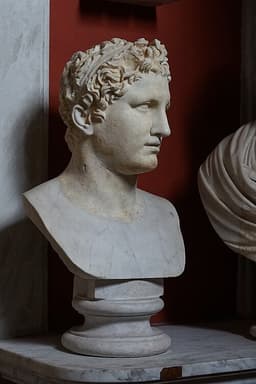
Demetrius I Poliorcetes
Emperor · Ancient
56.9Total
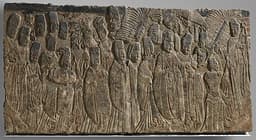
Emperor Xiaowen of Northern Wei
Emperor · Ancient
59.4Total
Basic Information
Born
-337
467
Died
-283
499
Era
Ancient
Ancient
Nationality
Macedon
China
Occupation
Emperor
Emperor
Civilization
Western
Eastern
Score Comparison
Military (10%)
67.3
55.0
Political (20%)
48.0
72.0
Influence (20%)
58.0
56.7
Legacy (20%)
50.0
52.0
Leadership (15%)
65.7
66.0
Strategy (15%)
61.2
60.0
TOTAL
56.9
59.4
Demetrius I Poliorcetes — Complete Timeline
306 BC
Battle of Salamis in Cyprus (306 BC)War◆ Major
Demetrius commanded the Macedonian fleet to a decisive victory over Ptolemy I's navy off Salamis, Cyprus. He destroyed or captured much of the Ptolemaic fleet, allowing him to conquer Cyprus and establish a base for his father Antigonus I Monophthalmus.
Naval BattleCyprusAntigonid
Impact: regional
305 BC
Siege of Rhodes (305-304 BC)War◆ Major
Demetrius Poliorcetes besieged the city of Rhodes with massive siege engines, including the Helepolis, a 130-foot siege tower. After a year-long siege, he failed to capture the city and was forced to withdraw, but his innovative siege techniques earned him the epithet 'Poliorcetes' (Besieger of Cities).
SiegeMilitary EngineeringRhodes
Impact: regional
294 BC
Proclaimed King of Macedon (294 BC)Political Action◆ Major
After a period of chaos in Macedon, Demetrius seized the throne and was proclaimed king. He ruled Macedon for seven years, attempting to restore Antigonid power and launch campaigns to reclaim his father's empire in Asia.
KingshipMacedonAntigonid
Impact: regional
285 BC
Capture and Death in Seleucid Captivity (285 BC)Other◆ Major
After being defeated by Lysimachus and Pyrrhus, Demetrius fled to Asia Minor but was captured by Seleucus I. He was held in honorable captivity in Apamea, where he died three years later from illness and excessive drinking, ending his turbulent career.
CaptivityDeathSeleucid
Impact: regionaltragic
Emperor Xiaowen of Northern Wei — Complete Timeline
485 AD
Land Equalization SystemReform◆ Major
Emperor Xiaowen implemented the Land Equalization System, which allocated land to peasant households based on the number of able-bodied men. This reform aimed to increase agricultural productivity and tax revenue, and it became a model for later Chinese dynasties.
Land ReformEconomic Policy
Impact: regionalconstructive
490 AD
Implementation of Sinicization ReformsReform◆ Major
Emperor Xiaowen enacted a series of reforms to adopt Chinese culture, including banning Xianbei clothing and language at court, promoting intermarriage between Xianbei and Chinese elites, and adopting Chinese surnames. These reforms aimed to strengthen the dynasty but also caused resentment among some Xianbei nobles.
Cultural ReformSinicization
Impact: regionalconstructive
494 AD
Move of Capital to LuoyangPolitical Action
Emperor Xiaowen moved the Northern Wei capital from Pingcheng (modern Datong) to Luoyang, a traditional Chinese capital. This move was part of his Sinicization reforms, aimed at integrating the Xianbei elite into Chinese culture and administration.
Capital MoveSinicization
Impact: regionalconstructive
496 AD
Adoption of Chinese SurnamesReform
Emperor Xiaowen ordered Xianbei nobles to adopt Chinese surnames, with the imperial family taking the surname Yuan. This was a key part of his Sinicization policy, intended to erase ethnic distinctions and integrate the Xianbei into Chinese society.
Cultural ReformSinicization
Impact: nationalconstructive
Expert Analysis
Origins
Demetrius I Poliorcetes was born in 336 BC in Macedonia, the son of Antigonus I Monophthalmus, one of Alexander the Great's most powerful successors. Raised in the military camps of his father, Demetrius was trained in warfare from an early age, participating in battles by his late teens. His education was typical of Macedonian nobility: hunting, riding, and the art of war. He lacked formal philosophical training, instead learning strategy from his father and from observing the Diadochi conflicts.
Emperor Xiaowen of Northern Wei was born Tuoba Hong in 467 AD in Pingcheng (modern Datong), the capital of the Xianbei-led Northern Wei dynasty. He was the son of Emperor Xianwen, who abdicated when Xiaowen was only five years old. Raised by his grandmother, Empress Dowager Feng, a powerful regent who deeply influenced his education, Xiaowen was steeped in Chinese classics, Confucian philosophy, and administrative theory. Unlike Demetrius, his upbringing emphasized cultural assimilation and governance over military prowess.
Rise to Power
Demetrius first rose to prominence at the Battle of Salamis in Cyprus in 306 BC, where he commanded the Macedonian fleet against Ptolemy I. He achieved a decisive victory, destroying or capturing much of the Ptolemaic navy. This victory allowed his father Antigonus to assume the title of king, and Demetrius was similarly acclaimed. In 305 BC, he launched the famous Siege of Rhodes, deploying the Helepolis, a 130-foot siege tower. Despite a year-long effort, he failed to capture the city, but his engineering feats earned him the nickname 'Poliorcetes' (Besieger of Cities). After his father's death at the Battle of Ipsus in 301 BC, Demetrius fled but rebuilt his forces. In 294 BC, he seized the Macedonian throne after a period of chaos, ruling for seven years until his defeat by Lysimachus and Pyrrhus.
Emperor Xiaowen ascended the throne at age five in 471 AD, with Empress Dowager Feng as regent until her death in 490 AD. During his minority, Feng implemented early reforms, including the Equal Field System in 485 AD. After assuming personal rule, Xiaowen began his transformative program. In 493 AD, he moved the capital from Pingcheng to Luoyang, a historic Chinese capital, overcoming opposition from conservative Xianbei nobles. This move was the cornerstone of his Sinicization policy, which aimed to integrate the Xianbei elite into Chinese culture.
Leadership & Governance
Demetrius's leadership was characterized by aggressive military expansion and reliance on siege warfare. He scored 67.3 in military capability, but his political score was only 48.0, reflecting his inability to build stable alliances or maintain control. He governed through personal charisma and force, often alienating allies. For example, his harsh treatment of Athens after liberating it in 307 BC turned the city against him. His governance lacked institutional reforms; he focused on conquest rather than administration.
Emperor Xiaowen, in contrast, scored 72.0 in political skill. He implemented sweeping reforms: banning Xianbei clothing and language at court, ordering intermarriage between Xianbei and Chinese elites, and adopting Chinese surnames (the imperial family became Yuan). The Land Equalization System allocated land to peasants based on able-bodied men, boosting agricultural productivity and tax revenue. He also established a Chinese-style bureaucracy, reducing the power of tribal leaders. His leadership score of 66.0 reflects his ability to enforce controversial changes despite resistance.
Triumph & Tragedy
Demetrius's greatest triumph was the Siege of Rhodes, which, though unsuccessful, showcased his engineering prowess and made him famous. His victory at Salamis in 306 BC was a high point, giving him control of the seas. However, his greatest failure was his inability to consolidate power. After losing Macedonia, he was captured by Seleucus I and died in captivity in 285 BC, a prisoner. His military score of 67.3 is respectable, but his political score of 48.0 doomed his legacy.
Emperor Xiaowen's triumph was the successful Sinicization of Northern Wei, which transformed a Xianbei tribal confederation into a Chinese-style dynasty. The capital move to Luoyang and the land reforms strengthened the state. However, his reforms alienated the Xianbei military elite, leading to the Six Garrisons Rebellion after his death. His political score of 72.0 was high, but his military score of 55.0 indicates neglect of military affairs. He died at age 32 in 499 AD, possibly from overwork, leaving a fragile state.
Character & Destiny
Demetrius was bold, charismatic, and reckless. He was known for his lavish lifestyle, including building a massive ship with nine banks of oars. His character led to overreach; he failed to secure his gains due to arrogance. Historians note that he scored 65.7 in leadership but lacked strategic patience. His capture and death reflect his inability to adapt to political realities.
Emperor Xiaowen was disciplined, studious, and visionary. He personally translated Chinese texts and promoted Confucian rituals. His character drove him to prioritize cultural unity over military strength. While his reforms were visionary, they were too rapid, creating backlash. His early death prevented him from managing the consequences.
Legacy
Demetrius's legacy is primarily military: his siege techniques influenced Hellenistic warfare. He scored 50.0 in legacy, with few enduring institutions. His dynasty ended with his son Antigonus Gonatas, who rebuilt Macedonia. In contrast, Emperor Xiaowen's legacy is more profound: his Sinicization reforms set a precedent for later non-Chinese dynasties like the Tang to adopt Chinese culture. The Land Equalization System influenced subsequent dynasties. He scored 52.0 in legacy, but his political and cultural impact was greater than Demetrius's.
Conclusion
Emperor Xiaowen of Northern Wei had a greater impact than Demetrius I Poliorcetes. Despite Demetrius's higher military score (67.3 vs. 55.0), Xiaowen's political score (72.0 vs. 48.0) and influence (56.7 vs. 58.0, though close) reflect his transformative governance. Xiaowen's reforms shaped Chinese history for centuries, while Demetrius's conquests were ephemeral. The total score gap of 2.5 points (Xiaowen 59.4 vs. Demetrius 56.9) understates Xiaowen's lasting legacy. Demetrius was a brilliant general but a poor king; Xiaowen was a visionary reformer whose policies outlasted his dynasty.
Rankings
🥇
Emperor Xiaowen of Northern WeiLeader
Mil: 55.0Pol: 72.0Inf: 56.7
59.4
🥈
Demetrius I Poliorcetes
Mil: 67.3Pol: 48.0Inf: 58.0
56.9
+2.5 behind
How This Comparison Works
Algorithm
Each figure is scored on 6 dimensions (0—100 scale) based on structured historical data: Military (10%), Political (20%), Influence (20%), Legacy (20%), Leadership (15%), Strategy (15%). The weighted total produces the final ranking.
Data Sources
Scores are computed from structured sub-indicators in the database. Scale factors adjust for era (Ancient ×0.85, Modern ×1.0) and civilization size (Eastern ×1.05, Other ×0.80) to account for differences in population and military scale.
Maximum 3 Figures
Comparisons are limited to 2—3 figures to ensure readability and statistical meaningfulness.
Error Margins
±5 points per dimension — Sub-scores are derived from historical records with inherent uncertainty. Two figures within 5 points on a dimension should be considered roughly equivalent in that area.
Total Score Accuracy
±3 points overall — The weighted combination of 6 dimensions produces a total score with approximately ±3 points of uncertainty. Differences of less than 3 points are not statistically significant— the figures are effectively tied.
Known Limitations
- Historical records are incomplete and uneven across civilizations
- Figures from oral-tradition societies may be underrepresented
- Occupation labels can misclassify multi-role figures
- Scores measure capability and impact, not moral character
- Quantitative scoring is a comparison tool, not absolute truth
Capability Radar
Military (10%) — Battles & Warfare
Battles
75
30
Win Rate
60
30
Expansion
70
20
Political (20%) — Governance & Reform
Reform
40
95
Diplomacy
50
75
Economy
45
70
Influence (20%) — Cultural & Global Reach
Cultural
55
85
Global
55
60
Legacy (20%) — Historical Impact
Historical
60
80
Longevity
50
75
Leadership (15%) — Power & Stability
Tenure
55
70
Stability
30
65
Strategy (15%) — Tactics & Innovation
Strategy
70
40
Tactics
85
25
Reform
50
60
Similar Comparisons
Comments & Discussion
No comments yet. Be the first to share your thoughts!