Loading...
Baibars al-Bunduqdari vs Julius Caesar
Julius Caesar leads by 14.1 pts · 2 figures compared
…
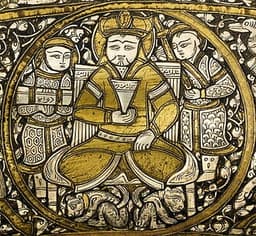
Baibars al-Bunduqdari
Emperor · Medieval
68.7Total

Julius Caesar
General · Ancient
82.8Total
Basic Information
Born
1223
-100
Died
1277
-44
Era
Medieval
Ancient
Nationality
Mamluk Sultanate
Roman Republic
Occupation
Emperor
General
Civilization
Middle Eastern
Western
Score Comparison
Military (10%)
85.0
88.0
Political (20%)
72.0
78.0
Influence (20%)
72.0
85.0
Legacy (20%)
52.0
82.0
Leadership (15%)
72.0
80.0
Strategy (15%)
76.0
85.0
TOTAL
68.7
82.8
Baibars al-Bunduqdari — Complete Timeline
1260 AD
Battle of Ain JalutWar
Baibars led the Mamluk army to a decisive victory over the Mongols at Ain Jalut in Palestine. This battle halted the Mongol advance into the Middle East and established the Mamluk Sultanate as a major power.
MongolsMamlukBattleAin Jalut
Impact: global
Assassination of QutuzPolitical Action◆ Major
Baibars assassinated Sultan Qutuz shortly after the victory at Ain Jalut. He then seized the sultanate, beginning his reign as the most powerful Mamluk ruler and initiating a period of expansion.
MamlukAssassinationPower Struggle
Impact: regionaldestructive
1263 AD
Siege of AcreWar
Baibars launched a major but unsuccessful siege of Acre, the capital of the Kingdom of Jerusalem. Although he failed to take the city, he devastated its hinterland and weakened Crusader defenses.
CrusadesSiegeAcreMamluk
Impact: regional
1268 AD
Conquest of AntiochWar◆ Major
Baibars besieged and captured the Crusader city of Antioch. The city was sacked and its population massacred or enslaved, ending the Principality of Antioch and marking a major blow to the Crusader states.
CrusadesConquestAntiochMamluk
Impact: regionaldestructive
1270 AD
Campaign against the AssassinsWar◆ Major
Baibars subjugated the Nizari Ismaili state (the Assassins) in Syria. He captured their fortresses, including Masyaf, and forced their submission, eliminating a rival power and securing Mamluk control over the region.
MamlukAssassinsConquestSyria
Impact: regional
1277 AD
War against the MongolsWar◆ Major
Baibars fought a campaign against the Ilkhanate Mongols in Anatolia, defeating them at the Battle of Elbistan. He expanded Mamluk influence into Anatolia but died shortly after, leaving the region contested.
MongolsMamlukBattleAnatolia
Impact: regional
Julius Caesar — Complete Timeline
58 BC
Gallic WarsWar◆ Major
Caesar, as proconsul of Gaul, launched a series of campaigns that conquered all of Gaul (modern France, Belgium, and parts of Switzerland). He fought numerous battles, including against the Helvetii, the Belgae, and the Gallic chieftain Vercingetorix. The wars brought immense wealth and a loyal army to Caesar.
Gallic WarsConquestRoman Expansion
Impact: regional
49 BC
Crossing the RubiconPolitical Action◆ Major
Caesar led Legio XIII across the Rubicon River into Italy, defying the Roman Senate's order to disband his army. This act triggered a civil war against Pompey and the Optimates, ultimately leading to Caesar's dictatorship and the end of the Roman Republic.
Roman Civil WarEnd of RepublicPower Struggle
Impact: global
48 BC
Battle of PharsalusWar◆ Major
Caesar's outnumbered army defeated the larger forces of Pompey the Great at Pharsalus in Greece. Caesar's tactical use of a reserve line to counter Pompey's cavalry charge proved decisive. Pompey fled to Egypt, where he was assassinated, leaving Caesar as the undisputed master of the Roman world.
Roman Civil WarBattleDecisive Victory
Impact: regional
44 BC
Appointment as Dictator for LifePolitical Action◆ Major
The Roman Senate appointed Caesar dictator perpetuo (dictator for life), granting him unprecedented personal power. This move concentrated military, legislative, and judicial authority in one person, effectively ending the Roman Republic's traditional system of checks and balances and alarming many senators.
DictatorshipEnd of RepublicPower Consolidation
Impact: regionaldestructive
Assassination on the Ides of MarchPolitical Action◆ Major
A group of Roman senators, led by Marcus Junius Brutus and Gaius Cassius Longinus, stabbed Caesar to death at a meeting of the Senate in the Theatre of Pompey. The assassination was intended to restore the Republic, but instead triggered another civil war that led to the rise of the Roman Empire.
AssassinationRoman PoliticsEnd of Republic
Impact: globaldestructive
Expert Analysis
Origins
Baibars al-Bunduqdari (c. 1223–1277) was born a Kipchak Turk in the Crimea, captured as a slave and sold to the Ayyubid sultan as a young soldier. His early life as a mamluk (military slave) in Syria shaped his martial skills and ruthless ambition. He rose through the ranks of the Bahriyya regiment, participating in campaigns against the Crusaders and Mongols.
Julius Caesar (100–44 BCE) was born into the patrician Julian family in Rome, but his family was not wealthy. He received a privileged education in rhetoric and philosophy, and his aunt married Gaius Marius, a leading populist politician. Caesar's early exposure to Roman politics and military campaigns in Asia Minor laid the foundation for his ambitions.
Rise to Power
Baibars first gained prominence as a commander under Sultan Qutuz. In 1260, at the Battle of Ain Jalut, he led the Mamluk army to a decisive victory over the Mongols, halting their advance into the Middle East. Shortly after, he assassinated Qutuz and seized the sultanate, beginning a 17-year reign. His rise was marked by treachery and military prowess.
Caesar's rise was more gradual. He served as quaestor in Spain, aedile in Rome, and as pontifex maximus. His military reputation soared during the Gallic Wars (58–50 BCE), where he conquered all of Gaul. In 49 BCE, he crossed the Rubicon River with his army, defying the Senate and triggering a civil war. His defeat of Pompey at Pharsalus (48 BCE) made him master of the Roman world. He was appointed dictator for life in 44 BCE.
Leadership & Governance
Baibars ruled as an absolute military autocrat. He centralized the Mamluk state, reorganized the army into a professional slave-soldier system, and established a postal service (barid) linking Cairo to Damascus. He also forged alliances with the Golden Horde and the Byzantine Empire against common enemies. His governance was pragmatic: he suppressed the Assassins by capturing their fortresses, but also patronized Sunni Islam to legitimize his rule. His score of 66.7 in political acumen reflects his effectiveness, but his reliance on assassination and fear limited institutional durability.
Caesar's leadership blended military genius with political reform. As dictator, he implemented land reforms, reorganized the calendar (the Julian calendar), granted citizenship to provincials, and initiated public works. He centralized power but maintained Republican forms. His political score of 78.0 reflects his ability to manipulate institutions, but his concentration of power alienated the Senate. His military score of 88.0 is significantly higher than Baibars' 67.8, reflecting his tactical innovations and scale of conquest.
Triumph & Tragedy
Baibars' greatest triumph was the victory at Ain Jalut (1260), which saved the Islamic world from Mongol domination. He also captured the Crusader stronghold of Antioch in 1268, ending the Principality of Antioch. His campaigns against the Mongols in Anatolia (Battle of Elbistan, 1277) expanded Mamluk influence. However, his greatest failure was his inability to unify the Muslim world permanently; his assassination of Qutuz set a precedent for succession crises. His legacy score of 69.3 reflects his role as a defender of Islam, but his dynasty soon declined.
Caesar's triumphs include the conquest of Gaul (58–50 BCE), adding a vast territory to Rome, and his victory in the civil war. He also reformed the Roman state, paving the way for the Empire. His tragedy was his assassination on the Ides of March 44 BCE, which plunged Rome into another civil war. His failure to secure a stable succession led to the rise of Augustus and the end of the Republic. His influence score of 85.0 and legacy score of 82.0 underscore his transformative impact.
Character & Destiny
Baibars was cunning, ruthless, and pragmatic. He often led from the front, inspiring loyalty among his mamluks. His decision to assassinate Qutuz shows his ambition and lack of scruples. His character shaped his destiny: he died in 1277 after a failed attempt to poison an enemy, apparently from drinking poisoned koumiss intended for someone else. His death was anticlimactic, but his legacy as a Mongol-slayer endured.
Caesar was ambitious, charismatic, and intellectually brilliant. He cultivated an image of clemency but was determined to rule alone. His crossing of the Rubicon was a gamble that paid off. His character—arrogant and dismissive of Republican norms—led to his assassination. He was stabbed 23 times in the Senate, a victim of his own success. His destiny was to be both the destroyer and the founder of the Roman Empire.
Legacy
Baibars' legacy is that of a military hero who saved the Middle East from the Mongols. His Mamluk state lasted until 1517, but his personal dynasty did not endure. He is remembered in Arab and Islamic history as a champion of Islam. His military score of 67.8 and strategy score of 76.2 place him as a competent but not exceptional commander compared to Caesar.
Caesar's legacy is immense: his conquests expanded Rome's borders, his reforms shaped Western governance, and his name became synonymous with imperial rule (Kaiser, Tsar). The Julian calendar was used for centuries. His military score of 88.0 and strategy score of 85.0 reflect his brilliance. His influence score of 85.0 and legacy score of 82.0 are higher than Baibars' 72.7 and 69.3 respectively.
Conclusion
Julius Caesar had a greater impact on world history than Baibars. His total score of 82.8 versus Baibars' 72.0 reflects this. Caesar's military innovations, political reforms, and the transformation of the Roman Republic into the Roman Empire shaped Western civilization for two millennia. Baibars, while a formidable warrior and ruler, operated on a smaller stage and his achievements were more regional. Caesar's conquest of Gaul and his role in the end of the Republic had global consequences, whereas Baibars' victories, though crucial for the Islamic world, did not fundamentally alter the course of history beyond the Middle East. Thus, Caesar stands as the more significant historical figure.
Rankings
🥇
Julius CaesarLeader
Mil: 88.0Pol: 78.0Inf: 85.0
82.8
🥈
Baibars al-Bunduqdari
Mil: 85.0Pol: 72.0Inf: 72.0
68.7
+14.1 behind
How This Comparison Works
Algorithm
Each figure is scored on 6 dimensions (0—100 scale) based on structured historical data: Military (10%), Political (20%), Influence (20%), Legacy (20%), Leadership (15%), Strategy (15%). The weighted total produces the final ranking.
Data Sources
Scores are computed from structured sub-indicators in the database. Scale factors adjust for era (Ancient ×0.85, Modern ×1.0) and civilization size (Eastern ×1.05, Other ×0.80) to account for differences in population and military scale.
Maximum 3 Figures
Comparisons are limited to 2—3 figures to ensure readability and statistical meaningfulness.
Error Margins
±5 points per dimension — Sub-scores are derived from historical records with inherent uncertainty. Two figures within 5 points on a dimension should be considered roughly equivalent in that area.
Total Score Accuracy
±3 points overall — The weighted combination of 6 dimensions produces a total score with approximately ±3 points of uncertainty. Differences of less than 3 points are not statistically significant— the figures are effectively tied.
Known Limitations
- Historical records are incomplete and uneven across civilizations
- Figures from oral-tradition societies may be underrepresented
- Occupation labels can misclassify multi-role figures
- Scores measure capability and impact, not moral character
- Quantitative scoring is a comparison tool, not absolute truth
Capability Radar
Military (10%) — Battles & Warfare
Battles
85
95
Win Rate
90
92
Expansion
80
97
Political (20%) — Governance & Reform
Reform
82
90
Diplomacy
78
85
Economy
80
82
Influence (20%) — Cultural & Global Reach
Cultural
65
88
Global
70
94
Legacy (20%) — Historical Impact
Historical
75
95
Longevity
60
96
Leadership (15%) — Power & Stability
Tenure
75
75
Stability
70
60
Strategy (15%) — Tactics & Innovation
Strategy
88
94
Tactics
92
96
Reform
85
88
Similar Comparisons
Comments & Discussion
No comments yet. Be the first to share your thoughts!