Loading...
Baldwin I of Jerusalem vs Julius Caesar
Julius Caesar leads by 26.7 pts · 2 figures compared
…
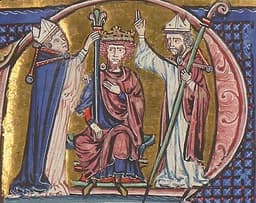
Baldwin I of Jerusalem
Emperor · Medieval
56.1Total

Julius Caesar
General · Ancient
82.8Total
Basic Information
Born
1058
-100
Died
1118
-44
Era
Medieval
Ancient
Nationality
Jerusalem
Roman Republic
Occupation
Emperor
General
Civilization
Western
Western
Score Comparison
Military (10%)
72.5
88.0
Political (20%)
46.6
78.0
Influence (20%)
57.2
85.0
Legacy (20%)
50.0
82.0
Leadership (15%)
62.2
80.0
Strategy (15%)
57.5
85.0
TOTAL
56.1
82.8
Baldwin I of Jerusalem — Complete Timeline
1100 AD
Coronation as First King of JerusalemPolitical Action
Baldwin I was crowned as the first king of Jerusalem on Christmas Day 1100, after the death of his brother Godfrey. He transformed the Crusader state from a lordship into a monarchy, centralizing power and expanding its territory.
CoronationCrusader KingdomJerusalem
Impact: regionalconstructive
1101 AD
Capture of Arsuf and CaesareaWar◆ Major
Baldwin I captured the coastal cities of Arsuf and Caesarea with the help of Genoese and Pisan fleets. These victories secured Crusader control over the Palestinian coast and provided access to Mediterranean trade routes.
ConquestCrusader KingdomCoastal Cities
Impact: regional
1104 AD
Siege of AcreWar◆ Major
Baldwin I besieged and captured the port city of Acre after a four-year blockade, with support from a Genoese fleet. Acre became the most important Crusader port and a major commercial center in the Levant.
SiegeCrusader KingdomAcre
Impact: regional
1105 AD
Defense of the Kingdom against Seljuk AttacksWar◆ Major
Baldwin I defeated a Seljuk Turkish army at the Battle of Ramla in 1105, securing the kingdom's eastern frontier. This victory prevented the Seljuks from recapturing Jerusalem and stabilized Crusader rule.
BattleSeljuksCrusader Kingdom
Impact: regional
1118 AD
Invasion of EgyptWar
Baldwin I led a campaign into Fatimid Egypt, reaching the Nile Delta. He died during the campaign near Al-Arish, possibly from illness. The invasion failed to conquer territory but demonstrated Crusader ambitions beyond the Levant.
InvasionEgyptCrusader Kingdom
Impact: regional
Julius Caesar — Complete Timeline
58 BC
Gallic WarsWar◆ Major
Caesar, as proconsul of Gaul, launched a series of campaigns that conquered all of Gaul (modern France, Belgium, and parts of Switzerland). He fought numerous battles, including against the Helvetii, the Belgae, and the Gallic chieftain Vercingetorix. The wars brought immense wealth and a loyal army to Caesar.
Gallic WarsConquestRoman Expansion
Impact: regional
49 BC
Crossing the RubiconPolitical Action◆ Major
Caesar led Legio XIII across the Rubicon River into Italy, defying the Roman Senate's order to disband his army. This act triggered a civil war against Pompey and the Optimates, ultimately leading to Caesar's dictatorship and the end of the Roman Republic.
Roman Civil WarEnd of RepublicPower Struggle
Impact: global
48 BC
Battle of PharsalusWar◆ Major
Caesar's outnumbered army defeated the larger forces of Pompey the Great at Pharsalus in Greece. Caesar's tactical use of a reserve line to counter Pompey's cavalry charge proved decisive. Pompey fled to Egypt, where he was assassinated, leaving Caesar as the undisputed master of the Roman world.
Roman Civil WarBattleDecisive Victory
Impact: regional
44 BC
Appointment as Dictator for LifePolitical Action◆ Major
The Roman Senate appointed Caesar dictator perpetuo (dictator for life), granting him unprecedented personal power. This move concentrated military, legislative, and judicial authority in one person, effectively ending the Roman Republic's traditional system of checks and balances and alarming many senators.
DictatorshipEnd of RepublicPower Consolidation
Impact: regionaldestructive
Assassination on the Ides of MarchPolitical Action◆ Major
A group of Roman senators, led by Marcus Junius Brutus and Gaius Cassius Longinus, stabbed Caesar to death at a meeting of the Senate in the Theatre of Pompey. The assassination was intended to restore the Republic, but instead triggered another civil war that led to the rise of the Roman Empire.
AssassinationRoman PoliticsEnd of Republic
Impact: globaldestructive
Expert Analysis
baldwin-i-of-jerusalem-vs-julius-caesar
# Two Paths to Power: Caesar and Baldwin, Founders of Worlds
The Ides of March, 44 BCE. Julius Caesar, the most powerful man in the Mediterranean, falls beneath the daggers of his own senators, his blood pooling on the floor of Pompey’s Theatre. A thousand years later, in 1118, another ruler—Baldwin I of Jerusalem—dies not by conspiracy but by fever, alone on the sands of Egypt, his army retreating from the Nile. Both men built kingdoms from nothing. One changed the course of Western history; the other built a fragile realm that would be remembered as a footnote. Why did their legacies diverge so dramatically?
Origins
Caesar was born into the patrician Julian clan, a family claiming descent from the goddess Venus. But by the first century BCE, the Republic’s old aristocracy was crumbling, and the Julii were politically marginal. Young Caesar grew up in a Rome seething with civil wars, the Social War, and the dictatorship of Sulla. He learned early that survival meant ambition—and that the old rules of the Republic were dead letters. His uncle by marriage was Gaius Marius, the populist general who had revolutionized the army by recruiting the landless poor. From him, Caesar absorbed the lesson that military loyalty could be bought—and that the state itself could be reshaped by a commander with an army at his back.
Baldwin was born in 1058, the son of Eustace II of Boulogne, a minor French nobleman. He was not the eldest son; his brother Godfrey of Bouillon was the family’s star. Baldwin grew up in a world of feudal loyalties, local wars, and the looming threat of the Seljuk Turks, who had swept into Anatolia and threatened the Byzantine Empire. The First Crusade, preached by Pope Urban II in 1095, offered younger sons like Baldwin something rare: land, power, and salvation. Unlike Caesar, who inherited a world already in crisis, Baldwin inherited a world of opportunity—but also of limits. His ambitions would be bound by the smallness of his resources and the fragility of his kingdom.
Rise to Power
Caesar’s path was a masterclass in political calculation. He became pontifex maximus at thirty-seven, then allied with Pompey and Crassus in the First Triumvirate (60 BCE). His consulship in 59 BCE was marked by land reforms that won him the loyalty of veterans and the poor. Then came Gaul: eight years of brutal war, from 58 to 50 BCE, in which Caesar conquered a territory larger than Italy, built a personal army of veterans, and wrote his own propaganda in the *Commentaries*. The Senate, fearing his power, ordered him to disband his army. Instead, on January 10, 49 BCE, he crossed the Rubicon River into Italy with a single legion—an act of war against the Republic.
Baldwin’s rise was more accidental. He joined the First Crusade as a minor noble, but when his brother Godfrey became ruler of Jerusalem in 1099, Baldwin was given the County of Edessa, a Crusader state in northern Syria. There he proved a capable ruler, defending the territory against Turkish attacks. When Godfrey died in 1100, Baldwin moved quickly: he seized Jerusalem, outmaneuvering the Patriarch and the Norman prince Bohemond. On Christmas Day 1100, he was crowned as the first king of Jerusalem. Unlike Caesar, who had to destroy a system to rise, Baldwin simply filled a vacuum.
Leadership & Governance
Caesar governed as a revolutionary reformer. As dictator, he reformed the calendar (the Julian calendar, still the basis of our own), granted citizenship to provincials, launched public works, and planned a massive codification of Roman law. His military genius was unmatched: at Alesia (52 BCE), he besieged the Gallic chieftain Vercingetorix while simultaneously repelling a relief army—a double siege that remains a textbook maneuver. But his political wisdom was often overshadowed by his arrogance. He accepted the title of dictator for life, paraded his power, and treated the Senate as a rubber stamp. He was reorganizing the state for an empire, but he did so with the speed of a conqueror, not the patience of a statesman.
Baldwin ruled a kingdom that was perpetually on the brink. His Jerusalem was a narrow strip of coastline, surrounded by Muslim powers. His military strategy was defensive and opportunistic: he captured the ports of Arsuf and Caesarea in 1101 with Genoese and Pisan fleets, and Acre in 1104 after a four-year blockade. At the Battle of Ramla in 1105, he defeated a Seljuk army that threatened his eastern frontier. But his kingdom was always short of men, money, and horses. He could not conquer; he could only survive. His political wisdom lay in managing the fractious Crusader barons, the Italian maritime republics, and the Byzantine Empire. He was a builder, not a destroyer—he founded a kingdom that would last for nearly two centuries, but never one that could expand.
Triumph & Tragedy
Caesar’s greatest triumph was the conquest of Gaul, which made him a legend and gave him the army that would destroy the Republic. His greatest tragedy was his own success: he became so powerful that the old order could not tolerate him. The Ides of March was not a spontaneous act of tyranny-fighting; it was the desperate lunge of a dying class. Caesar was assassinated not because he was a bad ruler, but because he was too good at ruling—and too indifferent to the forms that had once constrained power.
Baldwin’s greatest triumph was the foundation of the Kingdom of Jerusalem itself. A minor French lord became a king, and his realm became the heart of Crusader Christendom for generations. His greatest tragedy was the fragility of that achievement. He died in 1118 during an invasion of Egypt, possibly from illness or a wound, his army retreating from the Nile. His kingdom would survive, but it would never expand beyond the coastal strip he had carved out. Unlike Caesar, who remade the world, Baldwin merely held on.
Character & Destiny
Caesar was audacious, calculating, and supremely confident. He forgave his enemies—he pardoned Brutus and Cassius after the civil war—but he never forgot that the Republic was a machine he could dismantle. His personality drove him to take risks no other Roman would take: crossing the Rubicon, invading Britain, accepting dictatorship. His destiny was to be the hinge of history, the man who ended the Republic and made the Empire possible.
Baldwin was pragmatic, resilient, and perhaps a little grim. He was not a charismatic leader like his brother Godfrey; he was a survivor. He took what he could hold and held what he took. His personality—cautious, determined, unromantic—shaped a kingdom that was equally cautious and determined. His destiny was to be a founder, but a founder of a fragile thing, not a world-changing empire.
Legacy
Caesar’s legacy is everywhere. His name became a title—*Kaiser*, *Tsar*—and his reforms shaped Europe for two millennia. The Roman Empire he set in motion lasted for another five hundred years in the West and a thousand in the East. He is remembered as a genius, a tyrant, and a warning.
Baldwin’s legacy is narrower. He is remembered in the history of the Crusades, in the chronicles of William of Tyre, and in the ruins of Crusader castles. His kingdom fell in 1291, but it left a mark on the Middle East that still resonates. He is remembered not as a conqueror, but as a founder—the first king of Jerusalem, a man who built a kingdom from nothing and held it for eighteen years.
Conclusion
Standing on the banks of the Rubicon or the sands of Egypt, both men faced the same choice: to cross or to turn back. Caesar crossed, and the world changed forever. Baldwin crossed too—into a kingdom that would never be more than a beachhead. The difference was not in their ambition, but in their circumstances. Caesar inherited a Republic ripe for destruction; Baldwin inherited a frontier that demanded only survival. One man remade history; the other made a place in it. Both were founders, but of very different worlds.
Rankings
🥇
Julius CaesarLeader
Mil: 88.0Pol: 78.0Inf: 85.0
82.8
🥈
Baldwin I of Jerusalem
Mil: 72.5Pol: 46.6Inf: 57.2
56.1
+26.7 behind
How This Comparison Works
Algorithm
Each figure is scored on 6 dimensions (0—100 scale) based on structured historical data: Military (10%), Political (20%), Influence (20%), Legacy (20%), Leadership (15%), Strategy (15%). The weighted total produces the final ranking.
Data Sources
Scores are computed from structured sub-indicators in the database. Scale factors adjust for era (Ancient ×0.85, Modern ×1.0) and civilization size (Eastern ×1.05, Other ×0.80) to account for differences in population and military scale.
Maximum 3 Figures
Comparisons are limited to 2—3 figures to ensure readability and statistical meaningfulness.
Error Margins
±5 points per dimension — Sub-scores are derived from historical records with inherent uncertainty. Two figures within 5 points on a dimension should be considered roughly equivalent in that area.
Total Score Accuracy
±3 points overall — The weighted combination of 6 dimensions produces a total score with approximately ±3 points of uncertainty. Differences of less than 3 points are not statistically significant— the figures are effectively tied.
Known Limitations
- Historical records are incomplete and uneven across civilizations
- Figures from oral-tradition societies may be underrepresented
- Occupation labels can misclassify multi-role figures
- Scores measure capability and impact, not moral character
- Quantitative scoring is a comparison tool, not absolute truth
Capability Radar
Military (10%) — Battles & Warfare
Battles
55
95
Win Rate
60
92
Expansion
65
97
Political (20%) — Governance & Reform
Reform
40
90
Diplomacy
55
85
Economy
35
82
Influence (20%) — Cultural & Global Reach
Cultural
45
88
Global
40
94
Legacy (20%) — Historical Impact
Historical
55
95
Longevity
45
96
Leadership (15%) — Power & Stability
Tenure
50
75
Stability
30
60
Strategy (15%) — Tactics & Innovation
Strategy
60
94
Tactics
55
96
Reform
30
88
Similar Comparisons
Comments & Discussion
BLOOD-AND-SAND6/17/2026
Caesar conquered Gaul, invaded Britain, and defeated his rivals in civil wars—he built a legacy that lasted a thousand years. Baldwin, really? He lucked into a Crusader kingdom after his brother died and spent his reign scraping by with a few hundred knights. Caesar redefined empire. Baldwin just clung to a coastline. One is history; the other is a trivia question at best. Don't romanticize mediocrity.
铁蹄骑士6/17/2026
鲍德温一世有什么资格和凯撒比?凯撒在西欧和高卢打了八场大战役,跨过卢比孔河征服罗马,连他的敌人庞培和加图都敬畏他。鲍德温在耶路撒冷那巴掌大的领土上统治了18年,最著名的事迹就是被苏丹揍得逃回安条克。一个是改写文明的巨人,一个是十字军东征里的三流配角。别再神化他了。
TogaTracker6/17/2026
Historical comparisons need context, not hype. Caesar mastered the logistics of a transcontinental empire, managing supply lines from Spain to Syria. Baldwin's "kingdom"? It was a narrow strip of towns, perpetually bankrupt, with maybe 10,000 Latin settlers. Caesar faced real statecraft; Baldwin was a warlord with a crown. If we're measuring impact against resources, call me when Baldwin annexes the entire Middle East—oh wait, he didn't.