Loading...
Baldwin II of Jerusalem vs Sancho III of Navarre
Sancho III of Navarre leads by 6.1 pts · 2 figures compared
…
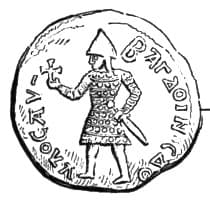
Baldwin II of Jerusalem
Emperor · Medieval
49.0Total
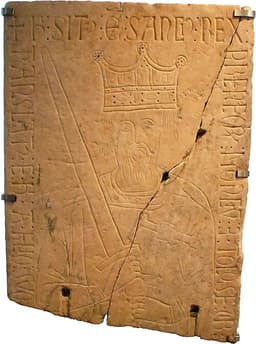
Sancho III of Navarre
Emperor · Medieval
55.1Total
Basic Information
Born
1060
985
Died
1131
1035
Era
Medieval
Medieval
Nationality
Kingdom of Jerusalem
Navarre
Occupation
Emperor
Emperor
Civilization
Western
Western
Score Comparison
Military (10%)
20.0
47.5
Political (20%)
43.7
68.0
Influence (20%)
52.5
56.4
Legacy (20%)
45.8
48.3
Leadership (15%)
65.7
53.2
Strategy (15%)
60.0
60.0
TOTAL
49.0
55.1
Baldwin II of Jerusalem — Complete Timeline
1118 AD
Elected as King of JerusalemPolitical Action◆ Major
Baldwin II was elected King of Jerusalem after the death of Baldwin I. As a capable military leader, he expanded the kingdom's territory and secured its borders against Muslim forces, including capturing Tyre in 1124.
Crusader StatesMonarchyTerritorial Expansion
Impact: regionalconstructive
1123 AD
Captured by Artuqids at Battle of HabWar◆ Major
Baldwin II was captured by the Artuqid Turkish ruler Belek Ghazi during a campaign near the Euphrates. He was held prisoner for over a year until being ransomed for 80,000 dinars, a significant financial blow to the kingdom.
CaptureRansomCrusader-Muslim Wars
Impact: regionaltragic
1124 AD
Captured by Egyptians at Battle of AscalonWar
Shortly after his release, Baldwin II was captured again by Egyptian forces near Ascalon. He was imprisoned in Cairo for several months before being ransomed a second time, demonstrating the precariousness of Crusader leadership.
CaptureRansomEgypt
Impact: regionaltragic
1129 AD
Arranged Marriage of Melisende to FulkPolitical Action◆ Major
Baldwin II arranged the marriage of his daughter Melisende to Fulk V of Anjou, securing a powerful European ally. This dynastic union ensured the succession and strengthened ties between Jerusalem and Western Europe.
Dynastic MarriageSuccessionAlliance
Impact: regionalconstructive
Sancho III of Navarre — Complete Timeline
1004 AD
Inheritance of the Kingdom of PamplonaPolitical Action◆ Major
Sancho III inherited the Kingdom of Pamplona (Navarre) from his father Garc
Medieval IberiaKingdom of NavarreSuccession
Impact: regionalconstructive
1029 AD
Conquest of CastileWar◆ Major
Sancho III conquered the County of Castile after the assassination of Count Garc
Medieval IberiaConquestCastile
Impact: regional
1034 AD
Title of 'Emperor of Spain'Political Action◆ Major
Sancho III claimed the title 'Imperator totius Hispaniae' (Emperor of all Spain) after capturing Le
Medieval IberiaImperial TitleHegemony
Impact: regional
1035 AD
Division of the kingdomPolitical Action◆ Major
Upon his death, Sancho III divided his territories among his sons: Garc
Medieval IberiaSuccessionFragmentation
Impact: regionaldestructive
Expert Analysis
Origins
Baldwin II of Jerusalem, born Baldwin of Rethel in the early 12th century, was a Frankish nobleman from the County of Rethel in the Crusader states. He arrived in the Holy Land during the First Crusade and quickly rose through the ranks, becoming Count of Edessa in 1100. His early life was shaped by the brutal realities of Crusader warfare and the need to consolidate Christian control in the Levant.
Sancho III of Navarre, born in 985, was the son of García Sánchez II of Pamplona. He inherited the Kingdom of Pamplona (Navarre) in 1004 and was raised in the turbulent environment of Christian Iberian states vying for dominance against Muslim taifas. His background was one of feudal politics and border conflicts.
Rise to Power
Baldwin II became King of Jerusalem in 1118 after the death of his cousin Baldwin I. He was elected by the nobility due to his military experience and administrative skill. His rise was marked by continuous warfare; he expanded the kingdom's territory by capturing key towns like Tyre in 1124. However, his reign was punctuated by captivity: in 1123, he was captured by the Artuqid ruler Belek Ghazi at the Battle of Hab and held for over a year. After ransom, he was captured again by Egyptians at the Battle of Ascalon in 1124, imprisoned in Cairo for months.
Sancho III rose to power through inheritance and conquest. He married Muniadona of Castile, which gave him claims to that county. After the assassination of Count García Sánchez of Castile in 1029, Sancho conquered Castile and incorporated it into his realm. By 1034, he had captured León and claimed the title 'Imperator totius Hispaniae' (Emperor of all Spain). His political score of 68.0 reflects his ability to unite multiple Christian kingdoms under his rule.
Leadership & Governance
Baldwin II's leadership style was pragmatic and focused on survival. He relied on marriage alliances, such as arranging the marriage of his daughter Melisende to Fulk V of Anjou in 1129, securing a powerful European ally. He also fostered relations with the military orders, granting them lands and privileges. However, his military score of 20.0 indicates that his battlefield performance was poor, as he was captured twice.
Sancho III governed through a combination of feudal consolidation and strategic marriages. He divided his kingdom among his sons upon his death, a common practice that later led to fragmentation. His leadership score of 53.2 suggests he was competent but not exceptional. He promoted the Cluniac reform in the Church and patronized monasteries.
Triumph & Tragedy
Baldwin II's greatest success was expanding the Kingdom of Jerusalem and securing its succession through the marriage of Melisende and Fulk. He also recaptured Tyre in 1124. His greatest failures were his two captures, which weakened his kingdom's military reputation and drained resources through ransoms. His influence score of 52.5 reflects his moderate impact on Crusader history.
Sancho III's triumph was briefly uniting the major Christian kingdoms of Iberia—Navarre, Castile, León, and Aragon—under his rule. He also stopped the decline of the Christian states against the Caliphate of Córdoba. His tragedy was that his empire did not survive his death; he divided it, leading to civil wars among his sons. His legacy score of 48.3 reflects the ephemeral nature of his unification.
Character & Destiny
Baldwin II was a resilient but unlucky leader. His character was marked by tenacity; despite being captured twice, he continued to rule effectively until his death in 1131. However, his military decisions were often reckless, leading to his captures. His destiny was to be a transitional figure, bridging the early Crusader kingdom to the more stable era of Fulk and Melisende.
Sancho III was ambitious and expansionist, with a vision of Christian hegemony in Iberia. He was also pragmatic, using marriage and diplomacy. His character led him to claim imperial titles, but his decision to divide his realm reflected a feudal mindset that prioritized family over state unity. His destiny was to be a unifier who sowed the seeds of division.
Legacy
Baldwin II's legacy is mixed. He strengthened the monarchy and secured the succession, but his military failures undermined the kingdom's security. The marriage of Melisende to Fulk eventually led to the succession of Baldwin III. His total score of 49.0 places him as a moderately influential Crusader king.
Sancho III is remembered as the first great king of Navarre and a unifier of Christian Spain. His title of Emperor was used by later kings. However, his division of the kingdom led to the rise of Castile under Ferdinand I, which ultimately dominated Iberia. His total score of 55.1 is higher than Baldwin's, reflecting his greater political and military impact.
Conclusion
Sancho III of Navarre had a greater impact on history than Baldwin II of Jerusalem. While Baldwin's reign was constrained by the precarious Crusader states and his own military failures (military score 20.0 vs. Sancho's 47.5), Sancho briefly united most of Christian Iberia and set the stage for the eventual Reconquista. His political acumen (68.0) and influence (56.4) outshine Baldwin's (43.7 and 52.5). However, Sancho's legacy was diluted by his divisive inheritance, whereas Baldwin's strategic marriage ensured continuity. Nonetheless, Sancho's unification of Iberian kingdoms was a more significant historical event than Baldwin's defense of Jerusalem. Therefore, Sancho III of Navarre is the more consequential figure.
Rankings
🥇
Sancho III of NavarreLeader
Mil: 47.5Pol: 68.0Inf: 56.4
55.1
🥈
Baldwin II of Jerusalem
Mil: 20.0Pol: 43.7Inf: 52.5
49.0
+6.1 behind
How This Comparison Works
Algorithm
Each figure is scored on 6 dimensions (0—100 scale) based on structured historical data: Military (10%), Political (20%), Influence (20%), Legacy (20%), Leadership (15%), Strategy (15%). The weighted total produces the final ranking.
Data Sources
Scores are computed from structured sub-indicators in the database. Scale factors adjust for era (Ancient ×0.85, Modern ×1.0) and civilization size (Eastern ×1.05, Other ×0.80) to account for differences in population and military scale.
Maximum 3 Figures
Comparisons are limited to 2—3 figures to ensure readability and statistical meaningfulness.
Error Margins
±5 points per dimension — Sub-scores are derived from historical records with inherent uncertainty. Two figures within 5 points on a dimension should be considered roughly equivalent in that area.
Total Score Accuracy
±3 points overall — The weighted combination of 6 dimensions produces a total score with approximately ±3 points of uncertainty. Differences of less than 3 points are not statistically significant— the figures are effectively tied.
Known Limitations
- Historical records are incomplete and uneven across civilizations
- Figures from oral-tradition societies may be underrepresented
- Occupation labels can misclassify multi-role figures
- Scores measure capability and impact, not moral character
- Quantitative scoring is a comparison tool, not absolute truth
Capability Radar
Military (10%) — Battles & Warfare
Battles
45
45
Win Rate
40
50
Expansion
40
60
Political (20%) — Governance & Reform
Reform
35
40
Diplomacy
55
70
Economy
30
50
Influence (20%) — Cultural & Global Reach
Cultural
30
45
Global
25
35
Legacy (20%) — Historical Impact
Historical
45
50
Longevity
30
40
Leadership (15%) — Power & Stability
Tenure
60
65
Stability
25
55
Strategy (15%) — Tactics & Innovation
Strategy
55
55
Tactics
50
40
Reform
30
30
Similar Comparisons
Comments & Discussion
No comments yet. Be the first to share your thoughts!