Loading...
Baoyi Qaghan vs Zhu Gaochi
Zhu Gaochi leads by 4.6 pts · 2 figures compared
…
Baoyi Qaghan
Emperor · Medieval
49.6Total
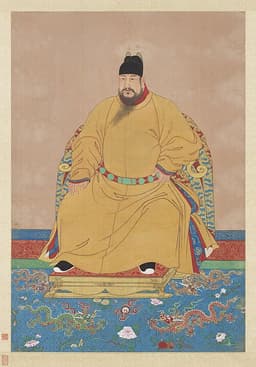
Zhu Gaochi
Emperor · Medieval
54.2Total
Basic Information
Born
760
1378
Died
821
1425
Era
Medieval
Medieval
Nationality
Uyghur Khaganate
China
Occupation
Emperor
Emperor
Civilization
Eastern
Eastern
Score Comparison
Military (10%)
50.0
51.4
Political (20%)
46.6
68.0
Influence (20%)
51.8
50.2
Legacy (20%)
43.3
42.5
Leadership (15%)
65.0
58.8
Strategy (15%)
41.0
68.7
TOTAL
49.6
54.2
Baoyi Qaghan — Complete Timeline
789 AD
Accession as Baoyi QaghanPolitical Action◆ Major
Baoyi Qaghan ascended to the throne of the Uyghur Khaganate after the death of his father, Tun Bagha Tarkhan. His reign continued the policies of his father, maintaining stability and alliance with Tang.
SuccessionKhaganateLeadership
Impact: regionalconstructive
790 AD
Marriage to a Tang princessPolitical Action◆ Major
Baoyi Qaghan married a Tang princess, Princess Xian'an, as part of a diplomatic alliance. This marriage strengthened ties between the Uyghur Khaganate and Tang China, ensuring peace and trade.
MarriageAllianceTang Dynasty
Impact: regionalconstructive
795 AD
Military campaigns against the KyrgyzWar
Baoyi Qaghan led campaigns against the Yenisei Kyrgyz, who were threatening Uyghur northern borders. The Uyghur forces defeated the Kyrgyz, securing the khaganate's northern frontier.
Military CampaignKyrgyzBorder Security
Impact: regional
821 AD
Death and successionPolitical Action
Baoyi Qaghan died in 821, succeeded by his son Chongde Qaghan. His reign was marked by continued prosperity and strong relations with Tang China.
DeathSuccessionLegacy
Impact: regional
Zhu Gaochi — Complete Timeline
1424 AD
Reversal of Yongle's Maritime ExpeditionsReform◆ Major
The Hongxi Emperor ordered the suspension of the treasure fleet voyages led by Zheng He, halting the costly maritime expeditions that had characterized his father's reign. This decision redirected resources to domestic needs and ended China's early naval expansion.
Maritime PolicyZheng HeFiscal Reform
Impact: global
Restoration of Civil Service ExaminationsReform◆ Major
The Hongxi Emperor reinstated the civil service examination system as the primary route to officialdom, reversing the Yongle Emperor's reliance on eunuchs and military appointments. This strengthened the scholar-official class and bureaucratic governance.
Civil ServiceBureaucracyReform
Impact: nationalconstructive
Accession as Hongxi EmperorPolitical Action◆ Major
Zhu Gaochi ascended the Ming throne as the Hongxi Emperor following the death of his father, the Yongle Emperor. His reign began with a shift away from Yongle's expansive policies, focusing on domestic governance and fiscal retrenchment.
Ming DynastySuccessionReform
Impact: nationalconstructive
Pardon of Disgraced OfficialsPolitical Action
The Hongxi Emperor pardoned many officials who had been purged or exiled under the Yongle Emperor, including the scholar Fang Xiaoru's associates. This act aimed to heal political divisions and restore confidence in the Ming court.
PardonPolitical ReconciliationMing Court
Impact: nationalconstructive
1425 AD
Death from IllnessOther◆ Major
The Hongxi Emperor died suddenly after a reign of only nine months, likely from a heart attack or stroke. His brief rule ended the immediate reformist agenda, but his policies influenced his son, the Xuande Emperor.
DeathShort ReignMing Dynasty
Impact: nationaltragic
Expert Analysis
Origins
Baoyi Qaghan (r. 808–821) was born into the Uyghur royal clan, the Yaglakar, as a son of Tun Bagha Tarkhan. The Uyghur Khaganate, centered in Mongolia, had emerged as a dominant steppe power after defeating the Göktürks. Baoyi likely received education in steppe governance and military tactics, but little is recorded of his early life. He ascended the throne around 808 following his father's death, inheriting a stable and prosperous khaganate that maintained close ties with Tang China.
Zhu Gaochi (1378–1425) was the eldest son of the Yongle Emperor of Ming China. Born into the imperial family, he was raised in the Confucian tradition, tutored by scholars, and served as a prince during his father's reign. Unlike his warrior father, Zhu Gaochi was scholarly and inclined toward civil administration. He was appointed heir apparent in 1404 but faced constant suspicion from Yongle, who favored his more militaristic younger sons. Zhu Gaochi's early life was marked by political maneuvering and the challenge of proving his worth as a successor.
Rise to Power
Baoyi Qaghan's rise was straightforward: he inherited the throne upon his father's death. His legitimacy was undisputed within the Uyghur elite. To solidify his position, he continued the pro-Tang policy of his predecessors. In 809, he formally requested a Tang princess in marriage, a diplomatic move that had been a cornerstone of Uyghur-Tang relations. The Tang court agreed, and Princess Xian'an was sent to the Uyghur court in 814, cementing the alliance. Baoyi also led campaigns against the Yenisei Kyrgyz, who threatened the northern border, securing Uyghur dominance in the region.
Zhu Gaochi's path to power was fraught with intrigue. As heir apparent, he was often at odds with his father's expansionist policies. Yongle favored his second son, Zhu Gaoxu, who was a skilled general. Zhu Gaochi's survival depended on his ability to avoid conflict and cultivate support among civil officials. After Yongle's death in 1424, Zhu Gaochi ascended the throne as the Hongxi Emperor. His reign began with immediate reversals of Yongle's policies, signaling a shift from militarism to civil governance.
Leadership & Governance
Baoyi Qaghan's leadership style was traditional for a steppe ruler: he relied on tribal alliances and personal charisma. He maintained the Uyghur Khaganate's stability through diplomacy and military deterrence. His marriage to Princess Xian'an was a key political tool, linking his lineage to the Tang imperial house. He also continued the tribute system, sending horses and goods to China in exchange for silk and recognition. Baoyi's governance was decentralized, with local tribes enjoying autonomy as long as they paid tribute and provided troops. His military strategy scored 41.0, reflecting limited expansion, while political score was 46.6.
Zhu Gaochi, scoring 68.0 in political ability, implemented centralized reforms. He halted Zheng He's maritime expeditions, saving vast resources, and restored the civil service examinations as the primary route to office, reducing eunuch influence. He also pardoned officials purged under Yongle, including associates of Fang Xiaoru, and reduced taxes on agriculture. His leadership score of 58.8 reflects a benevolent but short reign. He aimed to consolidate Ming power internally rather than expand externally.
Triumph & Tragedy
Baoyi Qaghan's triumphs include securing the Uyghur-Tang alliance through marriage, which brought economic benefits and military support. He successfully defended against the Kyrgyz, preserving the khaganate's territorial integrity. However, his reign saw no major territorial expansion, and his legacy was overshadowed by the later collapse of the Uyghur Khaganate in 840, when the Kyrgyz invaded. His failure to address internal tribal divisions and overreliance on Tang support left the khaganate vulnerable.
Zhu Gaochi's triumphs were swift: he reversed costly policies, reduced corruption, and promoted Confucian governance. His pardon of disgraced officials restored morale. However, his tragedy was his premature death after only nine months, cutting short his reforms. His son, the Xuande Emperor, continued some but not all of his policies. Zhu Gaochi's brief reign prevented him from solidifying a lasting legacy; his influence score is 50.2.
Character & Destiny
Baoyi Qaghan was a pragmatic ruler, prioritizing stability over glory. He maintained the status quo, avoiding risky campaigns. His character was diplomatic rather than martial, which suited the post-empire consolidation phase of the Uyghur Khaganate. However, his caution may have contributed to the khaganate's eventual decline, as he failed to strengthen central authority against nomadic threats.
Zhu Gaochi was scholarly and compassionate, in contrast to his father's autocracy. He was known for his empathy, but his short reign suggests he may have been physically frail. His decision to halt the treasure fleets was controversial; it saved money but ended China's maritime exploration. His character shaped a brief but humane rule, but fate denied him the time to leave a deep mark.
Legacy
Baoyi Qaghan's legacy is tied to the Uyghur Khaganate's peak as a Tang ally. He strengthened the Uyghur-Tang relationship, which influenced later steppe empires. However, his military score of 50.0 and legacy score of 43.3 indicate limited long-term impact. The Uyghur Khaganate fell apart after his son's reign, and Baoyi is remembered primarily as a transitional figure.
Zhu Gaochi's legacy is mixed. His reforms were partially reversed by his son, but his emphasis on civil administration influenced later Ming governance. His reign, though short, set a precedent for benevolent rule. His total score of 54.2 is higher than Baoyi's 49.6, reflecting stronger political and strategic skills. However, his influence (50.2) and legacy (42.5) are comparable to Baoyi's.
Conclusion
Zhu Gaochi had greater impact than Baoyi Qaghan, as his reforms shaped Ming governance despite his short reign. Baoyi maintained stability but did little to alter the course of steppe history. Zhu Gaochi's political score (68.0) and strategy (68.7) significantly outpace Baoyi's (46.6 and 41.0), indicating superior statecraft. While Baoyi's military score is slightly lower (50.0 vs 51.4), the gap in political and strategic ability is decisive. Zhu Gaochi's brief rule catalyzed a shift toward civil governance in Ming China, whereas Baoyi's reign was a continuation of existing trends. Therefore, Zhu Gaochi emerges as the more consequential figure.
Rankings
🥇
Zhu GaochiLeader
Mil: 51.4Pol: 68.0Inf: 50.2
54.2
🥈
Baoyi Qaghan
Mil: 50.0Pol: 46.6Inf: 51.8
49.6
+4.6 behind
How This Comparison Works
Algorithm
Each figure is scored on 6 dimensions (0—100 scale) based on structured historical data: Military (10%), Political (20%), Influence (20%), Legacy (20%), Leadership (15%), Strategy (15%). The weighted total produces the final ranking.
Data Sources
Scores are computed from structured sub-indicators in the database. Scale factors adjust for era (Ancient ×0.85, Modern ×1.0) and civilization size (Eastern ×1.05, Other ×0.80) to account for differences in population and military scale.
Maximum 3 Figures
Comparisons are limited to 2—3 figures to ensure readability and statistical meaningfulness.
Error Margins
±5 points per dimension — Sub-scores are derived from historical records with inherent uncertainty. Two figures within 5 points on a dimension should be considered roughly equivalent in that area.
Total Score Accuracy
±3 points overall — The weighted combination of 6 dimensions produces a total score with approximately ±3 points of uncertainty. Differences of less than 3 points are not statistically significant— the figures are effectively tied.
Known Limitations
- Historical records are incomplete and uneven across civilizations
- Figures from oral-tradition societies may be underrepresented
- Occupation labels can misclassify multi-role figures
- Scores measure capability and impact, not moral character
- Quantitative scoring is a comparison tool, not absolute truth
Capability Radar
Military (10%) — Battles & Warfare
Battles
20
47
Win Rate
25
49
Expansion
15
51
Political (20%) — Governance & Reform
Reform
30
55
Diplomacy
60
50
Economy
40
60
Influence (20%) — Cultural & Global Reach
Cultural
30
30
Global
20
10
Legacy (20%) — Historical Impact
Historical
35
35
Longevity
25
20
Leadership (15%) — Power & Stability
Tenure
55
20
Stability
45
55
Strategy (15%) — Tactics & Innovation
Strategy
20
54
Tactics
20
57
Reform
10
62
Similar Comparisons
Comments & Discussion
No comments yet. Be the first to share your thoughts!