Loading...
Mai Dunama Dabbalemi vs Zhu Gaochi
Mai Dunama Dabbalemi leads by 5.6 pts · 2 figures compared
…

Mai Dunama Dabbalemi
Emperor · Medieval
59.8Total
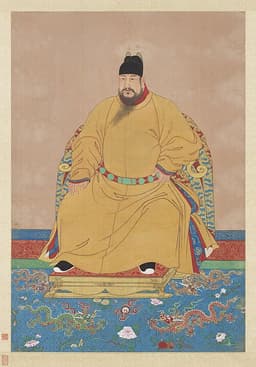
Zhu Gaochi
Emperor · Medieval
54.2Total
Basic Information
Born
1203
1378
Died
1248
1425
Era
Medieval
Medieval
Nationality
Kanem Empire
China
Occupation
Emperor
Emperor
Civilization
Other
Eastern
Score Comparison
Military (10%)
67.5
51.4
Political (20%)
68.0
68.0
Influence (20%)
57.2
50.2
Legacy (20%)
49.2
42.5
Leadership (15%)
72.0
58.8
Strategy (15%)
55.0
68.7
TOTAL
59.8
54.2
Mai Dunama Dabbalemi — Complete Timeline
1230 AD
Destruction of the MuneCultural
Mai Dunama Dabbalemi destroyed the Mune, a sacred symbol of the Kanem Empire's traditional religion. This act was intended to assert the dominance of Islam over indigenous beliefs, but it caused deep divisions within the empire and alienated many subjects.
Religious ReformIconoclasmIslam
Impact: nationaldestructive
1240 AD
Expansion of the Kanem EmpireWar◆ Major
Mai Dunama Dabbalemi led military campaigns that expanded the Kanem Empire to its greatest territorial extent. He conquered territories in the Lake Chad region and beyond, including parts of Fezzan and the Hausa states, establishing Kanem as a major power.
WarExpansionKanem
Impact: regional
1248 AD
Death of Mai Dunama DabbalemiOther◆ Major
Mai Dunama Dabbalemi died, ending his reign of approximately 45 years. His death led to a period of instability and civil war in the Kanem Empire, as the divisions caused by his destruction of the Mune and his expansionist policies came to a head.
DeathInstability
Impact: nationaltragic
Zhu Gaochi — Complete Timeline
1424 AD
Reversal of Yongle's Maritime ExpeditionsReform◆ Major
The Hongxi Emperor ordered the suspension of the treasure fleet voyages led by Zheng He, halting the costly maritime expeditions that had characterized his father's reign. This decision redirected resources to domestic needs and ended China's early naval expansion.
Maritime PolicyZheng HeFiscal Reform
Impact: global
Restoration of Civil Service ExaminationsReform◆ Major
The Hongxi Emperor reinstated the civil service examination system as the primary route to officialdom, reversing the Yongle Emperor's reliance on eunuchs and military appointments. This strengthened the scholar-official class and bureaucratic governance.
Civil ServiceBureaucracyReform
Impact: nationalconstructive
Accession as Hongxi EmperorPolitical Action◆ Major
Zhu Gaochi ascended the Ming throne as the Hongxi Emperor following the death of his father, the Yongle Emperor. His reign began with a shift away from Yongle's expansive policies, focusing on domestic governance and fiscal retrenchment.
Ming DynastySuccessionReform
Impact: nationalconstructive
Pardon of Disgraced OfficialsPolitical Action
The Hongxi Emperor pardoned many officials who had been purged or exiled under the Yongle Emperor, including the scholar Fang Xiaoru's associates. This act aimed to heal political divisions and restore confidence in the Ming court.
PardonPolitical ReconciliationMing Court
Impact: nationalconstructive
1425 AD
Death from IllnessOther◆ Major
The Hongxi Emperor died suddenly after a reign of only nine months, likely from a heart attack or stroke. His brief rule ended the immediate reformist agenda, but his policies influenced his son, the Xuande Emperor.
DeathShort ReignMing Dynasty
Impact: nationaltragic
Expert Analysis
Origins
Mai Dunama Dabbalemi (c. 1210–1248) was born into the Sayfawa dynasty of the Kanem Empire, centered around Lake Chad. His father was Mai Dunama Dabbalemi I, but details of his early life are scarce. He likely received traditional military and political training expected of a Kanem prince. The empire at his birth was already a regional power, but its religious and political systems were rooted in indigenous traditions, including the sacred symbol known as the Mune.
Zhu Gaochi (1378–1425), the Hongxi Emperor, was born in Beijing as the eldest son of the Yongle Emperor and Empress Xu. He was educated in Confucian classics and administered by his father as heir apparent, though he faced political challenges from his younger brothers. His reign was brief, lasting only nine months, but his policies aimed at reversing the expansionist and costly ventures of his father.
Rise to Power
Dabbalemi ascended the throne around 1210, inheriting a stable empire. His rise was conventional, but he soon distinguished himself by destroying the Mune, a sacred object that had been central to the empire's traditional religion. This act, likely intended to centralize religious authority under the monarchy, alienated traditionalists but allowed him to assert control. He then launched military campaigns that expanded Kanem to its greatest territorial extent, conquering areas around Lake Chad and into the Sahara.
Zhu Gaochi became emperor in 1424 after the death of his father, the Yongle Emperor. His accession was expected, as he had been designated heir apparent for decades. However, his father had favored his younger brother, Zhu Gaoxu, creating tension. Gaochi's rise was peaceful, but his brief reign was marked by immediate policy reversals.
Leadership & Governance
Dabbalemi's leadership was autocratic and militaristic. He centralized power by destroying the Mune, which had been a symbol of traditional authority. His governance relied on military expansion and control over trade routes. He scored 67.5 in military and 68.0 in political, reflecting his ability to expand territory but also his reliance on force. His strategy score of 55.0 suggests his expansion lacked long-term planning, as the empire fragmented after his death.
Zhu Gaochi's governance was reformist and benevolent. He scored 68.7 in strategy, indicating careful planning. He reversed the Yongle Emperor's maritime expeditions (halting Zheng He's voyages), restored civil service examinations as the primary route to office, and pardoned many disgraced officials. His political score of 68.0 matches Dabbalemi's, but his military score of 51.4 was lower. His leadership score of 58.8 reflects his short tenure, but his policies had lasting effects.
Triumph & Tragedy
Dabbalemi's greatest triumph was the expansion of Kanem to its peak, with control over trans-Saharan trade routes. He also successfully imposed Islam as the state religion, though this process was incomplete. His tragedy was the destruction of the Mune, which caused religious fractures and may have contributed to the civil wars after his death. His legacy score of 49.2 reflects the empire's later decline.
Zhu Gaochi's triumph was his humane reforms: he reduced taxes, ended costly expeditions, and restored Confucian governance. His tragedy was his sudden death after only nine months, preventing him from consolidating his policies. His influence score of 50.2 and legacy score of 42.5 are lower due to his short reign, but his reforms influenced his son, the Xuande Emperor.
Character & Destiny
Dabbalemi was decisive and ruthless, as shown by the destruction of the Mune. He was a military leader who prioritized expansion over stability. His character shaped his fate: his aggressive policies built a large empire but sowed discord that led to its fragmentation. Historical assessments view him as a powerful but divisive ruler.
Zhu Gaochi was cautious and benevolent, preferring stability over expansion. His character led him to reverse his father's policies, but his sudden death cut short his reforms. He is remembered as a kind emperor, but his short reign limited his impact.
Legacy
Dabbalemi's legacy is the expansion of Kanem and the introduction of Islam, but the empire declined after his death. His actions had long-term effects on the region's religious and political landscape. He scored 57.2 in influence, but his legacy score of 49.2 indicates limited enduring impact.
Zhu Gaochi's legacy includes the suspension of maritime expeditions, which ended China's age of exploration, and the restoration of civil service exams. His reforms shaped the later Ming dynasty's governance. His influence score of 50.2 and legacy score of 42.5 reflect his short reign, but his policies had lasting effects.
Conclusion
Mai Dunama Dabbalemi had a greater immediate impact due to his long reign and territorial expansion, but Zhu Gaochi's reforms, though brief, were more enduring in shaping governance. Dabbalemi's total score of 59.8 exceeds Zhu Gaochi's 54.2, but his legacy is mixed. While Dabbalemi expanded an empire, Zhu Gaochi's humane policies left a more positive imprint. However, based on impact magnitude, Dabbalemi edges ahead. His actions changed the course of Kanem, while Zhu Gaochi's reign was too short to fully transform Ming China. Thus, Dabbalemi had greater impact.
Rankings
🥇
Mai Dunama DabbalemiLeader
Mil: 67.5Pol: 68.0Inf: 57.2
59.8
🥈
Zhu Gaochi
Mil: 51.4Pol: 68.0Inf: 50.2
54.2
+5.6 behind
How This Comparison Works
Algorithm
Each figure is scored on 6 dimensions (0—100 scale) based on structured historical data: Military (10%), Political (20%), Influence (20%), Legacy (20%), Leadership (15%), Strategy (15%). The weighted total produces the final ranking.
Data Sources
Scores are computed from structured sub-indicators in the database. Scale factors adjust for era (Ancient ×0.85, Modern ×1.0) and civilization size (Eastern ×1.05, Other ×0.80) to account for differences in population and military scale.
Maximum 3 Figures
Comparisons are limited to 2—3 figures to ensure readability and statistical meaningfulness.
Error Margins
±5 points per dimension — Sub-scores are derived from historical records with inherent uncertainty. Two figures within 5 points on a dimension should be considered roughly equivalent in that area.
Total Score Accuracy
±3 points overall — The weighted combination of 6 dimensions produces a total score with approximately ±3 points of uncertainty. Differences of less than 3 points are not statistically significant— the figures are effectively tied.
Known Limitations
- Historical records are incomplete and uneven across civilizations
- Figures from oral-tradition societies may be underrepresented
- Occupation labels can misclassify multi-role figures
- Scores measure capability and impact, not moral character
- Quantitative scoring is a comparison tool, not absolute truth
Capability Radar
Military (10%) — Battles & Warfare
Battles
55
47
Win Rate
60
49
Expansion
75
51
Political (20%) — Governance & Reform
Reform
65
55
Diplomacy
55
50
Economy
60
60
Influence (20%) — Cultural & Global Reach
Cultural
50
30
Global
35
10
Legacy (20%) — Historical Impact
Historical
55
35
Longevity
40
20
Leadership (15%) — Power & Stability
Tenure
70
20
Stability
60
55
Strategy (15%) — Tactics & Innovation
Strategy
65
54
Tactics
50
57
Reform
70
62
Similar Comparisons
Comments & Discussion
No comments yet. Be the first to share your thoughts!