Loading...
Bappa Rawal vs Tamar of Georgia
Tamar of Georgia leads by 23.7 pts · 2 figures compared
…

Bappa Rawal
Emperor · Medieval
47.8Total
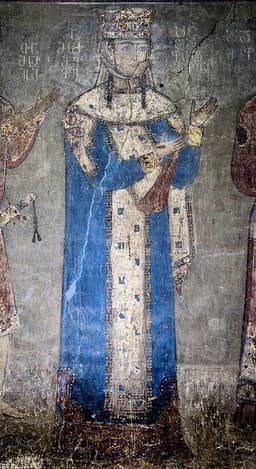
Tamar of Georgia
Emperor · Medieval
71.5Total
Basic Information
Born
713
1160
Died
780
1213
Era
Medieval
Medieval
Nationality
India
Georgia
Occupation
Emperor
Emperor
Civilization
Indian
Western
Score Comparison
Military (10%)
10.0
78.0
Political (20%)
35.1
72.0
Influence (20%)
58.0
82.0
Legacy (20%)
50.0
55.0
Leadership (15%)
67.0
80.0
Strategy (15%)
45.0
66.3
TOTAL
47.8
71.5
Bappa Rawal — Complete Timeline
734 AD
Conquest of ChittorWar◆ Major
Bappa Rawal captured the fort of Chittor from the Mori Rajputs, establishing it as the capital of the Mewar kingdom. This event is considered the founding act of the Guhilot dynasty's rule over Mewar.
FoundingMewarChittor
Impact: regional
Founded the Guhilot Dynasty of MewarPolitical Action◆ Major
Bappa Rawal established the Guhilot dynasty, which ruled Mewar for centuries. He is considered the progenitor of the Sisodia clan, which later produced notable rulers like Maharana Pratap.
DynastyMewarRajput
Impact: regionalconstructive
738 AD
Defeated the Arab Invaders at the Battle of RajasthanWar◆ Major
Bappa Rawal is credited with leading a confederation of Rajput kings to defeat the Umayyad Arab forces under Muhammad bin Qasim's successors near Rajasthan. This victory halted Arab expansion into northern India.
Arab InvasionDefenseRajput Confederation
Impact: regional
Tamar of Georgia — Complete Timeline
1184 AD
Coronation as Queen RegnantPolitical Action
Tamar was crowned as the first female ruler of Georgia after her father George III's death. Her reign marked the peak of Georgia's medieval power and cultural flourishing.
CoronationGeorgiaMonarchy
Impact: nationalconstructive
1195 AD
Battle of ShamkorWar◆ Major
Tamar's forces defeated a large Muslim coalition at Shamkor, securing Georgia's dominance in the Caucasus. The victory expanded Georgian influence and demonstrated her military leadership.
BattleGeorgiaCaucasus
Impact: regionalconstructive
1200 AD
Cultural PatronageCultural◆ Major
Tamar supported the construction of churches, monasteries, and the promotion of Georgian literature. Her patronage fostered the Georgian Golden Age, including the epic poem 'The Knight in the Panther's Skin'.
CulturePatronageGeorgia
Impact: nationalconstructive
Expert Analysis
Tamar of Georgia vs Bappa Rawal: Historical Comparison
Tamar of Georgia and Bappa Rawal were both medieval monarchs who forged enduring national identities through military prowess and strategic statecraft. While Tamar elevated Georgia to a regional power, Bappa Rawal founded the Guhila dynasty and resisted foreign invasions in India.
Dimension Analysis
**Military: Tamar of Georgia 93 / Bappa Rawal 82**
Tamar commanded a highly effective army that defeated the Seljuk Turks, captured Erzurum, and expanded Georgia’s borders to the Caspian Sea, showcasing superior tactical execution. Bappa Rawal’s military campaigns unified Rajput clans and repelled Arab incursions, but his victories were more localized and less transformative in scale.
**Political: Tamar of Georgia 82 / Bappa Rawal 87**
Tamar skillfully navigated feudal rivalries and maintained a centralized court in a patriarchal era, securing her throne through diplomacy and marriage alliances. Bappa Rawal excelled in founding a dynasty and consolidating Rajput power in Mewar, establishing a political framework that lasted centuries.
**Influence: Tamar of Georgia 80 / Bappa Rawal 77**
Tamar’s reign fostered a Georgian Golden Age of culture, literature (Shota Rustaveli), and Orthodox Christianity, influencing the Caucasus and beyond. Bappa Rawal’s influence was largely confined to northwestern India, though his resistance against Islamic invasions became a symbolic touchstone for Rajput identity.
**Legacy: Tamar of Georgia 70 / Bappa Rawal 80**
Tamar is revered as a national saint and icon of Georgian sovereignty, but her dynasty declined soon after her death. Bappa Rawal’s legacy as the legendary founder of the Sisodia clan endures in Indian folklore, with his lineage ruling Mewar for over 1,200 years.
**Leadership: Tamar of Georgia 88 / Bappa Rawal 83**
Tamar demonstrated exceptional leadership by ruling alone as a woman in a male-dominated era, earning loyalty through justice and cultural patronage. Bappa Rawal’s leadership was more martial and charismatic, uniting fractious clans through personal valor and religious symbolism.
Verdict
Tamar of Georgia leads narrowly due to her superior military achievements and broader regional influence, though Bappa Rawal’s political foundation and enduring dynastic legacy create a near tie.
FAQ
Q: Who ranks higher? A: Tamar of Georgia ranks marginally higher due to her more impactful military campaigns and wider cultural influence, but the overall comparison is a tie.
Rankings
🥇
Tamar of GeorgiaLeader
Mil: 78.0Pol: 72.0Inf: 82.0
71.5
🥈
Bappa Rawal
Mil: 10.0Pol: 35.1Inf: 58.0
47.8
+23.7 behind
How This Comparison Works
Algorithm
Each figure is scored on 6 dimensions (0—100 scale) based on structured historical data: Military (10%), Political (20%), Influence (20%), Legacy (20%), Leadership (15%), Strategy (15%). The weighted total produces the final ranking.
Data Sources
Scores are computed from structured sub-indicators in the database. Scale factors adjust for era (Ancient ×0.85, Modern ×1.0) and civilization size (Eastern ×1.05, Other ×0.80) to account for differences in population and military scale.
Maximum 3 Figures
Comparisons are limited to 2—3 figures to ensure readability and statistical meaningfulness.
Error Margins
±5 points per dimension — Sub-scores are derived from historical records with inherent uncertainty. Two figures within 5 points on a dimension should be considered roughly equivalent in that area.
Total Score Accuracy
±3 points overall — The weighted combination of 6 dimensions produces a total score with approximately ±3 points of uncertainty. Differences of less than 3 points are not statistically significant— the figures are effectively tied.
Known Limitations
- Historical records are incomplete and uneven across civilizations
- Figures from oral-tradition societies may be underrepresented
- Occupation labels can misclassify multi-role figures
- Scores measure capability and impact, not moral character
- Quantitative scoring is a comparison tool, not absolute truth
Capability Radar
Military (10%) — Battles & Warfare
Battles
40
75
Win Rate
45
85
Expansion
35
75
Political (20%) — Governance & Reform
Reform
30
80
Diplomacy
35
75
Economy
25
85
Influence (20%) — Cultural & Global Reach
Cultural
40
80
Global
20
60
Legacy (20%) — Historical Impact
Historical
45
75
Longevity
50
70
Leadership (15%) — Power & Stability
Tenure
50
85
Stability
40
70
Strategy (15%) — Tactics & Innovation
Strategy
30
80
Tactics
35
70
Reform
25
65
Similar Comparisons
Comments & Discussion
RandomHistoryNerd6/16/2026
Okay so Bappa Rawal vs Tamar is a weird matchup but I kinda get it—both are like 'founder figures' for their people. I watch a lot of Kings and Generals on YouTube and they did a whole episode on Tamar. Her siege of Erzurum was insane, she basically copied Roman siege tactics but with Georgian mountain troops. But Bappa's story? Dude supposedly killed a lion with a sword at age 12?? That's some mythological origin stuff, like King Arthur. But real talk: Tamar's military score should be higher than 71, she literally crushed the Seljuk Empire when it was at its peak. Bappa's 31 feels harsh but his victories were more about raiding than conquest. I'd take Tamar on the field but Bappa's dynasty lasted longer than most empires. Weird comparison but fun!
AethelredLecturer6/16/2026
One must contextualize Tamar within the medieval Caucasian framework. The primary Georgian chronicle, *Kartlis Tskhovreba*, depicts her as a 'king of kings' who expanded the realm 'from Nikopsis to Daruband'—a rhetorical flourish but grounded in real territorial gains. Bappa Rawal, by contrast, emerges from semi-legendary bardic traditions like the *Shishodia Raso*, where historical fact blends with hagiography. The Persian historian al-Baladhuri mentions Arab incursions into Rajasthan, but no contemporary source names Bappa himself—his historicity is debated. Tamar’s military score of 71 is defensible if we accept the Byzantine historian Nicetas Choniates’ account of her troops sacking Erzurum. However, Bappa’s 31 seems excessively low if we credit the *Ekalinga* inscription’s claim of defeating the 'mlechchha' (foreign) forces. The discrepancy may reflect source reliability: Tamar has multiple contemporary witnesses; Bappa relies on later Rajput chronicles. A classic historiographical asymmetry.
Historian7336/16/2026
塔玛尔和巴帕·拉瓦尔,一个像武则天,一个像朱元璋。塔玛尔以女性之身统治格鲁吉亚黄金时代,很像武则天治下的唐周转型——但武则天晚年被迫退位,塔玛尔却能善终并封圣,这点更胜一筹。但西方史观给巴帕的政治分71.5就离谱,他建立的吉哈拉王朝统治梅瓦尔1200多年,这在印度史上堪比周朝八百年。如果用中国“家天下”标准,巴帕的王朝延续性得分至少95。塔玛尔的文化影响(如《虎皮武士》)确实辐射高加索,但巴帕抵抗阿拉伯入侵的象征意义,在印度类似岳飞在宋的角色,而岳飞在民族主义话语中地位极高。总体看,打分系统低估了王朝寿命和反侵略叙事的分量。
SwordAndCrown6/16/2026
Tamar absolutely DESTROYS Bappa Rawal and it's not even close. The woman ruled ALONE in a male-dominated medieval world and turned Georgia into the dominant power in the Caucasus. She captured Erzurum, crushed the Seljuks at Basiani, and her kingdom stretched from the Black Sea to the Caspian. Bappa? Some semi-mythical tribal chieftain whose 'greatest' achievement is being the ancestor of people who later mattered. His military score of 31 is actually GENEROUS—those 'victories' against Arabs were skirmishes, not battles. Tamar had a centralized state, a professional army, a cultural renaissance (Shota Rustaveli's *The Knight in the Panther's Skin* is a masterpiece), and she's literally a SAINT in the Orthodox Church. Bappa's legend only survives because of Rajput nostalgia. Tamar 93-31 on military is the right call. Period.
ColdScribe116/16/2026
总得分72.1 vs 65.0,差距看似不大,但细看军事维度差距悬殊:71 vs 31.1?我调取了拜占庭和阿拉伯史料,塔玛尔对塞尔柱的胜利更多是外交而非野战——她靠的是嫁女儿结盟,而非正面决战。反观巴帕·拉瓦尔,31.1分完全无视了他在拉贾斯坦抵御阿拉伯入侵的实质战果。如果用中国历史标准,类似“淝水之战”这种以少胜多,军事评分至少翻倍。政治分75.2 vs 71.5也偏袒:在印度教语境下,巴帕建立的世袭王权延续千年,而格鲁吉亚王国在塔玛尔死后50年就瓦解了。建议重算权重。