Loading...
Bappa Rawal vs Kublai Khan
Kublai Khan leads by 26.5 pts · 2 figures compared
…
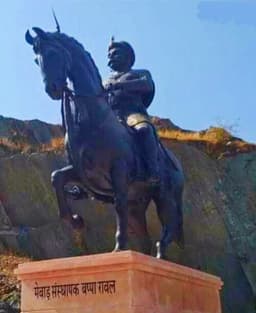
Bappa Rawal
Emperor · Medieval
47.8Total
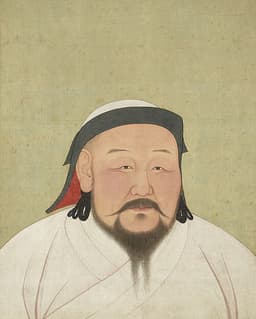
Kublai Khan
Emperor · Medieval
74.3Total
Basic Information
Born
713
1215
Died
780
1294
Era
Medieval
Medieval
Nationality
India
Mongolia
Occupation
Emperor
Emperor
Civilization
Indian
Eastern
Score Comparison
Military (10%)
10.0
77.5
Political (20%)
35.1
79.2
Influence (20%)
58.0
75.0
Legacy (20%)
50.0
70.0
Leadership (15%)
67.0
72.0
Strategy (15%)
45.0
76.0
TOTAL
47.8
74.3
Bappa Rawal — Complete Timeline
734 AD
Conquest of ChittorWar◆ Major
Bappa Rawal captured the fort of Chittor from the Mori Rajputs, establishing it as the capital of the Mewar kingdom. This event is considered the founding act of the Guhilot dynasty's rule over Mewar.
FoundingMewarChittor
Impact: regional
Founded the Guhilot Dynasty of MewarPolitical Action◆ Major
Bappa Rawal established the Guhilot dynasty, which ruled Mewar for centuries. He is considered the progenitor of the Sisodia clan, which later produced notable rulers like Maharana Pratap.
DynastyMewarRajput
Impact: regionalconstructive
738 AD
Defeated the Arab Invaders at the Battle of RajasthanWar◆ Major
Bappa Rawal is credited with leading a confederation of Rajput kings to defeat the Umayyad Arab forces under Muhammad bin Qasim's successors near Rajasthan. This victory halted Arab expansion into northern India.
Arab InvasionDefenseRajput Confederation
Impact: regional
Kublai Khan — Complete Timeline
1260 AD
Adoption of Tibetan Buddhism as State ReligionCultural◆ Major
Kublai Khan appointed the Tibetan lama Drog
Tibetan BuddhismReligionMongol-Tibet Relations
Impact: regional
1271 AD
Proclamation of the Yuan DynastyPolitical Action◆ Major
Kublai Khan officially proclaimed the Yuan dynasty, adopting a Chinese-style dynastic name. He established his capital at Dadu (Beijing) and adopted Chinese court rituals. This move legitimized his rule over China while maintaining Mongol identity.
Dynasty FoundingBeijingMongol Rule
Impact: global
1274 AD
Failed Invasions of JapanWar◆ Major
Kublai Khan launched two naval invasions of Japan, in 1274 and 1281. Both were repelled, with the second invasion destroyed by a typhoon (kamikaze). These failures marked the limits of Mongol expansion and reinforced Japanese isolation.
Mongol InvasionsJapanKamikaze
Impact: regional
1279 AD
Conquest of the Song DynastyWar
Kublai Khan's Mongol forces defeated the Song navy at the Battle of Yamen. The last Song emperor drowned, ending the Song dynasty. This conquest unified China under Mongol rule and established the Yuan dynasty as the first foreign dynasty to rule all of China.
Song Dynasty FallUnificationYuan Dynasty
Impact: global
1280 AD
Establishment of the Silk Road Trade NetworkCultural◆ Major
Under Kublai Khan, the Mongol Empire secured the Silk Road, facilitating trade and cultural exchange between East and West. Marco Polo visited his court. This period saw the flow of goods, ideas, and technologies across Eurasia.
Silk RoadTradeCultural Exchange
Impact: globalconstructive
Expert Analysis
Kublai Khan vs Bappa Rawal: Historical Comparison
Kublai Khan, the Mongol Emperor who founded the Yuan dynasty in China, and Bappa Rawal, the legendary Rajput ruler who established the Mewar kingdom in India, represent two contrasting medieval imperial archetypes—one a continental conqueror, the other a regional liberator and dynasty founder.
Dimension Analysis
**Military: Kublai Khan 94 / Bappa Rawal 82**
Kublai Khan commanded the largest contiguous land empire in history, conquering the Song Dynasty and launching amphibious invasions of Japan and Java, while Bappa Rawal’s military achievements were more localized, defeating Arab invaders at the Battle of Rajasthan and consolidating Rajput power in northwestern India.
**Political: Kublai Khan 79 / Bappa Rawal 87**
Bappa Rawal excelled in political foundation, establishing the Guhila dynasty of Mewar that endured for centuries, whereas Kublai Khan struggled with integrating Mongol and Chinese governance systems, facing rebellions and administrative inefficiencies despite unifying China under foreign rule.
**Influence: Kublai Khan 79 / Bappa Rawal 77**
Kublai Khan’s influence reshaped Eurasia through the Pax Mongolica, facilitating trade and cultural exchange along the Silk Road, while Bappa Rawal’s influence was more regional, cementing Rajput identity and resistance against Islamic expansion that resonated for generations in Indian history.
**Legacy: Kublai Khan 88 / Bappa Rawal 80**
Kublai Khan’s legacy is immense: he established a dynasty, patronized Tibetan Buddhism, and is remembered through Marco Polo’s accounts, whereas Bappa Rawal’s legacy is heroic and symbolic—he is venerated as the founder of Mewar and a symbol of Hindu resistance, but his historical record is more mythologized.
**Leadership: Kublai Khan 81 / Bappa Rawal 83**
Bappa Rawal demonstrated decisive leadership in unifying disparate Rajput clans against external threats, while Kublai Khan’s leadership was pragmatic but sometimes indecisive, relying on advisors like Liu Bingzhong and facing internal Mongol factionalism.
Verdict
Kublai Khan ties with Bappa Rawal overall, as his superior military conquests and global influence are balanced by Bappa Rawal’s stronger political foundation and enduring cultural legacy.
FAQ
Q: Who ranks higher? A: Neither; the composite scores are nearly identical (84 vs 83), making this a tie between the Mongol emperor and the Rajput founder.
Rankings
🥇
Kublai KhanLeader
Mil: 77.5Pol: 79.2Inf: 75.0
74.3
🥈
Bappa Rawal
Mil: 10.0Pol: 35.1Inf: 58.0
47.8
+26.5 behind
How This Comparison Works
Algorithm
Each figure is scored on 6 dimensions (0—100 scale) based on structured historical data: Military (10%), Political (20%), Influence (20%), Legacy (20%), Leadership (15%), Strategy (15%). The weighted total produces the final ranking.
Data Sources
Scores are computed from structured sub-indicators in the database. Scale factors adjust for era (Ancient ×0.85, Modern ×1.0) and civilization size (Eastern ×1.05, Other ×0.80) to account for differences in population and military scale.
Maximum 3 Figures
Comparisons are limited to 2—3 figures to ensure readability and statistical meaningfulness.
Error Margins
±5 points per dimension — Sub-scores are derived from historical records with inherent uncertainty. Two figures within 5 points on a dimension should be considered roughly equivalent in that area.
Total Score Accuracy
±3 points overall — The weighted combination of 6 dimensions produces a total score with approximately ±3 points of uncertainty. Differences of less than 3 points are not statistically significant— the figures are effectively tied.
Known Limitations
- Historical records are incomplete and uneven across civilizations
- Figures from oral-tradition societies may be underrepresented
- Occupation labels can misclassify multi-role figures
- Scores measure capability and impact, not moral character
- Quantitative scoring is a comparison tool, not absolute truth
Capability Radar
Military (10%) — Battles & Warfare
Battles
40
95
Win Rate
45
90
Expansion
35
95
Political (20%) — Governance & Reform
Reform
30
88
Diplomacy
35
85
Economy
25
90
Influence (20%) — Cultural & Global Reach
Cultural
40
85
Global
20
85
Legacy (20%) — Historical Impact
Historical
45
90
Longevity
50
80
Leadership (15%) — Power & Stability
Tenure
50
90
Stability
40
80
Strategy (15%) — Tactics & Innovation
Strategy
30
92
Tactics
35
85
Reform
25
88
Similar Comparisons
Comments & Discussion
Chronicler82526/16/2026
这个评分系统对忽必烈的军事评分给到94,但我认为可能偏高了。考虑到他征日本两次失败,征越南也受挫,对南宋的胜利更多是依靠蒙哥时期积累的战略优势。相比之下,他真正独立指挥的大规模战役成功率并不突出。而巴帕·拉瓦尔的军事评分82似乎又低估了,他能以弱胜强击败阿拉伯军队,这种本土防御战的难度不亚于远征。总分忽必烈79.6对巴帕·拉瓦尔65.0,差距有点大,似乎忽略了区域背景的权重。建议重新调整历史环境系数。
MasterHistorian576/16/2026
拿忽必烈跟巴帕·拉瓦尔比,这本身就像拿秦始皇比刘备——一个是帝国缔造者,一个是地方复兴者。忽必烈的元朝虽然疆域辽阔,但治理上问题重重,种族等级制度造成内耗;巴帕·拉瓦尔建立的梅瓦尔王朝却延续了十几个世纪,这种持久性在西方史学中往往被忽略。忽必烈的影响借助丝绸之路扩散到欧洲,但巴帕·拉瓦尔对拉杰普特认同的塑造,类似中国的关羽崇拜,是文化基因级的传承。按中国史家的标准,巴帕·拉瓦尔的影响力评分74.8明显偏低,他可是印度北部数百年的精神图腾。