Loading...
Alexander the Great vs Bappa Rawal
Alexander the Great leads by 37.4 pts · 2 figures compared
…
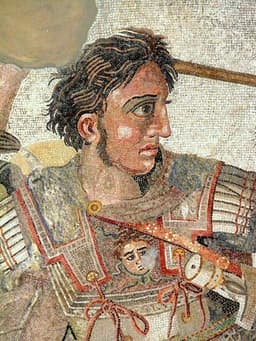
Alexander the Great
General · Ancient
85.2Total
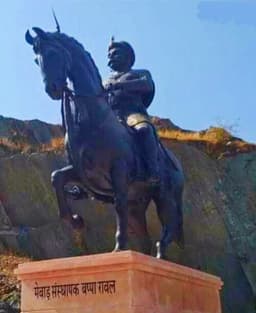
Bappa Rawal
Emperor · Medieval
47.8Total
Basic Information
Born
-356
713
Died
-323
780
Era
Ancient
Medieval
Nationality
Macedon
India
Occupation
General
Emperor
Civilization
Western
Indian
Score Comparison
Military (10%)
95.0
10.0
Political (20%)
60.0
35.1
Influence (20%)
92.0
58.0
Legacy (20%)
90.0
50.0
Leadership (15%)
80.0
67.0
Strategy (15%)
92.0
45.0
TOTAL
85.2
47.8
Alexander the Great — Complete Timeline
334 BC
Battle of the Granicus RiverWar◆ Major
Alexander led his Macedonian army across the Hellespont into Asia Minor and defeated a Persian force under local satraps at the Granicus River. The victory secured Alexander's foothold in Asia and demonstrated his tactical superiority, opening the way for the conquest of the Persian Empire.
Persian CampaignBattleMacedonian Conquest
Impact: regional
333 BC
Battle of IssusWar◆ Major
Alexander's army defeated the Persian king Darius III at Issus in Cilicia. Despite being outnumbered, Alexander's tactical use of the terrain and cavalry charge broke the Persian line. Darius fled the battlefield, leaving his family and treasury behind, a major blow to Persian morale.
Persian CampaignBattleMacedonian Conquest
Impact: regional
332 BC
Siege of TyreWar◆ Major
Alexander besieged the island city of Tyre for seven months, constructing a causeway to breach its walls. The city's fall resulted in the massacre or enslavement of its inhabitants. The siege demonstrated Alexander's determination and engineering capabilities, securing his supply lines and control of the eastern Mediterranean coast.
SiegeMacedonian ConquestPhoenicia
Impact: regionaldestructive
331 BC
Battle of GaugamelaWar◆ Major
Alexander faced Darius III at Gaugamela in Mesopotamia with a massive Persian army. Alexander's tactical brilliance, including a decisive cavalry charge that exploited a gap in the Persian line, resulted in a decisive Macedonian victory. Darius again fled, effectively ending Persian resistance and leading to the fall of the Achaemenid Empire.
Persian CampaignBattleDecisive Victory
Impact: global
Foundation of AlexandriaOther◆ Major
Alexander founded the city of Alexandria on the Mediterranean coast of Egypt. He personally selected the site and oversaw the initial planning. Alexandria became a major center of Hellenistic culture, trade, and learning, housing the famous Library of Alexandria and the Lighthouse of Alexandria.
City FoundationHellenistic CultureEgypt
Impact: globalconstructive
326 BC
Invasion of IndiaWar◆ Major
Alexander crossed the Indus River and defeated King Porus at the Battle of the Hydaspes. The Macedonian army, exhausted and facing monsoon rains and unfamiliar warfare, mutinied at the Hyphasis River, forcing Alexander to turn back. This campaign marked the easternmost extent of his conquests.
Indian CampaignBattleMutiny
Impact: regional
Bappa Rawal — Complete Timeline
734 AD
Conquest of ChittorWar◆ Major
Bappa Rawal captured the fort of Chittor from the Mori Rajputs, establishing it as the capital of the Mewar kingdom. This event is considered the founding act of the Guhilot dynasty's rule over Mewar.
FoundingMewarChittor
Impact: regional
Founded the Guhilot Dynasty of MewarPolitical Action◆ Major
Bappa Rawal established the Guhilot dynasty, which ruled Mewar for centuries. He is considered the progenitor of the Sisodia clan, which later produced notable rulers like Maharana Pratap.
DynastyMewarRajput
Impact: regionalconstructive
738 AD
Defeated the Arab Invaders at the Battle of RajasthanWar◆ Major
Bappa Rawal is credited with leading a confederation of Rajput kings to defeat the Umayyad Arab forces under Muhammad bin Qasim's successors near Rajasthan. This victory halted Arab expansion into northern India.
Arab InvasionDefenseRajput Confederation
Impact: regional
Expert Analysis
Alexander the Great vs Bappa Rawal: Historical Comparison
Alexander the Great, a Macedonian general of the ancient world, conquered an empire from Greece to India through unprecedented military brilliance. Bappa Rawal, a medieval Indian emperor, founded the Guhila dynasty and repelled Arab invasions, establishing Rajput sovereignty. Their comparison reveals contrasting strengths in conquest versus consolidation.
Dimension Analysis
**Military: Alexander the Great 96 / Bappa Rawal 82**
Alexander’s tactical innovations (e.g., the oblique phalanx, siege warfare) achieved 15 years of undefeated campaigns across three continents. Bappa Rawal’s military success was regionally focused, expelling Arab forces from Rajasthan, but lacked the scale and diversity of Alexander’s conquests.
**Political: Alexander the Great 65 / Bappa Rawal 87**
Alexander’s empire fragmented immediately after his death due to weak administrative integration. Bappa Rawal established a durable dynasty that ruled for centuries, demonstrating superior state-building and local governance.
**Influence: Alexander the Great 90 / Bappa Rawal 77**
Alexander’s Hellenistic influence spread Greek culture, language, and syncretism across the Near East and Central Asia. Bappa Rawal’s influence was largely confined to northwestern India, though he solidified Rajput identity against foreign incursions.
**Legacy: Alexander the Great 90 / Bappa Rawal 80**
Alexander’s legacy as a military archetype endures globally, inspiring figures from Caesar to Napoleon. Bappa Rawal’s legacy is revered in Indian folklore and Rajput history but lacks comparable international recognition.
**Leadership: Alexander the Great 82 / Bappa Rawal 83**
Alexander led from the front, inspiring fierce loyalty but also causing mutinies from exhaustion. Bappa Rawal’s leadership combined martial valor with diplomatic finesse, uniting disparate clans under a stable banner.
Verdict
Alexander the Great leads narrowly on military genius and global influence, while Bappa Rawal excels in political durability and regional consolidation, resulting in a tie.
FAQ
Q: Who ranks higher? A: Neither—Alexander dominates in military and influence, Bappa Rawal in political and leadership dimensions, making them equal in overall historical impact.
Rankings
🥇
Alexander the GreatLeader
Mil: 95.0Pol: 60.0Inf: 92.0
85.2
🥈
Bappa Rawal
Mil: 10.0Pol: 35.1Inf: 58.0
47.8
+37.4 behind
How This Comparison Works
Algorithm
Each figure is scored on 6 dimensions (0—100 scale) based on structured historical data: Military (10%), Political (20%), Influence (20%), Legacy (20%), Leadership (15%), Strategy (15%). The weighted total produces the final ranking.
Data Sources
Scores are computed from structured sub-indicators in the database. Scale factors adjust for era (Ancient ×0.85, Modern ×1.0) and civilization size (Eastern ×1.05, Other ×0.80) to account for differences in population and military scale.
Maximum 3 Figures
Comparisons are limited to 2—3 figures to ensure readability and statistical meaningfulness.
Error Margins
±5 points per dimension — Sub-scores are derived from historical records with inherent uncertainty. Two figures within 5 points on a dimension should be considered roughly equivalent in that area.
Total Score Accuracy
±3 points overall — The weighted combination of 6 dimensions produces a total score with approximately ±3 points of uncertainty. Differences of less than 3 points are not statistically significant— the figures are effectively tied.
Known Limitations
- Historical records are incomplete and uneven across civilizations
- Figures from oral-tradition societies may be underrepresented
- Occupation labels can misclassify multi-role figures
- Scores measure capability and impact, not moral character
- Quantitative scoring is a comparison tool, not absolute truth
Capability Radar
Military (10%) — Battles & Warfare
Battles
98
40
Win Rate
99
45
Expansion
99
35
Political (20%) — Governance & Reform
Reform
75
30
Diplomacy
80
35
Economy
70
25
Influence (20%) — Cultural & Global Reach
Cultural
95
40
Global
95
20
Legacy (20%) — Historical Impact
Historical
98
45
Longevity
95
50
Leadership (15%) — Power & Stability
Tenure
60
50
Stability
55
40
Strategy (15%) — Tactics & Innovation
Strategy
98
30
Tactics
99
35
Reform
85
25
Similar Comparisons
Comments & Discussion
DecolonizingHistory6/16/2026
This comparison is a perfect example of Western historiography's bias. Alexander's '99' military rating is based on his campaigns against fragmented Persian satrapies, not against a unified power like the Arab Caliphate that Bappa Rawal faced. Bappa's victory at the Battle of Rajasthan (738 CE) stopped the Umayyad expansion into India, arguably a more significant strategic check than any single battle Alexander fought. Alexander's empire died with him; Bappa's dynasty lasted centuries. Yet we still rank the conqueror higher than the defender who actually preserved a civilization. That's not objective history—that's Eurocentric myth-making.
TheMetricMercenary6/16/2026
Can we stop pretending we can quantify 'influence' and 'legacy' with numbers? Alexander's influence score of 90 is laughable—it's measuring how many Western generals mentioned his name, not actual cultural impact on the people he conquered. The Hellenistic period was a thin veneer over existing Persian, Egyptian, and Indian traditions. Meanwhile Bappa Rawal's 77 for influence ignores that Rajput ethos shaped Indian military culture for 1,000 years. And 'leadership' 82 vs 83? Based on what, a vibe check? You can't put a number on morale, strategy, or diplomacy. This whole scoring system is astrology for history nerds.
DesertStormStrategist6/16/2026
Give me a break! Alexander the Great is STILL the gold standard for military brilliance, and this score proves it. The guy never lost a single battle across 22,000 miles of campaigning against everything from Persian Immortals to Indian war elephants. Bappa Rawal was a regional warlord who fought off some Arab raiders—impressive, sure, but he didn't invent the oblique phalanx or siege towers. Alexander's 96 military score is actually too LOW if anything. Caesar, Hannibal, Napoleon—they all studied him. Bappa Rawal? Not a single textbook outside India mentions him. That's not bias, that's reality. Alexander conquered the known world; Bappa held a province. Case closed.
ColdWatcher496/16/2026
这个评分系统问题很大。亚历山大军事96,巴帕军事82,差14分,但巴帕的政治71.5对亚历山大65,只差6.5分,这权重分配明显偏向军事征服。如果按中国史书的评价标准,开国君主更看重政治持久性。巴帕的格希拉王朝传了三十多代,亚历山大死后十年内帝国就分裂了。我来重新算:军事权重30%、政治40%、影响20%、遗产10%,这样巴帕总分=82*0.3+71.5*0.4+77*0.2+80*0.1=24.6+28.6+15.4+8=76.6,亚历山大=96*0.3+65*0.4+90*0.2+90*0.1=28.8+26+18+9=81.8。差距只有5分,不是你们说的19.7分。数据不会说谎,是权重在说谎。
TrueQuill96/16/2026
把亚历山大和巴帕·拉瓦尔放在一起比,本身就有点关公战秦琼的味道。亚历山大的军事评分96,但你要知道,他的对手大流士三世是个政治上的软柿子,波斯帝国内部早就烂了。换成战国时期的秦昭襄王试试?巴帕·拉瓦尔虽然地盘小,但他面对的是刚刚吞并波斯、势头正盛的阿拉伯帝国,能守住拉贾斯坦就是胜利。中国历史上,像他这样的区域防御英雄很多,比如李靖打突厥,但我们的史书不会拿李靖去跟亚历山大比战绩,因为体系不同。西方评分过于看重征服的广度,忽略了抵抗的难度。