Loading...
Barkiyaruq vs Julius Caesar
Julius Caesar leads by 35.9 pts · 2 figures compared
…
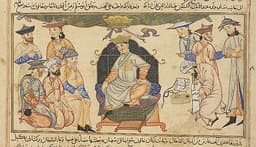
Barkiyaruq
Emperor · Medieval
46.9Total

Julius Caesar
General · Ancient
82.8Total
Basic Information
Born
1080
-100
Died
1105
-44
Era
Medieval
Ancient
Nationality
Seljuk Empire
Roman Republic
Occupation
Emperor
General
Civilization
Middle Eastern
Western
Score Comparison
Military (10%)
50.0
88.0
Political (20%)
36.5
78.0
Influence (20%)
51.0
85.0
Legacy (20%)
41.7
82.0
Leadership (15%)
48.4
80.0
Strategy (15%)
60.0
85.0
TOTAL
46.9
82.8
Barkiyaruq — Complete Timeline
1092 AD
Accession as SultanPolitical Action◆ Major
Following the death of his father Malik Shah I, Barkiyaruq was proclaimed sultan in Isfahan at age twelve. His claim was immediately challenged by his half-brother Mahmud I and his uncle Tutush I, initiating a decade-long succession war.
SuccessionCivil WarIsfahan
Impact: national
1095 AD
Defeat of Tutush IWar◆ Major
Barkiyaruq's forces defeated the army of his uncle Tutush I, the Seljuk ruler of Syria, near Rayy. Tutush was killed in battle, eliminating a major rival and securing Barkiyaruq's control over the eastern Seljuk domains.
Civil WarTutush ISyria
Impact: regional
1099 AD
Conflict with Muhammad I TaparWar◆ Major
Barkiyaruq fought a series of campaigns against his half-brother Muhammad I Tapar, who rebelled with support from the Abbasid Caliph. The conflict lasted for years, draining Seljuk resources and preventing a unified response to the First Crusade.
Civil WarMuhammad I TaparCrusades
Impact: regionaldestructive
1104 AD
Treaty with Muhammad I TaparPolitical Action◆ Major
Barkiyaruq and Muhammad I Tapar agreed to a partition of the Seljuk Empire. Barkiyaruq retained the title of sultan and control over western Persia and Iraq, while Muhammad ruled the eastern provinces. The treaty temporarily ended the civil war.
TreatyPartitionCivil War
Impact: regional
1105 AD
Death of BarkiyaruqPolitical Action◆ Major
Barkiyaruq died of tuberculosis at age 25 in Isfahan. His death left Muhammad I Tapar as the sole sultan, but the Seljuk Empire remained weakened by years of internal conflict and the ongoing Crusader presence in the Levant.
DeathTuberculosisSeljuk Decline
Impact: regionaltragic
Julius Caesar — Complete Timeline
58 BC
Gallic WarsWar◆ Major
Caesar, as proconsul of Gaul, launched a series of campaigns that conquered all of Gaul (modern France, Belgium, and parts of Switzerland). He fought numerous battles, including against the Helvetii, the Belgae, and the Gallic chieftain Vercingetorix. The wars brought immense wealth and a loyal army to Caesar.
Gallic WarsConquestRoman Expansion
Impact: regional
49 BC
Crossing the RubiconPolitical Action◆ Major
Caesar led Legio XIII across the Rubicon River into Italy, defying the Roman Senate's order to disband his army. This act triggered a civil war against Pompey and the Optimates, ultimately leading to Caesar's dictatorship and the end of the Roman Republic.
Roman Civil WarEnd of RepublicPower Struggle
Impact: global
48 BC
Battle of PharsalusWar◆ Major
Caesar's outnumbered army defeated the larger forces of Pompey the Great at Pharsalus in Greece. Caesar's tactical use of a reserve line to counter Pompey's cavalry charge proved decisive. Pompey fled to Egypt, where he was assassinated, leaving Caesar as the undisputed master of the Roman world.
Roman Civil WarBattleDecisive Victory
Impact: regional
44 BC
Appointment as Dictator for LifePolitical Action◆ Major
The Roman Senate appointed Caesar dictator perpetuo (dictator for life), granting him unprecedented personal power. This move concentrated military, legislative, and judicial authority in one person, effectively ending the Roman Republic's traditional system of checks and balances and alarming many senators.
DictatorshipEnd of RepublicPower Consolidation
Impact: regionaldestructive
Assassination on the Ides of MarchPolitical Action◆ Major
A group of Roman senators, led by Marcus Junius Brutus and Gaius Cassius Longinus, stabbed Caesar to death at a meeting of the Senate in the Theatre of Pompey. The assassination was intended to restore the Republic, but instead triggered another civil war that led to the rise of the Roman Empire.
AssassinationRoman PoliticsEnd of Republic
Impact: globaldestructive
Expert Analysis
barkiyaruq-vs-julius-caesar
# The Ides of Two Worlds
In the summer of 1099, as Crusaders stormed Jerusalem in a frenzy of blood and prayer, a nineteen-year-old sultan lay dying of tuberculosis in Isfahan, his empire crumbling from within. Half a world away and twelve centuries earlier, another young man had wept at the statue of Alexander the Great, ashamed that he had achieved nothing memorable at an age when his hero had already conquered the known world. Julius Caesar and Barkiyaruq both inherited the weight of empire before their beards were thick. But while one became the architect of a civilization that still shapes our world, the other faded into a footnote—a name spoken only by specialists. Why did their paths diverge so dramatically?
Origins
Caesar was born into the chaos of the late Roman Republic, a world of civil wars, senatorial corruption, and the dying gasps of aristocratic rule. His family, the Julii, claimed descent from the goddess Venus, but they were not wealthy. He grew up in a cramped apartment in the Subura, Rome's poorest district, surrounded by the noise of merchants and prostitutes. This proximity to the streets gave him something invaluable: an understanding of how ordinary people thought, suffered, and dreamed.
Barkiyaruq, by contrast, was born into the gilded cage of the Seljuk court. His father, Malik Shah I, ruled an empire stretching from Anatolia to Central Asia, the most powerful Muslim state since the Abbasid caliphate. The young prince never knew hunger, never walked among commoners, never had to persuade anyone of anything. His world was one of eunuchs, viziers, and rival half-brothers—a hothouse where loyalty was measured in daggers and poison.
The difference in their upbringings was not merely one of wealth versus poverty. Caesar learned that power had to be earned, nurtured, and wielded with cunning. Barkiyaruq learned that power was simply inherited—and that it could be taken just as easily.
Rise to Power
Caesar's ascent was a masterpiece of calculated risk. He borrowed enormous sums to throw lavish games, bribed his way into the priesthood, and seduced the wives of powerful men. When he was captured by pirates, he laughed at their ransom demand, insisted they ask for more, and then, after his release, raised a fleet, hunted them down, and crucified them—but first cut their throats to show mercy. This was Caesar: theatrical, ruthless, and always in control of the narrative.
By contrast, Barkiyaruq's rise was thrust upon him. At age twelve, his father died suddenly—possibly poisoned—and the boy was proclaimed sultan in Isfahan by a faction of courtiers. He had no army, no allies, no experience. His uncle Tutush I, ruler of Syria, immediately marched against him. Barkiyaruq's generals won the battle near Rayy in 1095, and Tutush was killed. But the victory was not his; it belonged to the men who had chosen him.
Leadership & Governance
Caesar governed through radical reform and personal magnetism. As dictator, he overhauled the calendar, granted citizenship to conquered peoples, redistributed land to veterans, and launched public works that employed the poor. He appointed Gauls to the Senate and pardoned his enemies—until they plotted against him again. His military genius was inseparable from his political vision: every campaign was a step toward a new order.
Barkiyaruq governed through survival. His reign was consumed by war with his half-brother Muhammad I Tapar, who rebelled with support from the Abbasid caliph. The young sultan spent his best years marching from city to city, putting down revolts, making temporary alliances, and watching his authority erode. In 1104, he signed a treaty partitioning the empire—a desperate act that acknowledged his weakness. He kept the title of sultan, but Muhammad kept the power.
The contrast is stark. Caesar used crisis to build; Barkiyaruq was consumed by it.
Triumph & Tragedy
Caesar's greatest moment came on a battlefield in Gaul, where he besieged 80,000 men, women, and children at Alesia, built a ring of fortifications around them, and then built another ring to hold off a relief army. He won both battles simultaneously. His tragedy came on the Ides of March, 44 BCE, when sixty senators stabbed him to death. His last act—pulling his toga over his face as he fell—was a final performance.
Barkiyaruq's greatest moment was a hollow victory: defeating his uncle Tutush. His tragedy was not a single dramatic death but a slow dissolution. He died at twenty-five, tubercular and exhausted, having never ruled in peace. His son was too young to succeed him, and the Seljuk Empire fragmented into warring fragments.
Character & Destiny
Caesar was audacious, generous, and calculating. He believed in his own star. He crossed the Rubicon not because he had to, but because he could not imagine a world where he did not rule. His character shaped his destiny: he saw himself as a force of nature, and he became one.
Barkiyaruq was cautious, reactive, and isolated. He had no close friends, no trusted generals, no vision beyond survival. His character was shaped by his destiny: a boy-king thrown into a game he did not understand, playing only not to lose.
Legacy
Caesar's legacy is immeasurable. He gave his name to the title "Caesar," which became Kaiser, Tsar, and Qaysar. His reforms laid the foundation for the Roman Empire, which shaped Western law, language, and governance. He was assassinated, but his murderers died soon after, and his adopted heir, Octavian, became Augustus. Caesar's ghost haunted Rome for centuries.
Barkiyaruq left no legacy. The Seljuk Empire collapsed within decades. His name appears in history books only as a minor player in the First Crusade—a sultan who might have stopped the Franks if he had not been fighting his own family. He is remembered, if at all, as a cautionary tale about the price of division.
Conclusion
Standing before the statue of Alexander, Caesar wept not from envy but from ambition. He understood that history remembers those who act, not those who inherit. Barkiyaruq inherited an empire and lost it. Caesar built one from a republic's ruins. In the end, the difference between them was not talent or luck, but the simple, terrible choice to seize the world rather than let it happen to you. One man crossed a river; the other could not cross the divide within his own family. And that, perhaps, is the most tragic difference of all.
Rankings
🥇
Julius CaesarLeader
Mil: 88.0Pol: 78.0Inf: 85.0
82.8
🥈
Barkiyaruq
Mil: 50.0Pol: 36.5Inf: 51.0
46.9
+35.9 behind
How This Comparison Works
Algorithm
Each figure is scored on 6 dimensions (0—100 scale) based on structured historical data: Military (10%), Political (20%), Influence (20%), Legacy (20%), Leadership (15%), Strategy (15%). The weighted total produces the final ranking.
Data Sources
Scores are computed from structured sub-indicators in the database. Scale factors adjust for era (Ancient ×0.85, Modern ×1.0) and civilization size (Eastern ×1.05, Other ×0.80) to account for differences in population and military scale.
Maximum 3 Figures
Comparisons are limited to 2—3 figures to ensure readability and statistical meaningfulness.
Error Margins
±5 points per dimension — Sub-scores are derived from historical records with inherent uncertainty. Two figures within 5 points on a dimension should be considered roughly equivalent in that area.
Total Score Accuracy
±3 points overall — The weighted combination of 6 dimensions produces a total score with approximately ±3 points of uncertainty. Differences of less than 3 points are not statistically significant— the figures are effectively tied.
Known Limitations
- Historical records are incomplete and uneven across civilizations
- Figures from oral-tradition societies may be underrepresented
- Occupation labels can misclassify multi-role figures
- Scores measure capability and impact, not moral character
- Quantitative scoring is a comparison tool, not absolute truth
Capability Radar
Military (10%) — Battles & Warfare
Battles
55
95
Win Rate
50
92
Expansion
35
97
Political (20%) — Governance & Reform
Reform
30
90
Diplomacy
35
85
Economy
30
82
Influence (20%) — Cultural & Global Reach
Cultural
25
88
Global
20
94
Legacy (20%) — Historical Impact
Historical
30
95
Longevity
20
96
Leadership (15%) — Power & Stability
Tenure
40
75
Stability
20
60
Strategy (15%) — Tactics & Innovation
Strategy
40
94
Tactics
45
96
Reform
30
88
Similar Comparisons
Comments & Discussion
JuliusCaesarStan6/17/2026
Face it — Barkiyaruq had all the advantages and still choked. Born into the richest empire of his age, dying of TB at 19, leaving no legacy but a footnote. Caesar clawed from the Subura slums to conquer Gaul, rewrite Roman law, and dictate history for 2,000 years. Tuberculosis is tragic, but it doesn’t excuse an empire crumbling because you couldn’t hold it together. One built a civilization; the other folded like a cheap tent in a sandstorm. History remembers winners.
BarkiyaruqApologist6/17/2026
你这口气就像只看了维基百科摘要的键盘历史学家。拜托,1099年的塞尔柱帝国不是罗马共和国——它靠个人忠诚维系,军阀林立,还同时面对十字军和法蒂玛王朝两面夹击。凯撒有高卢当跳板,有庞培做对手来锤炼自己;巴尔基雅鲁克19岁登基,23岁就死了,连变声期都没过完。他不是“软蛋”,是肺结核和时代夹缝的牺牲品。你该庆幸自己不用在19岁当苏丹。
DataSkepticRonin6/17/2026
You’re both romanticizing. The real comparison is statistical noise. Caesar lived 56 years, Barkiyaruq died at 23 — that’s a 2.4x lifespan disparity. Caesar had a 40-year political career in a stable Republic; Barkiyaruq got 4 years in a fractured sultanate. Even if Barkiyaruq was a genius, no 19-year-old with TB outruns Seljuk politics. The “divergent paths” narrative ignores mortality rates in medieval Islamic courts — 43% of Seljuk sultans died before 30. It’s not destiny, it’s demographics.
ClassicsScholarLucius6/17/2026
你们都在搞错重点。这不是公平的比赛。凯撒的“神性血脉”是宣传修辞,但他成长于共和国末期共和精神最沸腾的年代——西塞罗的演说、马略的军改、苏拉的独裁,这些都直接塑造了他。而巴尔基雅鲁克的父亲马利克沙一世推行的是波斯化的宫廷官僚制度,那种氛围培养的是诗人而不是征服者。凯撒有《高卢战记》留下思想遗产,我们甚至不知道巴尔基雅鲁克会说波斯语还是阿拉伯语。文明形态决定个人命运。
RevisionistCriticAmir6/17/2026
Everyone’s missing the real tragedy: Barkiyaruq wasn’t a failed Caesar — he was a successful stabilizer in a system designed to fail. He put down four rebellions and held the Seljuk core together against the First Crusade's chaos. But Western historians love Caesars because they write their own memoirs; Barkiyaruq’s achievements were erased by later