Loading...
Basarab I of Wallachia vs Frederick I Barbarossa
Frederick I Barbarossa leads by 12.2 pts · 2 figures compared
…

Basarab I of Wallachia
Emperor · Medieval
48.1Total
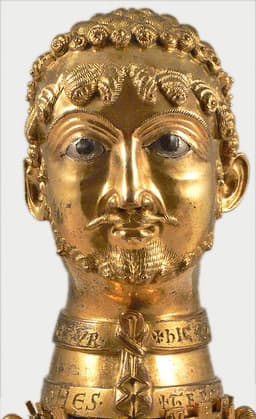
Frederick I Barbarossa
Emperor · Medieval
60.3Total
Basic Information
Born
1270
1122
Died
1352
1190
Era
Medieval
Medieval
Nationality
Wallachia
Holy Roman Empire
Occupation
Emperor
Emperor
Civilization
Western
Western
Score Comparison
Military (10%)
10.0
67.3
Political (20%)
42.3
55.0
Influence (20%)
56.4
56.7
Legacy (20%)
49.2
55.0
Leadership (15%)
65.7
72.0
Strategy (15%)
45.0
66.3
TOTAL
48.1
60.3
Basarab I of Wallachia — Complete Timeline
1310 AD
Foundation of WallachiaPolitical Action◆ Major
Basarab I unified the territories between the Carpathian Mountains and the Danube River, establishing the Principality of Wallachia. He became its first ruler, creating a political entity that would persist for centuries.
State FormationMedieval PoliticsFounding
Impact: regionalconstructive
1330 AD
Battle of PosadaWar
Basarab I led Wallachian forces to victory against the Hungarian army of King Charles I in the Carpathian Mountains. This battle secured Wallachian independence from Hungarian suzerainty and established the Principality of Wallachia as a sovereign state.
Wallachian IndependenceMedieval WarfareHungarian-Wallachian Conflict
Impact: regionalconstructive
Recognition of Wallachian SovereigntyPolitical Action◆ Major
Following the Battle of Posada, King Charles I of Hungary recognized Basarab I as ruler of Wallachia. This treaty formalized Wallachian independence and established diplomatic relations between the two kingdoms.
DiplomacyTreatyIndependence
Impact: regionalconstructive
Frederick I Barbarossa — Complete Timeline
1158 AD
Diet of RoncagliaPolitical Action◆ Major
Frederick I convened a diet at Roncaglia in northern Italy. He proclaimed the Regalian Rights, asserting imperial authority over Italian cities. The diet declared that all public authority derived from the emperor, leading to conflict with the Lombard League.
Imperial AuthorityItalyLegislation
Impact: regional
1176 AD
Battle of LegnanoWar
Frederick I Barbarossa was defeated by the Lombard League at Legnano in northern Italy. The League's infantry used a carroccio (war wagon) as a rallying point. This defeat forced Frederick to recognize the autonomy of Italian communes in the Peace of Venice.
Lombard LeagueItalian CampaignsDefeat
Impact: regional
1177 AD
Peace of VenicePolitical Action◆ Major
Frederick I signed a treaty with Pope Alexander III and the Lombard League in Venice. He recognized Alexander III as pope and agreed to a six-year truce with the Italian communes. The peace ended the schism in the Church and temporarily halted imperial campaigns in Italy.
TreatyPapacyLombard League
Impact: regionalconstructive
1190 AD
Death on the Third CrusadeWar◆ Major
Frederick I drowned in the Saleph River in Cilicia while leading the Third Crusade. His death caused the German contingent to largely return home, weakening the crusade. He was buried in Antioch, and his body later moved to Tyre.
CrusadeDeathAccident
Impact: globaltragic
Expert Analysis
Origins
Basarab I of Wallachia was born around 1280 into a semi-nomadic Vlach ruling family in the Carpathian foothills. Little is known of his early life, but he emerged as a local voivode (military leader) amidst the fragmentation of the Kingdom of Hungary's eastern frontier. His father, Thocomerius, was a minor prince, and Basarab inherited a small territory north of the Danube. His formative years were shaped by the Mongol withdrawal and the power vacuum it created, allowing local rulers to consolidate control.
Frederick I Barbarossa was born in 1122 to the Hohenstaufen family of Swabia. His father, Frederick II, Duke of Swabia, was a rival to the Welfs, and Barbarossa grew up in a court steeped in imperial ambition. He was well-educated for his time, studying chivalric codes and governance. His uncle, King Conrad III of Germany, appointed him Duke of Swabia in 1147, giving him early military command. Barbarossa's exposure to the Crusades and Italian campaigns shaped his worldview.
Rise to Power
Basarab I's rise came through military consolidation. By 1310, he had united several Vlach voivodeships between the Carpathians and the Danube. His turning point was the Battle of Posada in 1330. King Charles I of Hungary invaded Wallachia to assert suzerainty. Basarab lured the Hungarian army into a narrow Carpathian pass, where his forces, using archers and terrain, annihilated the invaders. Charles barely escaped. This victory forced Hungary to recognize Wallachian independence in 1332, making Basarab the first sovereign prince of Wallachia.
Frederick I Barbarossa became Holy Roman Emperor in 1155 after being elected King of Germany in 1152. He quickly moved to assert imperial authority over Italy, convening the Diet of Roncaglia in 1158. There, he proclaimed the Regalian Rights, claiming control over Italian cities' revenues and appointments. This sparked conflict with the Lombard League, a coalition of northern Italian communes. Barbarossa's military campaigns initially succeeded, but his defeat at the Battle of Legnano in 1176 forced him to compromise. The Peace of Venice in 1177 recognized Pope Alexander III and granted concessions to the Lombard cities.
Leadership & Governance
Basarab I ruled Wallachia as a military chieftain, relying on personal loyalty and clan networks. He established a feudal system where boyars (nobles) owed military service. His governance was pragmatic; he avoided centralizing bureaucracy, instead using marriage alliances and tribute to secure borders. He minted coins and fostered trade with the Black Sea colonies, but his state remained fragile.
Frederick I governed the Holy Roman Empire through a mix of feudal hierarchy and imperial decrees. He attempted to centralize power by appointing loyal ministeriales (unfree officials) and using Roman law to justify his authority. In Italy, he imposed podestàs (governors) but faced resistance. His leadership style was confrontational; he excommunicated Pope Alexander III and sacked Milan in 1162. However, after Legnano, he showed pragmatism by negotiating the Peace of Venice. His military scores of 67.3 reflect his effectiveness in battle, while his political score of 55.0 shows his struggles with diplomacy.
Triumph & Tragedy
Basarab I's greatest triumph was the Battle of Posada, which secured Wallachian independence. He successfully founded a principality that lasted for centuries. His tragedy was the lack of a stable succession; after his death in 1352, Wallachia faced internal strife. He also failed to expand significantly, remaining a buffer state between Hungary and the Mongols.
Frederick I's triumphs include the Diet of Roncaglia, which asserted imperial rights, and the Peace of Venice, which ended a 20-year conflict. His military campaigns in Italy and participation in the Third Crusade showcased his ambition. His tragedy was his death by drowning in the Saleph River in 1190, which dissolved his crusading army. He also failed to fully subdue the Lombard cities or secure a stable succession for his son Henry VI. His military score of 67.3 and strategy score of 66.3 indicate competent but not exceptional performance.
Character & Destiny
Basarab I was pragmatic and resilient, using guerrilla tactics to overcome larger forces. His character was shaped by survival; he avoided direct confrontation when possible. His destiny was to create a nation from a fragmented region. Historians view him as a founding figure, but his influence was limited to Wallachia.
Frederick I was ambitious and charismatic, with a red beard that symbolized his fiery temperament. He believed in the divine right of emperors, which led to conflicts with the papacy. His destiny was to embody the struggle between imperial and papal power. His death on crusade became legendary, with myths claiming he sleeps in a cave awaiting resurrection. His leadership score of 72.0 reflects his ability to inspire, but his political score of 55.0 shows his overreach.
Legacy
Basarab I's legacy is the foundation of Wallachia, which later unified with Moldavia to form Romania. His dynasty, the Basarabids, ruled until the 17th century. He is celebrated as a national hero in Romania, with his image on coins and stamps. His military tactics influenced later Romanian resistance against the Ottomans.
Frederick I's legacy is more complex. He strengthened the Holy Roman Empire's ties to Italy but also sowed seeds of conflict with the papacy. He is remembered as a chivalric figure in German folklore. His legal reforms influenced imperial administration. His influence score of 56.7 and legacy score of 55.0 show moderate impact, overshadowed by later emperors like Frederick II.
Conclusion
Frederick I Barbarossa had greater overall impact on European history, with a total score of 60.3 compared to Basarab I's 48.1. His military campaigns and political struggles shaped the Holy Roman Empire's development, and his death on crusade became a defining event. Basarab I's influence was confined to the Balkans, but his founding of Wallachia was crucial for Romanian identity. However, Barbarossa's reach across Germany, Italy, and the Crusades gives him a broader legacy. The score gap of 12.2 points reflects this difference in scale and influence.
Rankings
🥇
Frederick I BarbarossaLeader
Mil: 67.3Pol: 55.0Inf: 56.7
60.3
🥈
Basarab I of Wallachia
Mil: 10.0Pol: 42.3Inf: 56.4
48.1
+12.2 behind
How This Comparison Works
Algorithm
Each figure is scored on 6 dimensions (0—100 scale) based on structured historical data: Military (10%), Political (20%), Influence (20%), Legacy (20%), Leadership (15%), Strategy (15%). The weighted total produces the final ranking.
Data Sources
Scores are computed from structured sub-indicators in the database. Scale factors adjust for era (Ancient ×0.85, Modern ×1.0) and civilization size (Eastern ×1.05, Other ×0.80) to account for differences in population and military scale.
Maximum 3 Figures
Comparisons are limited to 2—3 figures to ensure readability and statistical meaningfulness.
Error Margins
±5 points per dimension — Sub-scores are derived from historical records with inherent uncertainty. Two figures within 5 points on a dimension should be considered roughly equivalent in that area.
Total Score Accuracy
±3 points overall — The weighted combination of 6 dimensions produces a total score with approximately ±3 points of uncertainty. Differences of less than 3 points are not statistically significant— the figures are effectively tied.
Known Limitations
- Historical records are incomplete and uneven across civilizations
- Figures from oral-tradition societies may be underrepresented
- Occupation labels can misclassify multi-role figures
- Scores measure capability and impact, not moral character
- Quantitative scoring is a comparison tool, not absolute truth
Capability Radar
Military (10%) — Battles & Warfare
Battles
35
75
Win Rate
40
70
Expansion
45
70
Political (20%) — Governance & Reform
Reform
40
75
Diplomacy
45
72
Economy
30
68
Influence (20%) — Cultural & Global Reach
Cultural
40
65
Global
30
60
Legacy (20%) — Historical Impact
Historical
50
75
Longevity
45
70
Leadership (15%) — Power & Stability
Tenure
50
80
Stability
35
60
Strategy (15%) — Tactics & Innovation
Strategy
35
78
Tactics
30
72
Reform
20
65
Similar Comparisons
Comments & Discussion
No comments yet. Be the first to share your thoughts!