Loading...
Frederick I Barbarossa vs Robert II the Pious
Frederick I Barbarossa leads by 15.4 pts · 2 figures compared
…
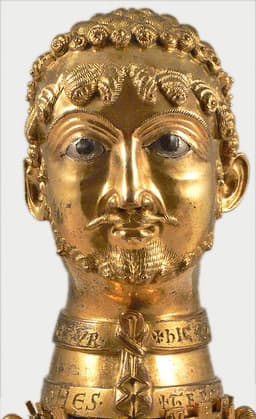
Frederick I Barbarossa
Emperor · Medieval
60.3Total
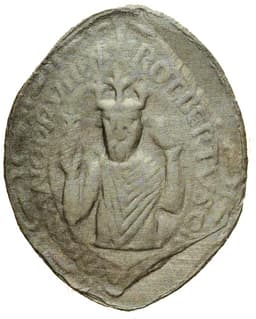
Robert II the Pious
Emperor · Medieval
44.9Total
Basic Information
Born
1122
972
Died
1190
1031
Era
Medieval
Medieval
Nationality
Holy Roman Empire
France
Occupation
Emperor
Emperor
Civilization
Western
Western
Score Comparison
Military (10%)
67.3
20.0
Political (20%)
55.0
37.9
Influence (20%)
56.7
50.2
Legacy (20%)
55.0
41.7
Leadership (15%)
72.0
65.0
Strategy (15%)
66.3
45.0
TOTAL
60.3
44.9
Frederick I Barbarossa — Complete Timeline
1158 AD
Diet of RoncagliaPolitical Action◆ Major
Frederick I convened a diet at Roncaglia in northern Italy. He proclaimed the Regalian Rights, asserting imperial authority over Italian cities. The diet declared that all public authority derived from the emperor, leading to conflict with the Lombard League.
Imperial AuthorityItalyLegislation
Impact: regional
1176 AD
Battle of LegnanoWar
Frederick I Barbarossa was defeated by the Lombard League at Legnano in northern Italy. The League's infantry used a carroccio (war wagon) as a rallying point. This defeat forced Frederick to recognize the autonomy of Italian communes in the Peace of Venice.
Lombard LeagueItalian CampaignsDefeat
Impact: regional
1177 AD
Peace of VenicePolitical Action◆ Major
Frederick I signed a treaty with Pope Alexander III and the Lombard League in Venice. He recognized Alexander III as pope and agreed to a six-year truce with the Italian communes. The peace ended the schism in the Church and temporarily halted imperial campaigns in Italy.
TreatyPapacyLombard League
Impact: regionalconstructive
1190 AD
Death on the Third CrusadeWar◆ Major
Frederick I drowned in the Saleph River in Cilicia while leading the Third Crusade. His death caused the German contingent to largely return home, weakening the crusade. He was buried in Antioch, and his body later moved to Tyre.
CrusadeDeathAccident
Impact: globaltragic
Robert II the Pious — Complete Timeline
996 AD
Reign as King of the FranksPolitical Action◆ Major
Robert II succeeded his father Hugh Capet as King of the Franks. His reign was marked by efforts to consolidate royal power, but he faced challenges from powerful nobles and the Church, limiting his authority.
KingshipCapetianReign
Impact: national
998 AD
Excommunication for Marriage to Bertha of BurgundyPolitical Action◆ Major
Robert II was excommunicated by Pope Gregory V for marrying Bertha of Burgundy, his cousin, without papal dispensation. The excommunication was lifted after Robert repudiated Bertha, but it damaged his reputation and strained relations with the Church.
ExcommunicationMarriageChurch Conflict
Impact: nationaltragic
1000 AD
Patronage of the Cluniac ReformsCultural
Robert II supported the Cluniac monastic reforms, which aimed to purify the Church and reduce secular influence. His patronage strengthened the Cluniac movement and enhanced the Church's moral authority in France.
Church ReformClunyPatronage
Impact: regionalconstructive
1002 AD
Conflict with the Duchy of BurgundyWar
Robert II attempted to assert control over the Duchy of Burgundy after the death of Duke Henry I. The conflict lasted several years and resulted in limited success, as Burgundy remained largely independent under its own dukes.
WarBurgundyTerritorial Conflict
Impact: regional
Expert Analysis
Origins
Frederick I Barbarossa was born in 1122 into the Hohenstaufen dynasty, a noble family from Swabia. His father, Frederick II, Duke of Swabia, and his mother, Judith of Bavaria, connected him to the powerful Welf dynasty. He received a knightly education and participated in the Second Crusade (1147–1149), gaining military experience. His uncle, King Conrad III, appointed him Duke of Swabia in 1147, setting the stage for his imperial ambitions.
Robert II the Pious was born in 972 as the son of Hugh Capet, the first Capetian king of France, and Adelaide of Aquitaine. Raised in the shadow of his father's fragile dynasty, he was educated by the scholar Gerbert of Aurillac (later Pope Sylvester II). His upbringing emphasized piety and learning, earning him the epithet "the Pious." He succeeded his father in 996, inheriting a kingdom limited to the Île-de-France.
Rise to Power
Frederick was elected King of the Romans in 1152, succeeding Conrad III. He quickly moved to assert imperial authority in Germany and Italy. He crowned himself Holy Roman Emperor in 1155 by Pope Adrian IV, but tensions arose over control of Italian territories. He convened the Diet of Roncaglia in 1158, proclaiming Regalian Rights to tax and govern Italian cities, which sparked conflict with the Lombard League. His defeat at the Battle of Legnano in 1176 was a turning point, forcing him to negotiate the Peace of Venice in 1177, where he recognized Pope Alexander III.
Robert II ascended the throne in 996 without opposition, but his reign was marred by ecclesiastical conflicts. He married Bertha of Burgundy, his cousin, without papal dispensation, leading to excommunication by Pope Gregory V in 998. The excommunication was lifted after he repudiated Bertha in 1000. He then married Constance of Arles, whose Provençal influence caused friction. His efforts to expand royal power were limited by powerful nobles, such as the counts of Blois and Anjou.
Leadership & Governance
Frederick I governed with a strong emphasis on imperial prestige and military might. He sought to revive the glory of Charlemagne, using the title "Holy Roman Emperor" to assert supremacy over the papacy and Italian cities. His leadership style was autocratic, relying on feudal levies and alliances with German princes. He implemented the Landfrieden (peace of the land) to reduce private warfare. However, his Italian campaigns drained resources, and his defeat at Legnano (scoring 67.3 in military) exposed the limits of his power.
Robert II the Pious (military score 20.0) focused on consolidating royal authority through diplomacy and religious patronage. He supported the Cluniac Reforms, which aimed to purify the Church and reduce secular influence. He maintained a pious image, but his political acumen was weak (political score 37.9). He failed to subdue the Duchy of Burgundy after a lengthy conflict, and his reign saw the rise of powerful vassals who eroded Capetian power. His governance relied on alliances with the Church, but he lacked the military strength to enforce his will.
Triumph & Tragedy
Frederick's greatest triumph was the Peace of Venice (1177), which ended his excommunication and recognized his imperial authority while conceding to the pope. He also negotiated the marriage of his son Henry VI to Constance of Sicily, securing the Norman kingdom for the Hohenstaufen. His tragedy was his death on the Third Crusade in 1190, drowning in the Saleph River. This event weakened the crusade and led to the disintegration of the German army. His Italian ambitions ultimately failed, as the Lombard cities retained their autonomy.
Robert II's triumph was his successful consolidation of the Capetian dynasty, passing the throne to his son Henry I without challenge. His patronage of Cluniac reforms strengthened the Church and enhanced his reputation for piety. His tragedy was his excommunication in 998, which undermined his moral authority. His conflict with Bertha and subsequent marriage to Constance created dynastic instability. He failed to expand royal territory significantly, leaving the crown weaker than when he inherited it.
Character & Destiny
Frederick I was ambitious, charismatic, and determined to restore imperial glory. His red beard symbolized fiery temperament, but he also showed pragmatism, as in the Peace of Venice. His decision to join the Third Crusade reflected his piety and desire for prestige, but his recklessness led to his death. Historians note his ability to inspire loyalty, but his overreach in Italy (scoring 55.0 in political) ultimately limited his achievements.
Robert II was devout, learned, and cautious, but his piety sometimes hindered political action. His excommunication stemmed from personal choice rather than necessity, revealing a lack of political calculation. He was overshadowed by powerful nobles and failed to assert dominance. His character earned him respect from the Church, but his weak will (leadership score 65.0) prevented him from strengthening the monarchy.
Legacy
Frederick I Barbarossa is remembered as a iconic medieval emperor, embodying the Holy Roman Empire's claims to universal rule. His legacy includes the myth of the "Kyffhäuser" legend, where he sleeps awaiting resurrection. His Italian campaigns set a pattern for future conflicts between emperors and popes. The Peace of Venice established a precedent for papal-imperial relations. His overall score of 60.3 reflects mixed achievements.
Robert II the Pious left a more modest legacy. He strengthened the Capetian dynasty's alliance with the Church, which later aided their rise. His support for Cluniac reforms contributed to the Gregorian Reform movement. However, his reign is often seen as a period of stagnation. His total score of 44.9 places him lower in historical impact.
Conclusion
Frederick I Barbarossa had a greater impact than Robert II the Pious, despite his failures. His military campaigns, political maneuvers, and symbolic role as a crusader emperor shaped European history for centuries. Robert's piety and dynastic continuity were important, but his lack of military power and political weakness limited his influence. Frederick's total score of 60.3 surpasses Robert's 44.9 by 15.4 points, reflecting his broader reach. While neither achieved all their goals, Frederick's ambition and legacy overshadow Robert's cautious reign.
Rankings
🥇
Frederick I BarbarossaLeader
Mil: 67.3Pol: 55.0Inf: 56.7
60.3
🥈
Robert II the Pious
Mil: 20.0Pol: 37.9Inf: 50.2
44.9
+15.4 behind
How This Comparison Works
Algorithm
Each figure is scored on 6 dimensions (0—100 scale) based on structured historical data: Military (10%), Political (20%), Influence (20%), Legacy (20%), Leadership (15%), Strategy (15%). The weighted total produces the final ranking.
Data Sources
Scores are computed from structured sub-indicators in the database. Scale factors adjust for era (Ancient ×0.85, Modern ×1.0) and civilization size (Eastern ×1.05, Other ×0.80) to account for differences in population and military scale.
Maximum 3 Figures
Comparisons are limited to 2—3 figures to ensure readability and statistical meaningfulness.
Error Margins
±5 points per dimension — Sub-scores are derived from historical records with inherent uncertainty. Two figures within 5 points on a dimension should be considered roughly equivalent in that area.
Total Score Accuracy
±3 points overall — The weighted combination of 6 dimensions produces a total score with approximately ±3 points of uncertainty. Differences of less than 3 points are not statistically significant— the figures are effectively tied.
Known Limitations
- Historical records are incomplete and uneven across civilizations
- Figures from oral-tradition societies may be underrepresented
- Occupation labels can misclassify multi-role figures
- Scores measure capability and impact, not moral character
- Quantitative scoring is a comparison tool, not absolute truth
Capability Radar
Military (10%) — Battles & Warfare
Battles
75
5
Win Rate
70
5
Expansion
70
5
Political (20%) — Governance & Reform
Reform
75
40
Diplomacy
72
30
Economy
68
30
Influence (20%) — Cultural & Global Reach
Cultural
65
30
Global
60
10
Legacy (20%) — Historical Impact
Historical
75
30
Longevity
70
20
Leadership (15%) — Power & Stability
Tenure
80
60
Stability
60
40
Strategy (15%) — Tactics & Innovation
Strategy
78
5
Tactics
72
5
Reform
65
5
Similar Comparisons
Comments & Discussion
No comments yet. Be the first to share your thoughts!