Loading...
Charlemagne vs Frederick I Barbarossa
Charlemagne leads by 10.7 pts · 2 figures compared
…
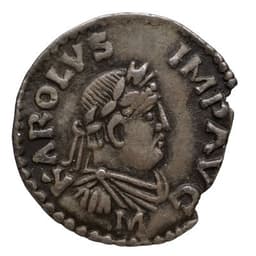
Charlemagne
Emperor · Medieval
71.0Total
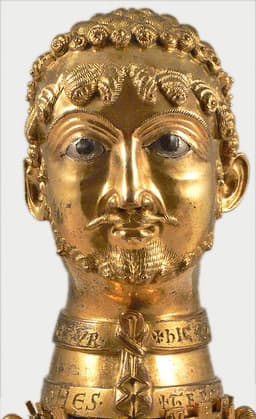
Frederick I Barbarossa
Emperor · Medieval
60.3Total
Basic Information
Born
748
1122
Died
814
1190
Era
Medieval
Medieval
Nationality
Frankish Empire
Holy Roman Empire
Occupation
Emperor
Emperor
Civilization
Western
Western
Score Comparison
Military (10%)
80.0
67.3
Political (20%)
78.0
55.0
Influence (20%)
65.0
56.7
Legacy (20%)
65.0
55.0
Leadership (15%)
80.0
72.0
Strategy (15%)
68.0
66.3
TOTAL
71.0
60.3
Charlemagne — Complete Timeline
772 AD
Saxon WarsWar◆ Major
Charlemagne launched a series of campaigns against the Saxons lasting over three decades. He forcibly converted them to Christianity, incorporated their territory into the Frankish Empire, and ordered the execution of thousands at the Massacre of Verden in 782.
ConquestChristianizationWar
Impact: regionaldestructive
774 AD
Conquest of the Lombard KingdomWar◆ Major
Charlemagne answered Pope Adrian I's call for aid against the Lombards. He besieged and captured Pavia, deposed King Desiderius, and annexed the Lombard Kingdom into his domain, assuming the title 'King of the Lombards' and solidifying Frankish control over Italy.
ConquestItalyPapal Alliance
Impact: regional
779 AD
Capitulary of HerstalReform
Charlemagne issued a series of legal and administrative reforms at the assembly in Herstal. He standardized weights and measures, reformed the coinage system, and strengthened the authority of royal officials (missi dominici) to oversee local governance and justice.
Legal ReformAdministrationStandardization
Impact: nationalconstructive
780 AD
Carolingian Renaissance ReformsCultural◆ Major
Charlemagne initiated a program of educational and cultural revival, inviting scholars like Alcuin of York to his court. He standardized Latin script (Carolingian minuscule), established palace schools, and promoted the copying of classical texts, preserving ancient knowledge.
EducationCultural RevivalScript
Impact: globalprogressive
800 AD
Coronation as Holy Roman EmperorPolitical Action
Pope Leo III crowned Charlemagne as Emperor of the Romans in St. Peter's Basilica on Christmas Day. This act revived the Western Roman Empire, established a precedent for papal authority over imperial titles, and created a political entity that shaped medieval European politics.
CoronationHoly Roman EmpirePapacy
Impact: globalconstructive
Frederick I Barbarossa — Complete Timeline
1158 AD
Diet of RoncagliaPolitical Action◆ Major
Frederick I convened a diet at Roncaglia in northern Italy. He proclaimed the Regalian Rights, asserting imperial authority over Italian cities. The diet declared that all public authority derived from the emperor, leading to conflict with the Lombard League.
Imperial AuthorityItalyLegislation
Impact: regional
1176 AD
Battle of LegnanoWar
Frederick I Barbarossa was defeated by the Lombard League at Legnano in northern Italy. The League's infantry used a carroccio (war wagon) as a rallying point. This defeat forced Frederick to recognize the autonomy of Italian communes in the Peace of Venice.
Lombard LeagueItalian CampaignsDefeat
Impact: regional
1177 AD
Peace of VenicePolitical Action◆ Major
Frederick I signed a treaty with Pope Alexander III and the Lombard League in Venice. He recognized Alexander III as pope and agreed to a six-year truce with the Italian communes. The peace ended the schism in the Church and temporarily halted imperial campaigns in Italy.
TreatyPapacyLombard League
Impact: regionalconstructive
1190 AD
Death on the Third CrusadeWar◆ Major
Frederick I drowned in the Saleph River in Cilicia while leading the Third Crusade. His death caused the German contingent to largely return home, weakening the crusade. He was buried in Antioch, and his body later moved to Tyre.
CrusadeDeathAccident
Impact: globaltragic
Expert Analysis
Origins
Charlemagne (748–814) was born into the Carolingian dynasty, the son of King Pepin the Short and Bertrada of Laon. He grew up in the Frankish court, receiving military training and education from scholars like Fulrad. His family background as the de facto rulers of Francia provided a stable foundation for his later conquests. In contrast, Frederick I Barbarossa (1122–1190) was born into the Hohenstaufen dynasty, son of Duke Frederick II of Swabia and Judith of Bavaria. He was raised in the context of the Investiture Controversy, which weakened imperial authority. His early years were marked by the conflict between the Welf and Hohenstaufen factions, shaping his aggressive pursuit of imperial power.
Rise to Power
Charlemagne became King of the Franks in 768 upon Pepin's death, initially co-ruling with his brother Carloman until the latter's death in 771. He quickly consolidated power by expanding into Italy, answering Pope Adrian I's call against the Lombards in 773. He besieged Pavia and deposed King Desiderius, annexing the Lombard Kingdom by 774. His coronation as Holy Roman Emperor by Pope Leo III on Christmas Day 800 marked the peak of his rise, reviving the Western Roman Empire. Frederick I Barbarossa rose through election: he was elected King of Germany in 1152 and crowned Holy Roman Emperor in 1155. He asserted imperial authority over Italy, convening the Diet of Roncaglia in 1158 to proclaim Regalian Rights, which claimed control over Italian cities. However, his rise was contested by the Lombard League and Pope Alexander III, leading to his defeat at the Battle of Legnano in 1176.
Leadership & Governance
Charlemagne's leadership was characterized by centralized control and cultural revival. He standardized laws through the Capitulary of Herstal, reformed coinage and weights, and promoted the Carolingian Renaissance by inviting scholars like Alcuin of York. He established a system of missi dominici to oversee local administration. His governance integrated conquered territories through conversion and assimilation, as seen in the Saxon Wars (772–804), where he forcibly converted Saxons to Christianity. Frederick I Barbarossa's governance focused on restoring imperial authority in Italy and Germany. He used feudal ties and the appointment of loyal bishops to counter the papacy. However, his heavy-handed approach in Italy provoked the Lombard League, leading to the Peace of Venice in 1177, where he recognized Pope Alexander III. His leadership was more reactive than Charlemagne's, as he constantly faced rebellions and the limits of imperial power.
Triumph & Tragedy
Charlemagne's greatest triumph was uniting much of Western Europe under one rule, creating a stable empire that fostered the Carolingian Renaissance. His military campaigns, including the conquest of Bavaria and Saxony, expanded Frankish territory significantly. His tragedy includes the brutal Saxon Wars, which caused high casualties and forced conversions. The division of his empire after his death among his sons, as per Frankish custom, led to fragmentation and decline. Frederick I Barbarossa's triumphs include the Peace of Venice, which temporarily stabilized relations with the papacy, and his role in the Third Crusade. However, his tragedy was the defeat at Legnano, which weakened imperial control in Italy. His death by drowning in the Saleph River in 1190 caused the German crusade to collapse, undermining his legacy.
Character & Destiny
Charlemagne was pragmatic, energetic, and deeply religious, believing his rule was divinely ordained. He was a patron of learning and administration, but also ruthless in conquest, as seen in the execution of 4,500 Saxon captives at Verden in 782. His character drove him to create a unified Christian empire, but his reliance on personal rule meant the empire could not survive his death. Frederick I Barbarossa was ambitious and chivalric, earning the nickname "Barbarossa" (Red Beard) for his fiery temperament. His determination to restore imperial glory led to conflicts with the papacy and Italian cities, but his inflexibility caused setbacks. Historians note that his death on crusade was a poetic end, as he sought glory in the Holy Land but met an inglorious end in a river.
Legacy
Charlemagne's legacy is immense: he is considered the father of Europe, with his empire forming the basis for modern France and Germany. His educational reforms, including the establishment of palace schools and the standardization of Latin script, influenced medieval scholarship. The Carolingian Renaissance preserved classical texts and set standards for governance. Frederick I Barbarossa's legacy is more mixed: he is remembered as a symbol of German medieval glory, but his failure to subdue Italy highlighted the limits of imperial power. The Hohenstaufen myth later inspired German nationalism, but his actual achievements were overshadowed by the eventual collapse of imperial authority in Italy.
Conclusion
Charlemagne had a greater impact than Frederick I Barbarossa, as evidenced by his higher total score of 71.0 compared to Barbarossa's 60.3. Charlemagne's military score of 80.0 reflects his successful conquests, while Barbarossa's 67.3 shows his mixed results. Charlemagne's political score of 78.0 versus Barbarossa's 55.0 underscores his effective governance and lasting institutions. While Barbarossa was a capable leader, his legacy was limited by his inability to overcome the Lombard League and the structural weaknesses of the Holy Roman Empire. Charlemagne's unification of Western Europe and cultural revival set the stage for future European development, making him the more influential figure.
Scores Summary
- Military: Charlemagne 80.0, Barbarossa 67.3
- Political: Charlemagne 78.0, Barbarossa 55.0
- Influence: Charlemagne 65.0, Barbarossa 56.7
- Legacy: Charlemagne 65.0, Barbarossa 55.0
- Leadership: Charlemagne 80.0, Barbarossa 72.0
- Strategy: Charlemagne 68.0, Barbarossa 66.3
- Total: Charlemagne 71.0, Barbarossa 60.3
Rankings
🥇
CharlemagneLeader
Mil: 80.0Pol: 78.0Inf: 65.0
71.0
🥈
Frederick I Barbarossa
Mil: 67.3Pol: 55.0Inf: 56.7
60.3
+10.7 behind
How This Comparison Works
Algorithm
Each figure is scored on 6 dimensions (0—100 scale) based on structured historical data: Military (10%), Political (20%), Influence (20%), Legacy (20%), Leadership (15%), Strategy (15%). The weighted total produces the final ranking.
Data Sources
Scores are computed from structured sub-indicators in the database. Scale factors adjust for era (Ancient ×0.85, Modern ×1.0) and civilization size (Eastern ×1.05, Other ×0.80) to account for differences in population and military scale.
Maximum 3 Figures
Comparisons are limited to 2—3 figures to ensure readability and statistical meaningfulness.
Error Margins
±5 points per dimension — Sub-scores are derived from historical records with inherent uncertainty. Two figures within 5 points on a dimension should be considered roughly equivalent in that area.
Total Score Accuracy
±3 points overall — The weighted combination of 6 dimensions produces a total score with approximately ±3 points of uncertainty. Differences of less than 3 points are not statistically significant— the figures are effectively tied.
Known Limitations
- Historical records are incomplete and uneven across civilizations
- Figures from oral-tradition societies may be underrepresented
- Occupation labels can misclassify multi-role figures
- Scores measure capability and impact, not moral character
- Quantitative scoring is a comparison tool, not absolute truth
Capability Radar
Military (10%) — Battles & Warfare
Battles
85
75
Win Rate
90
70
Expansion
88
70
Political (20%) — Governance & Reform
Reform
90
75
Diplomacy
80
72
Economy
75
68
Influence (20%) — Cultural & Global Reach
Cultural
85
65
Global
80
60
Legacy (20%) — Historical Impact
Historical
90
75
Longevity
85
70
Leadership (15%) — Power & Stability
Tenure
85
80
Stability
70
60
Strategy (15%) — Tactics & Innovation
Strategy
85
78
Tactics
75
72
Reform
80
65
Similar Comparisons
Comments & Discussion
No comments yet. Be the first to share your thoughts!