Loading...
Bayanchur Khan vs Francis I of France
Francis I of France leads by 1.6 pts · 2 figures compared
…

Bayanchur Khan
Emperor · Medieval
61.4Total
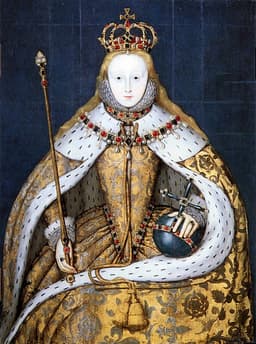
Francis I of France
Emperor · Medieval
63.0Total
Basic Information
Born
713
1494
Died
759
1547
Era
Medieval
Medieval
Nationality
Uyghur Khaganate
France
Occupation
Emperor
Emperor
Civilization
Eastern
Western
Score Comparison
Military (10%)
61.7
52.5
Political (20%)
72.0
60.0
Influence (20%)
58.3
72.0
Legacy (20%)
52.0
58.0
Leadership (15%)
72.0
72.0
Strategy (15%)
60.7
55.0
TOTAL
61.4
63.0
Bayanchur Khan — Complete Timeline
747 AD
Establishment of the Uyghur Khaganate as a Major PowerPolitical Action◆ Major
Bayanchur Khan consolidated Uyghur control over the former Gokturk territories, establishing the Uyghur Khaganate as the dominant steppe power. He built a capital at Ordu-Baliq and organized the Uyghur state on a model combining steppe traditions with Chinese administrative practices.
State BuildingCapitalUyghur Empire
Impact: regionalconstructive
750 AD
Military Campaigns against the Kyrgyz and KarluksWar
Bayanchur Khan led campaigns against the Kyrgyz and Karluk tribes to secure the northern and western borders of the Uyghur Khaganate. He defeated these groups and incorporated them into the Uyghur confederation, expanding Uyghur territory.
ExpansionMilitary CampaignSteppe Tribes
Impact: regional
756 AD
Alliance with Tang China against the An Lushan RebellionPolitical Action◆ Major
Bayanchur Khan sent Uyghur cavalry to aid the Tang dynasty in suppressing the An Lushan Rebellion. The Uyghur forces helped recapture the Tang capital Chang'an and Luoyang, cementing the Uyghur-Tang alliance.
AllianceAn Lushan RebellionTang Dynasty
Impact: regionalconstructive
Francis I of France — Complete Timeline
1515 AD
Battle of MarignanoWar◆ Major
Francis I led a French army to victory against the Swiss at Marignano, securing control of the Duchy of Milan. This battle established Francis I as a major military leader and marked the beginning of his Italian campaigns.
Italian WarsBattleCapetian
Impact: regional
1516 AD
Patronage of Leonardo da VinciCultural◆ Major
Francis I invited Leonardo da Vinci to France, providing him with the Ch
RenaissancePatronageCapetian
Impact: globalconstructive
Concordat of BolognaPolitical Action◆ Major
Francis I signed the Concordat of Bologna with Pope Leo X, which gave the French king the right to appoint bishops and abbots. This agreement strengthened royal control over the French Church and reduced papal influence in France.
Church-State RelationsTreatyCapetian
Impact: nationalconstructive
1525 AD
Capture at the Battle of PaviaWar
Francis I was defeated and captured by Imperial forces at the Battle of Pavia. He was imprisoned in Spain and forced to sign the Treaty of Madrid, renouncing French claims in Italy. This was a major setback for French ambitions.
Italian WarsDefeatCapetian
Impact: globaltragic
Expert Analysis
Origins
Bayanchur Khan, born around 713, was a member of the Yaglakar clan of the Uyghur tribal confederation. His early life was shaped by the collapse of the Second Turkic Khaganate and the rise of the Uyghurs under his father, Kutluk Bilge Köl Khagan. He likely received a traditional steppe education in horsemanship, archery, and tribal politics. His accession to the throne occurred in 747 after his father's death.
Francis I of France was born on September 12, 1494, in Cognac, the son of Charles, Count of Angoulême, and Louise of Savoy. He was not expected to become king until his cousin Louis XII died without a male heir in 1515. Francis received a humanist education, learning Latin, history, and the arts, influenced by his mother and tutors. He was crowned at Reims in January 1515.
Rise to Power
Bayanchur Khan ascended to the throne of the Uyghur Khaganate in 747 after his father's death. He quickly consolidated power by subduing rival tribes, including the Kyrgyz and Karluks. His major opportunity came in 755 when the An Lushan Rebellion erupted in Tang China. Bayanchur Khan allied with the Tang emperor Suzong, sending Uyghur cavalry to help recapture the capital Chang'an in 757. This alliance elevated the Uyghur Khaganate to a major power status, with the Tang granting them tribute and trade privileges.
Francis I became king on January 1, 1515, upon the death of Louis XII. His first major campaign was the Italian War of 1515, culminating in the Battle of Marignano (September 13-14, 1515), where he personally led a French army to defeat the Swiss mercenaries and secure the Duchy of Milan. This victory earned him the title of "Sun King" and established his reputation as a military leader. He then negotiated the Concordat of Bologna (1516) with Pope Leo X, giving the French crown control over ecclesiastical appointments.
Leadership & Governance
Bayanchur Khan ruled the Uyghur Khaganate as a absolute monarch, relying on tribal aristocracy and a centralized military. He established a dual administrative system, incorporating both steppe traditions and Chinese bureaucratic practices. His major reform was the adoption of Manichaeism as the state religion in 763, making the Uyghur Khaganate the only Manichaean state in history. This decision was politically motivated to differentiate his realm from Buddhist and Muslim neighbors, but it also created internal divisions. He built the capital Ordu-Baliq as a fortified city with palaces, temples, and markets, reflecting a blend of nomadic and sedentary influences.
Francis I governed France as a Renaissance monarch, centralizing royal authority while patronizing the arts. He signed the Concordat of Bologna, which strengthened the crown's control over the Church. He also introduced the "Pragmatic Sanction of Bourges" (1438) was replaced, but he maintained the right to appoint bishops. His governance was marked by the expansion of the royal court, the construction of châteaux like Chambord, and the promotion of French as the official language (Ordinance of Villers-Cotterêts, 1539). However, his financial mismanagement and costly wars led to increased taxation and debt.
Triumph & Tragedy
Bayanchur Khan's greatest triumph was the alliance with Tang China that crushed the An Lushan Rebellion, securing Uyghur dominance over the Silk Road and gaining immense wealth. He also expanded the Khaganate's borders, defeating the Kyrgyz and Karluks. His adoption of Manichaeism was a unique cultural achievement. However, his greatest failure was the over-reliance on the Tang alliance, which made the Uyghurs dependent on Chinese subsidies. After his death in 779, internal strife and external attacks weakened the Khaganate, leading to its collapse in 840.
Francis I's triumph was his victory at Marignano, which established him as a major European power. He also patronized Leonardo da Vinci, who brought the Mona Lisa to France, and invited other Italian artists, launching the French Renaissance. His greatest failure was the Battle of Pavia (1525), where he was captured by Imperial forces and imprisoned in Spain. He was forced to sign the Treaty of Madrid, renouncing claims to Italy, which he later repudiated. His wars, particularly against Charles V, drained French resources and led to no permanent gains.
Character & Destiny
Bayanchur Khan was a pragmatic and ambitious ruler. His decision to ally with Tang China showed strategic foresight, but his religious conversion to Manichaeism may have alienated his subjects. He was a capable military commander, scoring 60.7 in strategy, but his political score of 72.0 reflects his ability to navigate the complex steppe diplomacy. His legacy score of 52.0 indicates that his achievements were not long-lasting, as the Khaganate fell within decades of his death.
Francis I was a charismatic and cultured monarch, known for his love of art and chivalry. His military score of 52.5 and strategy score of 55.0 reflect his mixed record: brilliant at Marignano but disastrous at Pavia. His political score of 60.0 shows he was effective in domestic governance but poor in foreign policy. His influence score of 72.0 is high due to his patronage of the Renaissance. His legacy score of 58.0 is higher than Bayanchur Khan's, as his cultural impact endured.
Legacy
Bayanchur Khan's legacy is tied to the Uyghur Khaganate's brief golden age. He is remembered as the ruler who allied with Tang China and adopted Manichaeism. However, his state collapsed, and his religious experiment vanished. His influence on later steppe empires was limited, as the Mongols and others did not follow his example. His score of 52.0 in legacy reflects this ephemeral impact.
Francis I's legacy is more enduring. He is considered the father of the French Renaissance, having brought Leonardo da Vinci, Benvenuto Cellini, and others to France. He built the Château de Chambord and expanded the Louvre. His Ordinance of Villers-Cotterêts made French the official language of law, which still applies today. His patronage of exploration, such as sending Jacques Cartier to Canada, laid groundwork for French colonial ambitions. His legacy score of 58.0 reflects his cultural and linguistic impact.
Conclusion
While Bayanchur Khan scored a total of 61.4 and Francis I scored 63.0, the gap is narrow but meaningful. Francis I's influence on the Renaissance and French culture has had a longer-lasting effect, as his patronage shaped European art and language for centuries. Bayanchur Khan's achievements were significant but short-lived, as his Khaganate collapsed and his religious conversion left no lasting state. Therefore, Francis I had a greater overall impact, particularly in cultural and political terms. His military score of 52.5 is lower than Bayanchur Khan's 61.7, but his influence score of 72.0 and legacy score of 58.0 outweigh the steppe ruler's contributions. The final verdict: Francis I of France surpasses Bayanchur Khan in historical significance.
Rankings
🥇
Francis I of FranceLeader
Mil: 52.5Pol: 60.0Inf: 72.0
63.0
🥈
Bayanchur Khan
Mil: 61.7Pol: 72.0Inf: 58.3
61.4
+1.6 behind
How This Comparison Works
Algorithm
Each figure is scored on 6 dimensions (0—100 scale) based on structured historical data: Military (10%), Political (20%), Influence (20%), Legacy (20%), Leadership (15%), Strategy (15%). The weighted total produces the final ranking.
Data Sources
Scores are computed from structured sub-indicators in the database. Scale factors adjust for era (Ancient ×0.85, Modern ×1.0) and civilization size (Eastern ×1.05, Other ×0.80) to account for differences in population and military scale.
Maximum 3 Figures
Comparisons are limited to 2—3 figures to ensure readability and statistical meaningfulness.
Error Margins
±5 points per dimension — Sub-scores are derived from historical records with inherent uncertainty. Two figures within 5 points on a dimension should be considered roughly equivalent in that area.
Total Score Accuracy
±3 points overall — The weighted combination of 6 dimensions produces a total score with approximately ±3 points of uncertainty. Differences of less than 3 points are not statistically significant— the figures are effectively tied.
Known Limitations
- Historical records are incomplete and uneven across civilizations
- Figures from oral-tradition societies may be underrepresented
- Occupation labels can misclassify multi-role figures
- Scores measure capability and impact, not moral character
- Quantitative scoring is a comparison tool, not absolute truth
Capability Radar
Military (10%) — Battles & Warfare
Battles
65
65
Win Rate
70
45
Expansion
70
55
Political (20%) — Governance & Reform
Reform
60
65
Diplomacy
80
60
Economy
65
55
Influence (20%) — Cultural & Global Reach
Cultural
55
75
Global
55
60
Legacy (20%) — Historical Impact
Historical
60
70
Longevity
50
65
Leadership (15%) — Power & Stability
Tenure
75
70
Stability
70
40
Strategy (15%) — Tactics & Innovation
Strategy
65
55
Tactics
60
60
Reform
55
50
Similar Comparisons
Comments & Discussion
No comments yet. Be the first to share your thoughts!