Loading...
Francis I of France vs Napoleon Bonaparte
Napoleon Bonaparte leads by 7.9 pts · 2 figures compared
…
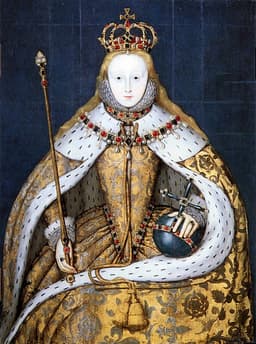
Francis I of France
Emperor · Medieval
63.0Total

Napoleon Bonaparte
General · Modern
70.9Total
Basic Information
Born
1494
1769
Died
1547
1821
Era
Medieval
Modern
Nationality
France
France
Occupation
Emperor
General
Civilization
Western
Western
Score Comparison
Military (10%)
52.5
94.0
Political (20%)
60.0
72.0
Influence (20%)
72.0
40.0
Legacy (20%)
58.0
80.0
Leadership (15%)
72.0
78.0
Strategy (15%)
55.0
90.0
TOTAL
63.0
70.9
Francis I of France — Complete Timeline
1515 AD
Battle of MarignanoWar◆ Major
Francis I led a French army to victory against the Swiss at Marignano, securing control of the Duchy of Milan. This battle established Francis I as a major military leader and marked the beginning of his Italian campaigns.
Italian WarsBattleCapetian
Impact: regional
1516 AD
Patronage of Leonardo da VinciCultural◆ Major
Francis I invited Leonardo da Vinci to France, providing him with the Ch
RenaissancePatronageCapetian
Impact: globalconstructive
Concordat of BolognaPolitical Action◆ Major
Francis I signed the Concordat of Bologna with Pope Leo X, which gave the French king the right to appoint bishops and abbots. This agreement strengthened royal control over the French Church and reduced papal influence in France.
Church-State RelationsTreatyCapetian
Impact: nationalconstructive
1525 AD
Capture at the Battle of PaviaWar
Francis I was defeated and captured by Imperial forces at the Battle of Pavia. He was imprisoned in Spain and forced to sign the Treaty of Madrid, renouncing French claims in Italy. This was a major setback for French ambitions.
Italian WarsDefeatCapetian
Impact: globaltragic
Napoleon Bonaparte — Complete Timeline
1799 AD
Coup of 18 BrumaireOther◆ Major
Napoleon Bonaparte, with support from his brother Lucien and key political figures, overthrew the Directory in a bloodless coup. He established the Consulate with himself as First Consul, effectively becoming the ruler of France. This event ended the French Revolution's most unstable period.
French RevolutionCoupRise to Power
Impact: regional
1804 AD
Promulgation of the Napoleonic CodeOther◆ Major
Napoleon enacted the Civil Code of the French, known as the Napoleonic Code, a comprehensive set of laws that replaced the fragmented feudal legal systems. The code established legal equality, protected property rights, and secularized law. It became the basis for legal systems in many European and world countries.
Legal ReformNapoleonic CodeCivil Law
Impact: globalconstructive
1805 AD
Battle of AusterlitzWar◆ Major
Napoleon's Grande Arm
Napoleonic WarsBattleDecisive Victory
Impact: global
1812 AD
Invasion of RussiaWar◆ Major
Napoleon led the Grande Arm
Napoleonic WarsInvasionDisaster
Impact: globaldestructive
1815 AD
Battle of WaterlooWar◆ Major
Napoleon's French army was defeated by the combined forces of the Duke of Wellington's Anglo-Allied army and Gebhard Leberecht von Bl
Napoleonic WarsBattleFinal Defeat
Impact: globaldestructive
Expert Analysis
francis-i-of-france-vs-napoleon-bonaparte
### The Emperor and the King: Two Visions of French Greatness
On a June morning in 1815, Napoleon Bonaparte stood on a muddy field near Waterloo, watching his Imperial Guard march into the muzzles of British cannon. Three centuries earlier, another French monarch had ridden victorious across the plains of Marignano, hailed as a knight-errant of Christendom. Both men sought to shape France’s destiny, yet one ended in exile on a remote Atlantic island, while the other died in his own bed, having brought the Renaissance to his kingdom. What separated the Corsican upstart from the Valois king? The answer lies not merely in their talents, but in the very nature of the worlds they inherited and the choices they made.
### Origins
Napoleon Bonaparte was born in 1769 on the island of Corsica, a land only recently annexed by France. His family were minor nobles of Italian descent, speaking Corsican dialect, and young Napoleon harbored a fierce resentment toward his French overlords. He entered a military academy at nine, a small, intense outsider mocked for his accent and poverty. The France he grew up in was a powder keg of Enlightenment ideas and simmering revolution—a world where a gifted commoner could rise faster than any nobleman.
Francis I, by contrast, was born in 1494 at the Château de Cognac, heir to a throne that had ruled France for centuries. His father had been imprisoned, his mother a shrewd regent, but Francis was never an outsider. He was the embodiment of the old order: a Renaissance prince who rode, jousted, and hunted with the confidence of a man who had never doubted his place in the world. The France he inherited was emerging from the Hundred Years’ War, rich in land and ambition, but still medieval in its politics and warfare.
The difference in their origins was not just one of class, but of epoch. Napoleon’s France had abolished its monarchy and guillotined its king; Francis’s France still believed that God appointed kings. One man had to fight for every scrap of legitimacy; the other wore it as naturally as his crown.
### Rise to Power
Napoleon’s ascent was a miracle of the revolutionary era. In 1793, at just twenty-four, he drove the British out of Toulon with a brilliant artillery barrage. By 1796, he was commanding the Army of Italy, where his lightning campaigns forced Austria to sue for peace. His 1798 Egyptian expedition was a gamble that failed strategically but burnished his legend. In 1799, he returned to a France desperate for order and staged a coup d’état, becoming First Consul at thirty. By 1804, he crowned himself Emperor in Notre-Dame, snatching the crown from the Pope’s hands.
Francis I took a different path. In 1515, at twenty-one, he inherited a throne from his cousin Louis XII. There was no coup, no struggle—just the smooth transfer of power in a monarchy that had lasted for centuries. His rise was not a climb but a coronation. Yet he was not passive. Eager to prove himself, he immediately led an army across the Alps, using a pass that Hannibal had once used, and crushed the Swiss at Marignano. That victory, won in a single day of ferocious fighting, made him a hero of Christendom. He had not seized power; he had inherited it and then justified it through glory.
The contrast is stark: Napoleon rose by destroying the old order; Francis rose by embodying it. One was a revolutionary who became an emperor; the other was a king who acted like a knight.
### Leadership & Governance
As a ruler, Napoleon was a titan of organization. He reformed France’s legal system with the Napoleonic Code in 1804, creating a uniform set of laws that abolished feudal privileges and enshrined meritocracy. He centralized the government, established the Bank of France, and built a network of lycées to train future elites. Militarily, he was a genius of maneuver, winning legendary victories at Austerlitz in 1805 and Jena in 1806. His Grand Army swept across Europe, toppling kingdoms and creating a French empire from Spain to Poland. But his political wisdom was flawed: he alienated Britain, provoked Spain into a guerrilla war, and invaded Russia in 1812—a catastrophic decision that cost him half a million men.
Francis I was a different kind of ruler. He was not a military genius—his score of 61.1 in strategy pales beside Napoleon’s 93. Yet he was a master of Renaissance statecraft. In 1516, he signed the Concordat of Bologna with Pope Leo X, giving the French crown control over Church appointments—a shrewd bargain that strengthened royal authority for centuries. He also patronized Leonardo da Vinci, who brought the *Mona Lisa* to France and lived out his final years in the king’s employ. Francis built the Château de Chambord, a masterpiece of French Renaissance architecture, and sponsored explorers like Jacques Cartier, who claimed Canada for France. His leadership was about cultivation, not conquest—building a kingdom of culture and diplomacy rather than an empire of steel.
Napoleon governed through force and efficiency; Francis through patronage and alliance. One sought to remake the world in his image; the other to adorn his kingdom with the finest treasures of his age.
### Triumph & Tragedy
Napoleon’s greatest moment came on December 2, 1805, at Austerlitz, where he destroyed a combined Russian and Austrian army in a battle so perfect it is still studied in military academies. His empire stretched from the Atlantic to the gates of Moscow. But his tragedy was equally immense. The Russian winter of 1812 shattered his army; the 1813 Battle of Leipzig cost him his German allies; and in 1814, he was forced to abdicate and exiled to Elba. He escaped in 1815, rallied France one last time, but was crushed at Waterloo. He died in 1821 on Saint Helena, a prisoner of the British, at just fifty-one.
Francis I’s triumph was Marignano in 1515, where he fought as a common soldier, his helmet dented by Swiss halberds, and won a victory that secured Milan. His tragedy came in 1525 at Pavia, where he was defeated and captured by the forces of Emperor Charles V. Imprisoned in Madrid, he was forced to sign a humiliating treaty, surrendering Burgundy and renouncing his claims in Italy. He was released only after his sons were held as hostages. Unlike Napoleon, he returned to his throne and ruled for another twenty-two years, but the dream of Italian dominance was over.
Two men, two defeats. Napoleon’s was absolute and final; Francis’s was a painful setback from which he recovered. The difference lay in the stakes: Napoleon risked everything on a single empire; Francis ruled a kingdom that could absorb a blow.
### Character & Destiny
Napoleon was a man of relentless ambition, brilliant intellect, and volcanic temper. He once said, “Impossible is a word to be found only in the dictionary of fools.” He trusted his own genius above all, and this hubris drove him to overreach. He divorced Josephine for a Habsburg princess, alienated his generals, and believed he could conquer Russia as easily as he had conquered Italy. His character was his destiny: a restless hunger that could never be satisfied.
Francis I was a man of charm, vanity, and resilience. He was a patron of arts, a lover of luxury, and a skilled diplomat. He said, “A king who is not loved is not a king.” He knew when to fight and when to negotiate. After Pavia, he bided his time, rebuilding his alliances and his army. He never conquered Europe, but he never lost France. His character was not about conquest but survival—and in that, he succeeded where Napoleon failed.
### Legacy
Napoleon’s legacy is a paradox. He is remembered as a military genius who reshaped Europe, spreading the ideals of the French Revolution through his conquests, yet also as a tyrant who caused millions of deaths. The Napoleonic Code influences legal systems from Louisiana to Japan. His name is synonymous with ambition and catastrophe.
Francis I is remembered as the king who brought the Renaissance to France. The châteaux of the Loire Valley, the patronage of Leonardo, the Concordat of Bologna—these are his monuments. He is not a figure of global legend, but a symbol of a golden age of French culture. His score of 72.2 reflects a solid, successful reign, not a world-changing one.
### Conclusion
Standing at the end of their stories, we see two men who both wanted greatness for France, but defined it differently. Napoleon wanted France to rule the world; Francis wanted France to be the jewel of the world. One built an empire that collapsed under its own weight; the other built a kingdom that endured. In the end, perhaps the king who knew his limits achieved more than the emperor who knew none. The Corsican outsider and the Valois prince—both French, both driven, but separated by the abyss of revolution and the choices that made them who they were.
Rankings
🥇
Napoleon BonaparteLeader
Mil: 94.0Pol: 72.0Inf: 40.0
70.9
🥈
Francis I of France
Mil: 52.5Pol: 60.0Inf: 72.0
63.0
+7.9 behind
How This Comparison Works
Algorithm
Each figure is scored on 6 dimensions (0—100 scale) based on structured historical data: Military (10%), Political (20%), Influence (20%), Legacy (20%), Leadership (15%), Strategy (15%). The weighted total produces the final ranking.
Data Sources
Scores are computed from structured sub-indicators in the database. Scale factors adjust for era (Ancient ×0.85, Modern ×1.0) and civilization size (Eastern ×1.05, Other ×0.80) to account for differences in population and military scale.
Maximum 3 Figures
Comparisons are limited to 2—3 figures to ensure readability and statistical meaningfulness.
Error Margins
±5 points per dimension — Sub-scores are derived from historical records with inherent uncertainty. Two figures within 5 points on a dimension should be considered roughly equivalent in that area.
Total Score Accuracy
±3 points overall — The weighted combination of 6 dimensions produces a total score with approximately ±3 points of uncertainty. Differences of less than 3 points are not statistically significant— the figures are effectively tied.
Known Limitations
- Historical records are incomplete and uneven across civilizations
- Figures from oral-tradition societies may be underrepresented
- Occupation labels can misclassify multi-role figures
- Scores measure capability and impact, not moral character
- Quantitative scoring is a comparison tool, not absolute truth
Capability Radar
Military (10%) — Battles & Warfare
Battles
65
95
Win Rate
45
90
Expansion
55
95
Political (20%) — Governance & Reform
Reform
65
95
Diplomacy
60
80
Economy
55
85
Influence (20%) — Cultural & Global Reach
Cultural
75
85
Global
60
90
Legacy (20%) — Historical Impact
Historical
70
95
Longevity
65
90
Leadership (15%) — Power & Stability
Tenure
70
85
Stability
40
70
Strategy (15%) — Tactics & Innovation
Strategy
55
95
Tactics
60
98
Reform
50
92
Similar Comparisons
Comments & Discussion
Grenadier's Ghost6/17/2026
Comparing Francis I to Napoleon is like comparing a jousting tournament to a battlefield slaughter. Francis was a Renaissance playboy who fancied himself a knight, but Napoleon revolutionized warfare with corps organization and mass conscription. At Waterloo, Napoleon's Old Guard broke—but Francis never faced anything like the coalition that crushed France. One fought for glory, the other for survival. Give me Bonaparte's grit over Valois pageantry any day.
数据毒蛇6/17/2026
把弗朗索瓦一世和拿破仑放在一起比较,简直就是拿骰子游戏跟战场策略相提并论。数据会说话:拿破仑的军队在1805年奥斯特里茨战役中只损失约9,000人,而弗朗索瓦在1525年帕维亚战役中就丢了8,000人——还把自己赔进去当俘虏。弗朗索瓦的"辉煌"大多靠联姻和政治,拿破仑的成就却实实在在用血与铁铸就。数字永远更诚实。
Legion's Lament6/17/2026
As a classics scholar, I see Napoleon as Caesar's true heir, while Francis was merely a French echo of Roman folly. Both sought to dominate Europe, but Napoleon understood power's mechanics—the Code, the Consulate, the Grand Armée. Francis squandered his Renaissance potential on Italian escapades and the disastrous Concordat of Bologna. One built an empire of laws; the other, a castle of dreams. Waterloo or Marignano? I'd take the battlefield that changed the world.
时光织梦师6/17/2026
历史总是偏爱悲剧英雄,但让我们抛开浪漫滤镜看事实。拿破仑确实是个军事天才,但他的野心毁了整整一代法国人:1812年俄国战役,50万大军只剩下不到3万幸存者。弗朗索瓦一世虽然战败被俘,却在死后给法国留下了枫丹白露宫和国王图书馆的根基。一个燃烧了一切留下废墟,一个用文艺复兴点亮了王国。我选择会建城的那个。
Revolution's Reckoning6/17/2026
Stop canonizing Napoleon as a revolutionary! He crowned himself emperor, reinstated slavery, and silenced the press. Francis I was at least honest about his feudal absolutism. Napoleon's "meritocracy" was just a new aristocracy dressed in military coats. At Waterloo, he fought to preserve his dynasty, not French liberty. Francis lost at Pavia because he was outnumbered, not because he betrayed his class. Give me the honest king over the self-serving usurper.