Loading...
Francis I of France vs Julius Caesar
Julius Caesar leads by 19.8 pts · 2 figures compared
…
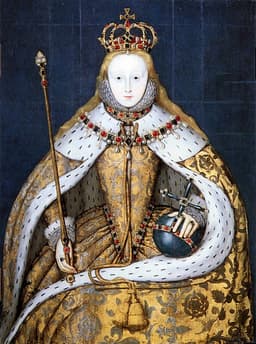
Francis I of France
Emperor · Medieval
63.0Total

Julius Caesar
General · Ancient
82.8Total
Basic Information
Born
1494
-100
Died
1547
-44
Era
Medieval
Ancient
Nationality
France
Roman Republic
Occupation
Emperor
General
Civilization
Western
Western
Score Comparison
Military (10%)
52.5
88.0
Political (20%)
60.0
78.0
Influence (20%)
72.0
85.0
Legacy (20%)
58.0
82.0
Leadership (15%)
72.0
80.0
Strategy (15%)
55.0
85.0
TOTAL
63.0
82.8
Francis I of France — Complete Timeline
1515 AD
Battle of MarignanoWar◆ Major
Francis I led a French army to victory against the Swiss at Marignano, securing control of the Duchy of Milan. This battle established Francis I as a major military leader and marked the beginning of his Italian campaigns.
Italian WarsBattleCapetian
Impact: regional
1516 AD
Patronage of Leonardo da VinciCultural◆ Major
Francis I invited Leonardo da Vinci to France, providing him with the Ch
RenaissancePatronageCapetian
Impact: globalconstructive
Concordat of BolognaPolitical Action◆ Major
Francis I signed the Concordat of Bologna with Pope Leo X, which gave the French king the right to appoint bishops and abbots. This agreement strengthened royal control over the French Church and reduced papal influence in France.
Church-State RelationsTreatyCapetian
Impact: nationalconstructive
1525 AD
Capture at the Battle of PaviaWar
Francis I was defeated and captured by Imperial forces at the Battle of Pavia. He was imprisoned in Spain and forced to sign the Treaty of Madrid, renouncing French claims in Italy. This was a major setback for French ambitions.
Italian WarsDefeatCapetian
Impact: globaltragic
Julius Caesar — Complete Timeline
58 BC
Gallic WarsWar◆ Major
Caesar, as proconsul of Gaul, launched a series of campaigns that conquered all of Gaul (modern France, Belgium, and parts of Switzerland). He fought numerous battles, including against the Helvetii, the Belgae, and the Gallic chieftain Vercingetorix. The wars brought immense wealth and a loyal army to Caesar.
Gallic WarsConquestRoman Expansion
Impact: regional
49 BC
Crossing the RubiconPolitical Action◆ Major
Caesar led Legio XIII across the Rubicon River into Italy, defying the Roman Senate's order to disband his army. This act triggered a civil war against Pompey and the Optimates, ultimately leading to Caesar's dictatorship and the end of the Roman Republic.
Roman Civil WarEnd of RepublicPower Struggle
Impact: global
48 BC
Battle of PharsalusWar◆ Major
Caesar's outnumbered army defeated the larger forces of Pompey the Great at Pharsalus in Greece. Caesar's tactical use of a reserve line to counter Pompey's cavalry charge proved decisive. Pompey fled to Egypt, where he was assassinated, leaving Caesar as the undisputed master of the Roman world.
Roman Civil WarBattleDecisive Victory
Impact: regional
44 BC
Appointment as Dictator for LifePolitical Action◆ Major
The Roman Senate appointed Caesar dictator perpetuo (dictator for life), granting him unprecedented personal power. This move concentrated military, legislative, and judicial authority in one person, effectively ending the Roman Republic's traditional system of checks and balances and alarming many senators.
DictatorshipEnd of RepublicPower Consolidation
Impact: regionaldestructive
Assassination on the Ides of MarchPolitical Action◆ Major
A group of Roman senators, led by Marcus Junius Brutus and Gaius Cassius Longinus, stabbed Caesar to death at a meeting of the Senate in the Theatre of Pompey. The assassination was intended to restore the Republic, but instead triggered another civil war that led to the rise of the Roman Empire.
AssassinationRoman PoliticsEnd of Republic
Impact: globaldestructive
Expert Analysis
francis-i-of-france-vs-julius-caesar
### The Crossing and the Captivity: Two Paths to Power
On a January day in 49 BCE, a Roman general stood at the banks of a small river in northern Italy. The Rubicon was little more than a stream, yet crossing it meant civil war. Gaius Julius Caesar, defying the Senate’s orders, led his legion across. The act was irreversible, a gamble for absolute power. Fifteen centuries later, another monarch woke in a Spanish prison, defeated and humiliated after the Battle of Pavia in 1525. Francis I of France had gambled his kingdom on a single battle and lost. Both men sought glory. One crossed into legend; the other crossed into a cage.
### Origins: The Republic and the Renaissance
Caesar was born into the chaos of the late Roman Republic, a world of crumbling institutions and ambitious warlords. His family, the Julii, claimed descent from the goddess Venus, but their political influence had waned. From childhood, Caesar learned that survival required cunning, debt, and a willingness to break rules. He was shaped by the violence of civil wars, the corruption of the Senate, and the hunger for personal glory that defined his age.
Francis I, born in 1494, emerged into the glittering courts of Renaissance France. His father died when he was a child, and he was raised by his mother, Louise of Savoy, who instilled in him a love of art and chivalry. The world he inherited was one of emerging nation-states, where kings were no longer feudal lords but patrons of culture. The printing press had just spread across Europe, and the Medici popes in Rome were transforming the Church. Francis was a creature of this new age: elegant, ambitious, and obsessed with the Italian Renaissance.
### Rise to Power: The General and the Prince
Caesar’s path was long and treacherous. He served as a military tribune in Asia, was captured by pirates (whom he later crucified), and climbed the political ladder through bribery and alliances. His true breakthrough came when he formed the First Triumvirate with Pompey and Crassus in 60 BCE, securing command of Gaul. Over the next eight years, he conquered over 800 cities and defeated a million men, building an army that was loyal to him alone. When the Senate ordered him to disband, he chose war.
Francis I, by contrast, inherited the throne at age twenty in 1515. He did not need to seize power—it was handed to him. His rise was immediate and spectacular. That same year, he led a French army across the Alps and crushed the Swiss at the Battle of Marignano, a victory that made him the master of Milan. Unlike Caesar, who fought for survival, Francis fought for prestige. His success was swift, but it was built on the fragile foundations of Renaissance diplomacy, not the iron discipline of a veteran legion.
### Leadership & Governance: The Dictator and the Patron
Caesar ruled as a revolutionary. As dictator, he reformed the calendar, granted citizenship to provincials, and redistributed land to veterans. He centralized power in his own hands, but he also understood that the Republic’s old institutions were dead. His governance was pragmatic, ruthless, and visionary. He built bridges, drained marshes, and planned public works. Yet his greatest innovation was his military leadership: he led from the front, shared hardships with his men, and rewarded loyalty with promotions. His soldiers adored him.
Francis I governed as a Renaissance prince. He signed the Concordat of Bologna in 1516, giving the French crown control over Church appointments—a masterstroke of political wisdom that strengthened royal authority. He patronized Leonardo da Vinci, who spent his final years at the Château du Clos Lucé, bringing the Mona Lisa to France. Francis built the Château de Chambord, a monument of French architecture. But his military strategy was flawed. He was brave but impetuous, preferring chivalric charges to tactical patience. At Pavia in 1525, he attacked a fortified Imperial position, lost his army, and was captured.
### Triumph & Tragedy: The Ides and the Prison
Caesar’s greatest triumph was the conquest of Gaul, which doubled Rome’s territory and made him the richest man in the Republic. Crossing the Rubicon was his moment of no return. But his tragedy was that he never understood how deeply the Senate hated him. On March 15, 44 BCE, he was stabbed twenty-three times by senators he had pardoned. His last words, according to legend, were “*Et tu, Brute*?”—a recognition that even those he trusted had turned on him.
Francis I’s triumph was Marignano, where he personally fought with a halberd and was knighted on the battlefield. His tragedy was Pavia, where he wrote to his mother, “All is lost except honor.” The imprisonment that followed was humiliating. He was forced to sign the Treaty of Madrid, surrendering Burgundy, and only regained freedom by leaving his two sons as hostages. Unlike Caesar, who died at the height of his power, Francis lived to see his ambitions crumble.
### Character & Destiny: The Gambler and the Dreamer
Caesar was a cold, calculating gambler. He understood that in the Republic, power belonged to whoever dared to take it. His personality was magnetic, his memory prodigious, and his ambition boundless. He could write a speech, command a battle, and seduce a queen—all in the same day. But his arrogance blinded him to the limits of his own power. He believed he was invincible, and that belief killed him.
Francis I was a dreamer. He wanted to be both a warrior king and a patron of the arts, a second Charlemagne and a new Medici. But he lacked Caesar’s focus. He scattered his resources on wars in Italy, the Holy Roman Empire, and the New World. He was charming, generous, and cultured, but he was also indecisive and easily distracted. His destiny was to be remembered as a great patron, not a great conqueror.
### Legacy: The Empire and the Château
Caesar’s legacy reshaped the world. His adopted heir, Octavian, became Augustus, the first Roman emperor. The Julian calendar, with its leap years, lasted for 1,600 years. His commentaries on the Gallic Wars are still studied in military academies. His name became a title: Kaiser, Tsar. He is the archetype of the ambitious general who destroys a republic and founds an empire.
Francis I’s legacy is more intimate. He brought the Renaissance to France. The châteaux of the Loire Valley, the Louvre’s art collection, and the French language’s status as a European tongue all owe something to his patronage. He is remembered as the king who loved art, not the king who conquered Italy. His capture at Pavia became a cautionary tale about the dangers of hubris.
### Conclusion: The River and the Prison
Two men, separated by centuries, both reached for greatness. Caesar crossed a river and changed history; Francis crossed the Alps and lost everything. One died by the sword, the other in his bed. Yet both were products of their times: Caesar of a Republic that could no longer contain its own ambition, Francis of a Renaissance that valued beauty as much as power. In the end, the difference between them was not talent—it was timing. Caesar lived when the old world was dying and the new was being born. Francis lived when glory was already being written, not in blood, but in stone and paint.
Rankings
🥇
Julius CaesarLeader
Mil: 88.0Pol: 78.0Inf: 85.0
82.8
🥈
Francis I of France
Mil: 52.5Pol: 60.0Inf: 72.0
63.0
+19.8 behind
How This Comparison Works
Algorithm
Each figure is scored on 6 dimensions (0—100 scale) based on structured historical data: Military (10%), Political (20%), Influence (20%), Legacy (20%), Leadership (15%), Strategy (15%). The weighted total produces the final ranking.
Data Sources
Scores are computed from structured sub-indicators in the database. Scale factors adjust for era (Ancient ×0.85, Modern ×1.0) and civilization size (Eastern ×1.05, Other ×0.80) to account for differences in population and military scale.
Maximum 3 Figures
Comparisons are limited to 2—3 figures to ensure readability and statistical meaningfulness.
Error Margins
±5 points per dimension — Sub-scores are derived from historical records with inherent uncertainty. Two figures within 5 points on a dimension should be considered roughly equivalent in that area.
Total Score Accuracy
±3 points overall — The weighted combination of 6 dimensions produces a total score with approximately ±3 points of uncertainty. Differences of less than 3 points are not statistically significant— the figures are effectively tied.
Known Limitations
- Historical records are incomplete and uneven across civilizations
- Figures from oral-tradition societies may be underrepresented
- Occupation labels can misclassify multi-role figures
- Scores measure capability and impact, not moral character
- Quantitative scoring is a comparison tool, not absolute truth
Capability Radar
Military (10%) — Battles & Warfare
Battles
65
95
Win Rate
45
92
Expansion
55
97
Political (20%) — Governance & Reform
Reform
65
90
Diplomacy
60
85
Economy
55
82
Influence (20%) — Cultural & Global Reach
Cultural
75
88
Global
60
94
Legacy (20%) — Historical Impact
Historical
70
95
Longevity
65
96
Leadership (15%) — Power & Stability
Tenure
70
75
Stability
40
60
Strategy (15%) — Tactics & Innovation
Strategy
55
94
Tactics
60
96
Reform
50
88
Similar Comparisons
Comments & Discussion
ROMA VICTRIX6/17/2026
Caesar’s Rubicon crossing was a masterclass in strategic decisiveness; Francis I’s Pavia defeat was a textbook failure in overconfidence. Caesar gambled with a single legion and won an empire, while Francis threw his entire army into a trap at Pavia and lost everything, including his freedom. The difference? Caesar understood timing and political leverage; Francis thought chivalry and personal bravery could substitute for tactical genius.
历史真相6/17/2026
表面上两人都追求荣耀,但凯撒的荣耀建立在共和国废墟上的个人独裁,而弗朗索瓦一世的骑士精神只是封建残余的华丽外衣。凯撒改变了西方政治格局,弗朗索瓦一世却只是文艺复兴的文艺赞助人。从马基雅维利的角度看,凯撒是现实主义政治家的典范,而弗朗索瓦一世更像一个穿着甲胄的诗人,在真实权力游戏中显得力不从心。
MILITARIA MENTOR6/17/2026
Let’s cut through the romanticism: Caesar’s crossing of the Rubicon was a calculated military coup, not some poetic act of destiny. He knew his veteran legions would follow him against the Senate because they were loyal to his pay, not his pedigree. Francis I, by contrast, led a feudal army that disintegrated at Pavia when Swiss mercenaries refused to die for a captured king. One man understood command economics; the other learned the hard way that chivalry doesn’t pay soldiers.
双面史家6/17/2026
比较这两位,我偏向弗朗索瓦一世。凯撒虽建立了不朽功业,但他用的是罗马军团的血与火;而法国国王在战败后依然推动艺术与建筑,为法国带来了文艺复兴的辉煌。从历史进程看,凯撒的独裁加速了共和国灭亡,而弗朗索瓦一世的失败却催生了法国中央集权。短期胜利与长期文明发展,哪个更值得铭记?
OPTIMO PRINCEPS6/17/2026
Classicists love to mythologize Caesar, but his Gallic Wars were genocidal imperialism dressed as civilization. Francis I, for all his flaws, at least patronized Leonardo da Vinci and brought the Italian Renaissance to France. Caesar crossed the Rubicon to satisfy his own ambition; Francis crossed into captivity but later negotiated his release and returned to govern. One died a dictator’s death on the Senate floor; the other died in bed, surrounded by art. Who truly won?