Loading...
Bayezid I vs Henry IV of HRE
Henry IV of HRE leads by 5.7 pts · 2 figures compared
…
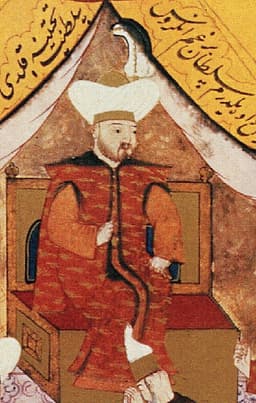
Bayezid I
Emperor · Medieval
59.6Total

Henry IV of HRE
Emperor · Medieval
65.3Total
Basic Information
Born
1360
1050
Died
1403
1106
Era
Medieval
Medieval
Nationality
Ottoman Empire
Holy Roman Empire
Occupation
Emperor
Emperor
Civilization
Middle Eastern
Western
Score Comparison
Military (10%)
72.0
50.0
Political (20%)
45.0
54.7
Influence (20%)
56.7
72.0
Legacy (20%)
58.0
72.0
Leadership (15%)
68.0
67.0
Strategy (15%)
68.1
60.0
TOTAL
59.6
65.3
Bayezid I — Complete Timeline
1389 AD
Battle of KosovoWar◆ Major
Bayezid I led the Ottoman army to victory at the Battle of Kosovo against a coalition of Serbian and Balkan forces. Both Sultan Murad I and Serbian Prince Lazar were killed, but the battle solidified Ottoman control over the Balkans.
BattleKosovoBalkans
Impact: regional
1393 AD
Annexation of Bulgarian and Serbian TerritoriesWar◆ Major
Bayezid I conquered the Bulgarian Empire and much of Serbia, incorporating these territories into the Ottoman realm. These conquests expanded Ottoman control over the Balkans and eliminated major Christian states in the region.
ConquestBulgariaSerbia
Impact: regional
1394 AD
Siege of Constantinople (1394-1402)War◆ Major
Bayezid I besieged Constantinople, the Byzantine capital, for eight years. The siege was ultimately lifted due to the Mongol invasion of Anatolia, but it severely weakened the Byzantine Empire and demonstrated Ottoman ambition to capture the city.
SiegeConstantinopleByzantine
Impact: regional
1396 AD
Battle of NicopolisWar◆ Major
Bayezid I defeated a large Crusader army from Hungary, France, and other European states at Nicopolis on the Danube. The victory crushed the last major Crusade against the Ottomans and confirmed Ottoman dominance in the Balkans.
BattleCrusadeNicopolis
Impact: regional
1402 AD
Battle of AnkaraWar
Bayezid I was defeated and captured by Timur at the Battle of Ankara. The defeat led to the collapse of Ottoman unity and a period of civil war (the Ottoman Interregnum), ending Bayezid's reign and temporarily halting Ottoman expansion.
BattleTimurDefeat
Impact: globaltragic
Henry IV of HRE — Complete Timeline
1075 AD
Battle of LangensalzaWar◆ Major
Henry IV defeated Saxon rebels at Langensalza in Thuringia. The victory temporarily ended the Saxon Rebellion, but the conflict resumed later. The battle demonstrated Henry's military capability early in his reign.
Saxon RebellionBattle
Impact: regional
1076 AD
Excommunication by Pope Gregory VIIPolitical Action◆ Major
Pope Gregory VII excommunicated Henry IV after Henry attempted to depose the Pope. The excommunication freed Henry's subjects from their oaths of loyalty, leading to a rebellion by German princes. This forced Henry to seek reconciliation at Canossa.
Investiture ControversyPapacyRebellion
Impact: globaldestructive
1077 AD
Walk to CanossaPolitical Action
Henry IV traveled to Canossa Castle in northern Italy to seek absolution from Pope Gregory VII. He stood barefoot in the snow for three days before the Pope lifted his excommunication. This event symbolized the power struggle between secular and religious authority.
Investiture ControversyPapacyPenance
Impact: global
1084 AD
Siege of RomeWar◆ Major
Henry IV besieged Rome and captured the city. He was crowned Holy Roman Emperor by Antipope Clement III. Pope Gregory VII took refuge in the Castel Sant'Angelo and was rescued by Norman forces under Robert Guiscard, who sacked Rome.
Investiture ControversyRomeCrowning
Impact: regionaldestructive
Expert Analysis
Origins
Bayezid I was born in 1360, the son of Sultan Murad I, who had established the Ottoman state as a major power in the Balkans. Raised in the warrior culture of the early Ottoman emirate, Bayezid received military training and administrative experience as a provincial governor. His formative years were shaped by the constant expansion of Ottoman territory and the need to consolidate control over newly conquered Christian lands.
Henry IV was born in 1050, the son of Henry III, Holy Roman Emperor. His early life was marked by the death of his father in 1056, leaving him a minor under the regency of his mother, Agnes of Poitou. He grew up in a period of intense conflict between the imperial crown and the papacy, exacerbated by his own upbringing amid court intrigues and the struggle to assert royal authority over powerful German dukes.
Rise to Power
Bayezid I rose to power suddenly in 1389 at the Battle of Kosovo, where his father Murad I was assassinated. Bayezid immediately took command and secured a decisive victory over the Serbian-led coalition. He then executed his brother Yakub to eliminate any rival claim, a practice that became standard in Ottoman succession. His rapid consolidation of power allowed him to continue expansionist campaigns, earning the nickname 'Yıldırım' (Thunderbolt) for his swift military movements.
Henry IV's path to power was more protracted. Crowned king of Germany in 1054, he assumed full control in 1065 after years of regency. He faced immediate opposition from Saxon nobles, leading to the Saxon Rebellion (1073-1075). Henry's military campaign culminated in the Battle of Langensalza on June 9, 1075, where he defeated the Saxons and temporarily quelled the revolt. However, his conflict with Pope Gregory VII over investiture rights soon overshadowed domestic issues.
Leadership & Governance
Bayezid I governed the Ottoman state as an absolute military monarch. He centralized authority, reducing the power of frontier lords and tribal leaders. His military score of 72.0 reflects his effectiveness in campaigns, but his political score of only 45.0 reveals a weakness in statecraft. He imposed heavy taxes to fund his wars and neglected administrative consolidation. His siege of Constantinople (1394-1402) demonstrated his strategic ambition but also his lack of diplomatic finesse, as it provoked a coalition against him.
Henry IV's leadership was defined by his struggle with the papacy. Politically, he scored 54.7, slightly higher than Bayezid, but his influence score of 72.0 is significantly higher. He attempted to assert royal control over church appointments, leading to the Investiture Controversy. His Walk to Canossa in January 1077, where he stood barefoot in the snow for three days to receive absolution from Pope Gregory VII, was a dramatic act of political theater. However, it temporarily undermined his authority. Henry later besieged Rome in 1084 and installed Antipope Clement III, securing his coronation as emperor.
Triumph & Tragedy
Bayezid I's greatest triumph was the Battle of Nicopolis in 1396, where he crushed a large Crusader army from Hungary, France, and other European states. This victory secured Ottoman dominance in the Balkans for decades. He also annexed Bulgaria and large parts of Serbia, expanding Ottoman territory to the Danube. However, his greatest tragedy was the Battle of Ankara in 1402, where he was defeated and captured by Timur. The defeat led to the collapse of Ottoman unity and a decade-long civil war (the Ottoman Interregnum). Bayezid died in captivity in 1403.
Henry IV's triumph was his successful siege of Rome in 1084, which forced Pope Gregory VII into exile and allowed Henry to be crowned emperor. He also suppressed the Saxon Rebellion and maintained control over Germany for most of his reign. However, his tragedy was the ongoing Investiture Controversy, which weakened imperial authority and saw his own sons rebel against him. His excommunication in 1076 freed his subjects from their oaths, leading to open revolt. Henry died in 1106, excommunicated again and fighting his son.
Character & Destiny
Bayezid I was known for his impetuous and prideful nature. His nickname 'Thunderbolt' reflected both his swift military campaigns and his temper. He famously rejected Timur's demands for tribute and insulted the Mongol ruler, directly provoking the invasion that led to his downfall. His character, though effective in conquest, made him unable to compromise. Historians note that his lack of political acumen contributed to his isolation.
Henry IV was stubborn and resourceful, but also prone to political miscalculations. His conflict with the papacy revealed a man who overestimated his power and underestimated the pope's ability to mobilize opposition. The Walk to Canossa showed his willingness to humiliate himself for political gain, yet he later repeated the same mistakes. His destiny was to be a central figure in the Investiture Controversy, which ultimately diminished imperial authority in Germany and Italy.
Legacy
Bayezid I's legacy is mixed. His conquests laid the foundation for the Ottoman Empire's expansion into Europe, but his defeat at Ankara triggered a civil war that set back Ottoman consolidation. The Interregnum (1402-1413) ended only with Mehmed I's victory. In the long term, Bayezid's policies of centralization and military expansion influenced later sultans. His total score of 59.6 reflects a strong military leader but a flawed statesman.
Henry IV's legacy is more profound. The Investiture Controversy, though a personal defeat, established the principle that secular rulers could not control church appointments, a key step in the separation of church and state. The Concordat of Worms (1122) resolved the conflict after his death. Henry's struggle also weakened the Holy Roman Empire, contributing to the rise of powerful territorial princes. His influence score of 72.0 and legacy score of 72.0 highlight his lasting impact on European political structures.
Conclusion
Henry IV had a greater historical impact than Bayezid I, evidenced by his higher total score of 65.3 compared to Bayezid's 59.6. While Bayezid was a more effective military commander (72.0 vs 50.0), Henry's political and institutional influence outweighed Bayezid's short-term conquests. The Investiture Controversy shaped the relationship between church and state for centuries, whereas Bayezid's achievements were largely undone by his defeat. Henry's legacy endures in the constitutional development of Europe, while Bayezid's is primarily a cautionary tale of overreach.
Rankings
🥇
Henry IV of HRELeader
Mil: 50.0Pol: 54.7Inf: 72.0
65.3
🥈
Bayezid I
Mil: 72.0Pol: 45.0Inf: 56.7
59.6
+5.7 behind
How This Comparison Works
Algorithm
Each figure is scored on 6 dimensions (0—100 scale) based on structured historical data: Military (10%), Political (20%), Influence (20%), Legacy (20%), Leadership (15%), Strategy (15%). The weighted total produces the final ranking.
Data Sources
Scores are computed from structured sub-indicators in the database. Scale factors adjust for era (Ancient ×0.85, Modern ×1.0) and civilization size (Eastern ×1.05, Other ×0.80) to account for differences in population and military scale.
Maximum 3 Figures
Comparisons are limited to 2—3 figures to ensure readability and statistical meaningfulness.
Error Margins
±5 points per dimension — Sub-scores are derived from historical records with inherent uncertainty. Two figures within 5 points on a dimension should be considered roughly equivalent in that area.
Total Score Accuracy
±3 points overall — The weighted combination of 6 dimensions produces a total score with approximately ±3 points of uncertainty. Differences of less than 3 points are not statistically significant— the figures are effectively tied.
Known Limitations
- Historical records are incomplete and uneven across civilizations
- Figures from oral-tradition societies may be underrepresented
- Occupation labels can misclassify multi-role figures
- Scores measure capability and impact, not moral character
- Quantitative scoring is a comparison tool, not absolute truth
Capability Radar
Military (10%) — Battles & Warfare
Battles
85
55
Win Rate
80
50
Expansion
85
35
Political (20%) — Governance & Reform
Reform
65
40
Diplomacy
60
70
Economy
70
30
Influence (20%) — Cultural & Global Reach
Cultural
60
60
Global
65
55
Legacy (20%) — Historical Impact
Historical
70
75
Longevity
55
65
Leadership (15%) — Power & Stability
Tenure
70
65
Stability
55
25
Strategy (15%) — Tactics & Innovation
Strategy
80
45
Tactics
75
40
Reform
70
30
Similar Comparisons
Comments & Discussion
No comments yet. Be the first to share your thoughts!