Loading...
Benjamin Disraeli vs Oscar Berger
Benjamin Disraeli leads by 13.8 pts · 2 figures compared
…
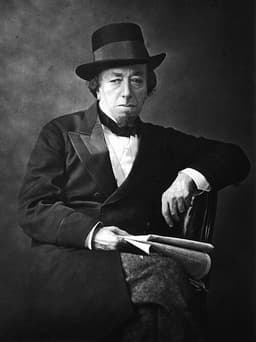
Benjamin Disraeli
Politician · Modern
57.5Total
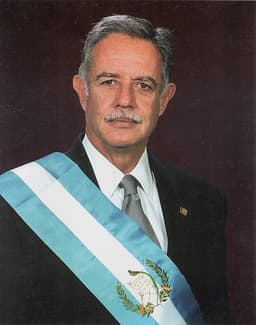
Oscar Berger
Politician · Modern
43.7Total
Basic Information
Born
1804
1946
Died
1881
—
Era
Modern
Modern
Nationality
United Kingdom
Guatemala
Occupation
Politician
Politician
Civilization
Western
Western
Score Comparison
Military (10%)
47.4
49.6
Political (20%)
62.7
36.5
Influence (20%)
55.0
47.1
Legacy (20%)
55.0
36.7
Leadership (15%)
78.0
55.3
Strategy (15%)
41.7
40.3
TOTAL
57.5
43.7
Benjamin Disraeli — Complete Timeline
1867 AD
Reform Act 1867Reform
As Chancellor of the Exchequer, Disraeli steered the Reform Act 1867 through Parliament, which doubled the electorate by extending the vote to many urban working-class men. This 'leap in the dark' was a major political reform that reshaped British democracy.
Electoral ReformDemocracyWorking Class
Impact: nationalprogressive
1868 AD
Became Prime MinisterPolitical Action
Disraeli became Prime Minister for the first time on February 27, 1868, after the resignation of Lord Derby. His first ministry lasted only 10 months, but he passed the Reform Act 1867 during his time as Chancellor of the Exchequer, which expanded the electorate.
Prime MinisterConservative PartyReform
Impact: national
1875 AD
Purchase of Suez Canal SharesPolitical Action◆ Major
Disraeli arranged the purchase of a 44% stake in the Suez Canal Company from the Khedive of Egypt for
Suez CanalImperialismFinance
Impact: globalconstructive
1876 AD
Royal Titles Act 1876Political Action
Disraeli's government passed the Royal Titles Act 1876, which added 'Empress of India' to Queen Victoria's titles. This formalized British imperial rule in India and was a symbolic assertion of British power, though it was criticized as flattery of the monarch.
MonarchyIndiaImperial Title
Impact: global
1878 AD
Congress of BerlinPolitical Action◆ Major
Disraeli attended the Congress of Berlin in June-July 1878, representing Britain. He secured revisions to the Treaty of San Stefano, limiting Russian influence in the Balkans and gaining Cyprus for Britain. He returned claiming 'peace with honour', boosting his popularity.
Foreign PolicyBalkansDiplomacy
Impact: global
Oscar Berger — Complete Timeline
2003 AD
Elected President of GuatemalaPolitical Action◆ Major
Berger won the 2003 presidential election as the candidate of the Grand National Alliance, a center-right coalition. He campaigned on anti-corruption and economic development.
ElectionGrand National AllianceGuatemala
Impact: nationalconstructive
2004 AD
Post-war reconstruction and social spendingReform
Berger increased social spending on health and education, and launched programs to rebuild infrastructure damaged during the civil war. However, poverty and inequality remained high.
Social PolicyReconstructionPoverty
Impact: nationalconstructive
2005 AD
Implementation of CAFTA-DRPolitical Action◆ Major
Berger's government ratified and implemented the Dominican Republic-Central America Free Trade Agreement (CAFTA-DR) with the United States, aiming to boost trade and investment.
Trade AgreementCAFTA-DREconomic Policy
Impact: regionalconstructive
Expert Analysis
Origins
Benjamin Disraeli was born on December 21, 1804, in London to a Jewish literary family. His father, Isaac D'Israeli, was a noted author, and Disraeli was baptized into the Church of England at age 13. He received little formal education, leaving school at 16 to work in a law office. Disraeli's early career included failed business ventures and literary pursuits, publishing novels like "Vivian Grey" (1826). His Jewish ancestry and flamboyant style were obstacles in British politics.
Oscar Berger was born on August 11, 1946, in Guatemala City to a wealthy German-Guatemalan family. His father was a sugar plantation owner, and Berger studied law at the University of San Carlos and business at the University of Pennsylvania. He inherited the family sugar business, becoming a successful magnate. His political career began later, as a member of the National Advancement Party.
Rise to Power
Disraeli entered Parliament in 1837 as a Conservative. His rise was marked by his alliance with Lord George Bentinck and his opposition to Sir Robert Peel over the Corn Laws. Disraeli became Chancellor of the Exchequer in 1858 under Lord Derby. He first became Prime Minister in February 1868, but his ministry lasted only 10 months. His defining moment came as Chancellor when he steered the Reform Act 1867 through Parliament, doubling the electorate by extending the vote to urban working men. This secured his leadership of the Conservative Party.
Berger was elected President of Guatemala in 2003 as the candidate of the Grand National Alliance, a center-right coalition. He campaigned on anti-corruption and economic reform, winning with 54.1% of the vote in a runoff. His rise came in the post-civil war context, with a mandate for reconstruction and stability. Berger had previously served as Mayor of Guatemala City (1991-1999), but his national profile was limited.
Leadership & Governance
Disraeli's leadership style was charismatic and pragmatic. He championed "One Nation" conservatism, seeking to bridge class divides. Domestically, he passed the Public Health Act 1875 and the Artisans' and Labourers' Dwellings Improvement Act 1875, improving urban conditions. In foreign policy, he pursued an assertive imperialism, purchasing a 44% stake in the Suez Canal in 1875 for £4 million and securing the Royal Titles Act 1876, making Queen Victoria Empress of India. His greatest diplomatic triumph was the Congress of Berlin (1878), where he limited Russian influence in the Balkans, winning "peace with honour."
Berger governed as a technocratic centrist. He prioritized economic liberalization, ratifying CAFTA-DR in 2005 to boost trade with the US. He increased social spending on health and education, launching programs to rebuild infrastructure after the civil war. However, his presidency faced criticism for failing to tackle corruption and poverty. His governance score of 55.3 reflects moderate effectiveness, but political score of 36.5 indicates limited influence.
Triumph & Tragedy
Disraeli's greatest triumph was the Reform Act 1867, which expanded the electorate and cemented his legacy as a democratizer. His purchase of Suez Canal shares secured British control over a vital trade route. However, his imperial policies were costly, and his second ministry (1874-1880) ended with economic depression and military setbacks in the Zulu War and Second Anglo-Afghan War. Disraeli died in 1881, with his health broken by overwork.
Berger's triumph was the peaceful implementation of CAFTA-DR and post-war reconstruction. He increased social spending and oversaw the trial of former dictator Efraín Ríos Montt for genocide, a landmark in transitional justice. However, his legacy is marred by persistent poverty, high crime, and corruption. His score of 36.7 in legacy reflects limited long-term impact.
Character & Destiny
Disraeli was witty, ambitious, and resilient. He overcame anti-Semitism and social prejudice to reach the highest office, shaping his destiny through sheer force of personality. He was a pragmatist who adapted to changing political currents. Historians often note his ability to charm Queen Victoria, with whom he cultivated a close relationship.
Berger was reserved and businesslike, lacking Disraeli's charisma. He governed during a period of transition but struggled to enact deep reforms. His character, while honest, was seen as passive. His destiny was to be a caretaker president in a challenging era.
Legacy
Disraeli's legacy is enduring: he shaped modern British conservatism, expanded democracy, and asserted British imperial power. The Reform Act 1867 is a milestone in political history. He is remembered as a towering figure, scoring 55.0 in legacy.
Berger's legacy is modest. CAFTA-DR remains in effect, but Guatemala's problems persist. He is not a transformative figure. His legacy score of 36.7 reflects limited impact.
Conclusion
Benjamin Disraeli had greater impact by any measure. His total score of 57.5 versus Berger's 43.7 reflects his lasting influence on British politics and global affairs. Disraeli's reforms and diplomacy shaped the late 19th century, while Berger's presidency was a footnote in a turbulent period. Disraeli's leadership score of 78.0 and political score of 62.7 dwarf Berger's 55.3 and 36.5. The data is clear: Disraeli's achievements in expanding democracy and projecting imperial power far outweigh Berger's modest reforms.
Rankings
🥇
Benjamin DisraeliLeader
Mil: 47.4Pol: 62.7Inf: 55.0
57.5
🥈
Oscar Berger
Mil: 49.6Pol: 36.5Inf: 47.1
43.7
+13.8 behind
How This Comparison Works
Algorithm
Each figure is scored on 6 dimensions (0—100 scale) based on structured historical data: Military (10%), Political (20%), Influence (20%), Legacy (20%), Leadership (15%), Strategy (15%). The weighted total produces the final ranking.
Data Sources
Scores are computed from structured sub-indicators in the database. Scale factors adjust for era (Ancient ×0.85, Modern ×1.0) and civilization size (Eastern ×1.05, Other ×0.80) to account for differences in population and military scale.
Maximum 3 Figures
Comparisons are limited to 2—3 figures to ensure readability and statistical meaningfulness.
Error Margins
±5 points per dimension — Sub-scores are derived from historical records with inherent uncertainty. Two figures within 5 points on a dimension should be considered roughly equivalent in that area.
Total Score Accuracy
±3 points overall — The weighted combination of 6 dimensions produces a total score with approximately ±3 points of uncertainty. Differences of less than 3 points are not statistically significant— the figures are effectively tied.
Known Limitations
- Historical records are incomplete and uneven across civilizations
- Figures from oral-tradition societies may be underrepresented
- Occupation labels can misclassify multi-role figures
- Scores measure capability and impact, not moral character
- Quantitative scoring is a comparison tool, not absolute truth
Capability Radar
Military (10%) — Battles & Warfare
Battles
31
27
Win Rate
34
34
Expansion
36
35
Political (20%) — Governance & Reform
Reform
80
20
Diplomacy
85
25
Economy
70
35
Influence (20%) — Cultural & Global Reach
Cultural
65
10
Global
65
10
Legacy (20%) — Historical Impact
Historical
75
10
Longevity
70
10
Leadership (15%) — Power & Stability
Tenure
75
30
Stability
70
20
Strategy (15%) — Tactics & Innovation
Strategy
39
36
Tactics
38
39
Reform
42
41
Similar Comparisons
Comments & Discussion
No comments yet. Be the first to share your thoughts!