Loading...
Benjamin Disraeli vs Habib Bourguiba
Habib Bourguiba leads by 6.9 pts · 2 figures compared
…
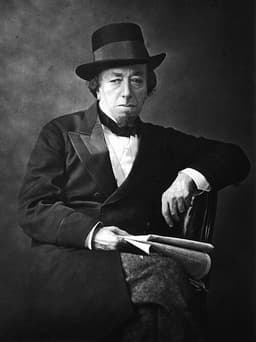
Benjamin Disraeli
Politician · Modern
57.5Total
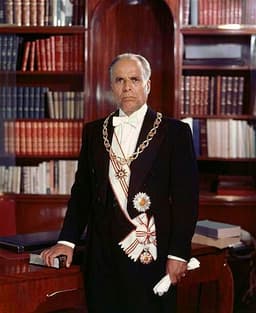
Habib Bourguiba
Politician · Modern
64.4Total
Basic Information
Born
1804
1903
Died
1881
2000
Era
Modern
Modern
Nationality
United Kingdom
Tunisia
Occupation
Politician
Politician
Civilization
Western
Middle Eastern
Score Comparison
Military (10%)
47.4
39.9
Political (20%)
62.7
82.0
Influence (20%)
55.0
68.0
Legacy (20%)
55.0
55.0
Leadership (15%)
78.0
80.0
Strategy (15%)
41.7
53.8
TOTAL
57.5
64.4
Benjamin Disraeli — Complete Timeline
1867 AD
Reform Act 1867Reform
As Chancellor of the Exchequer, Disraeli steered the Reform Act 1867 through Parliament, which doubled the electorate by extending the vote to many urban working-class men. This 'leap in the dark' was a major political reform that reshaped British democracy.
Electoral ReformDemocracyWorking Class
Impact: nationalprogressive
1868 AD
Became Prime MinisterPolitical Action
Disraeli became Prime Minister for the first time on February 27, 1868, after the resignation of Lord Derby. His first ministry lasted only 10 months, but he passed the Reform Act 1867 during his time as Chancellor of the Exchequer, which expanded the electorate.
Prime MinisterConservative PartyReform
Impact: national
1875 AD
Purchase of Suez Canal SharesPolitical Action◆ Major
Disraeli arranged the purchase of a 44% stake in the Suez Canal Company from the Khedive of Egypt for
Suez CanalImperialismFinance
Impact: globalconstructive
1876 AD
Royal Titles Act 1876Political Action
Disraeli's government passed the Royal Titles Act 1876, which added 'Empress of India' to Queen Victoria's titles. This formalized British imperial rule in India and was a symbolic assertion of British power, though it was criticized as flattery of the monarch.
MonarchyIndiaImperial Title
Impact: global
1878 AD
Congress of BerlinPolitical Action◆ Major
Disraeli attended the Congress of Berlin in June-July 1878, representing Britain. He secured revisions to the Treaty of San Stefano, limiting Russian influence in the Balkans and gaining Cyprus for Britain. He returned claiming 'peace with honour', boosting his popularity.
Foreign PolicyBalkansDiplomacy
Impact: global
Habib Bourguiba — Complete Timeline
1956 AD
Code of Personal StatusReform◆ Major
Bourguiba enacted the Code of Personal Status, a progressive family law that abolished polygamy, established legal minimum age for marriage, and granted women rights to divorce and custody. This reform was unprecedented in the Arab world and modernized Tunisian society.
Women's RightsLegal ReformSocial Change
Impact: nationalprogressive
Tunisian IndependencePolitical Action
Habib Bourguiba led Tunisia to independence from France through a combination of political negotiation and nationalist pressure. He became the first Prime Minister of independent Tunisia, ending 75 years of French protectorate rule.
IndependenceDecolonizationNationalism
Impact: nationalconstructive
1957 AD
Proclamation of the RepublicPolitical Action◆ Major
Bourguiba abolished the Tunisian monarchy and proclaimed the Republic of Tunisia, with himself as President. This move consolidated his power and established a presidential system that would dominate Tunisian politics for decades.
RepublicConstitutional ChangePresidency
Impact: national
1961 AD
Bizerte CrisisWar◆ Major
Bourguiba demanded the evacuation of the French naval base at Bizerte. When negotiations failed, Tunisian forces blockaded the base, leading to a violent confrontation with French troops. The crisis resulted in hundreds of Tunisian casualties and strained Franco-Tunisian relations.
ConflictDecolonizationBizerte
Impact: regionaltragic
1987 AD
Removal from PowerPolitical Action◆ Major
Prime Minister Zine El Abidine Ben Ali removed Bourguiba from office in a bloodless coup, citing his failing health and inability to govern. Bourguiba was placed under house arrest, ending his 30-year presidency and his role as Tunisia's founding father.
CoupSuccessionBen Ali
Impact: nationaltragic
Expert Analysis
Origins
Benjamin Disraeli was born on December 21, 1804, in London to a Jewish literary family. His father, Isaac D'Israeli, was a noted author. Disraeli was baptized into the Church of England at age 12, which allowed him to pursue a political career. He was largely self-educated, with a passion for literature and history. Disraeli's early career included failed business ventures and writing novels, such as 'Vivian Grey' (1826).
Habib Bourguiba was born on August 3, 1903, in Monastir, Tunisia, then a French protectorate. His father, Ali Bourguiba, was a former army officer. Bourguiba attended Sadiki College in Tunis and later studied law and political science at the University of Paris. He was influenced by French republican ideals and the nationalist movements in Egypt and Turkey. His early involvement in Tunisian nationalism began with the Destour party.
Rise to Power
Disraeli entered Parliament in 1837 as a Conservative MP. His early speeches were mocked, but he persevered. He became a leading figure in the Young England movement. Disraeli served as Chancellor of the Exchequer under Lord Derby in 1852, 1858–1859, and 1866–1868. His major turning point was the Reform Act 1867, which he skillfully steered through Parliament, doubling the electorate. This earned him the prime ministership briefly in 1868. After a defeat, he returned as PM in 1874, serving until 1880.
Bourguiba emerged as a leader of the Neo Destour party in 1934, advocating for Tunisian independence. He was arrested multiple times by French authorities. During World War II, he was imprisoned in France and later in Tunisia. After the war, he engaged in negotiations, culminating in internal autonomy in 1955 and full independence on March 20, 1956. He became Prime Minister and then President after abolishing the monarchy in 1957.
Leadership & Governance
Disraeli's leadership style was pragmatic and opportunistic. He championed 'One Nation' conservatism, seeking to unite the classes. Domestically, he passed social reforms like the Public Health Act 1875 and the Artisans' and Labourers' Dwellings Improvement Act 1875. His foreign policy focused on British imperial interests, notably the purchase of Suez Canal shares (scoring 41.7 in strategy) and the Congress of Berlin (1878), where he checked Russian expansion. He was a skilled debater and cultivated a close relationship with Queen Victoria.
Bourguiba governed as a modernizing autocrat. He prioritized secularization and women's rights, exemplified by the Code of Personal Status (1956), which banned polygamy and set minimum marriage ages. He promoted education and healthcare, and pursued a non-aligned foreign policy. However, he became increasingly authoritarian, suppressing opposition and establishing a cult of personality. His handling of the Bizerte Crisis (1961) resulted in hundreds of Tunisian casualties but eventually led to French evacuation in 1963.
Triumph & Tragedy
Disraeli's greatest triumph was the Reform Act 1867, which expanded the electorate and reshaped British politics. He also secured the Suez Canal shares, enhancing British influence. At the Congress of Berlin, he achieved 'peace with honour'. His tragedies include economic troubles during his second ministry and the disastrous Anglo-Zulu War (1879). He died shortly after leaving office in 1881.
Bourguiba's triumph was leading Tunisia to independence and implementing progressive reforms. The Code of Personal Status remains a landmark in the Arab world. His tragedy was the Bizerte Crisis, where his gamble led to heavy losses. In his later years, he became increasingly senile and was removed by Ben Ali in 1987, tarnishing his legacy.
Character & Destiny
Disraeli was witty, ambitious, and resilient. His Jewish background and literary flair set him apart. He believed in empire and social hierarchy. His character shaped his fate: his opportunism secured the Reform Act, but his imperial adventures sometimes backfired. Historical assessments often highlight his political skill, with a score of 62.7 in political ability.
Bourguiba was charismatic, determined, and authoritarian. His single-minded pursuit of independence succeeded, but his intolerance of dissent led to isolation. His destiny was to be a founding father, yet his later years saw a decline into senility. He scored 82.0 in political ability, reflecting his effectiveness in nation-building.
Legacy
Disraeli's legacy endures in British conservatism's 'One Nation' tradition. The Reform Act 1867 set a precedent for further democratic expansion. His imperial policies influenced Britain's global role. He is remembered as a transformative PM, with a total score of 57.5.
Bourguiba's legacy is deeply imprinted on Tunisia. The Code of Personal Status remains a model for women's rights. His secular policies shaped Tunisia's modern identity. However, his authoritarianism set a precedent for Ben Ali's regime. He scored 64.4 overall, reflecting his high political and leadership scores.
Conclusion
Bourguiba had a greater impact on his nation's development than Disraeli. While Disraeli shaped British politics within an existing democratic framework, Bourguiga created a new state and transformed social norms. Bourguiba's political score (82.0) and leadership score (80.0) exceed Disraeli's (62.7 and 78.0 respectively). His legacy in women's rights and secularism has had lasting regional influence. Disraeli's achievements were significant but more incremental. Thus, Bourguiba's impact is more profound and enduring.
Rankings
🥇
Habib BourguibaLeader
Mil: 39.9Pol: 82.0Inf: 68.0
64.4
🥈
Benjamin Disraeli
Mil: 47.4Pol: 62.7Inf: 55.0
57.5
+6.9 behind
How This Comparison Works
Algorithm
Each figure is scored on 6 dimensions (0—100 scale) based on structured historical data: Military (10%), Political (20%), Influence (20%), Legacy (20%), Leadership (15%), Strategy (15%). The weighted total produces the final ranking.
Data Sources
Scores are computed from structured sub-indicators in the database. Scale factors adjust for era (Ancient ×0.85, Modern ×1.0) and civilization size (Eastern ×1.05, Other ×0.80) to account for differences in population and military scale.
Maximum 3 Figures
Comparisons are limited to 2—3 figures to ensure readability and statistical meaningfulness.
Error Margins
±5 points per dimension — Sub-scores are derived from historical records with inherent uncertainty. Two figures within 5 points on a dimension should be considered roughly equivalent in that area.
Total Score Accuracy
±3 points overall — The weighted combination of 6 dimensions produces a total score with approximately ±3 points of uncertainty. Differences of less than 3 points are not statistically significant— the figures are effectively tied.
Known Limitations
- Historical records are incomplete and uneven across civilizations
- Figures from oral-tradition societies may be underrepresented
- Occupation labels can misclassify multi-role figures
- Scores measure capability and impact, not moral character
- Quantitative scoring is a comparison tool, not absolute truth
Capability Radar
Military (10%) — Battles & Warfare
Battles
31
5
Win Rate
34
5
Expansion
36
5
Political (20%) — Governance & Reform
Reform
80
90
Diplomacy
85
85
Economy
70
75
Influence (20%) — Cultural & Global Reach
Cultural
65
70
Global
65
65
Legacy (20%) — Historical Impact
Historical
75
75
Longevity
70
65
Leadership (15%) — Power & Stability
Tenure
75
85
Stability
70
70
Strategy (15%) — Tactics & Innovation
Strategy
39
5
Tactics
38
5
Reform
42
10
Similar Comparisons
Comments & Discussion
No comments yet. Be the first to share your thoughts!