Loading...
Berengar I vs Julius Caesar
Julius Caesar leads by 37.4 pts · 2 figures compared
…
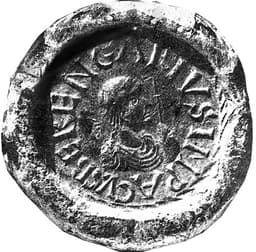
Berengar I
Emperor · Medieval
45.4Total

Julius Caesar
General · Ancient
82.8Total
Basic Information
Born
845
-100
Died
924
-44
Era
Medieval
Ancient
Nationality
Italy
Roman Republic
Occupation
Emperor
General
Civilization
Western
Western
Score Comparison
Military (10%)
38.3
88.0
Political (20%)
36.5
78.0
Influence (20%)
51.0
85.0
Legacy (20%)
40.8
82.0
Leadership (15%)
58.8
80.0
Strategy (15%)
43.3
85.0
TOTAL
45.4
82.8
Berengar I — Complete Timeline
899 AD
Battle of the Brenta RiverWar◆ Major
Berengar I defeated a Magyar raiding army at the Brenta River in northern Italy. This victory temporarily halted Magyar incursions into Italy and enhanced Berengar's reputation as a defender of the kingdom, leading to his imperial coronation.
BattleMagyarsDefense
Impact: regionalconstructive
915 AD
Crowned Holy Roman EmperorPolitical Action◆ Major
Berengar I was crowned Holy Roman Emperor by Pope John X. This recognition came after his victory over the Magyars at the Battle of the Brenta River, solidifying his authority in Italy and marking the peak of his power.
Holy Roman EmpireCoronationItaly
Impact: regional
922 AD
Loss of Imperial Title to Rudolf IIPolitical Action
Berengar I was forced to recognize Rudolf II of Burgundy as King of Italy after a military defeat. This loss of control over much of northern Italy weakened his position and led to a period of dual kingship, undermining his authority.
Civil WarItalyRivalry
Impact: regionaldestructive
924 AD
Assassination of Berengar IOther◆ Major
Berengar I was assassinated in Verona by a member of his own retinue, possibly at the instigation of his rival, Rudolf II of Burgundy. His death ended his reign and plunged Italy into a period of fragmentation and civil war.
AssassinationItalySuccession Crisis
Impact: regionaltragic
Julius Caesar — Complete Timeline
58 BC
Gallic WarsWar◆ Major
Caesar, as proconsul of Gaul, launched a series of campaigns that conquered all of Gaul (modern France, Belgium, and parts of Switzerland). He fought numerous battles, including against the Helvetii, the Belgae, and the Gallic chieftain Vercingetorix. The wars brought immense wealth and a loyal army to Caesar.
Gallic WarsConquestRoman Expansion
Impact: regional
49 BC
Crossing the RubiconPolitical Action◆ Major
Caesar led Legio XIII across the Rubicon River into Italy, defying the Roman Senate's order to disband his army. This act triggered a civil war against Pompey and the Optimates, ultimately leading to Caesar's dictatorship and the end of the Roman Republic.
Roman Civil WarEnd of RepublicPower Struggle
Impact: global
48 BC
Battle of PharsalusWar◆ Major
Caesar's outnumbered army defeated the larger forces of Pompey the Great at Pharsalus in Greece. Caesar's tactical use of a reserve line to counter Pompey's cavalry charge proved decisive. Pompey fled to Egypt, where he was assassinated, leaving Caesar as the undisputed master of the Roman world.
Roman Civil WarBattleDecisive Victory
Impact: regional
44 BC
Appointment as Dictator for LifePolitical Action◆ Major
The Roman Senate appointed Caesar dictator perpetuo (dictator for life), granting him unprecedented personal power. This move concentrated military, legislative, and judicial authority in one person, effectively ending the Roman Republic's traditional system of checks and balances and alarming many senators.
DictatorshipEnd of RepublicPower Consolidation
Impact: regionaldestructive
Assassination on the Ides of MarchPolitical Action◆ Major
A group of Roman senators, led by Marcus Junius Brutus and Gaius Cassius Longinus, stabbed Caesar to death at a meeting of the Senate in the Theatre of Pompey. The assassination was intended to restore the Republic, but instead triggered another civil war that led to the rise of the Roman Empire.
AssassinationRoman PoliticsEnd of Republic
Impact: globaldestructive
Expert Analysis
berengar-i-vs-julius-caesar
### The Crossing and the Crown
In the annals of history, few contrasts are as stark as the fates of two Western rulers who met violent ends nearly a thousand years apart. One was a man whose very name became synonymous with imperial ambition, cut down on the floor of the Roman Senate by his closest allies. The other was a forgotten king of Italy, stabbed to death in Verona by a member of his own retinue. Both were assassinated. Both sought to rule a fractured world. Yet one remade the course of civilization, while the other vanished into a footnote. What drove these two men—Julius Caesar and Berengar I—to such divergent outcomes? The answer lies not in their ambitions, which were similar, but in the soil from which they grew.
### Origins: The Republic and the Ruin
Julius Caesar was born in 100 BCE into a patrician family that had fallen on hard times. The Roman Republic was at its zenith, a muscular, expansionist state governed by a complex system of checks and balances—senators, tribunes, and assemblies—all vying for power. Caesar’s world was one of law, oratory, and ruthless competition. His uncle by marriage, Gaius Marius, had reformed the army, turning it into a personal instrument of power. Caesar inherited this legacy: he understood that in Rome, greatness was earned through military glory and political cunning.
Berengar I, born in 845 CE, inhabited a very different universe. The Carolingian Empire, once the unifying force of Europe under Charlemagne, had shattered into warring fragments. Italy was a prize fought over by local dukes, popes, and foreign invaders. Berengar was a grandson of Louis the Pious, a Carolingian by blood, but that blood meant little in a world where legitimacy was measured by the sword. His Italy was not a republic of laws but a mosaic of fortified towns and feudal loyalties, where a king could command only as far as his army could march. If Caesar was a product of civic ambition, Berengar was a child of chaos.
### Rise to Power: The Rubicon and the Rivalry
Caesar’s ascent was a masterpiece of timing and audacity. He climbed the *cursus honorum*—the ladder of Roman offices—through military command in Spain, a consulship in 59 BCE, and then the conquest of Gaul from 58 to 50 BCE. His victories were not just military; they were political. He wrote his own *Commentaries*, shaping his image as a genius. When the Senate ordered him to disband his army, he crossed the Rubicon River in 49 BCE, igniting a civil war. It was a calculated gamble, and he won. By 45 BCE, he was dictator for life, the master of Rome.
Berengar’s path was messier. He became King of Italy in 888 CE, but his reign was a constant struggle. His key moment came in 899 at the Battle of the Brenta River, where he defeated a Magyar raiding army. This victory was crucial—it temporarily halted the Magyar threat and earned him prestige. In 915, Pope John X crowned him Holy Roman Emperor, a title that sounded grand but meant little without real power. Unlike Caesar, who built a loyal army through conquest, Berengar’s authority was transactional. He relied on local nobles who could—and did—abandon him. By 922, after a military defeat, he was forced to recognize Rudolf II of Burgundy as King of Italy. His crown was a loan, not a possession.
### Leadership & Governance: Vision vs. Survival
Caesar governed with a revolutionary vision. He reformed the calendar, granting us the Julian calendar still used in part today. He extended Roman citizenship to provinces, diluted the power of the old senatorial elite, and initiated massive public works. His military genius was undeniable—his siege of Alesia in 52 BCE remains a textbook example of strategy. But his political wisdom was flawed. He centralized power so completely that he made enemies of the very class that had elevated him. His clemency toward former foes was seen as weakness, not mercy.
Berengar’s governance was a desperate act of survival. He could not reform Italy; he could only hold it together. His political score of 72.0 reflects a man who understood the game of alliances, but his military score of 33.2 reveals his weakness. He fought not to conquer but to endure. Where Caesar crossed the Rubicon, Berengar retreated before Rudolf. His rule was a series of temporary victories—a battle here, a coronation there—never a lasting transformation. He was a mediator, not a maker.
### Triumph & Tragedy: Glory and the Knife
Caesar’s greatest triumph was his conquest of Gaul, which brought immense wealth and territory to Rome. His most devastating failure was his own assassination on the Ides of March in 44 BCE. He had ignored warnings, disbanded his bodyguard, and walked into the Senate unarmed. His tragedy was that he had become so powerful that his survival threatened the very republic he sought to lead.
Berengar’s triumph was the Battle of the Brenta, a moment of genuine heroism against the Magyars. His tragedy was his assassination in 924, stabbed to death in Verona by a member of his own retinue, possibly at the instigation of Rudolf. It was a sordid end, without the drama of Caesar’s fall. No one immortalized it in verse. His death marked the end of a line, not the birth of an empire.
### Character & Destiny: The Architect and the Survivor
Caesar was a gambler who believed in his own star. His personality—confident, ruthless, and charismatic—drove him to take risks that paid off. He once said, “*Veni, vidi, vici*”—I came, I saw, I conquered. But that same hubris led him to dismiss the conspiracy that killed him. His destiny was to be a hinge of history, the man who ended the Republic and made the Empire inevitable.
Berengar was a survivor, not a visionary. He lacked Caesar’s strategic brilliance (a strategy score of 58.9 vs. Caesar’s 88.0) and his political insight (78.0 vs. 72.0). He was a product of his era—an era of fragmentation, where no single man could forge a lasting state. His character was shaped by necessity, not ambition. He fought not to change the world but to keep his place in it.
### Legacy: The Name and the Shadow
Caesar’s legacy is immense. His name became a title—*Kaiser* in German, *Tsar* in Russian. His writings shaped military thought for millennia. He is remembered as a genius, a tyrant, and a martyr, a figure of endless fascination. His total score of 83.3 reflects a man who altered the trajectory of Western civilization.
Berengar’s legacy is a shadow. His total score of 62.4 marks him as a minor figure, remembered only by specialists. He left no reforms, no lasting institutions, no cultural touchstone. His name appears in dry chronicles, a footnote to the Carolingian collapse. He is remembered not for what he built, but for what he failed to hold.
### Conclusion: What the Rubicon Teaches
The difference between Caesar and Berengar is not simply one of talent. It is one of context. Caesar lived in a republic that could be bent to a single will; Berengar lived in a world that had already shattered. Caesar’s ambition was matched by his opportunity; Berengar’s survival was limited by his era’s chaos. Both were assassinated, but one death ended a world, while the other merely ended a reign. History, it seems, rewards not just the man who dares, but the man who dares at the right moment. For Berengar, the moment never came. For Caesar, it came and cut him down—but not before he changed everything.
Rankings
🥇
Julius CaesarLeader
Mil: 88.0Pol: 78.0Inf: 85.0
82.8
🥈
Berengar I
Mil: 38.3Pol: 36.5Inf: 51.0
45.4
+37.4 behind
How This Comparison Works
Algorithm
Each figure is scored on 6 dimensions (0—100 scale) based on structured historical data: Military (10%), Political (20%), Influence (20%), Legacy (20%), Leadership (15%), Strategy (15%). The weighted total produces the final ranking.
Data Sources
Scores are computed from structured sub-indicators in the database. Scale factors adjust for era (Ancient ×0.85, Modern ×1.0) and civilization size (Eastern ×1.05, Other ×0.80) to account for differences in population and military scale.
Maximum 3 Figures
Comparisons are limited to 2—3 figures to ensure readability and statistical meaningfulness.
Error Margins
±5 points per dimension — Sub-scores are derived from historical records with inherent uncertainty. Two figures within 5 points on a dimension should be considered roughly equivalent in that area.
Total Score Accuracy
±3 points overall — The weighted combination of 6 dimensions produces a total score with approximately ±3 points of uncertainty. Differences of less than 3 points are not statistically significant— the figures are effectively tied.
Known Limitations
- Historical records are incomplete and uneven across civilizations
- Figures from oral-tradition societies may be underrepresented
- Occupation labels can misclassify multi-role figures
- Scores measure capability and impact, not moral character
- Quantitative scoring is a comparison tool, not absolute truth
Capability Radar
Military (10%) — Battles & Warfare
Battles
35
95
Win Rate
40
92
Expansion
25
97
Political (20%) — Governance & Reform
Reform
30
90
Diplomacy
40
85
Economy
25
82
Influence (20%) — Cultural & Global Reach
Cultural
20
88
Global
15
94
Legacy (20%) — Historical Impact
Historical
25
95
Longevity
20
96
Leadership (15%) — Power & Stability
Tenure
55
75
Stability
20
60
Strategy (15%) — Tactics & Innovation
Strategy
30
94
Tactics
30
96
Reform
20
88
Similar Comparisons
Comments & Discussion
Eternal_Gaia6/17/2026
Caesar’s assassination in 44 BCE sparked a cascade of civil wars that birthed the Roman Empire. Berengar I’s stabbing in 924 CE? It just made local warlords shrug and carve up Italy further. Caesar changed the political DNA of Western civilization; Berengar couldn’t even control Verona. That’s not a comparison—that’s a cosmic tier gap. Calling them both “assassinated rulers” misses the forest for the trees. One shaped history, the other was shaped by entropy.
数据守墓人6/17/2026
历史不是玄学,是数据。凯撒活了56年,统治高卢八年,跨越卢比孔河一次,写了三本征战记,其直接遗产撑起罗马帝国五百年。贝伦加尔一世活了近八十岁,当意大利国王二十七年,结果呢?维罗纳被刺杀后,王国立刻瓦解,连个像样的敕令都没留下。用数字说话:凯撒的“后续影响力年数”是贝伦加尔的至少五十倍。这不是“不同结局”,这是统计学上不可归类。某些历史爱好者的问题,就是把石头和行星都叫“天体”。
Toga_Rider6/17/2026
Look at their rivals. Caesar faced Pompey the Great—a towering military mind with senatorial backing—and crushed him after a decade-long struggle. Berengar I fought Guy III of Spoleto and, well, Ludovician feuds nobody bothers memorizing. Caesar’s fall triggered the rise of Octavian, a transformation of the state. Berengar’s fall triggered… a Byzantine encroachment and petty Lombard quarrels. As a classics scholar, I’d argue Caesar’s assassination was a dramatic turning point; Berengar’s was jus
铁幕史评6/17/2026
一个真正的比较是权力结构,不是个人命运。凯撒的刺杀是共和制崩裂的最后信号,元老院、公民大会与军队三者博弈的必然结局。贝伦加尔之死,不过是后加洛林欧洲封建碎片化的一次普通震动——地方伯爵杀了国王,换一个国王继续割据。凯撒的死催生了帝国体系,贝伦加尔的死甚至没催生新边界。所谓“相似”,只存在于把两个金属都叫“刀”的肤浅层面。要比较,就得承认:凯撒的历史坐标大得无法与贝伦加尔同台。
Centurion_Tactics6/17/2026
Military legacy difference: Caesar’s Gallic Wars produced tactics still studied at West Point—siege of Alesia, double contravallation, genius logistics. Berengar I’s key battle was against the Magyars in 899—and he got annihilated, losing thousands of Italian nobles. That defeat destabilized his reign permanently. One general wrote