Loading...
This comparison has not been analyzed yet.
One-time AI generation (~1 minute). Scores and timeline are already available below.
Bhagiratha vs Seti I
Seti I leads by 1.0 pts · 2 figures compared
…

Bhagiratha
Emperor · Ancient
57.3Total
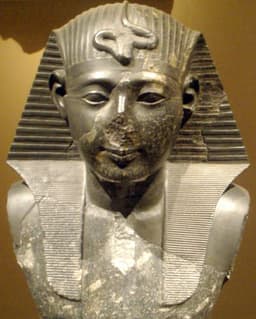
Seti I
Emperor · Ancient
58.3Total
Basic Information
Born
-1550
-1290
Died
-1500
-1279
Era
Ancient
Ancient
Nationality
Vedic India
Egypt
Occupation
Emperor
Emperor
Civilization
Indian
Middle Eastern
Score Comparison
Military (10%)
45.4
74.7
Political (20%)
32.1
62.7
Influence (20%)
82.0
56.7
Legacy (20%)
68.0
54.0
Leadership (15%)
44.5
53.2
Strategy (15%)
37.5
58.0
TOTAL
57.3
58.3
Bhagiratha — Complete Timeline
1550 BC
Descent of the GangesCultural
Bhagiratha performed severe penance to bring the Ganges River from heaven to earth to purify the ashes of his ancestors. The river's descent was controlled by Shiva, and the event is a foundational myth in Hinduism.
Ganges MythPenanceShiva's Intervention
Impact: globalconstructive
Ancestor RedemptionOther◆ Major
By bringing the Ganges to earth, Bhagiratha redeemed the 60,000 sons of Sagara who had been burned to ashes. Their souls were liberated and ascended to heaven, fulfilling Bhagiratha's vow.
Ancestral SalvationGanges PurificationMythical Redemption
Impact: regionalconstructive
Seti I — Complete Timeline
1290 BC
Establishment of the 19th Dynasty's Power BasePolitical Action◆ Major
Seti I, son of Ramesses I, solidified the 19th Dynasty's rule by strengthening the military and administrative structures. He appointed his son Ramesses II as co-regent, ensuring a smooth succession and laying the foundation for Ramesses II's long reign.
DynastySuccessionRamesses II
Impact: nationalconstructive
1288 BC
Military Campaigns in Syria and LibyaWar◆ Major
Seti I led military campaigns into Syria to reassert Egyptian control over Canaan and against Libyan tribes in the west. He recaptured the city of Kadesh and defeated the Libyans, securing Egypt's borders and restoring its military reputation.
MilitarySyriaLibya
Impact: regional
1285 BC
Construction of the Temple of AbydosCultural◆ Major
Seti I built the magnificent Temple of Abydos, dedicated to Osiris. The temple features exquisite reliefs and the famous King List, which records the names of 76 pharaohs from Menes to Seti I, providing a crucial chronological record.
ArchitectureAbydosKing List
Impact: globalconstructive
1280 BC
Construction of the Great Hypostyle Hall at Karnak (Completion)Cultural◆ Major
Seti I completed the Great Hypostyle Hall at Karnak, begun by Horemheb. The hall's 134 columns are covered with reliefs depicting Seti I's military victories and religious ceremonies, making it a masterpiece of New Kingdom architecture.
ArchitectureKarnakHypostyle Hall
Impact: globalconstructive
This comparison has not been analyzed yet.
One-time AI generation (~1 minute). Scores and timeline are already available below.
Rankings
🥇
Seti ILeader
Mil: 74.7Pol: 62.7Inf: 56.7
58.3
🥈
Bhagiratha
Mil: 45.4Pol: 32.1Inf: 82.0
57.3
+1.0 behind
How This Comparison Works
Algorithm
Each figure is scored on 6 dimensions (0—100 scale) based on structured historical data: Military (10%), Political (20%), Influence (20%), Legacy (20%), Leadership (15%), Strategy (15%). The weighted total produces the final ranking.
Data Sources
Scores are computed from structured sub-indicators in the database. Scale factors adjust for era (Ancient ×0.85, Modern ×1.0) and civilization size (Eastern ×1.05, Other ×0.80) to account for differences in population and military scale.
Maximum 3 Figures
Comparisons are limited to 2—3 figures to ensure readability and statistical meaningfulness.
Error Margins
±5 points per dimension — Sub-scores are derived from historical records with inherent uncertainty. Two figures within 5 points on a dimension should be considered roughly equivalent in that area.
Total Score Accuracy
±3 points overall — The weighted combination of 6 dimensions produces a total score with approximately ±3 points of uncertainty. Differences of less than 3 points are not statistically significant— the figures are effectively tied.
Known Limitations
- Historical records are incomplete and uneven across civilizations
- Figures from oral-tradition societies may be underrepresented
- Occupation labels can misclassify multi-role figures
- Scores measure capability and impact, not moral character
- Quantitative scoring is a comparison tool, not absolute truth
Capability Radar
Military (10%) — Battles & Warfare
Battles
20
70
Win Rate
26
75
Expansion
30
65
Political (20%) — Governance & Reform
Reform
10
60
Diplomacy
10
65
Economy
10
60
Influence (20%) — Cultural & Global Reach
Cultural
90
70
Global
70
55
Legacy (20%) — Historical Impact
Historical
90
65
Longevity
90
60
Leadership (15%) — Power & Stability
Tenure
10
55
Stability
10
65
Strategy (15%) — Tactics & Innovation
Strategy
30
70
Tactics
36
65
Reform
34
60
Similar Comparisons
Comments & Discussion
No comments yet. Be the first to share your thoughts!