Loading...
Seti I vs Theodosius the Great
Theodosius the Great leads by 11.2 pts · 2 figures compared
…
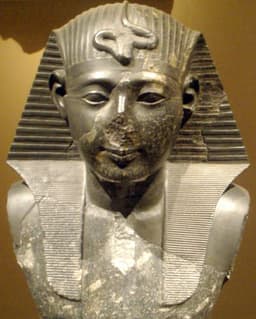
Seti I
Emperor · Ancient
58.3Total
Theodosius the Great
Emperor · Ancient
69.5Total
Basic Information
Born
-1290
347
Died
-1279
395
Era
Ancient
Ancient
Nationality
Egypt
Roman Empire
Occupation
Emperor
Emperor
Civilization
Middle Eastern
Western
Score Comparison
Military (10%)
74.7
65.0
Political (20%)
62.7
65.0
Influence (20%)
56.7
75.0
Legacy (20%)
54.0
75.0
Leadership (15%)
53.2
68.0
Strategy (15%)
58.0
55.0
TOTAL
58.3
69.5
Seti I — Complete Timeline
1290 BC
Establishment of the 19th Dynasty's Power BasePolitical Action◆ Major
Seti I, son of Ramesses I, solidified the 19th Dynasty's rule by strengthening the military and administrative structures. He appointed his son Ramesses II as co-regent, ensuring a smooth succession and laying the foundation for Ramesses II's long reign.
DynastySuccessionRamesses II
Impact: nationalconstructive
1288 BC
Military Campaigns in Syria and LibyaWar◆ Major
Seti I led military campaigns into Syria to reassert Egyptian control over Canaan and against Libyan tribes in the west. He recaptured the city of Kadesh and defeated the Libyans, securing Egypt's borders and restoring its military reputation.
MilitarySyriaLibya
Impact: regional
1285 BC
Construction of the Temple of AbydosCultural◆ Major
Seti I built the magnificent Temple of Abydos, dedicated to Osiris. The temple features exquisite reliefs and the famous King List, which records the names of 76 pharaohs from Menes to Seti I, providing a crucial chronological record.
ArchitectureAbydosKing List
Impact: globalconstructive
1280 BC
Construction of the Great Hypostyle Hall at Karnak (Completion)Cultural◆ Major
Seti I completed the Great Hypostyle Hall at Karnak, begun by Horemheb. The hall's 134 columns are covered with reliefs depicting Seti I's military victories and religious ceremonies, making it a masterpiece of New Kingdom architecture.
ArchitectureKarnakHypostyle Hall
Impact: globalconstructive
Theodosius the Great — Complete Timeline
380 AD
Edict of ThessalonicaReform
Theodosius issued the Edict of Thessalonica, declaring Nicene Christianity the official state religion of the Roman Empire. All other Christian sects were deemed heretical, and pagan practices were increasingly suppressed.
ChristianityReligious PolicyState Religion
Impact: globalprogressive
390 AD
Massacre of ThessalonicaPolitical Action◆ Major
Theodosius ordered a massacre in Thessalonica after a riot killed a Roman official. Thousands of citizens were killed in the circus. Bishop Ambrose of Milan excommunicated Theodosius until he performed public penance.
MassacreChurch-State RelationsAmbrose
Impact: regionaldestructive
394 AD
Battle of the FrigidusWar◆ Major
Theodosius defeated the usurper Eugenius and his general Arbogast at the Battle of the Frigidus. The victory reunited the Roman Empire under Theodosius's rule for the last time before its permanent division.
Civil WarReunificationEugenius
Impact: national
395 AD
Division of the Roman EmpirePolitical Action
Upon his death, Theodosius divided the Roman Empire between his sons: Arcadius received the East and Honorius the West. This division became permanent, leading to the separate development of the Byzantine and Western Roman Empires.
Imperial DivisionSuccessionByzantine Empire
Impact: global
Expert Analysis
Origins
**Seti I** was born around 1323 BCE, the son of Ramesses I, founder of the 19th Dynasty. His family was of non-royal military origin, rising to power under Horemheb. Seti likely grew up in a military environment, receiving training in chariotry and archery. His father's brief reign (c. 1292–1290 BCE) provided a platform for Seti to assume the throne.
**Theodosius the Great** was born in 347 CE in Cauca, Hispania (modern Spain), into a Christian family. His father, Theodosius the Elder, was a prominent general serving under Emperor Valentinian I. Theodosius the Elder was executed in 376 CE under murky circumstances, which shaped Theodosius's cautious political maneuvering. Theodosius received a classical education and military training.
Rise to Power
Seti I became pharaoh around 1290 BCE after his father's short reign. He immediately undertook military campaigns to restore Egyptian influence in Canaan and Libya, which had waned during the late 18th Dynasty. His first campaign (year 1) recaptured the city of Kadesh, though it was later lost again. Seti's military successes solidified the 19th Dynasty's legitimacy.
Theodosius rose to power after the death of Emperor Valens at the Battle of Adrianople (378 CE). The Western Emperor Gratian appointed Theodosius as co-emperor of the East in 379 CE. Theodosius faced the Gothic crisis, eventually settling the Goths as foederati in 382 CE. He defeated the usurper Magnus Maximus in 388 CE and Eugenius in 394 CE, reuniting the empire.
Leadership & Governance
Seti I governed through traditional pharaonic bureaucracy, emphasizing temple construction and military expeditions. He completed the Great Hypostyle Hall at Karnak, begun by Horemheb, covering its 134 columns with reliefs depicting his victories. His reign saw administrative reforms that strengthened state control. Seti scored 53.2 in leadership, reflecting competent but unexceptional governance.
Theodosius was a strong proponent of Nicene Christianity. He issued the Edict of Thessalonica (380 CE) making Nicene Christianity the state religion, banning Arianism and paganism. He convened the First Council of Constantinople (381 CE) to settle doctrinal disputes. His leadership score of 68.0 reflects decisive action, though his religious policies sparked conflict.
Triumph & Tragedy
Seti I's greatest success was reasserting Egyptian control over Syria-Palestine, though his gains were temporary. His temple at Abydos, with its beautiful reliefs and the Abydos King List, remains a masterpiece. His tragedy was that many of his military achievements were undone by the time of his son Ramesses II. Seti scored 74.7 in military, showing his strength as a general.
Theodosius's triumph was unifying the Roman Empire under Christianity and defeating usurpers. His greatest tragedy was the Massacre of Thessalonica (390 CE), where he ordered the killing of thousands of civilians after a riot. Bishop Ambrose of Milan excommunicated him until he did public penance. Theodosius scored 75.0 in legacy and 75.0 in influence, reflecting his lasting impact on religion.
Character & Destiny
Seti I is depicted as a determined, pious ruler who valued tradition. He restored monuments of earlier pharaohs and emphasized his lineage. His character was shaped by the need to restore stability after the Amarna period. His destiny was to be overshadowed by his son Ramesses II, though he laid the foundation for the 19th Dynasty's greatness.
Theodosius was a complex figure: devoutly Christian but capable of brutality. His penance for Thessalonica showed a willingness to submit to religious authority, setting a precedent for church-state relations. His decision to divide the empire between his sons led to its permanent split, a fateful choice.
Legacy
Seti I's legacy is primarily architectural and religious. The Temple of Abydos and the Hypostyle Hall at Karnak are enduring monuments. His military campaigns were overshadowed by Ramesses II's propaganda. Seti scored 54.0 in legacy, reflecting his role as a transitional figure.
Theodosius's legacy is immense: he made Christianity the dominant religion of the Roman Empire, shaping Western civilization. The division of the empire after his death in 395 CE became permanent. His influence on religious policy and church-state relations was profound. Theodosius scored 75.0 in legacy.
Conclusion
Theodosius the Great had greater historical impact than Seti I. Theodosius's total score of 69.5 exceeds Seti's 58.3 by 11.2 points. While Seti was a competent military leader (74.7 vs 65.0), Theodosius's influence (75.0 vs 56.7) and legacy (75.0 vs 54.0) were far more transformative. Theodosius's decision to establish Nicene Christianity as the state religion changed the course of European history, while Seti's achievements, though significant, were largely regional and temporary. Theodosius's impact on religion, law, and the division of the empire gives him the edge in historical significance.
Rankings
🥇
Theodosius the GreatLeader
Mil: 65.0Pol: 65.0Inf: 75.0
69.5
🥈
Seti I
Mil: 74.7Pol: 62.7Inf: 56.7
58.3
+11.2 behind
How This Comparison Works
Algorithm
Each figure is scored on 6 dimensions (0—100 scale) based on structured historical data: Military (10%), Political (20%), Influence (20%), Legacy (20%), Leadership (15%), Strategy (15%). The weighted total produces the final ranking.
Data Sources
Scores are computed from structured sub-indicators in the database. Scale factors adjust for era (Ancient ×0.85, Modern ×1.0) and civilization size (Eastern ×1.05, Other ×0.80) to account for differences in population and military scale.
Maximum 3 Figures
Comparisons are limited to 2—3 figures to ensure readability and statistical meaningfulness.
Error Margins
±5 points per dimension — Sub-scores are derived from historical records with inherent uncertainty. Two figures within 5 points on a dimension should be considered roughly equivalent in that area.
Total Score Accuracy
±3 points overall — The weighted combination of 6 dimensions produces a total score with approximately ±3 points of uncertainty. Differences of less than 3 points are not statistically significant— the figures are effectively tied.
Known Limitations
- Historical records are incomplete and uneven across civilizations
- Figures from oral-tradition societies may be underrepresented
- Occupation labels can misclassify multi-role figures
- Scores measure capability and impact, not moral character
- Quantitative scoring is a comparison tool, not absolute truth
Capability Radar
Military (10%) — Battles & Warfare
Battles
70
65
Win Rate
75
70
Expansion
65
50
Political (20%) — Governance & Reform
Reform
60
85
Diplomacy
65
75
Economy
60
60
Influence (20%) — Cultural & Global Reach
Cultural
70
85
Global
55
85
Legacy (20%) — Historical Impact
Historical
65
90
Longevity
60
95
Leadership (15%) — Power & Stability
Tenure
55
70
Stability
65
55
Strategy (15%) — Tactics & Innovation
Strategy
70
75
Tactics
65
60
Reform
60
55
Similar Comparisons
Comments & Discussion
No comments yet. Be the first to share your thoughts!