Loading...
This comparison has not been analyzed yet.
One-time AI generation (~1 minute). Scores and timeline are already available below.
Bhim Singh of Mewar vs Solomon I of Imereti
Solomon I of Imereti leads by 4.4 pts · 2 figures compared
…
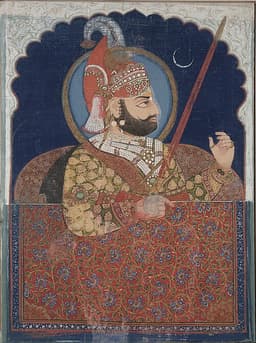
Bhim Singh of Mewar
Emperor · Modern
42.4Total

Solomon I of Imereti
Emperor · Modern
46.8Total
Basic Information
Born
1761
1735
Died
1828
1784
Era
Modern
Modern
Nationality
India
Georgia
Occupation
Emperor
Emperor
Civilization
Indian
Western
Score Comparison
Military (10%)
14.9
45.0
Political (20%)
32.2
45.1
Influence (20%)
51.0
48.6
Legacy (20%)
40.0
39.2
Leadership (15%)
62.2
65.0
Strategy (15%)
39.6
38.6
TOTAL
42.4
46.8
Bhim Singh of Mewar — Complete Timeline
1778 AD
Last Coronation at ChittorCultural
Bhim Singh was crowned Maharana at Chittor, the traditional capital of Mewar. This was the last coronation held at Chittor before the fort was abandoned due to Maratha threats.
CoronationChittorMewar
Impact: regional
1800 AD
Resisted Maratha InvasionsWar◆ Major
Bhim Singh led Mewar's resistance against Maratha raids under Holkar and Scindia. Despite limited resources, he defended Chittor and Udaipur, but the kingdom was weakened by constant warfare.
Maratha WarsDefenseMewar
Impact: regional
1818 AD
Treaty of 1818 with the BritishPolitical Action◆ Major
Bhim Singh signed a subsidiary alliance with the British East India Company, making Mewar a princely state under British suzerainty. This ended Mewar's independence and brought it under colonial control.
TreatyBritish RajPrincely State
Impact: regional
Solomon I of Imereti — Complete Timeline
1757 AD
Battle of KhresiliWar◆ Major
King Solomon I of Imereti led his forces to a decisive victory over the Ottoman Empire at the Battle of Khresili. This victory halted Ottoman expansion into western Georgia and secured Imereti's independence for a period, establishing Solomon as a major regional power.
BattleOttoman EmpireImereti
Impact: regionalconstructive
1760 AD
Abolition of the Slave Trade in ImeretiReform◆ Major
Solomon I issued a decree abolishing the slave trade within the Kingdom of Imereti, specifically targeting the sale of Christian captives to the Ottoman Empire. This reform was both a moral stance and a political move to weaken Ottoman influence and strengthen his own authority.
AbolitionSlave TradeReform
Impact: regionalprogressive
1761 AD
Excommunication of Slave Traders by the Georgian ChurchCultural
Solomon I secured the support of the Georgian Orthodox Church to excommunicate anyone involved in the slave trade. This religious sanction reinforced his secular abolition decree and made the practice socially unacceptable within Imereti.
ChurchExcommunicationSlave Trade
Impact: nationalconstructive
1774 AD
Signing of the Treaty of Kuchuk-Kainarji (Georgian Clauses)Political Action
The Treaty of Kuchuk-Kainarji between Russia and the Ottoman Empire included clauses that recognized Imereti's right to trade without Ottoman interference. Solomon I had lobbied Russia for these provisions, which reduced Ottoman economic pressure on his kingdom.
TreatyRussiaOttoman Empire
Impact: regionalconstructive
This comparison has not been analyzed yet.
One-time AI generation (~1 minute). Scores and timeline are already available below.
Rankings
🥇
Solomon I of ImeretiLeader
Mil: 45.0Pol: 45.1Inf: 48.6
46.8
🥈
Bhim Singh of Mewar
Mil: 14.9Pol: 32.2Inf: 51.0
42.4
+4.4 behind
How This Comparison Works
Algorithm
Each figure is scored on 6 dimensions (0—100 scale) based on structured historical data: Military (10%), Political (20%), Influence (20%), Legacy (20%), Leadership (15%), Strategy (15%). The weighted total produces the final ranking.
Data Sources
Scores are computed from structured sub-indicators in the database. Scale factors adjust for era (Ancient ×0.85, Modern ×1.0) and civilization size (Eastern ×1.05, Other ×0.80) to account for differences in population and military scale.
Maximum 3 Figures
Comparisons are limited to 2—3 figures to ensure readability and statistical meaningfulness.
Error Margins
±5 points per dimension — Sub-scores are derived from historical records with inherent uncertainty. Two figures within 5 points on a dimension should be considered roughly equivalent in that area.
Total Score Accuracy
±3 points overall — The weighted combination of 6 dimensions produces a total score with approximately ±3 points of uncertainty. Differences of less than 3 points are not statistically significant— the figures are effectively tied.
Known Limitations
- Historical records are incomplete and uneven across civilizations
- Figures from oral-tradition societies may be underrepresented
- Occupation labels can misclassify multi-role figures
- Scores measure capability and impact, not moral character
- Quantitative scoring is a comparison tool, not absolute truth
Capability Radar
Military (10%) — Battles & Warfare
Battles
15
35
Win Rate
10
30
Expansion
5
20
Political (20%) — Governance & Reform
Reform
20
30
Diplomacy
30
40
Economy
15
25
Influence (20%) — Cultural & Global Reach
Cultural
35
20
Global
10
10
Legacy (20%) — Historical Impact
Historical
30
25
Longevity
20
20
Leadership (15%) — Power & Stability
Tenure
40
60
Stability
20
20
Strategy (15%) — Tactics & Innovation
Strategy
15
25
Tactics
20
30
Reform
5
20
Similar Comparisons
Comments & Discussion
No comments yet. Be the first to share your thoughts!