Loading...
This comparison has not been analyzed yet.
One-time AI generation (~1 minute). Scores and timeline are already available below.
Bidhan Chandra Roy vs Juscelino Kubitschek
Bidhan Chandra Roy leads by 5.4 pts · 2 figures compared
…

Bidhan Chandra Roy
Politician · Modern
61.7Total
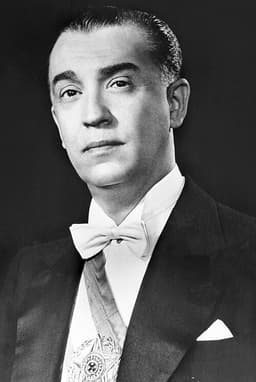
Juscelino Kubitschek
Politician · Modern
56.3Total
Basic Information
Born
1882
1902
Died
1962
1976
Era
Modern
Modern
Nationality
India
Brazil
Occupation
Politician
Politician
Civilization
Indian
Western
Score Comparison
Military (10%)
47.2
50.0
Political (20%)
68.8
62.7
Influence (20%)
60.0
55.0
Legacy (20%)
52.0
52.0
Leadership (15%)
84.5
72.0
Strategy (15%)
60.0
43.9
TOTAL
61.7
56.3
Bidhan Chandra Roy — Complete Timeline
1948 AD
Became Chief Minister of West BengalPolitical Action◆ Major
Bidhan Chandra Roy was sworn in as the Chief Minister of West Bengal, serving until his death in 1962. He led the Congress government and focused on rebuilding the state after the partition of Bengal.
Chief MinisterWest BengalCongress
Impact: regionalconstructive
1950 AD
Developed the Kolkata Metropolitan AreaReform◆ Major
Roy oversaw the development of the Kolkata Metropolitan Area, including the construction of the Kolkata Municipal Corporation building, the expansion of the city's infrastructure, and the establishment of the Kolkata Port Trust.
Urban DevelopmentKolkataInfrastructure
Impact: regionalconstructive
1951 AD
Established the Indian Institute of Technology KharagpurReform
Roy played a key role in establishing the Indian Institute of Technology (IIT) Kharagpur, the first IIT in India. The institution became a premier engineering college and a model for technical education in the country.
EducationIITTechnical Education
Impact: nationalprogressive
1952 AD
Established the West Bengal Health SchemeReform◆ Major
Roy introduced the West Bengal Health Scheme, a pioneering health insurance program for government employees. The scheme provided medical coverage and became a model for other states.
HealthInsuranceWest Bengal
Impact: regionalprogressive
1962 AD
Death and legacy as a physician and statesmanOther◆ Major
Roy died in office in 1962, leaving a legacy as a physician and builder of modern West Bengal. His birthday, July 1, is celebrated as National Doctors' Day in India in his honor.
DeathLegacyDoctors' Day
Impact: nationalconstructive
Juscelino Kubitschek — Complete Timeline
1955 AD
Elected President of BrazilPolitical Action◆ Major
Juscelino Kubitschek was elected president of Brazil in 1955 as the candidate of the Social Democratic Party (PSD) and the Brazilian Labor Party (PTB). He assumed office on January 31, 1956, with a mandate for rapid development.
Brazilian PresidencyElectionDevelopment
Impact: nationalconstructive
1956 AD
Launched the 'Fifty Years in Five' Development PlanReform
Kubitschek launched the Plano de Metas (Goals Plan) in 1956, a comprehensive development program aiming to achieve fifty years of progress in five years. The plan focused on energy, transportation, industry, and agriculture, driving rapid economic growth.
Economic DevelopmentPlano de MetasBrazil
Impact: nationalconstructive
Expanded the Brazilian Automotive IndustryReform◆ Major
Kubitschek's government attracted foreign automakers such as Volkswagen, Ford, and General Motors to establish factories in Brazil. This policy created a domestic automotive industry, generating jobs and reducing imports.
IndustrializationAutomotiveBrazil
Impact: nationalconstructive
1959 AD
Faced the 1959 Military Revolt of AragarçasWar
In December 1959, a group of military officers led by Colonel Jo
Military RevoltPolitical InstabilityBrazil
Impact: nationaldestructive
1960 AD
Founded BrasíliaCultural
Kubitschek oversaw the construction of Bras
Urban PlanningBrasíliaModernization
Impact: nationalconstructive
This comparison has not been analyzed yet.
One-time AI generation (~1 minute). Scores and timeline are already available below.
Rankings
🥇
Bidhan Chandra RoyLeader
Mil: 47.2Pol: 68.8Inf: 60.0
61.7
🥈
Juscelino Kubitschek
Mil: 50.0Pol: 62.7Inf: 55.0
56.3
+5.4 behind
How This Comparison Works
Algorithm
Each figure is scored on 6 dimensions (0—100 scale) based on structured historical data: Military (10%), Political (20%), Influence (20%), Legacy (20%), Leadership (15%), Strategy (15%). The weighted total produces the final ranking.
Data Sources
Scores are computed from structured sub-indicators in the database. Scale factors adjust for era (Ancient ×0.85, Modern ×1.0) and civilization size (Eastern ×1.05, Other ×0.80) to account for differences in population and military scale.
Maximum 3 Figures
Comparisons are limited to 2—3 figures to ensure readability and statistical meaningfulness.
Error Margins
±5 points per dimension — Sub-scores are derived from historical records with inherent uncertainty. Two figures within 5 points on a dimension should be considered roughly equivalent in that area.
Total Score Accuracy
±3 points overall — The weighted combination of 6 dimensions produces a total score with approximately ±3 points of uncertainty. Differences of less than 3 points are not statistically significant— the figures are effectively tied.
Known Limitations
- Historical records are incomplete and uneven across civilizations
- Figures from oral-tradition societies may be underrepresented
- Occupation labels can misclassify multi-role figures
- Scores measure capability and impact, not moral character
- Quantitative scoring is a comparison tool, not absolute truth
Capability Radar
Military (10%) — Battles & Warfare
Battles
47
27
Win Rate
44
35
Expansion
48
32
Political (20%) — Governance & Reform
Reform
75
85
Diplomacy
70
70
Economy
72
80
Influence (20%) — Cultural & Global Reach
Cultural
55
65
Global
45
55
Legacy (20%) — Historical Impact
Historical
60
70
Longevity
50
60
Leadership (15%) — Power & Stability
Tenure
65
65
Stability
68
60
Strategy (15%) — Tactics & Innovation
Strategy
50
40
Tactics
58
42
Reform
58
46
Similar Comparisons
Comments & Discussion
No comments yet. Be the first to share your thoughts!