Loading...
Bilge Khagan vs Julius Caesar
Julius Caesar leads by 17.8 pts · 2 figures compared
…
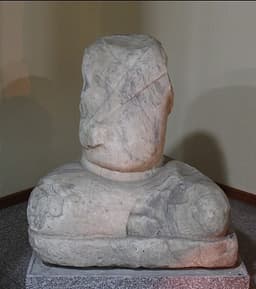
Bilge Khagan
Emperor · Medieval
65.0Total

Julius Caesar
General · Ancient
82.8Total
Basic Information
Born
683
-100
Died
734
-44
Era
Medieval
Ancient
Nationality
Second Turkic Khaganate
Roman Republic
Occupation
Emperor
General
Civilization
Eastern
Western
Score Comparison
Military (10%)
60.0
88.0
Political (20%)
59.3
78.0
Influence (20%)
65.0
85.0
Legacy (20%)
65.0
82.0
Leadership (15%)
72.0
80.0
Strategy (15%)
68.1
85.0
TOTAL
65.0
82.8
Bilge Khagan — Complete Timeline
716 AD
Accession as Bilge KhaganPolitical Action◆ Major
Bilge Khagan ascended to the throne of the Second Turkic Khaganate after the death of his father, Qapaghan Qaghan. His reign marked a period of stability and cultural flourishing.
SuccessionKhaganateLeadership
Impact: regionalconstructive
720 AD
Reforms and consolidation of the khaganateReform◆ Major
Bilge Khagan implemented administrative and military reforms to strengthen the khaganate. He centralized authority, reorganized the army, and promoted trade along the Silk Road, enhancing the khaganate's prosperity.
ReformAdministrationMilitary
Impact: regionalconstructive
725 AD
Diplomatic relations with Tang ChinaPolitical Action
Bilge Khagan established peaceful diplomatic relations with the Tang dynasty, exchanging embassies and gifts. This d
DiplomacyTang DynastyPeace
Impact: regionalconstructive
732 AD
Construction of the Orkhon inscriptionsCultural
Bilge Khagan commissioned the Orkhon inscriptions, monumental stelae inscribed in Old Turkic script. These inscriptions recorded the history and achievements of the Turkic Khaganate, providing a key source for Turkic history.
InscriptionsCultural HeritageWriting System
Impact: globalconstructive
734 AD
Death and legacyPolitical Action◆ Major
Bilge Khagan died in 734, possibly poisoned by a minister. His death led to a period of instability, but his legacy endured through the Orkhon inscriptions, which became a symbol of Turkic identity.
DeathLegacyInstability
Impact: regionaltragic
Julius Caesar — Complete Timeline
58 BC
Gallic WarsWar◆ Major
Caesar, as proconsul of Gaul, launched a series of campaigns that conquered all of Gaul (modern France, Belgium, and parts of Switzerland). He fought numerous battles, including against the Helvetii, the Belgae, and the Gallic chieftain Vercingetorix. The wars brought immense wealth and a loyal army to Caesar.
Gallic WarsConquestRoman Expansion
Impact: regional
49 BC
Crossing the RubiconPolitical Action◆ Major
Caesar led Legio XIII across the Rubicon River into Italy, defying the Roman Senate's order to disband his army. This act triggered a civil war against Pompey and the Optimates, ultimately leading to Caesar's dictatorship and the end of the Roman Republic.
Roman Civil WarEnd of RepublicPower Struggle
Impact: global
48 BC
Battle of PharsalusWar◆ Major
Caesar's outnumbered army defeated the larger forces of Pompey the Great at Pharsalus in Greece. Caesar's tactical use of a reserve line to counter Pompey's cavalry charge proved decisive. Pompey fled to Egypt, where he was assassinated, leaving Caesar as the undisputed master of the Roman world.
Roman Civil WarBattleDecisive Victory
Impact: regional
44 BC
Appointment as Dictator for LifePolitical Action◆ Major
The Roman Senate appointed Caesar dictator perpetuo (dictator for life), granting him unprecedented personal power. This move concentrated military, legislative, and judicial authority in one person, effectively ending the Roman Republic's traditional system of checks and balances and alarming many senators.
DictatorshipEnd of RepublicPower Consolidation
Impact: regionaldestructive
Assassination on the Ides of MarchPolitical Action◆ Major
A group of Roman senators, led by Marcus Junius Brutus and Gaius Cassius Longinus, stabbed Caesar to death at a meeting of the Senate in the Theatre of Pompey. The assassination was intended to restore the Republic, but instead triggered another civil war that led to the rise of the Roman Empire.
AssassinationRoman PoliticsEnd of Republic
Impact: globaldestructive
Expert Analysis
bilge-khagan-vs-julius-caesar
The Emperor and the General: Bilge Khagan and Julius Caesar
On the Ides of March, 44 BCE, a man in a blood-soaked toga slumped at the foot of Pompey’s statue, his twenty-three dagger wounds sealing the fate of the Roman Republic. Half a world away and seven centuries later, in 734 CE, a Turkic emperor named Bilge Khagan lay dying in his yurt, possibly poisoned by a minister who had once been his trusted advisor. One fell to the knives of senators who feared his ambition; the other to a poison that ended a reign of wisdom. Both men shaped their worlds, yet their paths—and their legacies—could not have been more different. Why did Caesar’s ambition build an empire that would outlast him for a millennium, while Bilge Khagan’s careful statecraft left a khaganate that collapsed within a generation? The answer lies not in their scores, but in the soil of their civilizations.
Origins
Julius Caesar was born into the twilight of the Roman Republic, a world of senatorial intrigue, civil wars, and relentless expansion. His family, the Julii, claimed descent from the goddess Venus, but they were not among the ruling elite. From boyhood, Caesar witnessed the brutal competition of Roman politics—where a man could rise by military glory, oratorical skill, and sheer audacity. He was a product of a society that worshipped individual achievement, where the line between hero and tyrant was razor-thin.
Bilge Khagan, by contrast, emerged from the steppes of Central Asia in 683 CE, a world of nomadic clans, horse archers, and the eternal struggle for pasture and power. The Second Turkic Khaganate was a fragile confederation, constantly threatened by the Tang Empire to the east and internal rebellions. Bilge was not a conqueror by birthright; he was the son of Qapaghan Qaghan, a ruler who had expanded the khaganate through brutal warfare. But Bilge’s era demanded something different: not more conquest, but survival.
Rise to Power
Caesar’s rise was a masterclass in calculated risk. He climbed the Roman political ladder—quaestor, aedile, pontifex maximus—but his true breakthrough came in 58 BCE, when he secured the governorship of Gaul. Over eight years, he conquered a territory the size of modern France, writing his own propaganda in *Commentarii de Bello Gallico* and building an army loyal to him, not the Republic. When the Senate ordered him to disband, he crossed the Rubicon River in 49 BCE, sparking a civil war that ended with him as dictator for life.
Bilge Khagan’s path was quieter but no less decisive. He ascended the throne in 716 CE, after his father’s death, at a moment when the khaganate was fractured by clan rivalries and Tang pressure. His first act was not to march on an enemy, but to listen to his advisor Tonyukuk, a wise old statesman who urged restraint. Bilge chose consolidation over conquest. He implemented administrative reforms in 720 CE, centralizing authority and reorganizing the army. His rise was not a thunderbolt but a slow dawn.
Leadership & Governance
Here the two men diverge sharply. Caesar was a military genius—his siege of Alesia, the lightning campaigns in Gaul, and the tactical brilliance at Pharsalus all earned him a Military score of 88. But his political score of 78 reflects a deeper flaw: he was a brilliant destroyer but a flawed builder. He reformed the calendar, granted citizenship to provincials, and initiated public works, yet his rule was always personal, not institutional. He centralized power in his own hands, alienated the Senate, and offered no stable succession. His leadership was a flame that burned bright but consumed its own fuel.
Bilge Khagan, with a Leadership score of 86.3, governed differently. He understood that the khaganate’s strength lay not in one man, but in unity. His reforms in 720 CE strengthened the tribal structure without breaking it. He established diplomatic relations with Tang China in 725 CE, exchanging embassies and gifts—a détente that bought peace for his people. His greatest act was the Orkhon inscriptions of 732 CE, monumental stelae carved in Old Turkic script, which proclaimed the history and values of the Turkic people. These were not propaganda for a single man, but a constitution for a nation.
Triumph & Tragedy
Caesar’s triumph was absolute: he conquered Gaul, defeated his rivals, and stood as master of the Mediterranean world. His tragedy was equally absolute: the Ides of March, when his refusal to share power led to his murder. The Republic he sought to save died with him, replaced by the Empire he inadvertently created.
Bilge Khagan’s triumph was quieter: the Orkhon inscriptions, which have survived for 1,300 years as the first written records of the Turkic language. His tragedy was his death in 734 CE, possibly by poison, which plunged the khaganate into chaos. Within a decade, the Second Turkic Khaganate collapsed, its people absorbed by the Uyghurs. But where Caesar’s empire rose from his ashes, Bilge’s khaganate simply vanished.
Character & Destiny
Caesar was driven by an insatiable ambition. He once said, “I came, I saw, I conquered”—a phrase that sums up his life. He believed that history belonged to the bold, and he was willing to burn the world to prove it. His character was his destiny: he could not stop, could not share power, could not imagine a world where he was not at the center.
Bilge Khagan, by contrast, was a figure of restraint. The Orkhon inscriptions quote him saying, “The Turkic people, if they unite, are strong; if they divide, they perish.” He was a builder, not a conqueror. His destiny was to preserve, not to expand. And yet, in preserving, he created something fragile—a khaganate that depended on his wisdom. When he died, so did the unity he had forged.
Legacy
Caesar’s legacy is written in stone and blood. His name became synonymous with emperor—*Kaiser* in German, *Tsar* in Russian. His reforms shaped the Roman Empire, which in turn shaped Western civilization. He is remembered as a genius and a tyrant, a man who changed the world but could not change himself.
Bilge Khagan’s legacy is more subtle but no less profound. The Orkhon inscriptions are a treasure of world history—the first written evidence of a Turkic identity. They inspired later Turkic empires, from the Seljuks to the Ottomans, and continue to resonate in modern Turkey and Central Asia. He is remembered not as a conqueror, but as a wise ruler who gave his people a voice.
Conclusion
Caesar and Bilge Khagan represent two poles of leadership. Caesar’s ambition built an empire that lasted centuries; Bilge’s wisdom created a legacy that outlasted his khaganate. One changed the world through force; the other through words. As we read the Orkhon inscriptions today, we hear a voice from the steppe—a voice that says, “Look at what we built.” And as we read Caesar’s commentaries, we hear a voice from Rome—a voice that says, “Look at what I conquered.” Both are true. Both are human. And both remind us that history is not a single story, but a conversation between the conqueror and the builder, the general and the emperor.
Rankings
🥇
Julius CaesarLeader
Mil: 88.0Pol: 78.0Inf: 85.0
82.8
🥈
Bilge Khagan
Mil: 60.0Pol: 59.3Inf: 65.0
65.0
+17.8 behind
How This Comparison Works
Algorithm
Each figure is scored on 6 dimensions (0—100 scale) based on structured historical data: Military (10%), Political (20%), Influence (20%), Legacy (20%), Leadership (15%), Strategy (15%). The weighted total produces the final ranking.
Data Sources
Scores are computed from structured sub-indicators in the database. Scale factors adjust for era (Ancient ×0.85, Modern ×1.0) and civilization size (Eastern ×1.05, Other ×0.80) to account for differences in population and military scale.
Maximum 3 Figures
Comparisons are limited to 2—3 figures to ensure readability and statistical meaningfulness.
Error Margins
±5 points per dimension — Sub-scores are derived from historical records with inherent uncertainty. Two figures within 5 points on a dimension should be considered roughly equivalent in that area.
Total Score Accuracy
±3 points overall — The weighted combination of 6 dimensions produces a total score with approximately ±3 points of uncertainty. Differences of less than 3 points are not statistically significant— the figures are effectively tied.
Known Limitations
- Historical records are incomplete and uneven across civilizations
- Figures from oral-tradition societies may be underrepresented
- Occupation labels can misclassify multi-role figures
- Scores measure capability and impact, not moral character
- Quantitative scoring is a comparison tool, not absolute truth
Capability Radar
Military (10%) — Battles & Warfare
Battles
65
95
Win Rate
70
92
Expansion
75
97
Political (20%) — Governance & Reform
Reform
80
90
Diplomacy
75
85
Economy
70
82
Influence (20%) — Cultural & Global Reach
Cultural
85
88
Global
70
94
Legacy (20%) — Historical Impact
Historical
80
95
Longevity
85
96
Leadership (15%) — Power & Stability
Tenure
70
75
Stability
75
60
Strategy (15%) — Tactics & Innovation
Strategy
80
94
Tactics
75
96
Reform
70
88
Similar Comparisons
Comments & Discussion
TONSURE_TACTICUS6/17/2026
Caesar's expansion was conquest for conquest's sake—he invaded Gaul to pay off debts and build a personal army, not to spread civilization. Bilge Khagan's campaigns were defensive, uniting Turkic tribes against Tang Chinese encroachment. Caesar was a glory-hound writing his own memoirs; Bilge was a reluctant emperor trying to keep his people from extinction. The real question isn't who was "greater," but whose violence served a purpose beyond ego.
草原狼毫6/17/2026
数据上,Bilge Khagan统治时突厥人口不到两百万,军队最多三万骑兵。而高卢战争期间,凯撒调动了至少六万罗马军团,还雇佣了日耳曼骑兵。帝国规模差了三倍,人口差二十倍——拿两个体系完全不同的统治者比“得分”,就像拿围棋冠军和拳击手比体重。别被排名网站骗了,metrics不跨文明平移。
INSOMNIAC_LEGIONARY6/17/2026
Give me Caesar every time. The man wrote his own commentaries, crossed the Rubicon in a gambit that would make poker players weep, and reformed the calendar we still use. Bilge Khagan left some Orkhon inscriptions that most people can't even read. Caesar's charisma built a cult that became an empire; Bilge's legacy is a few runestones in the Mongolian steppe. Who do you think schoolkids will remember in 500 years?
古道笨伯6/17/2026
你们都说凯撒更“成功”,可他死得比卖鱼佬还惨——浑身是洞倒在元老院地板上,连朋友布鲁图都捅了他一刀。Bilge Khagan至少死在床上,是在葬礼上才被揭露是毒杀的。而且他那毒药很可能是大臣为了停止同室操戈而下的。凯撒是被自己的野心鲨了,Bilge是被自己的仁慈害了。政治智慧不是谁的刀快,而是死得像个样。