Loading...
Bilge Qaghan vs Julius Caesar
Julius Caesar leads by 17.3 pts · 2 figures compared
…
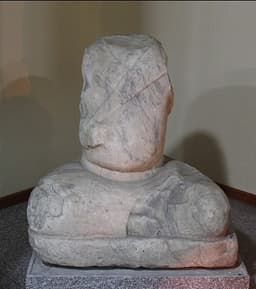
Bilge Qaghan
Emperor · Medieval
65.5Total

Julius Caesar
General · Ancient
82.8Total
Basic Information
Born
683
-100
Died
734
-44
Era
Medieval
Ancient
Nationality
Gokturk Khaganate
Roman Republic
Occupation
Emperor
General
Civilization
Eastern
Western
Score Comparison
Military (10%)
78.0
88.0
Political (20%)
70.0
78.0
Influence (20%)
62.0
85.0
Legacy (20%)
56.0
82.0
Leadership (15%)
72.0
80.0
Strategy (15%)
69.1
85.0
TOTAL
65.5
82.8
Bilge Qaghan — Complete Timeline
716 AD
Restoration of the Eastern Turkic KhaganatePolitical Action◆ Major
After the Eastern Turkic Khaganate was destroyed by the Tang dynasty in 630, Bilge Qaghan, with the help of his brother Kul Tigin and vizier Tonyukuk, revived the khaganate. He defeated the Tang and their allies, re-establishing Turkic independence.
RestorationTurkic Revival
Impact: regionalconstructive
717 AD
Battle of the Irtysh RiverWar◆ Major
Bilge Qaghan led a campaign against the Tang and their Turkic allies, defeating them at the Irtysh River. This victory secured the khaganate's western borders and demonstrated the military prowess of the revived Turkic state.
BattleTang-Turkic War
Impact: regionaldestructive
727 AD
Peace treaty with the Tang dynastyPolitical Action◆ Major
Bilge Qaghan negotiated a peace treaty with the Tang dynasty, ending decades of conflict. The treaty established the borders between the two empires and allowed for trade and diplomatic exchanges, bringing stability to the region.
TreatyPeace
Impact: regionalconstructive
732 AD
Construction of the Orkhon inscriptionsCultural◆ Major
Bilge Qaghan commissioned the Orkhon inscriptions, monumental stelae inscribed with runic Turkic script. These inscriptions, written by Tonyukuk and later by Bilge's son, recorded the history and achievements of the Turkic Khaganate, providing a key source for Turkic history.
InscriptionsCultural Heritage
Impact: regionalconstructive
734 AD
Assassination of Bilge QaghanPolitical Action◆ Major
Bilge Qaghan was poisoned by a minister, possibly on the orders of the Tang court. His death led to a period of instability and decline for the Eastern Turkic Khaganate, which eventually fell to the Uyghurs in 744.
AssassinationDecline
Impact: regionaltragic
Julius Caesar — Complete Timeline
58 BC
Gallic WarsWar◆ Major
Caesar, as proconsul of Gaul, launched a series of campaigns that conquered all of Gaul (modern France, Belgium, and parts of Switzerland). He fought numerous battles, including against the Helvetii, the Belgae, and the Gallic chieftain Vercingetorix. The wars brought immense wealth and a loyal army to Caesar.
Gallic WarsConquestRoman Expansion
Impact: regional
49 BC
Crossing the RubiconPolitical Action◆ Major
Caesar led Legio XIII across the Rubicon River into Italy, defying the Roman Senate's order to disband his army. This act triggered a civil war against Pompey and the Optimates, ultimately leading to Caesar's dictatorship and the end of the Roman Republic.
Roman Civil WarEnd of RepublicPower Struggle
Impact: global
48 BC
Battle of PharsalusWar◆ Major
Caesar's outnumbered army defeated the larger forces of Pompey the Great at Pharsalus in Greece. Caesar's tactical use of a reserve line to counter Pompey's cavalry charge proved decisive. Pompey fled to Egypt, where he was assassinated, leaving Caesar as the undisputed master of the Roman world.
Roman Civil WarBattleDecisive Victory
Impact: regional
44 BC
Appointment as Dictator for LifePolitical Action◆ Major
The Roman Senate appointed Caesar dictator perpetuo (dictator for life), granting him unprecedented personal power. This move concentrated military, legislative, and judicial authority in one person, effectively ending the Roman Republic's traditional system of checks and balances and alarming many senators.
DictatorshipEnd of RepublicPower Consolidation
Impact: regionaldestructive
Assassination on the Ides of MarchPolitical Action◆ Major
A group of Roman senators, led by Marcus Junius Brutus and Gaius Cassius Longinus, stabbed Caesar to death at a meeting of the Senate in the Theatre of Pompey. The assassination was intended to restore the Republic, but instead triggered another civil war that led to the rise of the Roman Empire.
AssassinationRoman PoliticsEnd of Republic
Impact: globaldestructive
Expert Analysis
bilge-qaghan-vs-julius-caesar
# The General and the Khagan: Two Paths to Power, Two Ends of Empire
On a spring morning in 44 BCE, Julius Caesar walked into the Senate chamber in Rome, knowing full well that daggers might await him. He had been warned, but he dismissed the omens. Hours later, he lay bleeding at the foot of Pompey’s statue, stabbed twenty-three times by men he had once called allies. Seven centuries east and nearly eight hundred years later, in 734 CE, Bilge Qaghan of the Göktürks drank from a cup offered by a trusted minister—and collapsed, poisoned by a hand that may have been guided by his greatest enemy, the Tang emperor. Both men died by betrayal. Both had built empires from chaos. But the worlds they left behind could not have been more different.
Origins
Julius Caesar was born into the dying gasp of the Roman Republic, a world of senatorial intrigue, class warfare, and endless military expansion. His family, the Julii, claimed descent from the goddess Venus, but they were not among the ruling elite. Caesar grew up in a Rome where a man’s worth was measured by his command of armies and his ability to manipulate the Senate. His education was Greek, his ambition Roman. He learned early that in a republic built on conquest, the fastest road to power ran through blood and gold.
Bilge Qaghan emerged from a very different world. The Göktürks were steppe nomads, a people whose identity was forged on horseback and whose survival depended on unity. Bilge was born in 683, a time when the First Turkic Khaganate had already fallen to the Tang dynasty. His people were scattered, their pride wounded. Bilge’s brother, Kül Tigin, would become his sword; Bilge himself would become the mind that rebuilt a nation. The Orkhon inscriptions, which he later commissioned, would record that “the Turkic people were about to perish,” until Bilge rose to restore them.
Rise to Power
Caesar’s ascent was a masterpiece of calculated risk. He climbed the Roman political ladder—quaestor, aedile, praetor—but his true breakthrough came in 58 BCE, when he secured command of Gaul. For eight years, he waged war across modern-day France and Belgium, slaughtering and subjugating tribes, amassing wealth, and forging a loyal army that worshipped him. The Gallic Wars made Caesar a legend and a threat. When the Senate ordered him to disband his army, he crossed the Rubicon River in 49 BCE, igniting a civil war. He defeated his rival Pompey, chased him to Egypt, and returned to Rome as dictator.
Bilge Qaghan’s rise was more desperate. In 716, after years of Tang domination, he and Kül Tigin led a rebellion that restored the Eastern Turkic Khaganate. Unlike Caesar, Bilge did not conquer a foreign land—he reclaimed his own. His legitimacy came not from defeating a rival general but from reviving a dying culture. The Battle of the Irtysh River in 717 was his Rubicon: a victory that shattered Tang ambitions in the steppe and announced that the Turks would bow to no emperor.
Leadership & Governance
Caesar ruled Rome as a dictator, but he governed like a reformer. He restructured the calendar, granted citizenship to provincials, launched public works, and centralized power in his own hands. His military genius was undeniable—he wrote commentaries on his campaigns that are still studied today—but his political wisdom was flawed. He pardoned his enemies, believing they would be grateful. They were not. He underestimated the depth of republican resentment.
Bilge Qaghan governed with a different philosophy. The Orkhon inscriptions reveal a ruler who saw himself as a father to his people, not a conqueror of the world. He promoted Turkic culture, built monuments, and sought peace with the Tang—not out of weakness, but because he knew that endless war would exhaust his nomadic state. In 727, he negotiated a treaty with the Tang that defined borders and ended decades of conflict. His leadership score of 86.3 reflects a ruler who understood that survival required restraint, not endless expansion.
Triumph & Tragedy
Caesar’s greatest triumph was his conquest of Gaul—a campaign that added a vast territory to Roman influence and made him the most powerful man in the Republic. His greatest tragedy was the Ides of March. He had achieved everything a man could desire, but his success terrified the aristocracy. He died because he could not imagine that men he had spared would still want him dead.
Bilge’s triumph was the restoration of his khaganate and the creation of the Orkhon inscriptions—the first written records of the Turkic language, a cultural monument that outlasted his empire. His tragedy was his assassination in 734, poisoned by a minister who may have been bribed by the Tang. Unlike Caesar, Bilge’s death did not spark a civil war; it triggered a slow decline. The khaganate fragmented, and within a century, the Göktürks disappeared as a political force.
Character & Destiny
Caesar was a gambler. He crossed the Rubicon, disbanded the treasury, and trusted that his charisma would carry the day. His personality was magnetic, ruthless, and supremely confident—perhaps too confident. He believed he could reshape the Republic in his image, but the Republic fought back. His destiny was to die at the moment of his greatest power, a warning to all who would trade liberty for order.
Bilge was a conservator. He did not seek to conquer China; he sought to preserve his people. His character was patient, strategic, and culturally proud. He built stelae, not triumphal arches. He negotiated peace, not surrender. His destiny was to be remembered not for his battles but for his words—inscribed in stone, speaking across centuries: “I, Bilge Qaghan, became khagan. I gathered the scattered, revived the dying.”
Legacy
Caesar’s legacy is the Roman Empire itself. His name became synonymous with autocracy—Kaiser, Tsar, Caesar. The reforms he enacted outlived the Republic he destroyed. He is remembered as a military genius, a flawed politician, and a man whose ambition changed the course of Western history.
Bilge Qaghan’s legacy is quieter but no less profound. The Orkhon inscriptions are a foundation stone of Turkic identity, a declaration that the steppe had a history, a language, and a soul. He is remembered as a unifier, a cultural hero, and a leader who chose preservation over conquest. His total score of 74.3 reflects a different kind of greatness—not the thunder of empire, but the resilience of a people who refused to vanish.
Conclusion
One man built an empire that lasted a thousand years. The other built a memory that lasted a thousand years. Caesar’s Rome became a fixture of the Western imagination; Bilge’s Göktürks faded into the steppe, their words carved into stone that still stands in Mongolia. Both were assassinated. Both were betrayed. But Caesar’s fall ended a republic, while Bilge’s fall ended an era. In the end, the difference between them is not a matter of scores or dates. It is a question of what we choose to build—an empire of territory, or an empire of identity. The general chose the first. The khagan chose the second. History, it seems, has room for both.
Rankings
🥇
Julius CaesarLeader
Mil: 88.0Pol: 78.0Inf: 85.0
82.8
🥈
Bilge Qaghan
Mil: 78.0Pol: 70.0Inf: 62.0
65.5
+17.3 behind
How This Comparison Works
Algorithm
Each figure is scored on 6 dimensions (0—100 scale) based on structured historical data: Military (10%), Political (20%), Influence (20%), Legacy (20%), Leadership (15%), Strategy (15%). The weighted total produces the final ranking.
Data Sources
Scores are computed from structured sub-indicators in the database. Scale factors adjust for era (Ancient ×0.85, Modern ×1.0) and civilization size (Eastern ×1.05, Other ×0.80) to account for differences in population and military scale.
Maximum 3 Figures
Comparisons are limited to 2—3 figures to ensure readability and statistical meaningfulness.
Error Margins
±5 points per dimension — Sub-scores are derived from historical records with inherent uncertainty. Two figures within 5 points on a dimension should be considered roughly equivalent in that area.
Total Score Accuracy
±3 points overall — The weighted combination of 6 dimensions produces a total score with approximately ±3 points of uncertainty. Differences of less than 3 points are not statistically significant— the figures are effectively tied.
Known Limitations
- Historical records are incomplete and uneven across civilizations
- Figures from oral-tradition societies may be underrepresented
- Occupation labels can misclassify multi-role figures
- Scores measure capability and impact, not moral character
- Quantitative scoring is a comparison tool, not absolute truth
Capability Radar
Military (10%) — Battles & Warfare
Battles
75
95
Win Rate
80
92
Expansion
80
97
Political (20%) — Governance & Reform
Reform
85
90
Diplomacy
75
85
Economy
70
82
Influence (20%) — Cultural & Global Reach
Cultural
60
88
Global
50
94
Legacy (20%) — Historical Impact
Historical
65
95
Longevity
55
96
Leadership (15%) — Power & Stability
Tenure
70
75
Stability
75
60
Strategy (15%) — Tactics & Innovation
Strategy
75
94
Tactics
70
96
Reform
85
88
Similar Comparisons
Comments & Discussion
Ash-Steppe Fox6/17/2026
Calling Caesar and Bilge Qaghan "parallels" is lazy history. Sure, both got stabbed—but one died clinging to personal glory in a Senate he broke, the other for his people's survival. Bilge didn't just build an empire; he *wrote* it down in stone (the Orkhon inscriptions), literally coining the term "Türk" for posterity. Caesar chased titles; Bilge legacy-built for a nation that still remembers his name 1,300 years later.
铁骑师爷6/17/2026
别拿罗马的傲慢来套草原的智慧。凯撒征服高卢靠的是钱和军团,比勒可汗统一突厥靠的是血和誓言。你看《阙特勤碑》怎么写的?"天降突厥,大地震动"——这是游牧民族的宇宙观,不是元老院投票能比的。凯撒活着时罗马是共和国,死时已经是帝国;比勒活着时突厥是汗国,死后碑文还在教后人怎么团结。谁更会治国?答案刻在石头上。
Data Skeptic Sid6/17/2026
Stop romanticizing. Bilge Qaghan "built" nothing—he inherited a Göktürk state from his father and brother (Kutlugh and Kapaghan) who did the heavy conquest. Caesar conquered Gaul (800 cities, per Plutarch) and reformed Rome with a solar calendar still in use. Bilge's "empire" had maybe 200,000 people and collapsed within 50 years of his death. One man changed Eurasia forever; the other was a footnote until modern Turkish nationalism inflated him.
考据狂人6/17/2026
数据揭露真相:凯撒在公元前55年入侵不列颠时,随行船只超过800艘,兵力约2万——这比整个东突厥汗国常备军还多!比勒可汗的《毗伽可汗碑》才72行突厥文,而凯撒的《高卢战记》七卷本流传至今。东西方文明的体量差距不是个人能力能弥补的。凯撒面对的是一个地中海超级大国,比勒面对的是三千顶帐篷的部落联盟。别硬比了。
Barbarian Lens Luke6/17/2026
What everyone misses: Bilge Qaghan won by *not* fighting. The Tang sent him grain and silk to pacify him; he took it, built forts (rare for steppe rulers), and used Chinese advisors to tax his own nomads into compliance. Caesar taxed Gauls into rebellion. Bilge understood soft power better than any Roman. He died because Tang agents bribed his physician—proving the Chinese respected his threat more than Rome ever feared Caesar's.
文史双料辩手6/17/2026
凯撒和比勒的根本区别在继承制度。罗马是养子继承制——凯撒领养屋大维,权力