Loading...
Bimbisara vs Licinius
Bimbisara leads by 17.8 pts · 2 figures compared
…
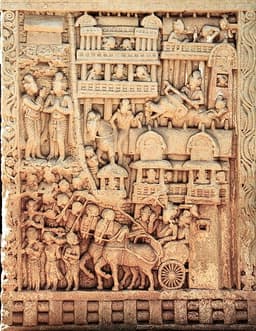
Bimbisara
Emperor · Ancient
57.3Total

Licinius
Emperor · Ancient
39.5Total
Basic Information
Born
-558
263
Died
-491
325
Era
Ancient
Ancient
Nationality
India
Roman Empire
Occupation
Emperor
Emperor
Civilization
Indian
Western
Score Comparison
Military (10%)
60.0
20.0
Political (20%)
60.0
35.1
Influence (20%)
55.7
44.8
Legacy (20%)
49.2
35.8
Leadership (15%)
72.0
51.9
Strategy (15%)
52.5
43.3
TOTAL
57.3
39.5
Bimbisara — Complete Timeline
550 BC
Married Princess Chellana of LicchaviPolitical Action
Bimbisara married Chellana, daughter of the Licchavi chief Chetaka of Vaishali. This marriage alliance strengthened Magadha's ties with the powerful Licchavi republic and produced his son Ajatashatru.
Marriage AllianceDiplomacy
Impact: regional
540 BC
Conquered AngaWar◆ Major
Bimbisara annexed the kingdom of Anga (modern Bihar) to the Magadha empire. This conquest gave Magadha control over the Ganges river trade route and access to the sea, strengthening its economic and military power.
ConquestMagadha Expansion
Impact: regional
530 BC
Established Diplomatic Relations with the BuddhaPolitical Action◆ Major
Bimbisara met Gautama Buddha and became a lay follower, donating the Veluvana Bamboo Grove monastery near Rajagriha. This patronage helped establish Buddhism in Magadha and provided the Buddha with a permanent residence during the rainy season.
BuddhismPatronageReligion
Impact: regionalconstructive
491 BC
Imprisoned and Killed by AjatashatruPolitical Action◆ Major
Bimbisara was imprisoned by his son Ajatashatru, who seized the throne. According to Buddhist sources, Bimbisara died in captivity, possibly by starvation or suicide. This event marked a violent succession in Magadha.
Succession CrisisPatricide
Impact: nationaltragic
Licinius — Complete Timeline
313 AD
Edict of MilanPolitical Action◆ Major
Licinius met Constantine in Milan and agreed to a policy of religious toleration for Christians. The agreement, known as the Edict of Milan, granted freedom of worship throughout the Roman Empire.
ChristianityReligious PolicyTetrarchy
Impact: globalprogressive
316 AD
Battle of CibalaeWar◆ Major
Licinius was defeated by Constantine at the Battle of Cibalae in Pannonia. The loss forced Licinius to cede most of the Balkan provinces to Constantine, significantly weakening his position as co-emperor.
Civil WarConstantineTetrarchy
Impact: regional
324 AD
Battle of ChrysopolisWar
Constantine decisively defeated Licinius at the Battle of Chrysopolis near Chalcedon. Licinius surrendered and was initially spared, but was later executed on charges of plotting rebellion, ending the Tetrarchy.
Civil WarConstantineEnd of Tetrarchy
Impact: global
Expert Analysis
Origins
**Bimbisara** (c. 558–491 BCE) was born into the Haryanka dynasty of Magadha, a kingdom in the eastern Gangetic plain of India. His father was King Bhattiya, and Bimbisara ascended the throne around 543 BCE at the age of 15. He was educated in statecraft and military tactics, and his early life was marked by a strategic marriage to Princess Chellana of the Licchavi clan, which strengthened Magadha's ties with the influential Licchavi republic. Contemporary Buddhist texts describe him as a wise and ambitious ruler.
**Licinius** (c. 263–325 CE) was born in Moesia Superior (modern Serbia) to a peasant family. He rose through the ranks of the Roman army due to his military competence. He became a close friend of Emperor Galerius, who appointed him as Augustus of the West in 308 CE. His early career was shaped by the tetrarchic system and the constant civil wars that plagued the late Roman Empire.
Rise to Power
Bimbisara's rise was largely hereditary, but he expanded his influence through conquest and diplomacy. His first major achievement was the annexation of Anga (modern Bihar) around 540 BCE, which gave Magadha control over the Ganges river trade route and access to maritime ports. This conquest was achieved through a combination of military force and marriage alliances. He also established diplomatic relations with the Buddha, becoming a lay follower and patron, which enhanced his legitimacy and spread Buddhism.
Licinius's rise came during the chaotic period after the abdication of Diocletian. He was appointed Augustus of the West by Galerius in 308 CE, but his authority was contested by Constantine and others. He allied with Maximinus Daza against Constantine, but after Maximinus's defeat, he became co-emperor with Constantine in 313 CE. The Edict of Milan, issued jointly with Constantine in 313 CE, granted religious toleration to Christians, a major political move.
Leadership & Governance
Bimbisara's leadership style was characterized by strategic expansion and religious patronage. He governed Magadha efficiently, with a centralized administration and a strong military. He built roads, promoted trade, and supported the Buddhist sangha, donating the Veluvana Bamboo Grove monastery. His governance was relatively peaceful, focusing on consolidation rather than constant warfare. His political acumen scored 60.0, reflecting his ability to maintain alliances and manage internal affairs.
Licinius, on the other hand, ruled as a Roman emperor with a military-centric approach. He implemented reforms to stabilize the economy and army but was often overshadowed by Constantine's political maneuvering. His leadership score of 51.9 indicates moderate effectiveness, but his governance was marked by conflicts with Constantine, culminating in the civil wars of 316–317 CE and 324 CE. He failed to secure the loyalty of his troops and made strategic errors, such as not eliminating Constantine when he had the chance.
Triumph & Tragedy
Bimbisara's greatest triumph was the conquest of Anga and the establishment of Magadha as a dominant power in northern India. His patronage of Buddhism helped the religion spread across Asia. His tragedy was his imprisonment and death by starvation at the hands of his son Ajatashatru, who usurped the throne around 491 BCE. Despite his successes, he could not secure a peaceful succession.
Licinius's greatest triumph was the Edict of Milan, which ensured religious toleration for Christians and ended persecution. He also won several battles against his rivals. His tragedy was his defeat at the Battle of Chrysopolis in 324 CE, after which he surrendered and was executed by Constantine. His military score of 20.0 reflects his inability to match Constantine's strategic genius.
Character & Destiny
Bimbisara was known for his wisdom and religious tolerance. His decision to follow the Buddha without converting his entire kingdom showed political foresight. However, his trust in his son Ajatashatru proved fatal. Buddhist sources suggest he was a just ruler but overly trusting. His character of openness and diplomacy shaped his destiny: he expanded Magadha but fell victim to palace intrigue.
Licinius was pragmatic and ruthless, but he lacked the political savvy of Constantine. He was suspicious and often cruel, executing potential rivals. His inability to build lasting alliances led to his downfall. After the Edict of Milan, he reversed his stance and persecuted Christians, which alienated a growing segment of the population. His character—cautious but inflexible—cost him the empire.
Legacy
Bimbisara's legacy is profound in Indian history. He laid the foundation for the Magadha empire, which would later be expanded by his son and eventually become the Maurya Empire under Chandragupta Maurya. His patronage of Buddhism helped establish it as a major world religion. His influence score of 55.7 reflects his long-term impact on religion and statecraft. He is remembered as a wise and benevolent ruler in Buddhist texts.
Licinius is largely overshadowed by Constantine. His legacy is mixed: the Edict of Milan is a landmark in religious freedom, but his later persecution of Christians damaged his reputation. He is often seen as a transitional figure in the Roman Empire's shift to Christianity. His legacy score of 35.8 indicates limited enduring impact. Compared to Bimbisara's 49.2, Licinius's legacy is weaker.
Conclusion
Bimbisara had a greater impact than Licinius. His total score of 57.3 surpasses Licinius's 39.5 by 17.8 points. Bimbisara's conquest of Anga and patronage of Buddhism had lasting effects on Indian civilization and world religion. Licinius, despite the Edict of Milan, was a secondary figure in the rise of Constantine. Bimbisara's leadership (72.0 vs 51.9) and political acumen (60.0 vs 35.1) were clearly superior. While Licinius played a role in religious toleration, Bimbisara's strategic and cultural contributions were more significant.
Rankings
🥇
BimbisaraLeader
Mil: 60.0Pol: 60.0Inf: 55.7
57.3
🥈
Licinius
Mil: 20.0Pol: 35.1Inf: 44.8
39.5
+17.8 behind
How This Comparison Works
Algorithm
Each figure is scored on 6 dimensions (0—100 scale) based on structured historical data: Military (10%), Political (20%), Influence (20%), Legacy (20%), Leadership (15%), Strategy (15%). The weighted total produces the final ranking.
Data Sources
Scores are computed from structured sub-indicators in the database. Scale factors adjust for era (Ancient ×0.85, Modern ×1.0) and civilization size (Eastern ×1.05, Other ×0.80) to account for differences in population and military scale.
Maximum 3 Figures
Comparisons are limited to 2—3 figures to ensure readability and statistical meaningfulness.
Error Margins
±5 points per dimension — Sub-scores are derived from historical records with inherent uncertainty. Two figures within 5 points on a dimension should be considered roughly equivalent in that area.
Total Score Accuracy
±3 points overall — The weighted combination of 6 dimensions produces a total score with approximately ±3 points of uncertainty. Differences of less than 3 points are not statistically significant— the figures are effectively tied.
Known Limitations
- Historical records are incomplete and uneven across civilizations
- Figures from oral-tradition societies may be underrepresented
- Occupation labels can misclassify multi-role figures
- Scores measure capability and impact, not moral character
- Quantitative scoring is a comparison tool, not absolute truth
Capability Radar
Military (10%) — Battles & Warfare
Battles
45
45
Win Rate
50
40
Expansion
65
30
Political (20%) — Governance & Reform
Reform
75
25
Diplomacy
70
35
Economy
65
30
Influence (20%) — Cultural & Global Reach
Cultural
55
15
Global
40
10
Legacy (20%) — Historical Impact
Historical
60
20
Longevity
55
15
Leadership (15%) — Power & Stability
Tenure
70
40
Stability
60
25
Strategy (15%) — Tactics & Innovation
Strategy
55
45
Tactics
40
40
Reform
60
20
Similar Comparisons
Comments & Discussion
No comments yet. Be the first to share your thoughts!